Artwork
The Hay Wagon
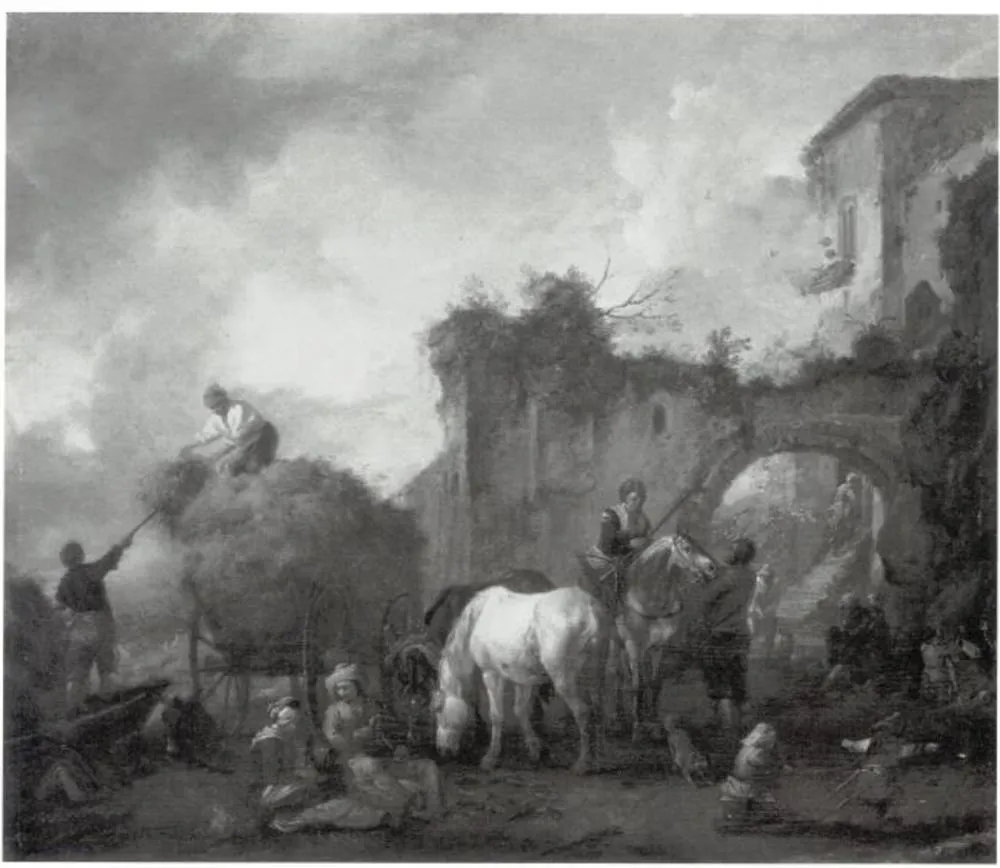
The Hay Wagon is an oil painting by the Dutch Golden Age artist Philips Wouwerman. It dates from 1655 and is held in the collection of the Gemäldegalerie Berlin.
About this work
Subject & Meaning
The ladder wagon, a specialized farm vehicle for hauling hay, serves as the central motif, emphasizing the seasonal rhythms of rural productivity.
The Hay Wagon depicts a rural scene with a man, a horse, and a ladder wagon, set within a landscape that includes an arch. As a work of genre art, it represents everyday labor and the agricultural life of the Dutch Golden Age. The painting combines landscape and genre elements to celebrate the dignity of peasant work while showcasing the natural environment.
The ladder wagon, a specialized farm vehicle for hauling hay, serves as the central motif, emphasizing the seasonal rhythms of rural productivity.
Technique & Style
The Hay Wagon is an oil painting executed on panel, a support characteristic of Dutch seventeenth-century cabinet pictures suited to its modest scale of 34 by 39 centimeters. Painted in 1655 in Haarlem, the work is classified as a landscape with genre elements, depicting a man, a horse, and a ladder wagon set beneath an arch.
Wouwerman's handling reflects the refined finish typical of his small-format scenes, with oil paint applied to panel allowing the crisp detail and smooth surface associated with his production. The composition centers on the hay wagon motif, a recurring subject in his oeuvre, rendered within a landscape setting that combines topographical observation with everyday rural activity.
History & Provenance
The painting was created in 1655, during Wouwerman’s active period in Haarlem.
The work entered the collection of the Gemäldegalerie Berlin, where it remains held today. Its dimensions are recorded at 34 cm in height and 39 cm in width, painted on panel using oil medium.
The Hay Wagon is held in the collection of the Gemäldegalerie Berlin, located in Berlin, Germany. The work, created by Philips Wouwerman in 1655, is executed in oil paint on panel. While the provided sources confirm its current location and creator, they do not specify a unique inventory or accession number for the piece.
Regarding exhibition history, the available documentation does not list specific past exhibitions or venues where the painting has been displayed. The sources focus primarily on the work's physical attributes, such as its dimensions of 34 cm in height and 39 cm in width, and its classification as a landscape and genre painting.
Context
Philips Wouwerman's 1655 oil painting The Hay Wagon entered the Gemäldegalerie Berlin's collection and is recognized as a genre landscape by contemporary scholars. Its depiction of a man with a horse and a ladder wagon draws from Haarlem workshop traditions while reflecting the artist's mastery of animal and landscape rendering. The work's provenance, confirmed by its presence in the Gemäldegalerie Berlin's holdings, anchors its significance within 17th-century Dutch painting circles.
Scholarship emphasizes its technical precision in rendering both equine forms and atmospheric scenery, positioning it within Wouwerman's mature period and his influence on later Dutch landscape painters.
Overview
Philips Wouwerman’s The Hay Wagon (1655) is an oil painting that illustrates a lively rural tableau typical of mid‑17th‑century Dutch landscape art. Executed during the height of the Dutch Golden Age, the work captures a moment of everyday activity on a farm, rendered with careful attention to light, atmosphere, and the interaction of figures within a natural setting.
Artist & collection
Artist
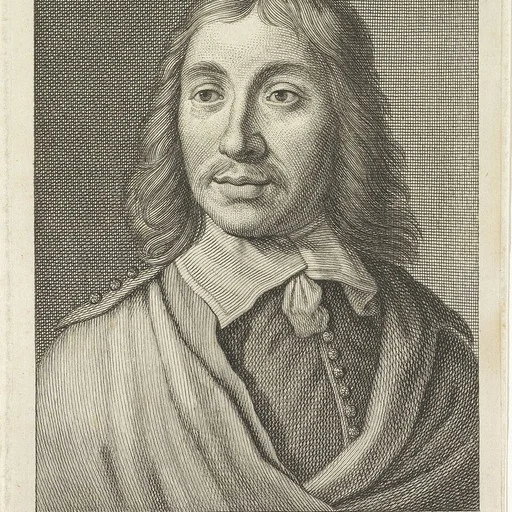
Philips Wouwerman (also Wouwermans) (24 May 1619 (baptized) – 19 May 1668) was a Dutch painter of hunting, landscape and battle scenes. He became prolific during the Dutch Golden Age and joined the Haarlem Guild of St. Luke.

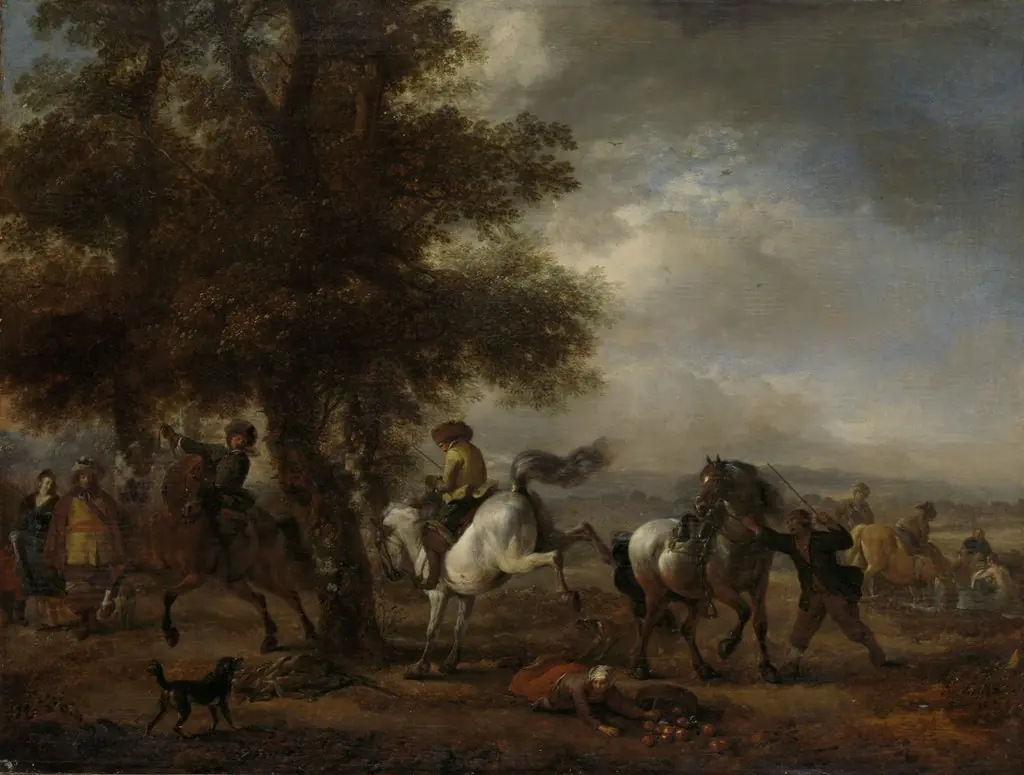
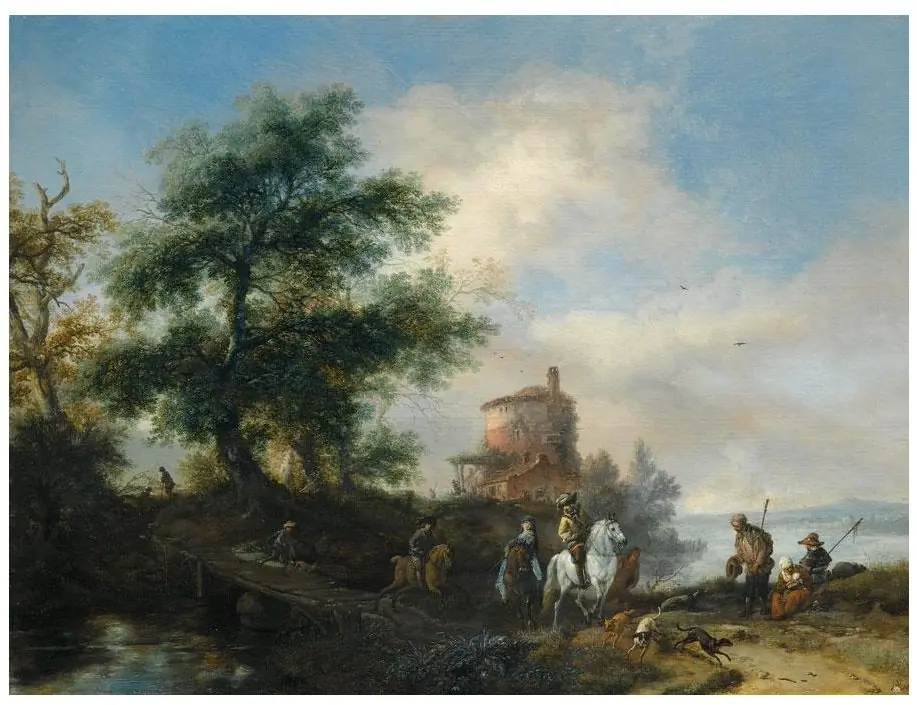
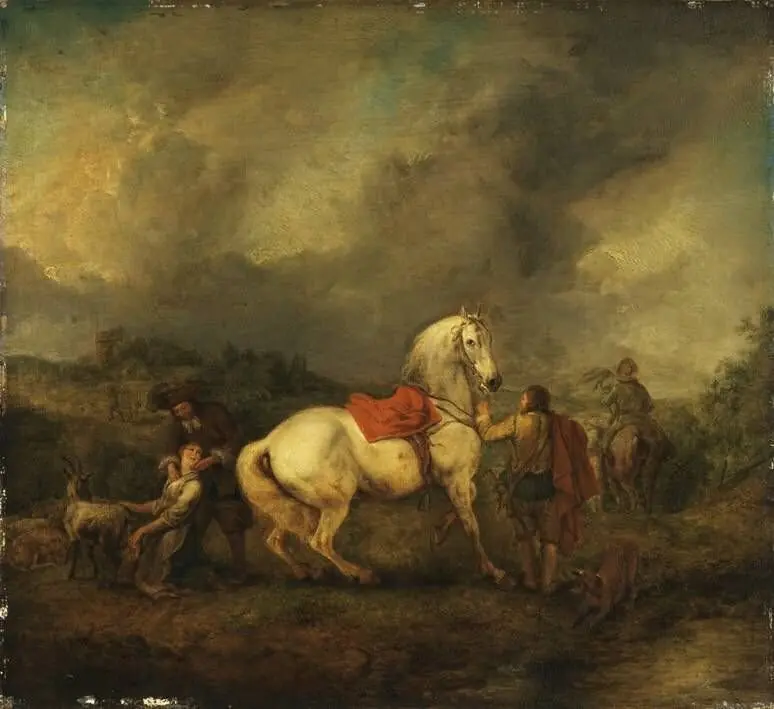
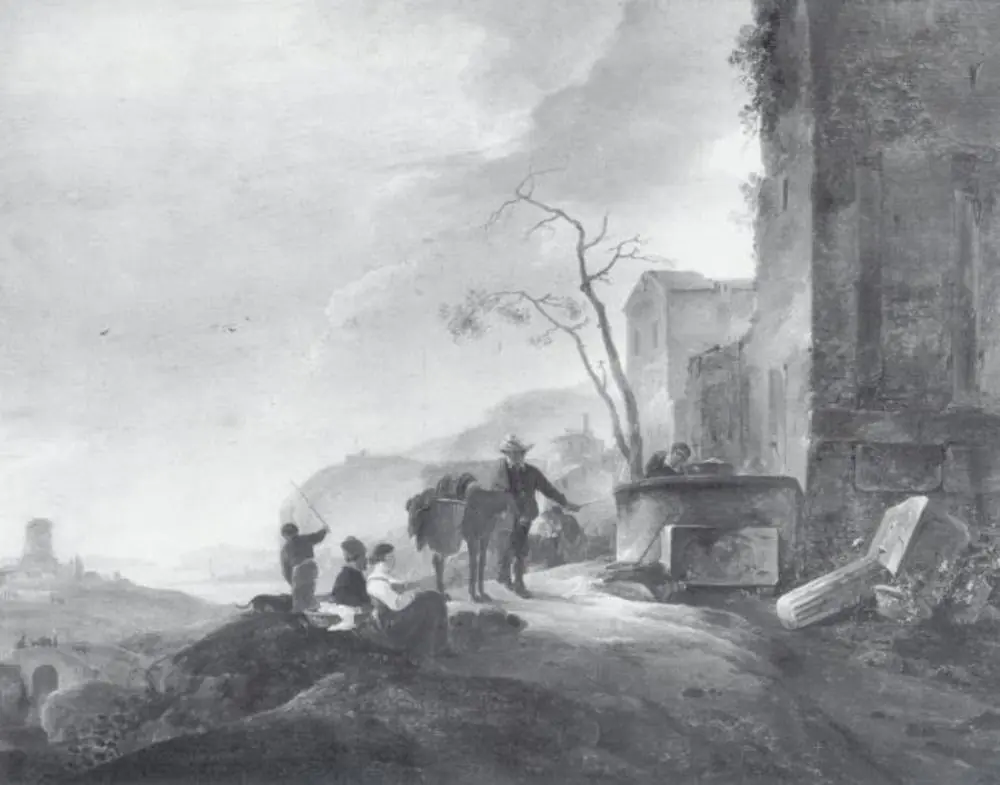
- Italian Landscape with Figures at a Fountain among Antique Ruins
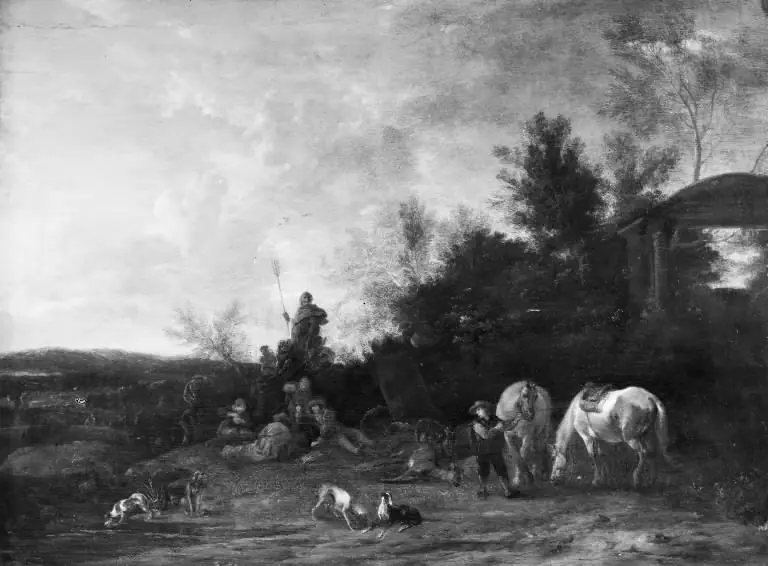 Evening Scenery with Resting Hunters
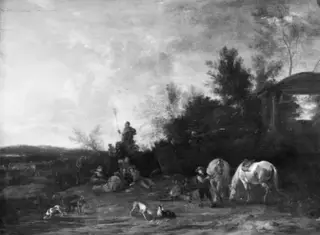 Evening Scenery with Resting Hunters
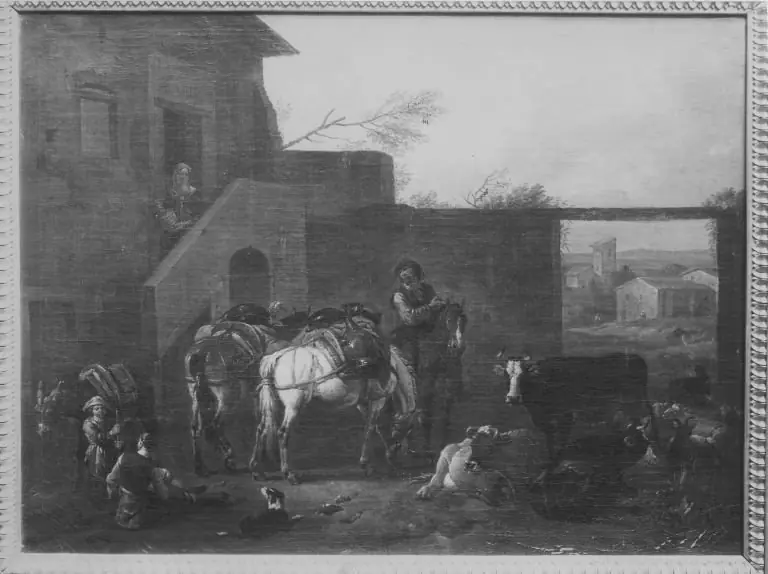 Vor der Schenke
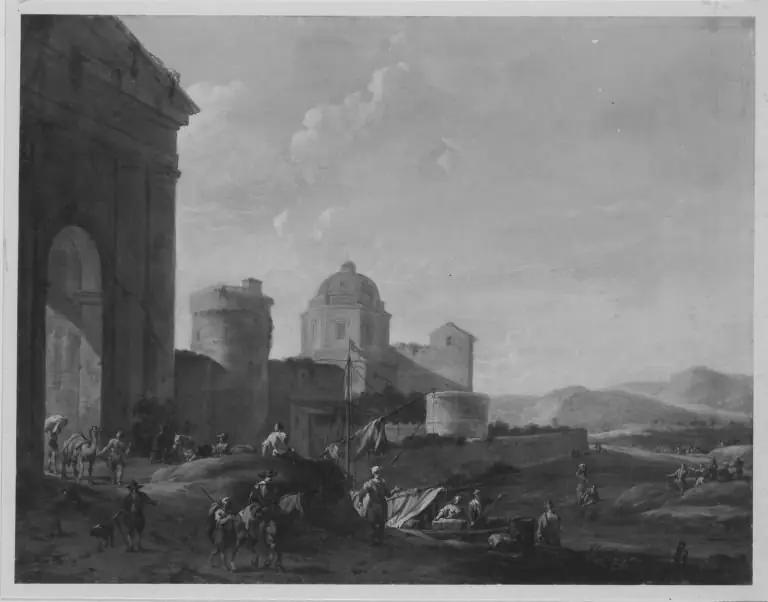 Fantasielandschaft
 A Beach
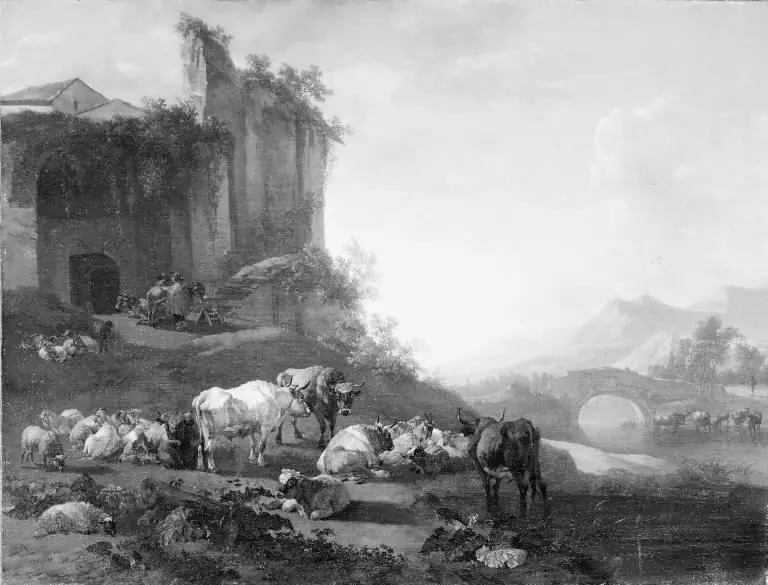 Cattle in a Southern Region
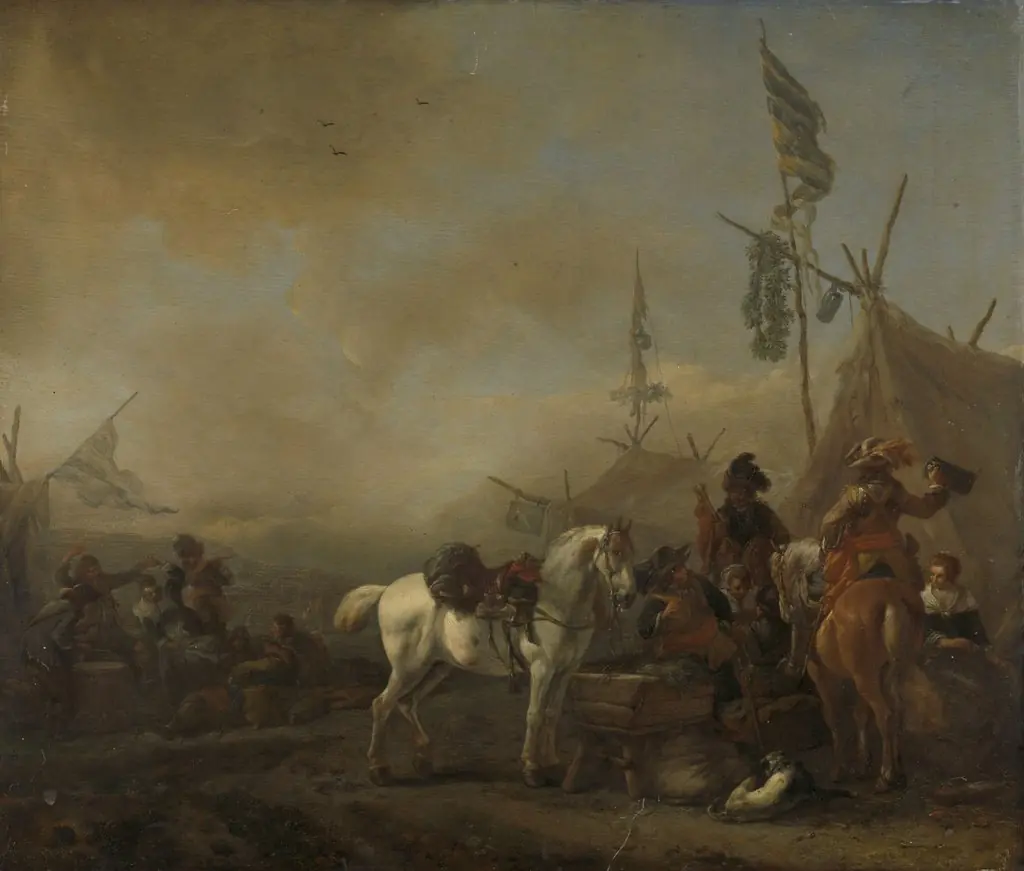
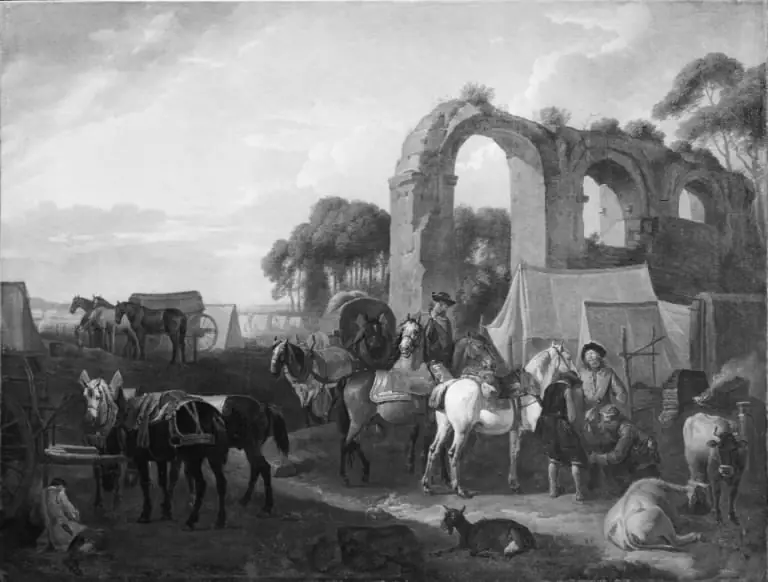 A horse is being shoed in a soldier's camp
 Italian Landscape with Shepherds
 Cattle in a Southern Region
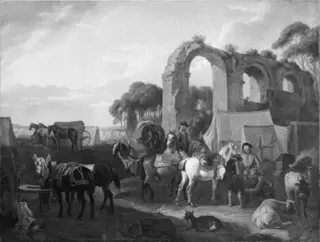 Horse Being Shoed in a Military Encampment
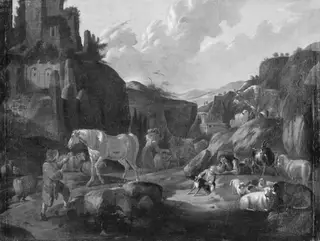 Italian Landscape with Shepherds