Artwork
The Pool of Bethesda
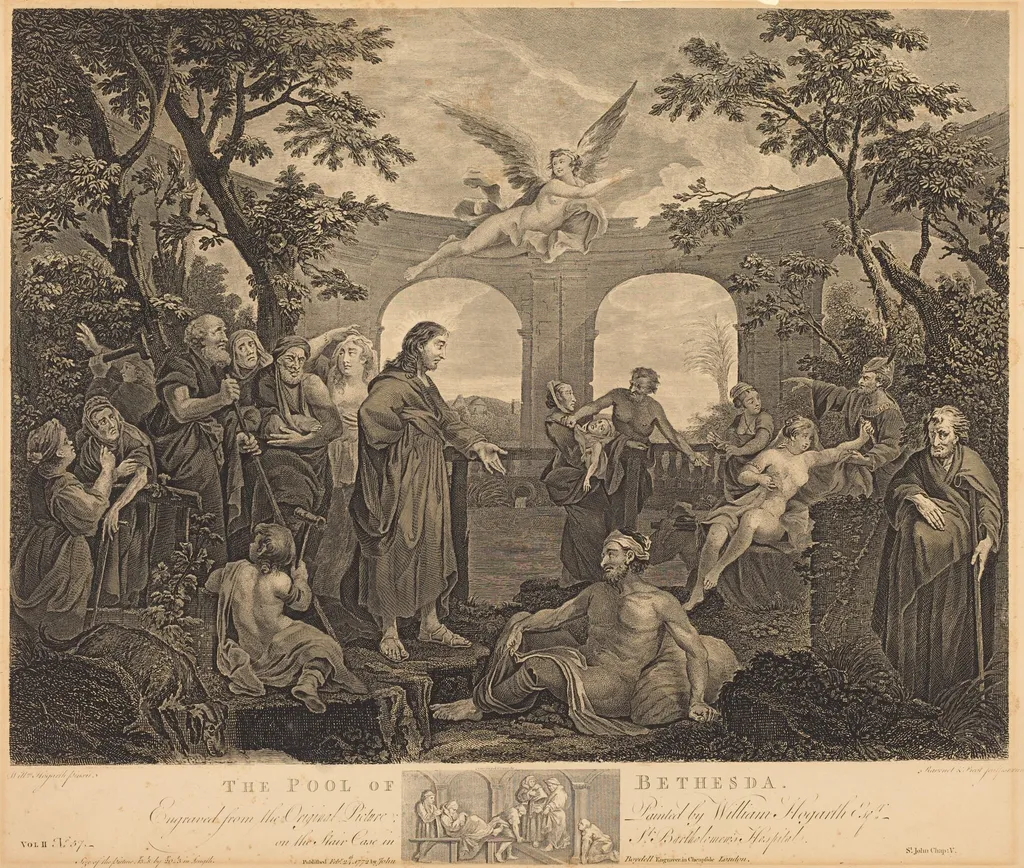
The Pool of Bethesda is an ink print by the Romanticist artist Victor Marie Picot. It dates from 1772 and is held in the collection of the National Gallery of Art.
About this work
Overview
The composition centers on a group of figures gathered around the water, with Christ positioned as the focal point amid a crowd of the afflicted.
Created in 1772 by Victor Marie Picot, The Pool of Bethesda is a print composed of etching and engraving techniques. It illustrates a biblical episode from the Gospel of John, in which Jesus heals a paralyzed man at a pool in Jerusalem. The composition centers on a group of figures gathered around the water, with Christ positioned as the focal point amid a crowd of the afflicted.
The scene is rendered with careful line work and tonal variation to suggest spatial depth and emotional gravity.
Subject & Meaning
The scene depicts the moment Jesus heals a man who had been ill for thirty-eight years, as recounted in John 5:1–9. Surrounding figures include the sick, the lame, and onlookers, their postures conveying desperation and hope. Christ, calm and authoritative, stands apart, his gesture implying divine intervention.
The pool, a traditional site of healing, becomes a threshold between suffering and grace, inviting quiet reflection rather than dramatic spectacle.
Technique & Style
Picot employed fine etched lines and engraved textures to model form and atmosphere. Shading is achieved through cross-hatching and controlled ink density, giving volume to figures and architecture without overt chiaroscuro. The background features simplified trees and arched structures, framing the central action while maintaining a restrained, classical aesthetic. The precision of the lines reflects the engraver’s discipline, aligning with 18th-century academic print traditions.
History & Provenance
The print was produced in 1772 during Picot’s active years as a French engraver and illustrator of religious subjects. It likely circulated among private collectors and religious institutions, serving devotional or educational purposes. No documented early ownership records survive, but its technical quality suggests it was commissioned or published by a reputable print house. The work remains within the tradition of biblical illustration popular in pre-Revolutionary France.
Context
In late 18th-century France, religious imagery remained prevalent despite growing secularism. Artists often turned to biblical narratives to explore human vulnerability and moral themes. Picot’s work aligns with the academic preference for clarity and moral instruction over emotional excess.
While Romanticism would later emphasize individual feeling, this print reflects the lingering influence of Enlightenment ideals, order, reason, and quiet reverence in the face of divine action.
Legacy
Picot’s etching did not achieve widespread fame but contributes to a broader corpus of religious prints that sustained devotional culture in pre-Revolutionary Europe. Its restrained style and narrative focus exemplify how biblical stories were visually transmitted to literate audiences outside church settings. Though overshadowed by larger artistic movements, it endures as a modest yet precise example of academic printmaking at the close of the Ancien Régime.
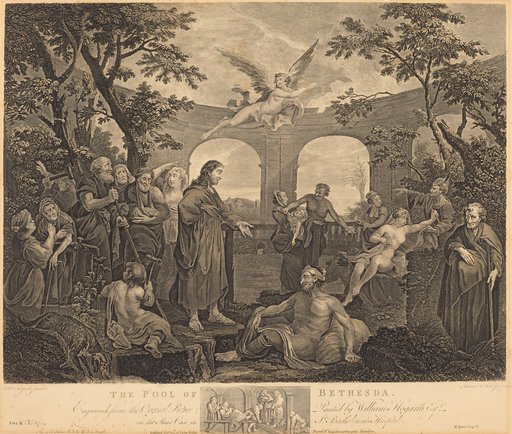
Own this work as a print
Artist & collection

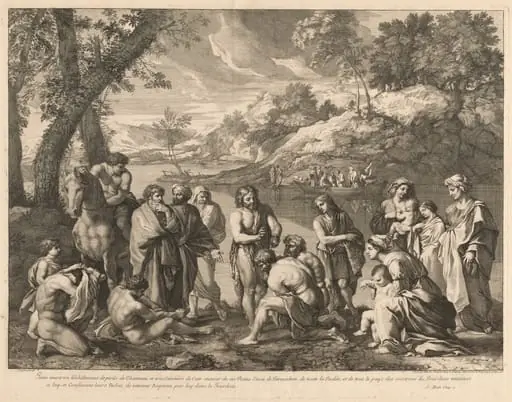
- Saint John the Baptist in the River Jordan
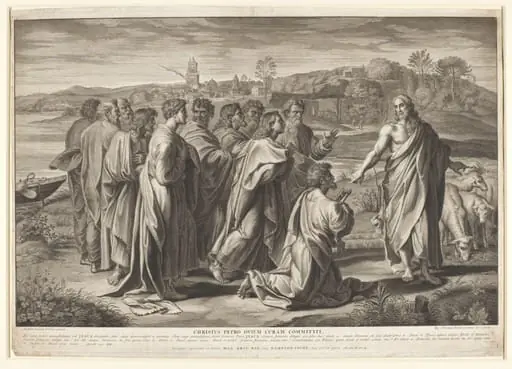 Christ's Charge to Peter
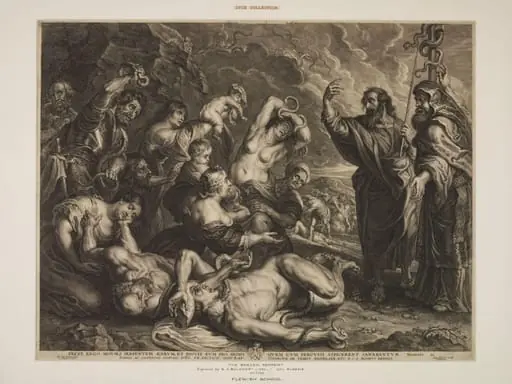 The Brazen Serpent of Moses
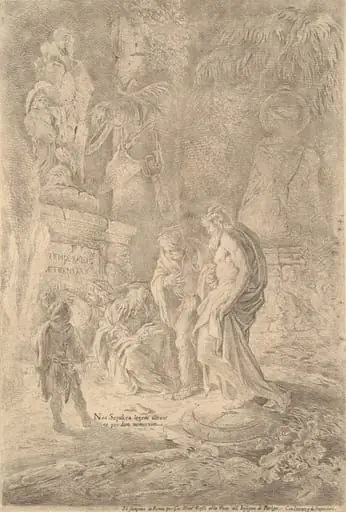 Temporalis Aeternitas
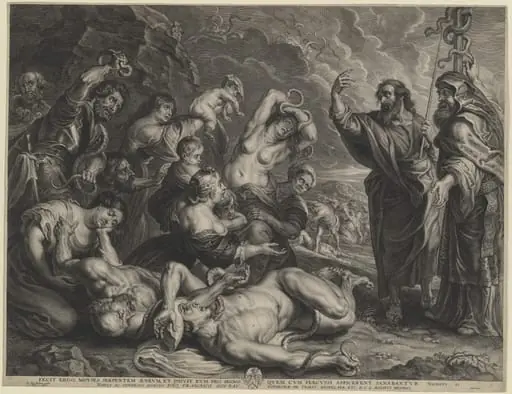 Moses and the Brazen Serpent
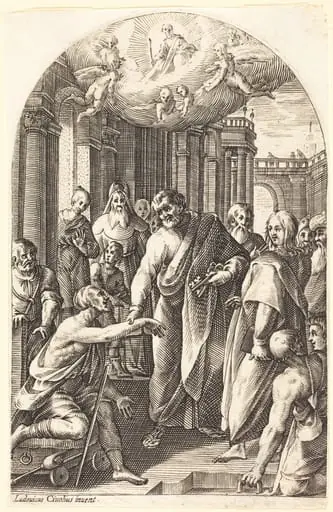 Peter and John Healing the Lame
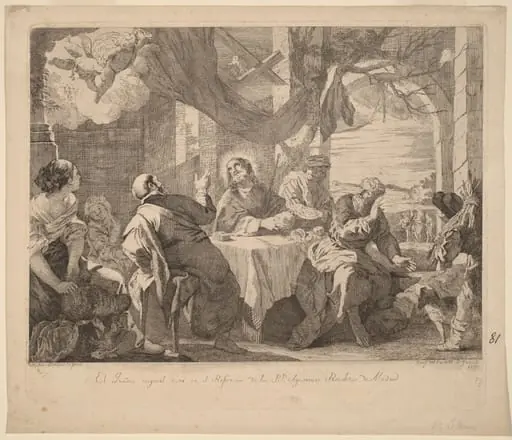 The Supper at Emmaus
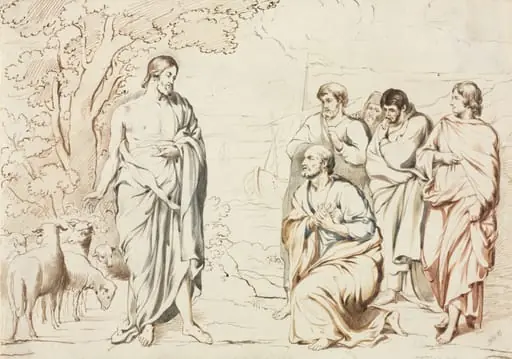 Christ and His Disciples
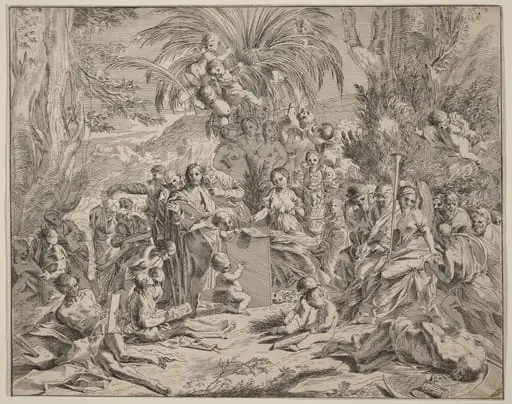 Allegory of Painting
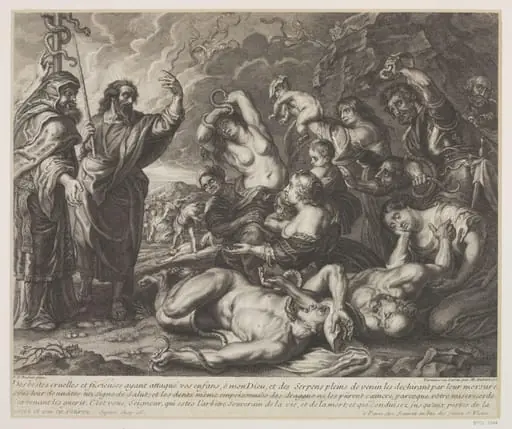 The Children of Israel and the Plague of Fiery Serpents
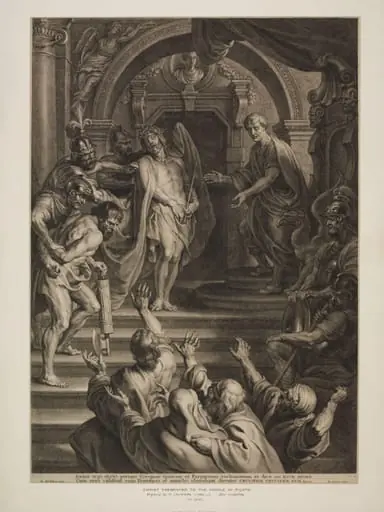 Jesus Christ before Pontias Pilate
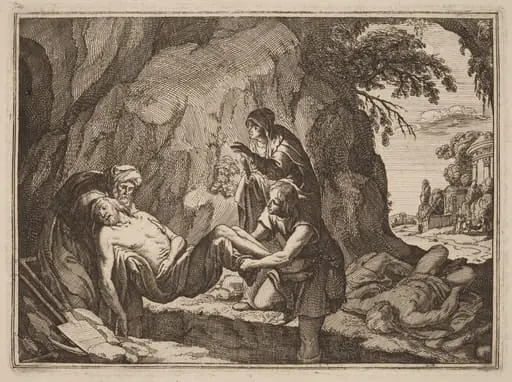 Burying the Dead