Artwork
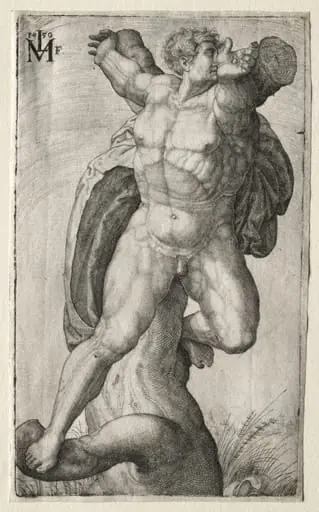
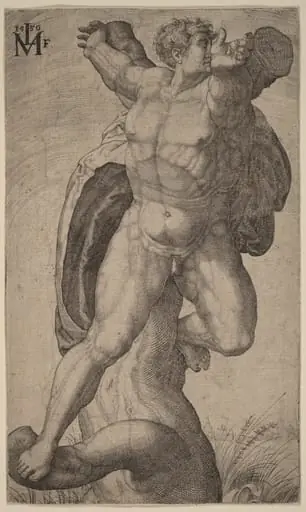
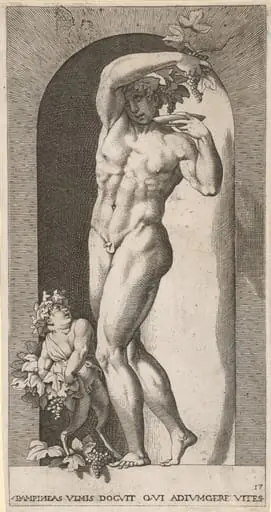
Ignudo (after Michelangelo)
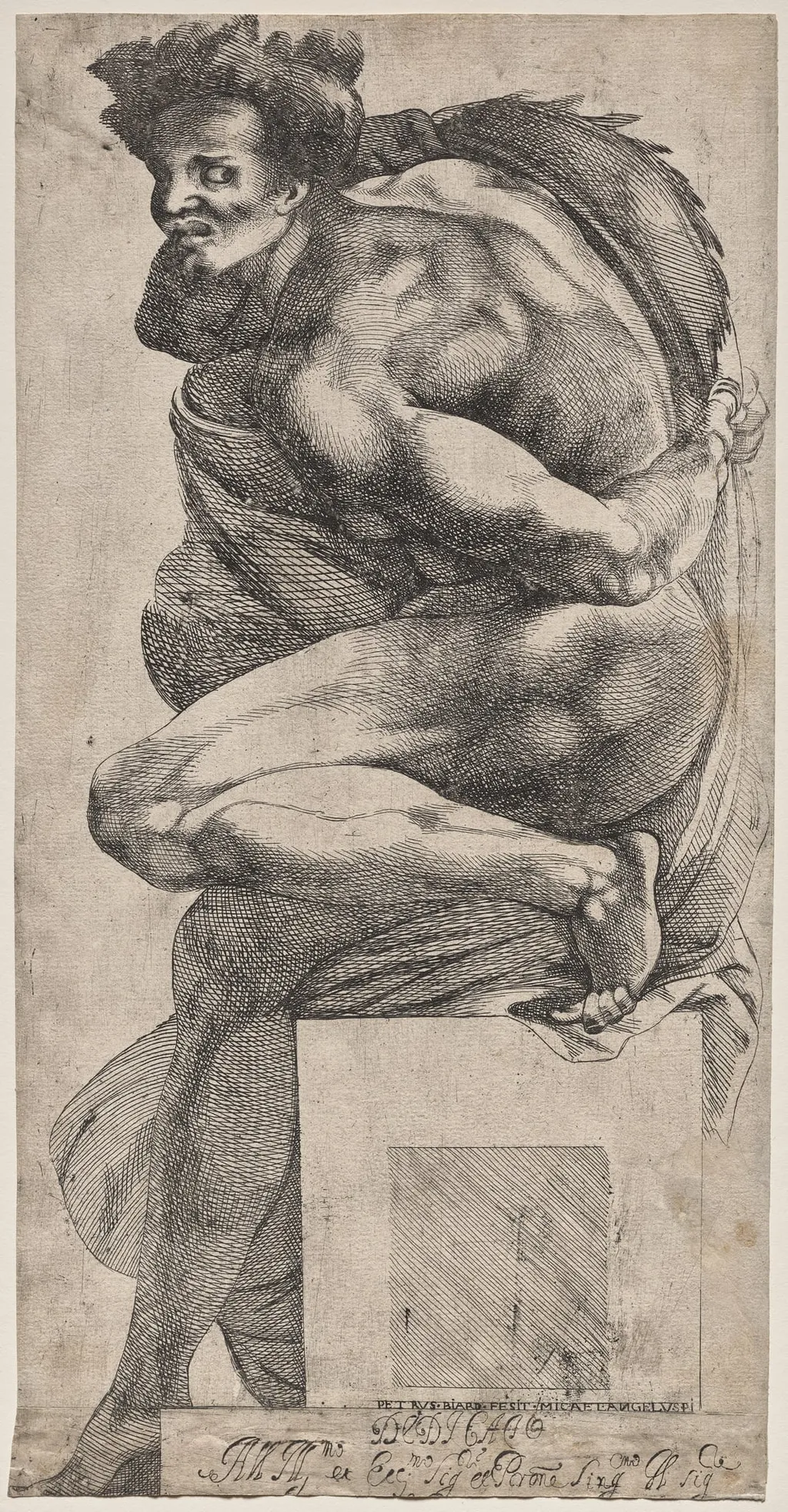
Ignudo (after Michelangelo) is a print by the Renaissance artist Pierre Biard the Younger. It dates from 1628 and is held in the collection of the Cleveland Museum of Art.
- Accession no.
- 2019.228
- Credit line
- The Charlotte Ekker and Charlotte Van der Veer Memorial Fund
About this work
Overview
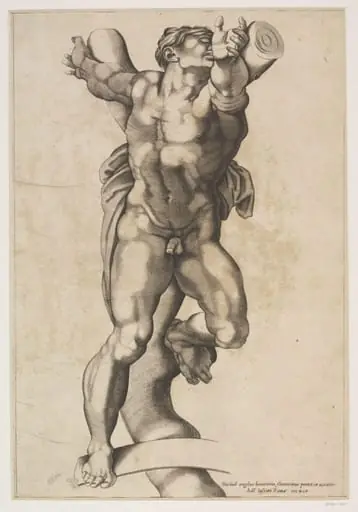
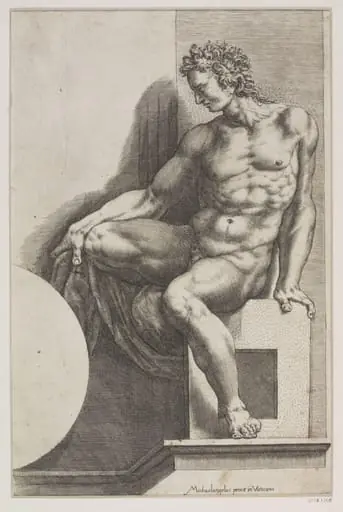
Ignudo (after Michelangelo) is a 1628 print by French sculptor and architect Pierre Biard the Younger, reinterpreting Michelangelo’s ignudi from the Sistine Chapel ceiling.
Subject & Meaning
The work depicts a nude male figure in a twisted pose, exploring the human form with subtle play of light and shadow, adding depth and volume.
Technique & Style
The piece showcases a careful study of light and shadow, likely employing chiaroscuro to create a sense of volume, reflecting Renaissance influences in 17th-century French art.
History & Provenance
Created in 1628, the print is part of The Cleveland Museum of Art’s collection, highlighting the enduring impact of Michelangelo’s work on later artists.
Artist & collection
Artist
Pierre II Biard also called Pierre Biard the younger (1592 – May 28, 1661),was a French sculptor and architect of the seventeenth century, part of a lineage of prominent sculptors.

![The Farnese Hercules, seen from behind [plate 4], by François Perrier](https://artifactworldgallery.com/img/francois-perrier--the-farnese-hercules-seen-from-behind-plate-4--075576b9459929be-w320.webp)
![The Farnese Hercules, three-quarter view turned to left [plate 3], by François Perrier](https://artifactworldgallery.com/img/francois-perrier--the-farnese-hercules-three-quarter-view-turned-to-left-plate--b0564bebaad016fa-w320.webp)
![The Borghese Gladiator, back view [plate 29], by François Perrier](https://artifactworldgallery.com/img/francois-perrier--the-borghese-gladiator-back-view-plate-29--e76fdd1927ce2d52-w320.webp)