Artwork
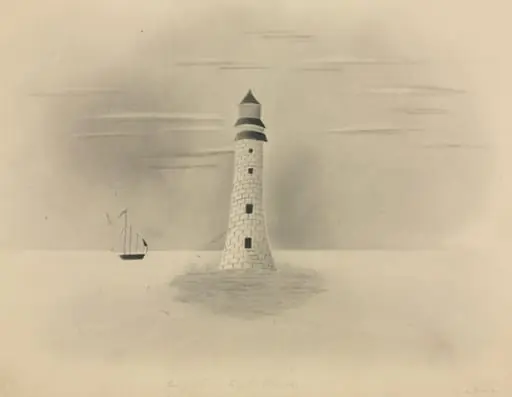
Lighthouse in Cleveland, Ohio, on Lake Erie
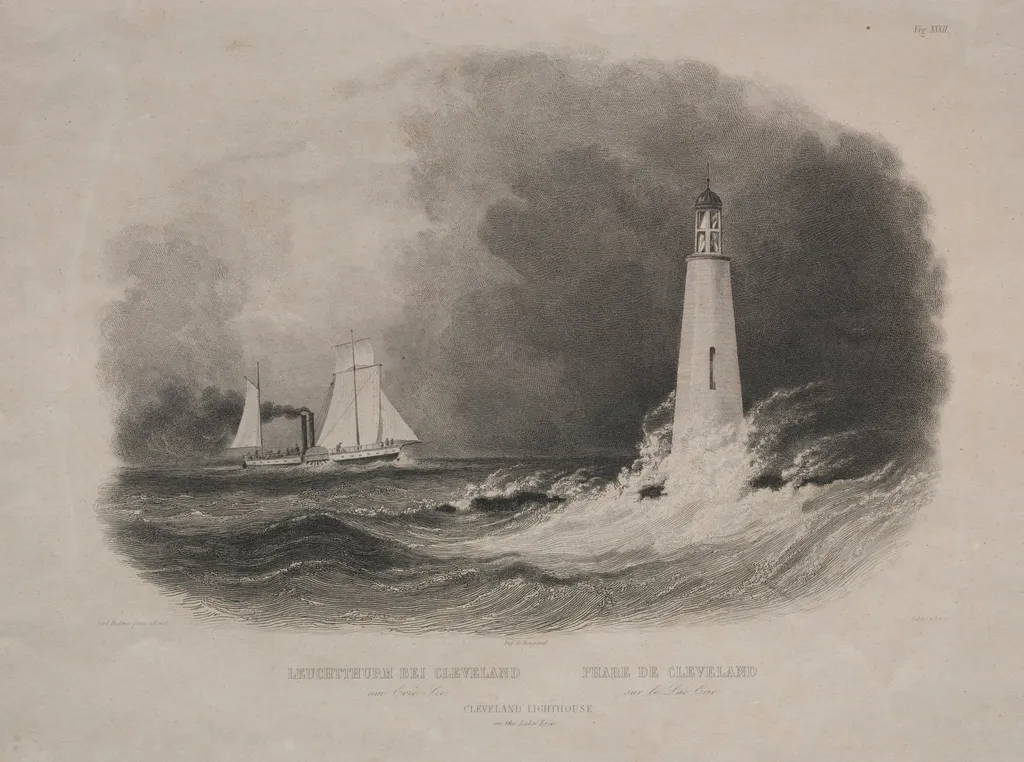
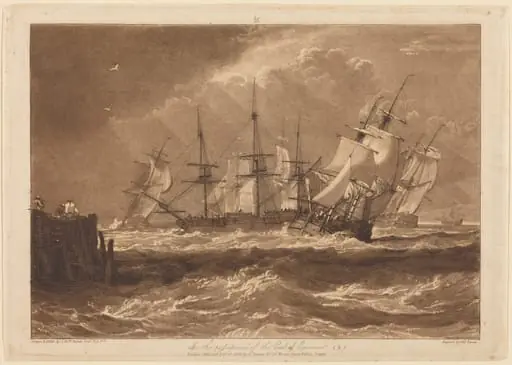
Lighthouse in Cleveland, Ohio, on Lake Erie is a print by the Romanticist artist Pierre Eugène I Aubert. It dates from 1840 and is held in the collection of the Cleveland Museum of Art. This black-and-white print, dated around 1840, depicts the Cleveland Lighthouse situated on the rocky shore of Lake Erie.
- Accession no.
- 1942.257
- Credit line
- Gift of Mrs. S. Prentiss Baldwin
About this work
Overview
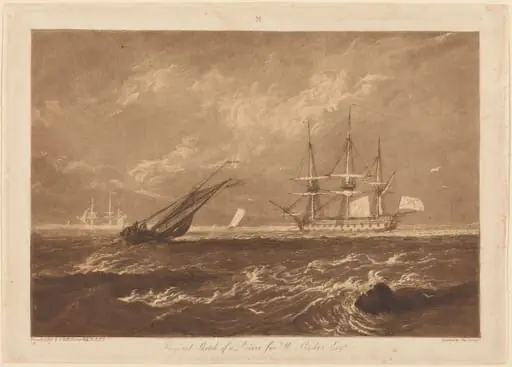
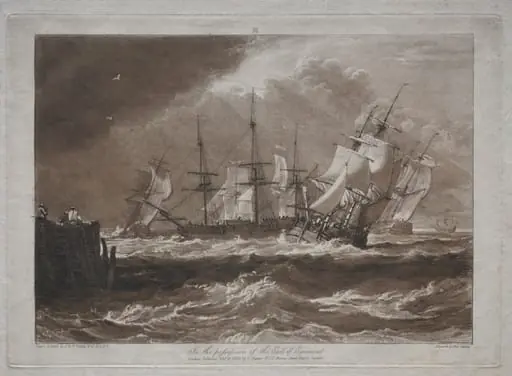
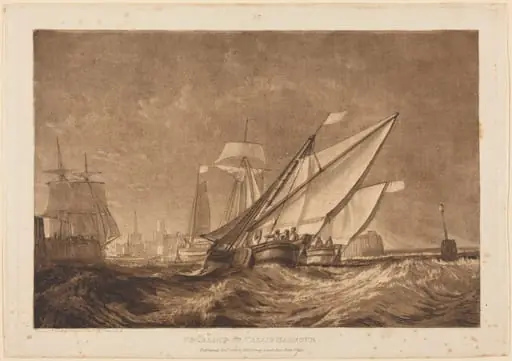
This black-and-white print, dated around 1840, depicts the Cleveland Lighthouse situated on the rocky shore of Lake Erie. Created by Pierre Eugène I. Aubert, the work captures a moment of maritime tension under a brooding sky. The Cleveland Museum of Art holds the print in its collection, preserving it as a record of 19th-century American coastal imagery.
Subject & Meaning
The scene centers on the lighthouse as a beacon of guidance amid a turbulent waterscape. A two-masted vessel, trailing smoke, advances toward the structure, suggesting navigation through peril. The storm-lit sky and crashing waves emphasize the vulnerability of seafarers and the critical role of coastal infrastructure in an era reliant on waterborne transport.
Technique & Style
Aubert employed fine linear shading to render the texture of waves, clouds, and rock. The contrast between the dark, turbulent sky and the illuminated lighthouse creates visual focus. The print’s precision in depicting the ship’s rigging and the lighthouse’s architecture reflects a documentary intent, grounded in observational detail rather than romantic embellishment.
History & Provenance
The print was produced in the early 1840s, a period when Cleveland was expanding as a Great Lakes port. Its survival in the Cleveland Museum of Art’s collection suggests local interest in documenting regional landmarks. No earlier provenance is documented, but its subject matter implies it may have been circulated as a topographical record or souvenir.
Context
During the 1830s and 1840s, Lake Erie’s commercial traffic grew rapidly, prompting the construction of navigational aids like the Cleveland Lighthouse. Prints such as this served both practical and commemorative purposes, helping communities visualize and affirm their connection to maritime commerce and safety.
Legacy
The print remains a modest but valuable artifact of early American print culture, illustrating how local landmarks were visually recorded before widespread photography. It contributes to the historical understanding of Great Lakes infrastructure and the role of print media in shaping regional identity during the antebellum period.
Own this work as a print
Artist & collection