Artwork
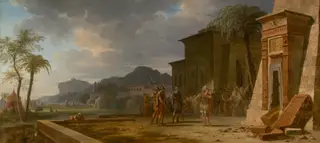
Alexander at the Tomb of Cyrus the Great
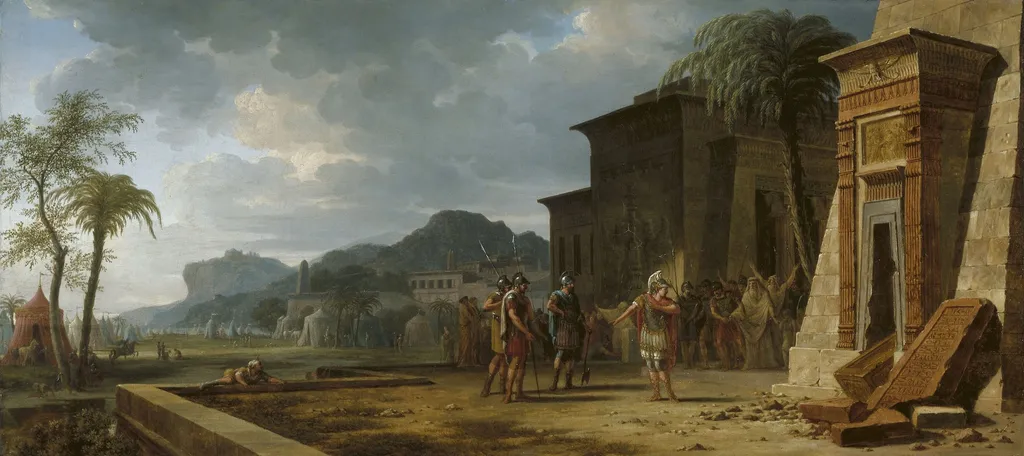
Alexander at the Tomb of Cyrus the Great is an oil painting by the French Romanticist artist Pierre Henri de Valenciennes. It dates from 1798 and is held in the collection of the Art Institute of Chicago.
About this work
Overview
Alexander at the Tomb of Cyrus the Great is an oil painting created by Pierre-Henri de Valenciennes in 1796 or 1798. It is part of the Art Institute of Chicago's collection.
Subject & Meaning
The painting depicts Alexander the Great at the tomb of Cyrus the Great, showing soldiers in ancient armor surrounding a damaged tomb with a displaced stone lid. A seated figure is nearby, set against a backdrop of palm trees, ruins, and a dramatic sky.
Technique & Style
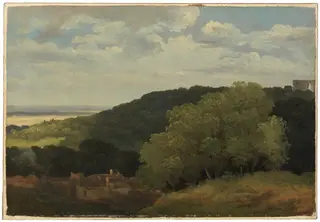
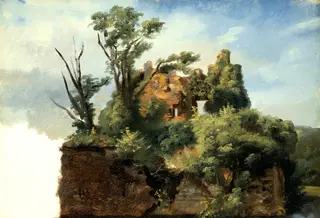
Valenciennes, associated with neoclassicism and an early proponent of plein air painting, executed the work in the French Romantic style.
Context
The tomb depicted is likely inspired by the Tomb of Cyrus the Great, an ancient structure that would have been familiar to Valenciennes through historical accounts or illustrations.
Artist & collection

Artist
Pierre-Henri de Valenciennes (6 December 1750 – 16 February 1819) was a French painter. A neoclassicist artist, he was influential in elevating the status of En plein air (open-air painting).