Artwork
Alexander at the Tomb of Cyrus the Great
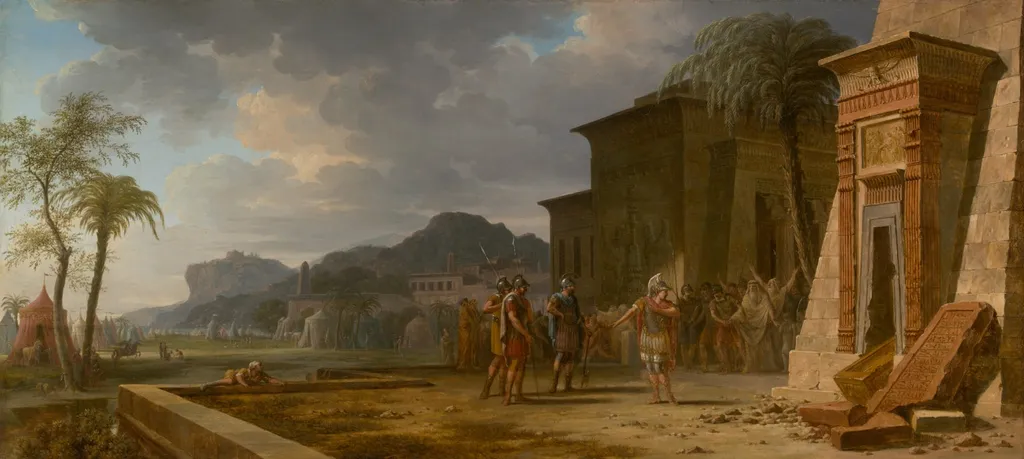
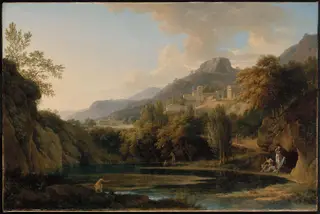
Alexander at the Tomb of Cyrus the Great is an oil painting by the French Romanticist artist Pierre Henri de Valenciennes. It dates from 1796 and is held in the collection of the Art Institute of Chicago.
- Accession no.
- 100060
- Credit line
- Purchased with funds provided by Mrs. Harold T. Martin
About this work
Overview
The work forms a pair with another painting on a related theme, both reflecting late 18th-century interests in antiquity and moral reflection through landscape.
This oil on canvas painting by Pierre-Henri de Valenciennes depicts Alexander the Great standing before the tomb of Cyrus the Great, founder of the Persian Empire. The scene is set in a quiet, atmospheric landscape, where the ruin of the tomb suggests neglect and violation. The work forms a pair with another painting on a related theme, both reflecting late 18th-century interests in antiquity and moral reflection through landscape.
Subject & Meaning
Alexander, conqueror of Persia, encounters the desecrated resting place of the ruler he once admired. The broken tomb symbolizes the fragility of power and the passage of time. Rather than celebrating conquest, the scene invites contemplation on the impermanence of empires and the moral responsibility of successors. The contrast between Alexander’s presence and the tomb’s decay underscores a quiet elegy for fallen greatness.
Technique & Style
Valenciennes employs a subdued palette and careful modulation of light to evoke mood rather than drama. Chiaroscuro is used subtly to define the tomb’s form against the surrounding landscape, guiding the viewer’s eye to the central figures. The brushwork is precise yet restrained, favoring atmospheric harmony over theatricality, aligning with the classical ideals of landscape painting popular in late 18th-century France.
History & Provenance
Painted in the 1780s, the work emerged during a period when French artists increasingly turned to historical and moral subjects through landscape. Valenciennes, a pioneer of plein air painting, likely developed the composition from sketches made during his time in Italy. The painting remained in French collections and was later acquired by a public institution, where it continues to be studied as an example of Enlightenment-era historical reflection.
Context
The painting reflects broader intellectual currents of the Enlightenment, where ancient history was mined for ethical lessons. The cult of sensibility encouraged emotional responses to ruins and antiquities, framing them as reminders of human mortality. Valenciennes’ choice to depict Alexander’s quiet reaction, rather than battle or triumph, aligns with a growing preference for introspective, morally charged narratives over heroic spectacle.
Legacy
Valenciennes’ treatment of historical landscape influenced later French painters who sought to merge narrative with naturalism. While not widely exhibited today, the work remains a significant example of how 18th-century artists used classical themes to explore philosophical questions. Its pairing with the Mount Athos composition highlights a deliberate program of moral contemplation through paired imagery.
Artist & collection

Artist
Pierre-Henri de Valenciennes (6 December 1750 – 16 February 1819) was a French painter. A neoclassicist artist, he was influential in elevating the status of En plein air (open-air painting).