Artwork
The Eruption of Vesuvius
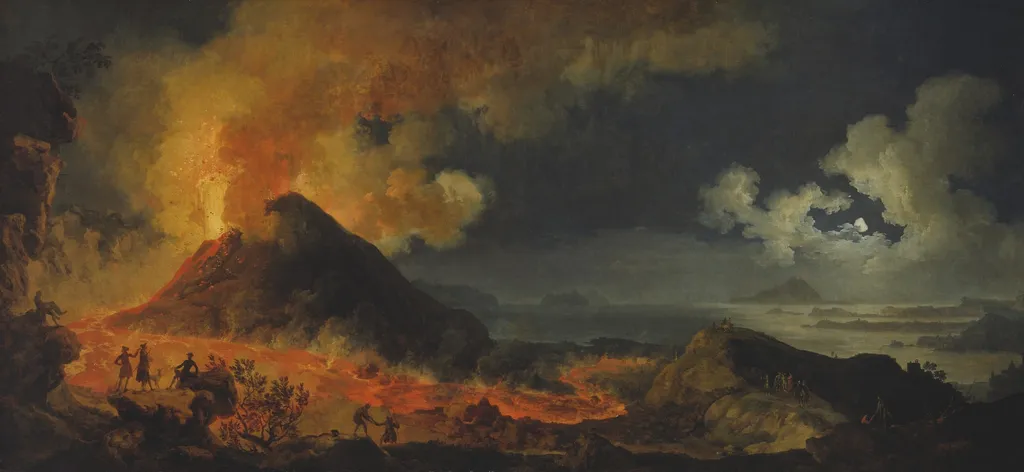
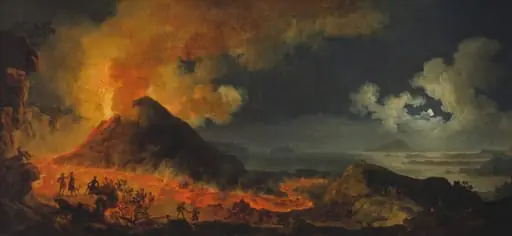
The Eruption of Vesuvius is an oil painting by the Rococo painting artist Pierre-Jacques Volaire. It dates from 1771 and is held in the collection of the Art Institute of Chicago.
About this work
Subject & Meaning
Small human figures appear as silhouettes against the luminous lava, observing the spectacle from the foreground.
Pierre-Jacques Volaire's 1771 oil painting depicts the specific volcanic eruption of Mount Vesuvius that occurred on May 14, capturing the event as a dramatic nocturne. The composition is dominated on the right by the erupting volcano and a flowing lava stream, while the left side reveals the Bay of Naples illuminated by a gibbous moon. Small human figures appear as silhouettes against the luminous lava, observing the spectacle from the foreground.
The work functions as a landscape that documents a natural disaster witnessed on-site, contrasting the destructive power of the eruption with the serene, moonlit bay.
Technique & Style
Pierre-Jacques Volaire’s The Eruption of Vesuvius (1771) is executed in oil paint on a horizontally oriented canvas, measuring 116.8 cm in height and 242.9 cm in width. The medium’s fluidity allows for dramatic contrasts between luminous volcanic emissions and the cool, moonlit Bay of Naples, enhancing the nocturne’s atmospheric depth.
The handling is precise yet dynamic, with thin glazes building translucent veils of smoke and fire, while thicker impasto defines incandescent lava flows. Silhouetted figures and boats are rendered in swift, economical strokes, creating a sense of immediacy. Stylistically, the work balances empirical observation, Volaire witnessed the 14 May eruption firsthand, with a Romantic emphasis on sublime natural forces, using stark chiaroscuro to heighten the scene’s theatricality.
History & Provenance
Pierre-Jacques Volaire painted The Eruption of Vesuvius in 1771, depicting a nocturnal volcanic eruption observed on May 14, 1771, from locations near Mount Vesuvius overlooking the Bay of Naples. The work, an oil on canvas measuring 116.8 cm by 242.9 cm, entered the collection of the Art Institute of Chicago in 1978 after its acquisition, where it remains on permanent display.
The painting was created on-site during the eruption, capturing the lava flow illuminated by moonlight, with figures of onlookers rendered as silhouettes against the glowing backdrop. Its composition emphasizes the dominance of the volcanic activity within the scene, reflecting the artist’s fascination with natural phenomena.
The Art Institute of Chicago acquired the piece in 1978, establishing it as part of its permanent collection of European paintings, specifically within the landscape and nocturne subgenres.
The work’s provenance is documented through its acquisition by the museum and prior context of creation in situ, linking it directly to Volaire’s documented activity near Vesuvius during the specified eruption.
The painting is held in the collection of the Art Institute of Chicago in Chicago, Illinois, United States. According to the Wikidata record, the work is part of the museum's collection and located there. The French Wikipedia article on the painting states that the oil on canvas was acquired in 1978 and has since been conserved at the Art Institute of Chicago.
No specific inventory or accession number is provided in the available sources, and no exhibition history beyond its acquisition and current museum placement is documented.
Legacy
The work is recognized for shaping the visual vocabulary of volcanic subjects in European art, particularly through its dramatic nocturnal depiction of Vesuvius that influenced later landscape painters and contributed to the Romantic fascination with natural catastrophe. Its presence in a major American collection helped introduce this French 18th‑century vista to a broader audience, reinforcing its reputation as a seminal example of the genre.
Overview
The Eruption of Vesuvius is an oil painting created by Pierre-Jacques Volaire in 1771, depicting a nighttime volcanic eruption. It is currently held at the Art Institute of Chicago.
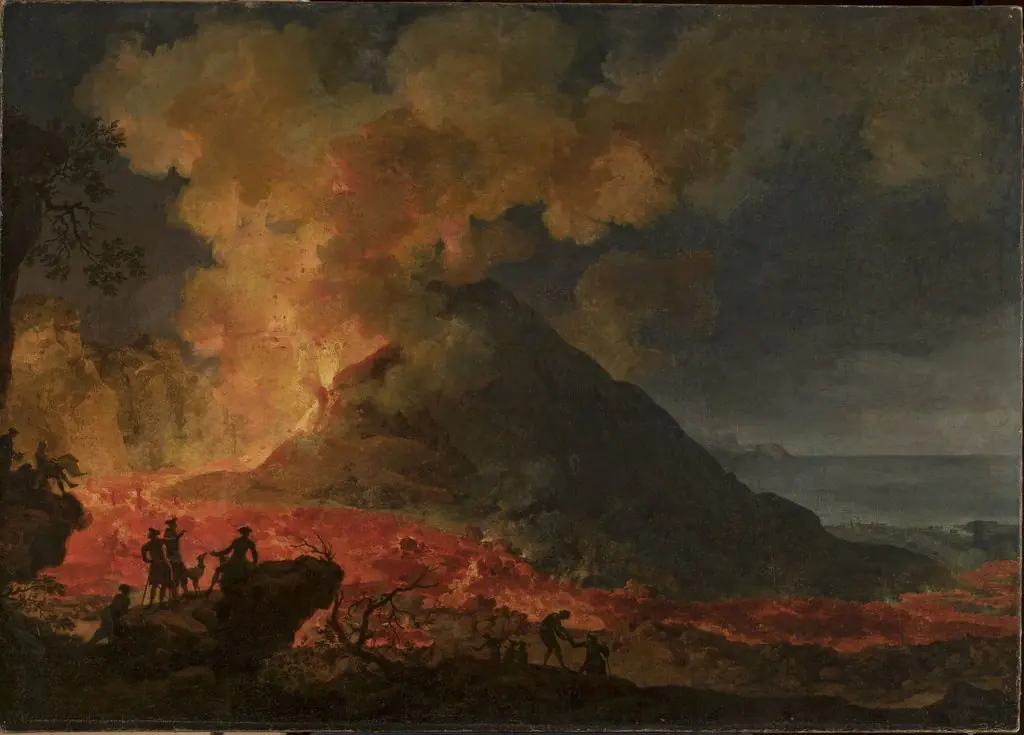
Artist & collection


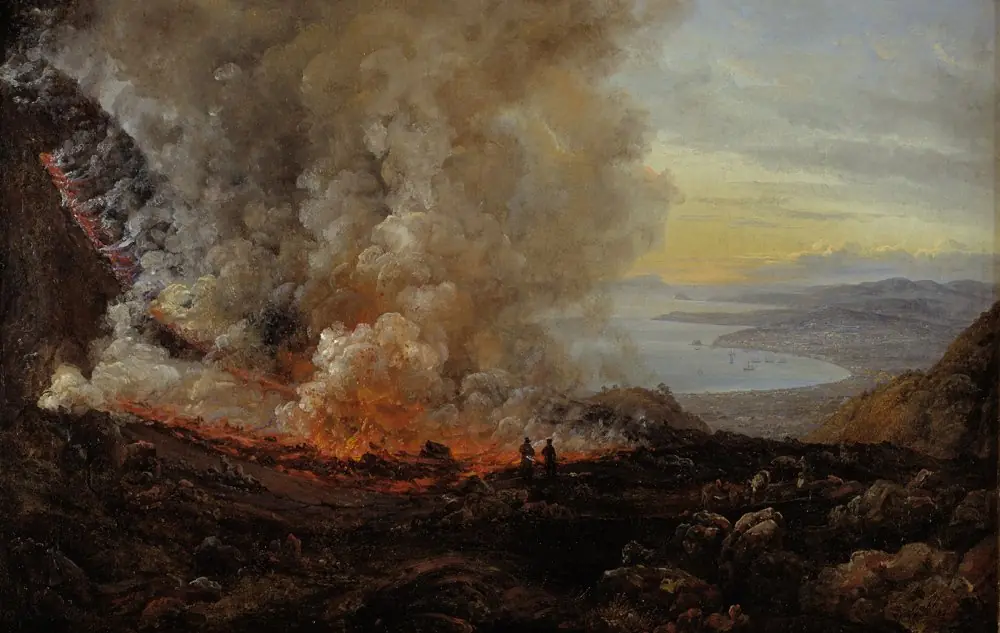 The Eruption of Vesuvius
 The Eruption of Vesuvius
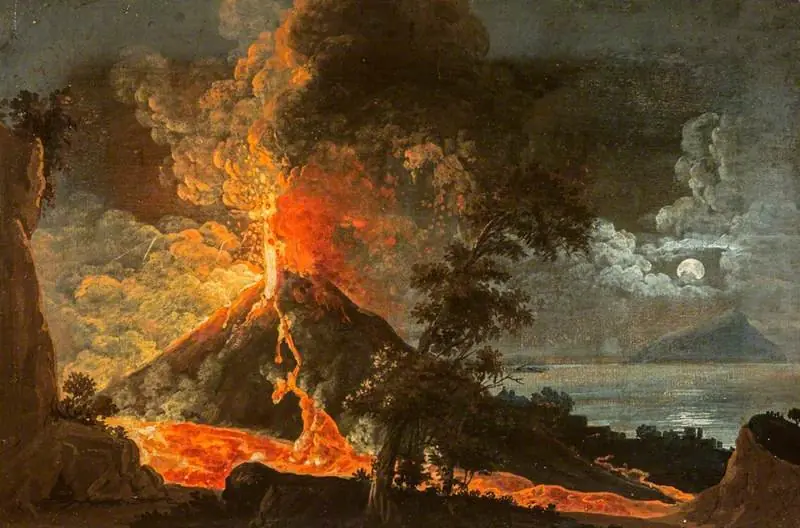 Eruption of Vesuvius
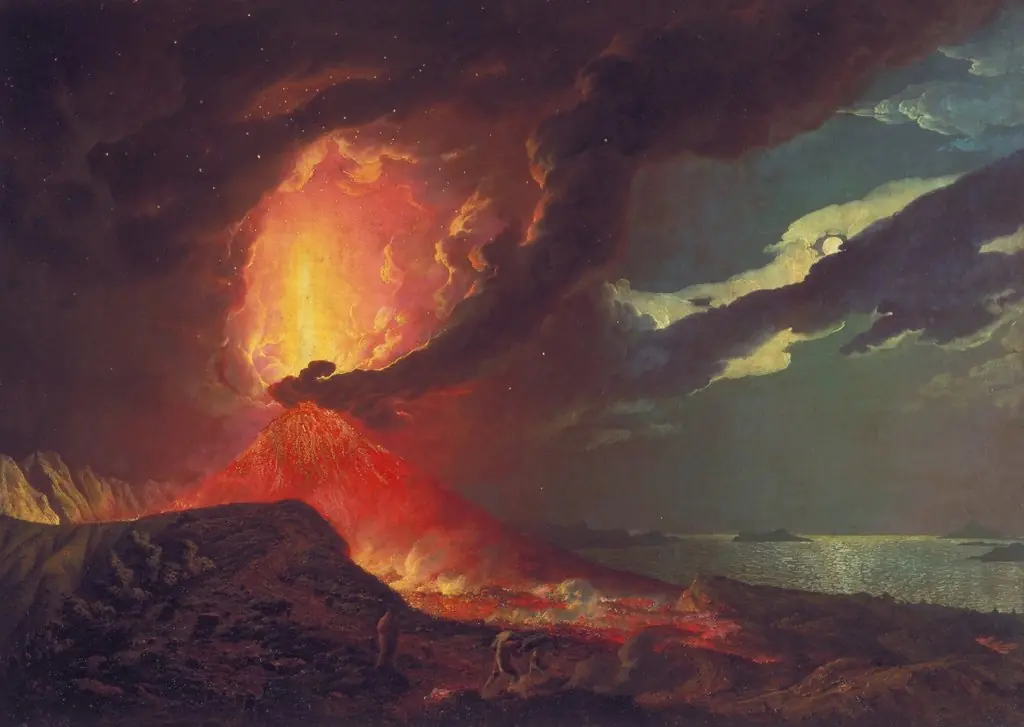 Vesuvius in Eruption, with a View over the Islands in the Bay of Naples
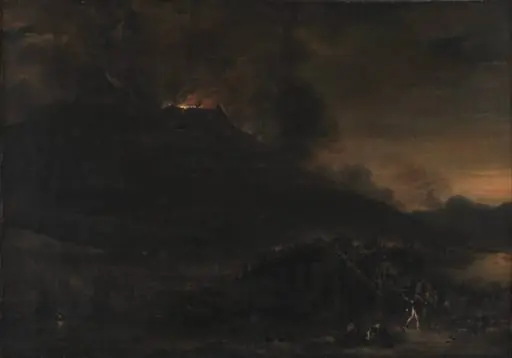 Vesuvius Erupting at Nightfall
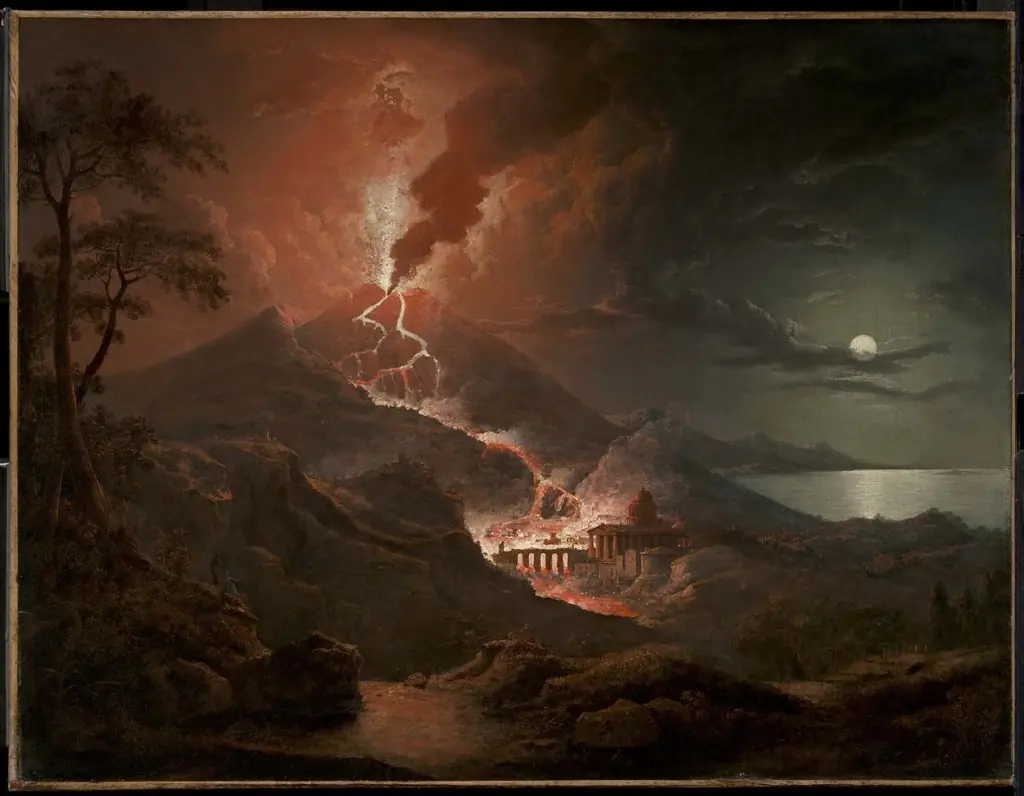 Eruption of Vesuvius with Destruction of a Roman City
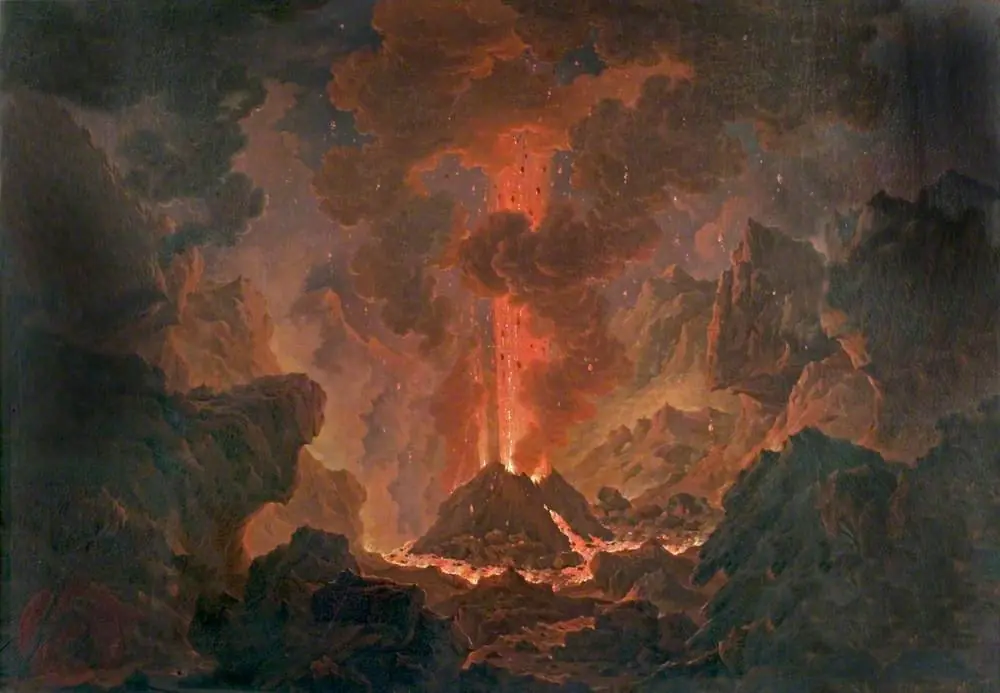 Vesuvius in Eruption, Italy
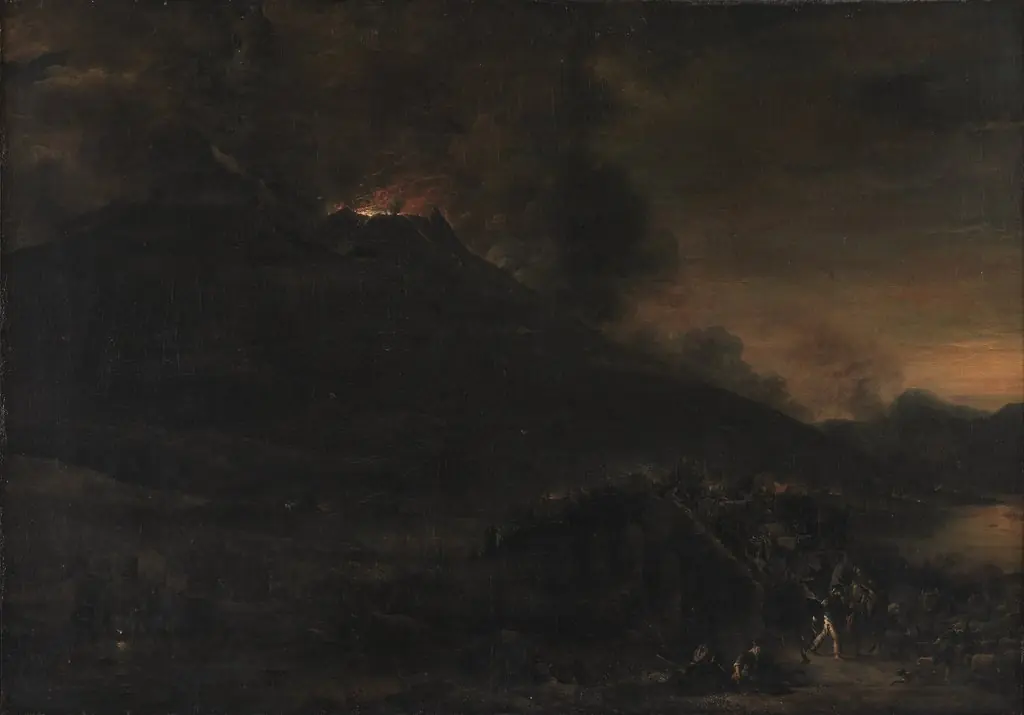 Vesuvius Erupting at Nightfall
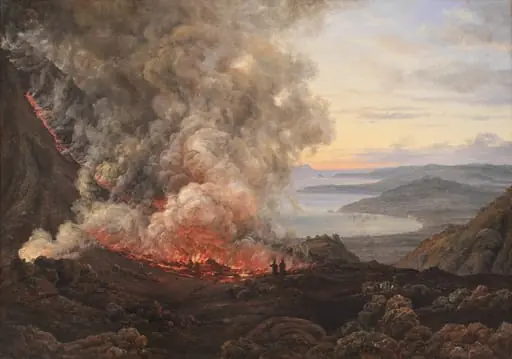 Eruption of the Volcano Vesuvius
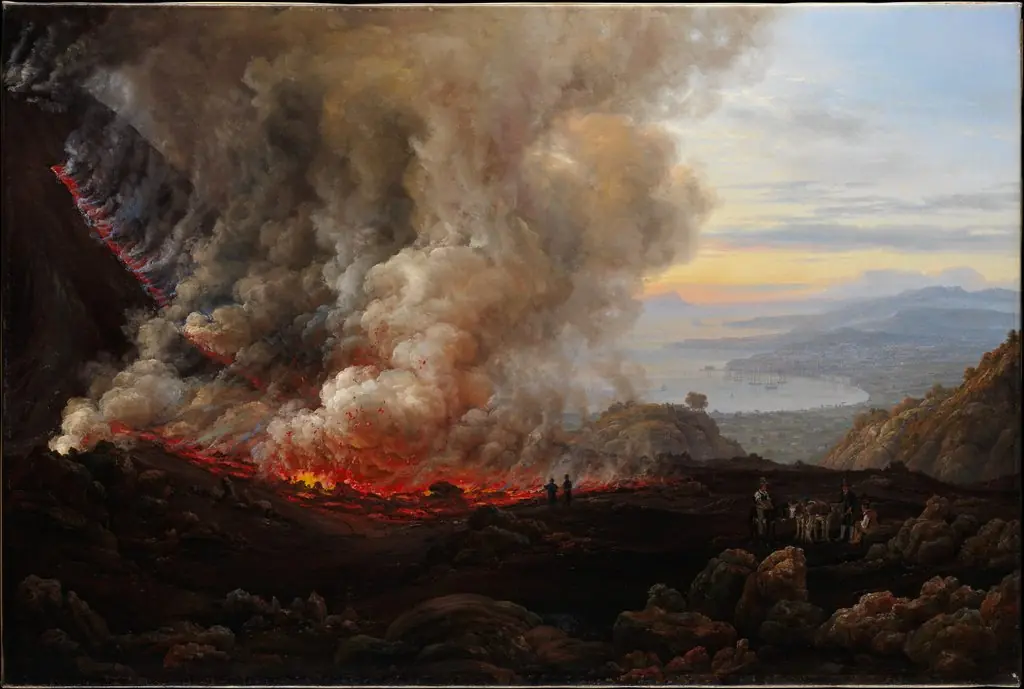 An Eruption of Vesuvius