Artwork
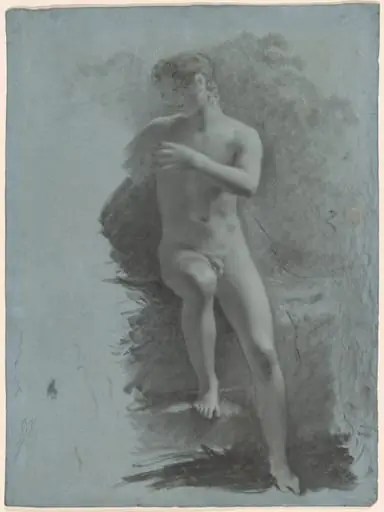
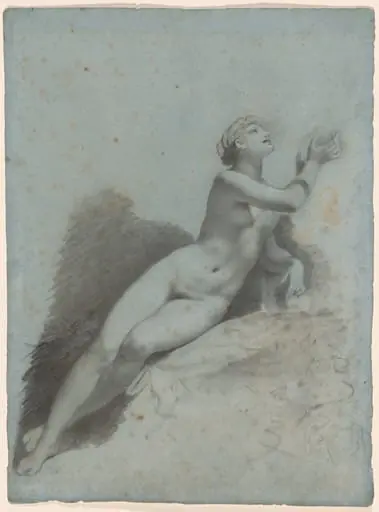
Study of a Nude Woman, Seated Looking to the Right (recto) Study of a Male Nude (verso)
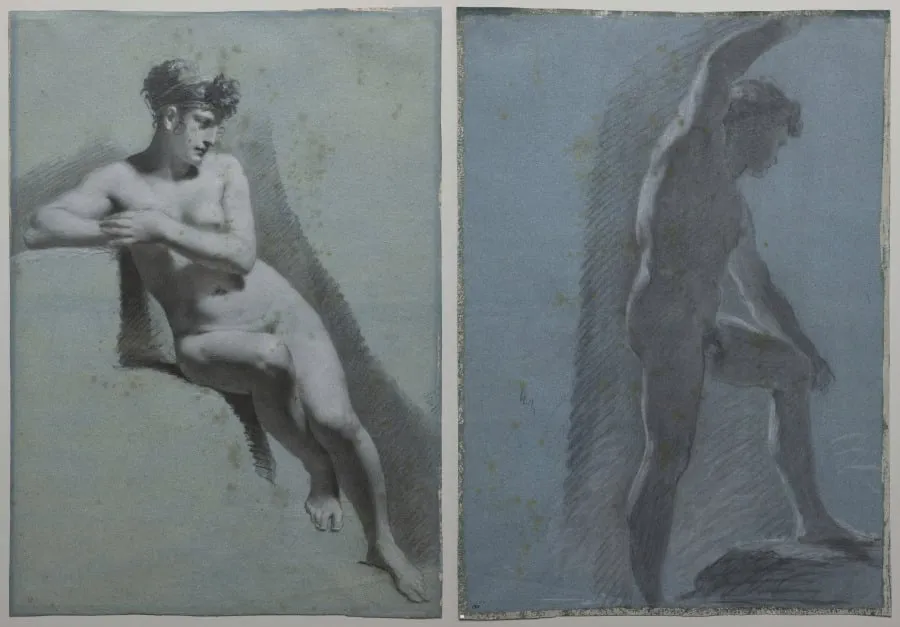
Study of a Nude Woman, Seated Looking to the Right (recto) Study of a Male Nude (verso) is a drawing by the Romanticist artist Pierre Paul Prud'hon. It dates from 1810 and is held in the collection of the Cleveland Museum of Art.
- Accession no.
- 1961.318
- Credit line
- Purchase from the J. H. Wade Fund
About this work
Overview
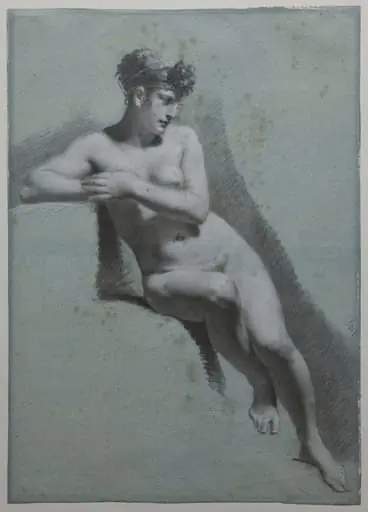
This double-sided drawing by Pierre-Paul Prud’hon features a seated female nude on the front and a quick study of a male figure on the reverse.
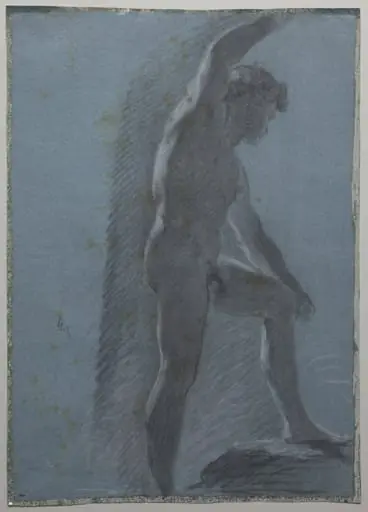
This double-sided drawing by Pierre-Paul Prud’hon features a seated female nude on the front and a quick study of a male figure on the reverse. Both figures are rendered in chalk, with the woman’s form meticulously modeled in white and black on a pale blue paper. The sheet exemplifies Prud’hon’s sustained engagement with the nude figure, a practice he maintained well into his mature career, contrary to common artistic norms of the time.
Subject & Meaning
The woman depicted is Marguerite, a recurring model known for her distinctive curly hair and physical presence. Prud’hon returned to her form repeatedly, suggesting a deep, personal investment in her anatomy and posture. The seated pose, with a gently curved spine and relaxed hand, conveys quiet introspection.
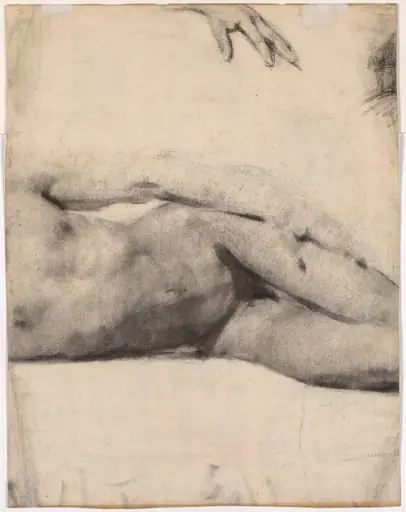
The verso’s sketch of a male nude, less detailed, may reflect comparative study or spontaneous observation, though neither figure carries narrative or symbolic intent.
Technique & Style
Prud’hon employed white and black chalk on a pale blue ground to achieve subtle gradations of light and shadow. The soft transitions between tones echo the sfumato technique, creating a luminous, atmospheric effect. The female figure is rendered with careful modeling, while the male figure on the reverse is sketched with swift, minimal strokes. This contrast highlights his ability to shift between deliberate study and spontaneous notation within a single sheet.
History & Provenance
After Prud’hon’s death, over a hundred nude studies were found in his studio, many featuring Marguerite. These drawings were not preparatory sketches for paintings but independent works, suggesting a private, ongoing practice. Their survival indicates they were valued by the artist himself, though their purpose remains undocumented.
The blue paper, unusual for the period, was likely chosen for its tonal resonance with his chalk medium.
Context
While most artists abandoned live modeling after achieving recognition, Prud’hon continued to work from the nude well into his later years. This persistence sets him apart from contemporaries who treated figure study as an early-stage exercise. His focus on solitary drawing, without commission or public intent, reflects a personal discipline rooted in observation rather than academic convention.
Legacy
Prud’hon’s extensive body of nude drawings influenced later artists interested in the expressive potential of the unadorned figure. Their quiet intensity and technical refinement offered an alternative to the theatrical nudes of academic tradition. Though not widely exhibited in his lifetime, these works now serve as key documents of his artistic philosophy, emphasizing sustained observation over idealized representation.
Artist & collection
Artist
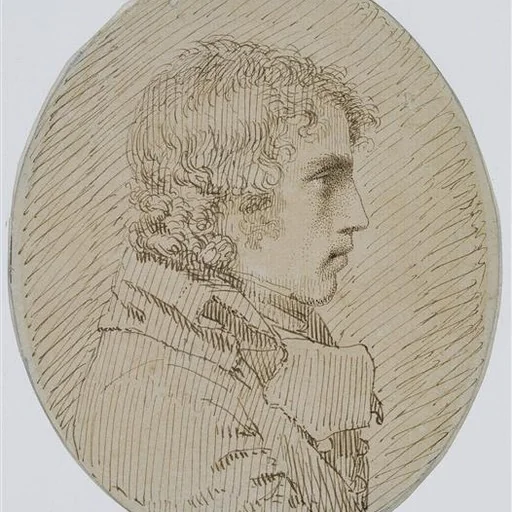
Pierre-Paul Prud'hon (French pronunciation: 4 April 1758 – 16 February 16, 1823) was a French Neo-classical painter and draughtsman best known in his own time for his allegorical paintings and portraits, now for his drawings.