Artwork
Double-Leaf Door
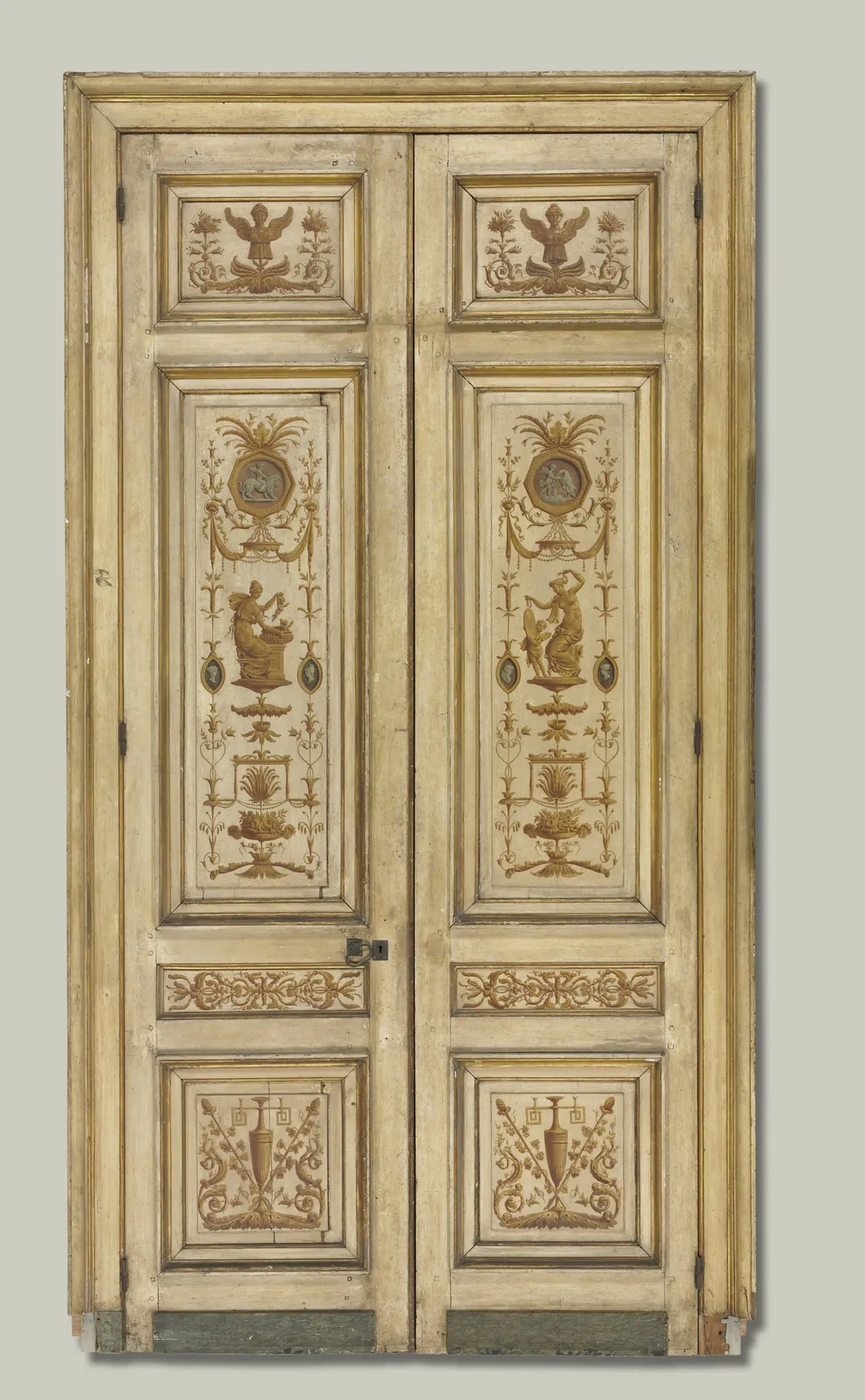
Double-Leaf Door is an oil painting by the Rococo painting artist Pierre Rousseau. It dates from 1798 and is held in the collection of the Cleveland Museum of Art.
About this work
Technique & Style
0 cm in width, proportions consistent with a functional door rather than a conventional easel painting.
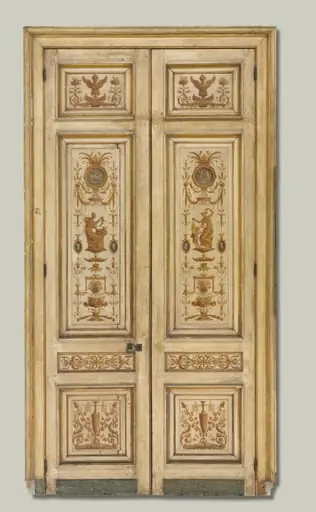
The Double-Leaf Door is executed in oil paint, applied to a wooden panel support rather than canvas. Its format is markedly elongated and narrow, measuring 274.0 cm in height by 63.0 cm in width, proportions consistent with a functional door rather than a conventional easel painting. The work was produced in France in 1794.
As a trompe-l'œil or decorative panel conceived to function architecturally, its narrow vertical format and panel construction would have allowed the painted surface to operate as a pair of hinged leaves within a doorway opening.
The classification as a painting, combined with its panel support and oil medium, places the work within the tradition of French late-eighteenth-century decorative painting, in which artists treated architectural elements as surfaces for illusionistic imagery.
History & Provenance
The Double-Leaf Door is an oil painting on panel created by the French artist Pierre Rousseau in 1794. Executed in France, the work measures 274 cm in height and 63 cm in width. The piece is currently held in the collection of the Cleveland Museum of Art, where it is cataloged under the accession number 1944.466.2.b.
The painting Double-Leaf Door is held in the collection of the Cleveland Museum of Art. It was accessioned into the museum's holdings under the inventory number 1944.466.2.b. The provided records confirm the work's location at the institution but do not contain specific details regarding its exhibition history or public display timeline.
Overview
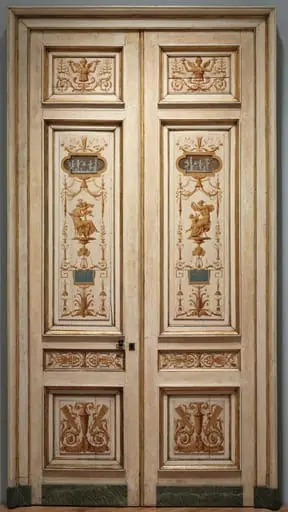
Pierre Rousseau’s Double‑Leaf Door, executed in oil in 1798, is a painted wooden panel that now belongs to the Cleveland Museum of Art. The work presents a vertically oriented, double‑door composition whose decorative scheme is divided into three horizontal registers, each populated with symbolic motifs rendered in gold and cream against a light‑stained wood background.
Subject & Meaning
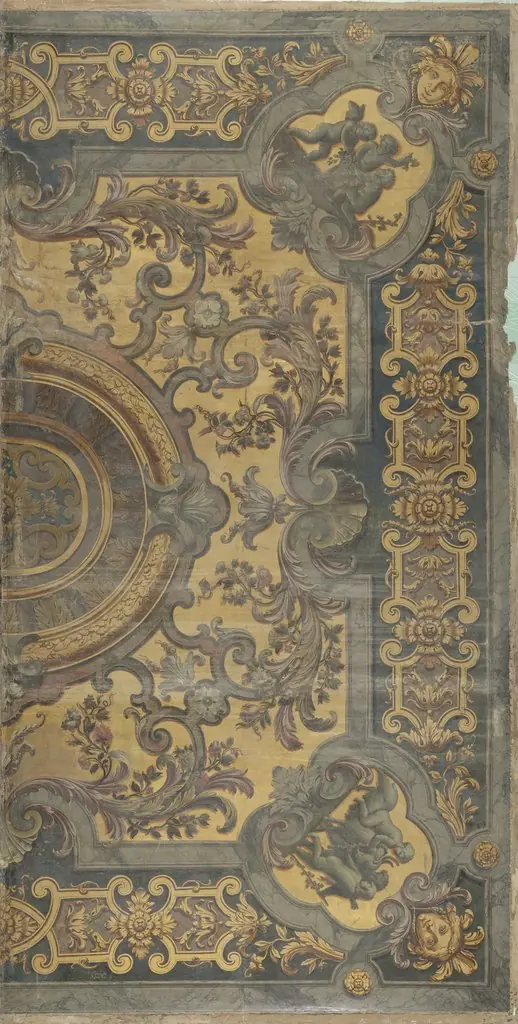
The upper register features a pair of eagles with wings outstretched, each positioned above a laurel wreath, a traditional emblem of victory and authority. Beneath the birds, a seated female figure holds a scroll, surrounded by vases and floral arrangements, suggesting themes of learning or civic virtue. The central band displays ornamental vases entwined with ribbons and foliage, while the lower tier includes crossed tools, a hammer and a pair of compasses, evoking craftsmanship and the trades.
Context
During the final decades of the eighteenth century, French decorative painters often embellished architectural elements such as doors and shutters with allegorical scenes and gilded ornamentation. Rousseau’s work aligns with this tradition, integrating symbolic imagery, eagles, laurel, tools, into a functional object, thereby blurring the line between utilitarian architecture and fine art.
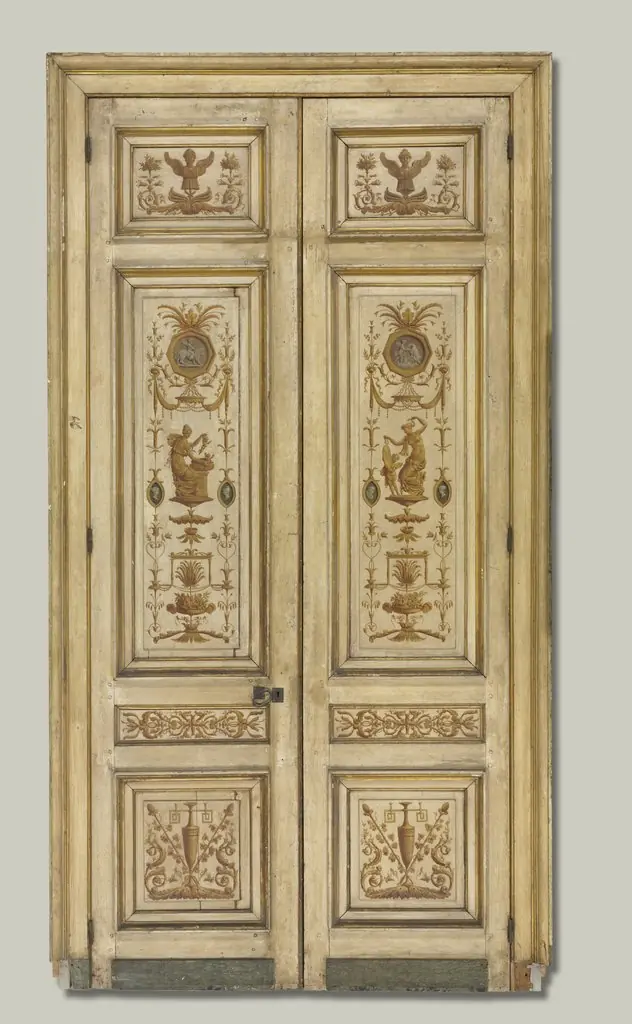
Own this work as a print
Artist & collection
Artist
Pierre Jean-Baptiste Rousseau was a French essayist, epistemologist, astronomer and journalist who authored numerous popular science essays and articles.

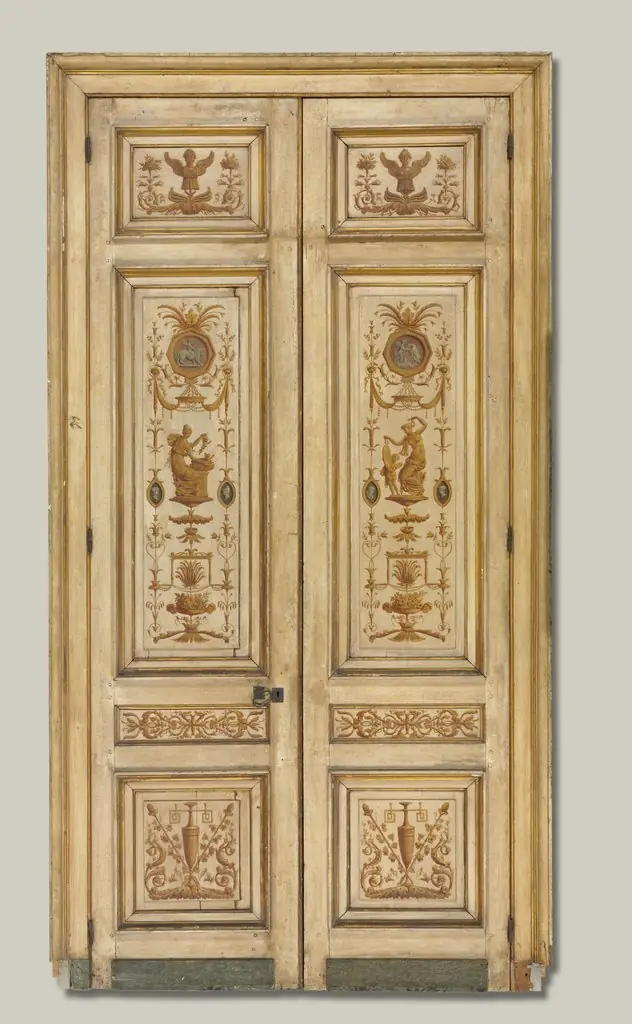 Overdoor Painting
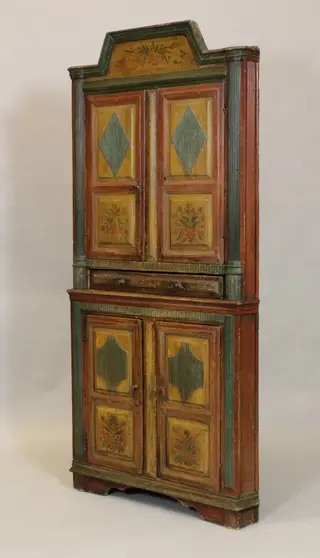 kaappi
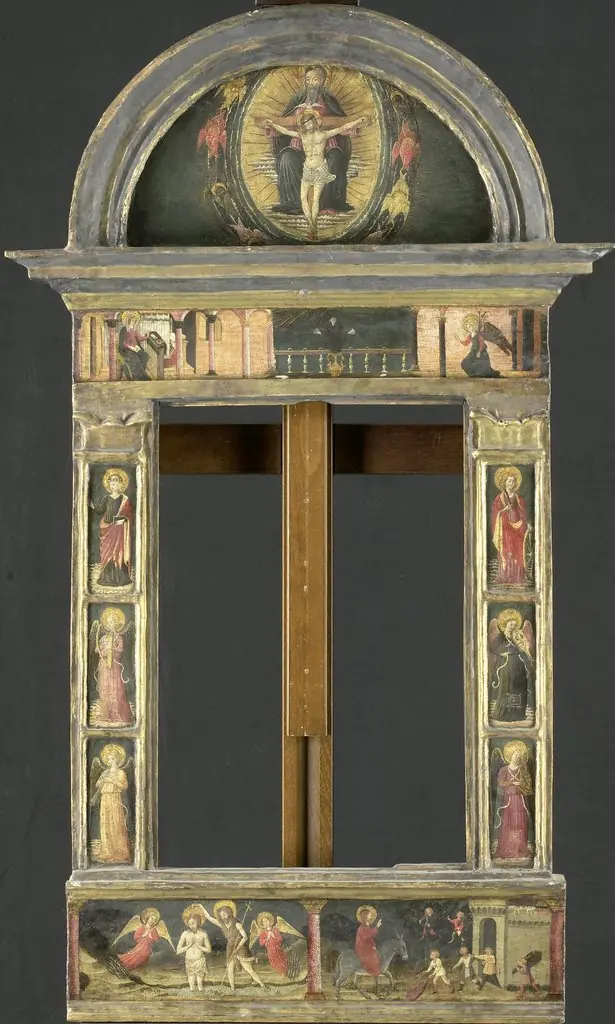 Frame painted with the annunciation, the baptism of Christ, the entry into Jerusalem, the Saints Cecilia and Catharina, and 4 angels making music
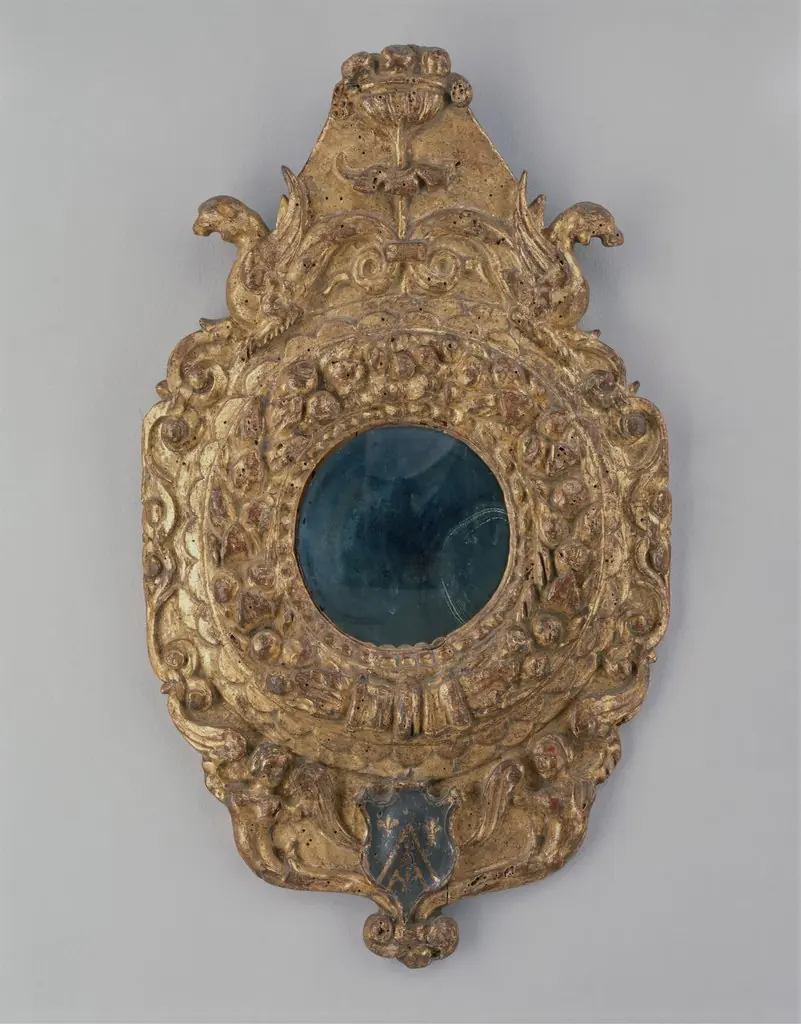 Tondo mirror frame
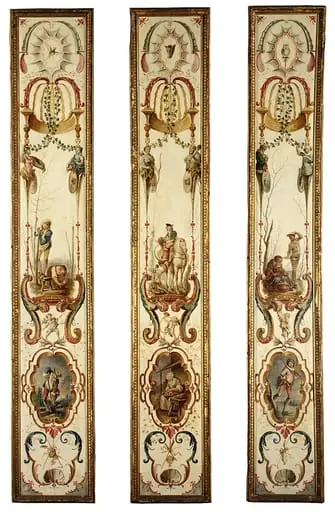 January and February (part of a set illustrating the months of the year)
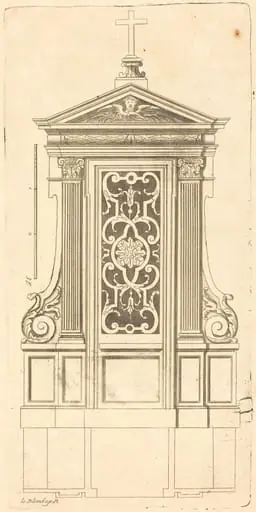 Plan et elevation des plus beaux confessionnaux de Paris, tres fidelemant mesure
 Ornamentale plafondschildering met in de hoeken voorstellingen van putti