Artwork
Frame painted with the annunciation, the baptism of Christ, the entry into Jerusalem, the Saints Cecilia and Catharina, and 4 angels making music
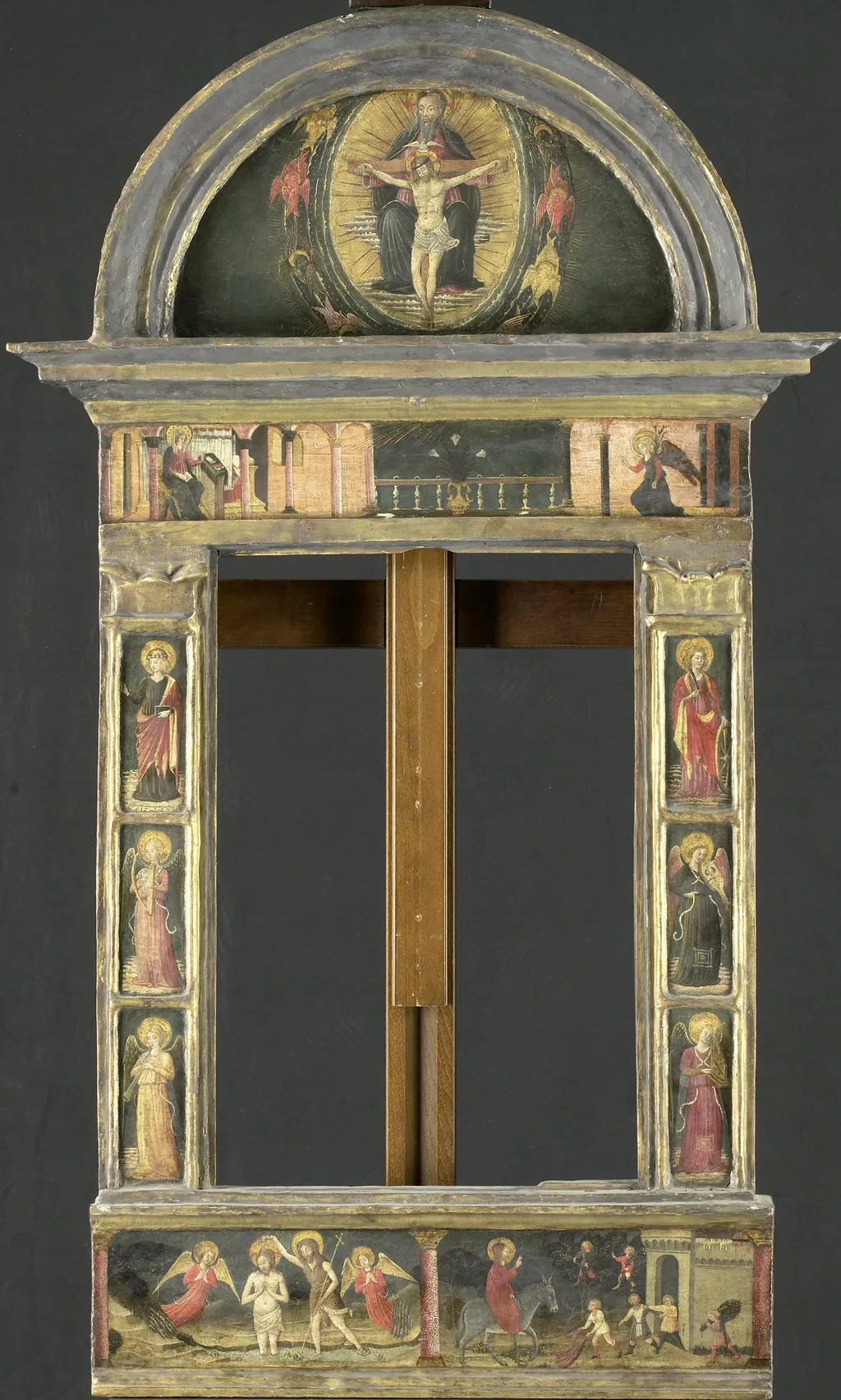
Frame painted with the annunciation, the baptism of Christ, the entry into Jerusalem, the Saints Cecilia and Catharina, and 4 angels making music is a tempera painting by the Early Renaissance artist Giovanni di Francesco. It dates from 1450 and is held in the collection of the Rijksmuseum.
About this work
Subject & Meaning
The painting frames a central devotional image with six narrative scenes and figures drawn from Christian scripture and hagiography.
The painting frames a central devotional image with six narrative scenes and figures drawn from Christian scripture and hagiography. Along the top and sides, the Annunciation, Baptism of Christ, and Entry into Jerusalem unfold as sequential episodes from the life of Jesus, underscoring themes of divine incarnation, initiation into ministry, and messianic revelation.
On the lower border, Saints Cecilia and Catharina stand as intercessors, Cecilia holding her attribute of an organ and Catharina identified by the spiked wheel of her martyrdom. Four angels playing musical instruments flank the saints, evoking the celestial harmony of heaven and reinforcing the work’s liturgical function as an aid to prayer and contemplation.
Technique & Style
The frame is a painted wooden structure depicting the Annunciation, Baptism of Christ, Entry into Jerusalem, Saints Cecilia and Catherine, and four angels playing music. It is created in tempera on a wooden panel, consistent with early Italian religious painting practices of the mid-15th century. The composition features narrative scenes arranged within an architectural frame, reflecting devotional conventions of the period.
Measured dimensions are 146 cm in height and 86.2 cm in width, confirming its scale as a devotional panel painting.
The work demonstrates formal restraint through hierarchical arrangement and symbolic iconography, typical of Tuscan painting circa 1450. The use of tempera on panel supports precise detail and luminous color modulation, particularly evident in the rendering of drapery and angelic figures. The integration of music-making angels within a sacred narrative underscores its liturgical function and stylistic emphasis on celestial harmony.
Context
The work is attributed to Giovanni di Francesco and dates to 1450, situating it within the mid-15th-century Italian painting tradition. It depicts a complex religious narrative involving the Annunciation, Baptism of Christ, Entry into Jerusalem, Saints Cecilia and Catherine of Alexandria, and four angelic musicians, reflecting devotional themes common in devotional painting of the period. The painting is housed in the Rijksmuseum collection, confirming its provenance and institutional significance.
Legacy
The work's influence is evident in its enduring presence within religious art collections, particularly at the Rijksmuseum where it remains part of the permanent display. Its compositional elements, including the musical angels and narrative scenes, have informed scholarly discussions on early Netherlandish painting techniques and devotional imagery.
Overview
Created circa 1450 by Giovanni di Francesco, a mid‑15th‑century Florentine painter, this tempera‑painted wooden frame functions as a miniature narrative panel. It is part of the Rijksmuseum’s collection and exemplifies the early Renaissance interest in integrating multiple sacred episodes within a single decorative object.
History & Provenance
Giovanni di Francesco, active in Florence, produced the piece for an unknown patron in the mid‑1400s. It entered the Rijksmuseum’s holdings through later acquisition, though the precise chain of ownership before its museum entry remains undocumented.
Own this work as a print
Artist & collection
Artist
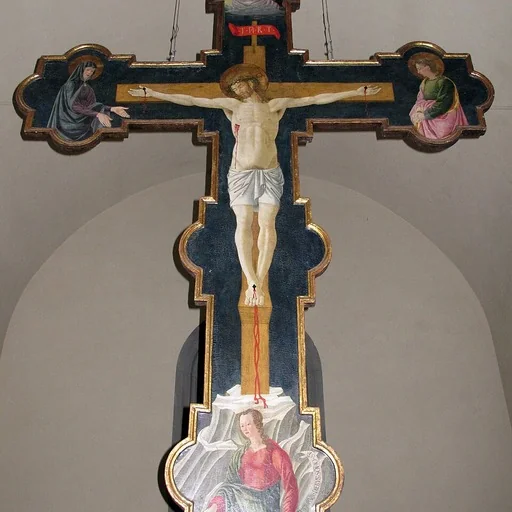
Giovanni di Francesco del Cervelliera or Giovanni di Francesco (1412 – September 28, 1459) was an Italian Renaissance painter, active in Florence in the mid-fifteenth century.

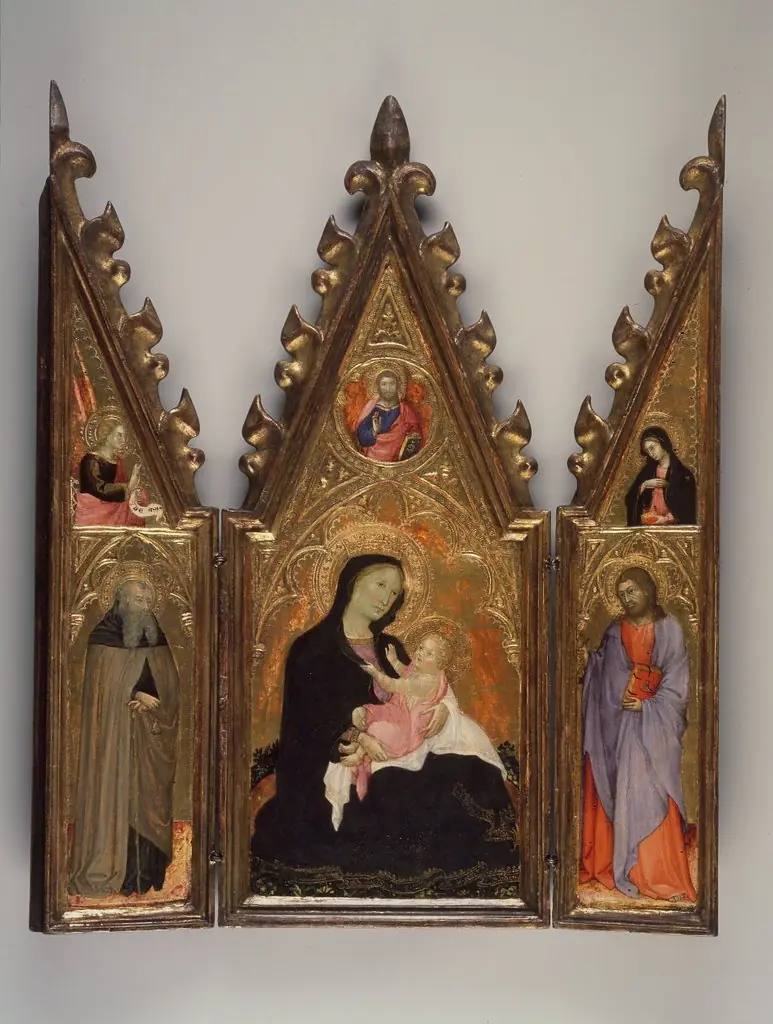 Madonna of Humility, portable altarpiece
 Sketch of the back of the triumphal arch of Philip IV
 The Crucifixion
 The Crucifixion with the Virgin and Saint John, with Saint John Baptist (above); Franciscan Saint in Prayer before a Vision of Christ and Saints, with a Male Saint (above) (recto and verso)
 Annunication; Crucifixion
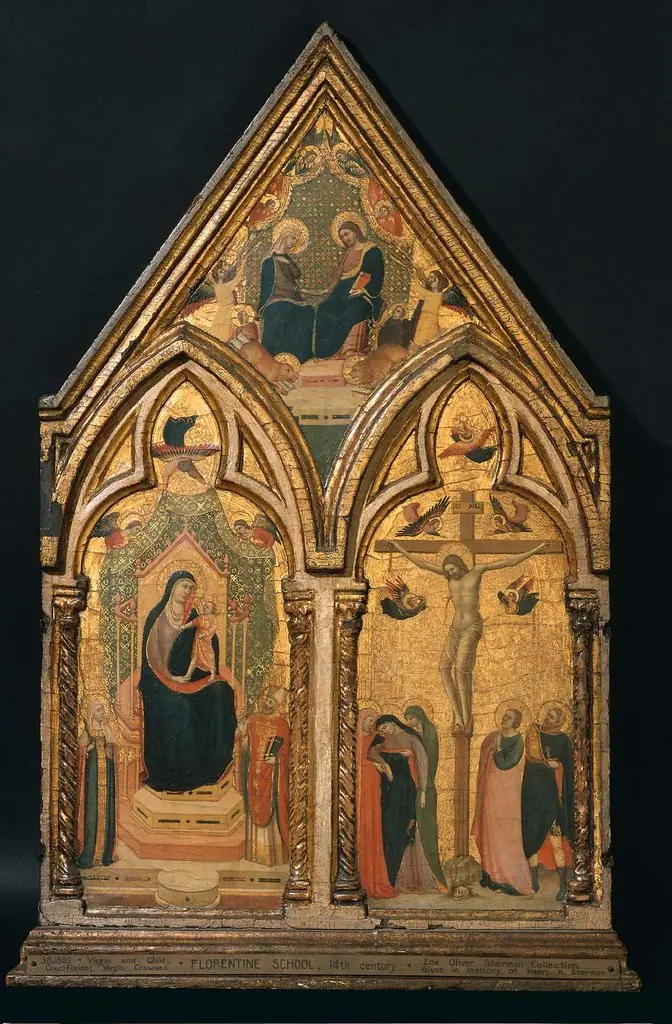 Virgin and Child Enthroned with Saints; Crucifixion; Coronation of the Virgin
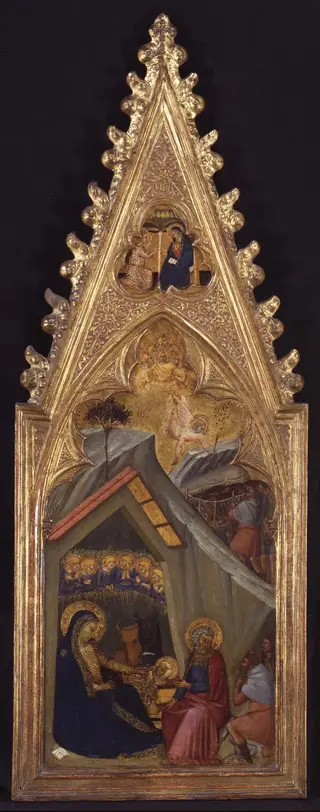 Nativity of Christ
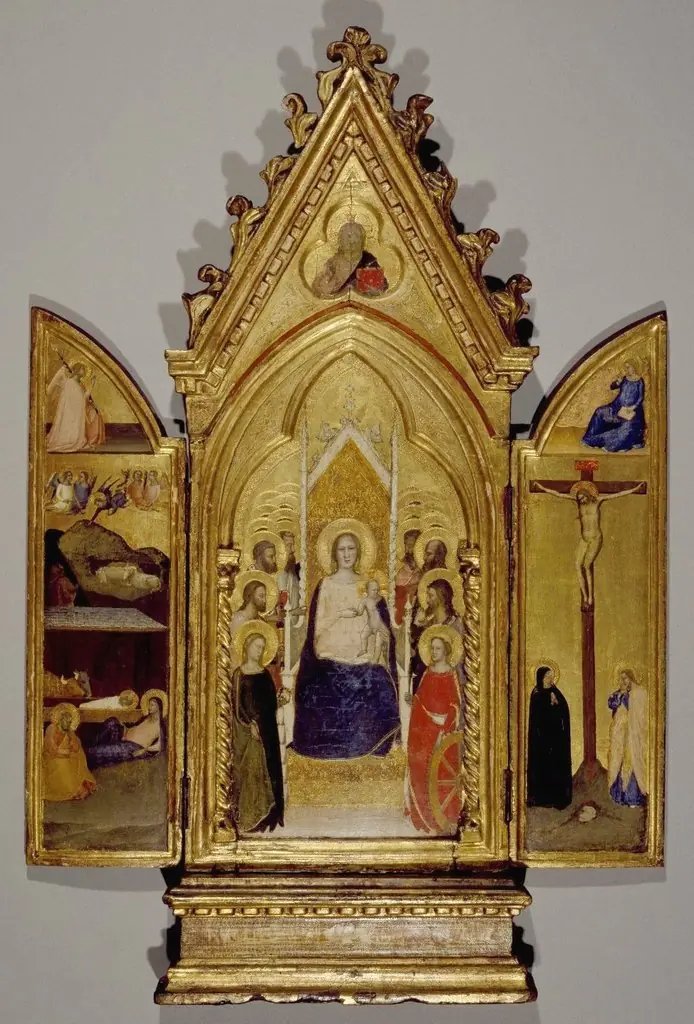 Triptych: Madonna with Saints and Christ Blessing (Center); The Nativity and the Annunciate Angel (Left Wing); Crucifixion and the Virgin Annunciate (Right Wing)
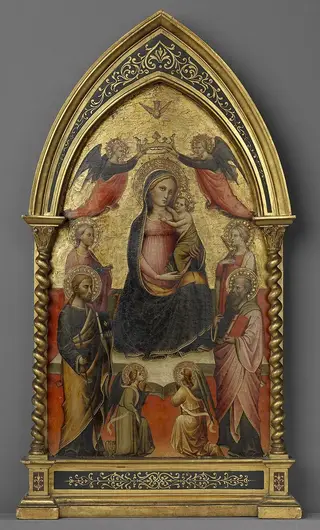 Madonna mit vier Heiligen und Engeln (?)
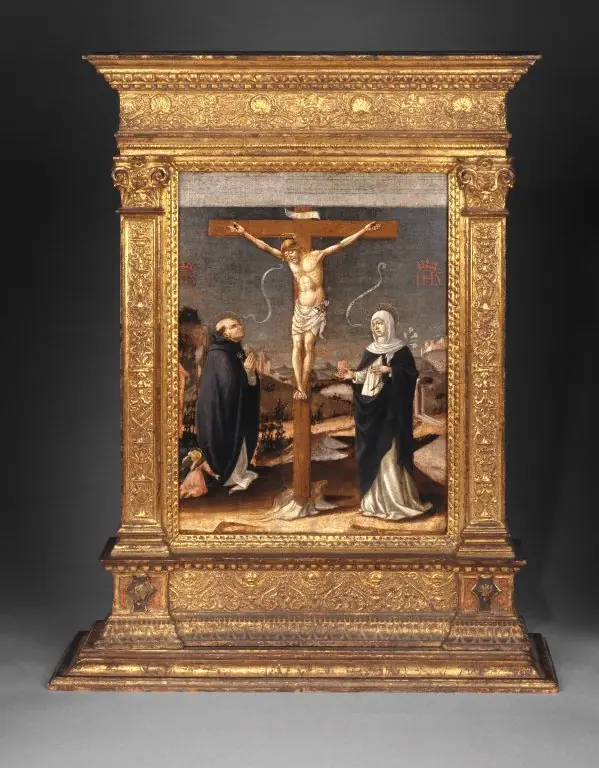 Christ on the Cross Adored by Saints Thomas Aquinas and Catherine of Siena