Artwork
The canal at 's-Graveland
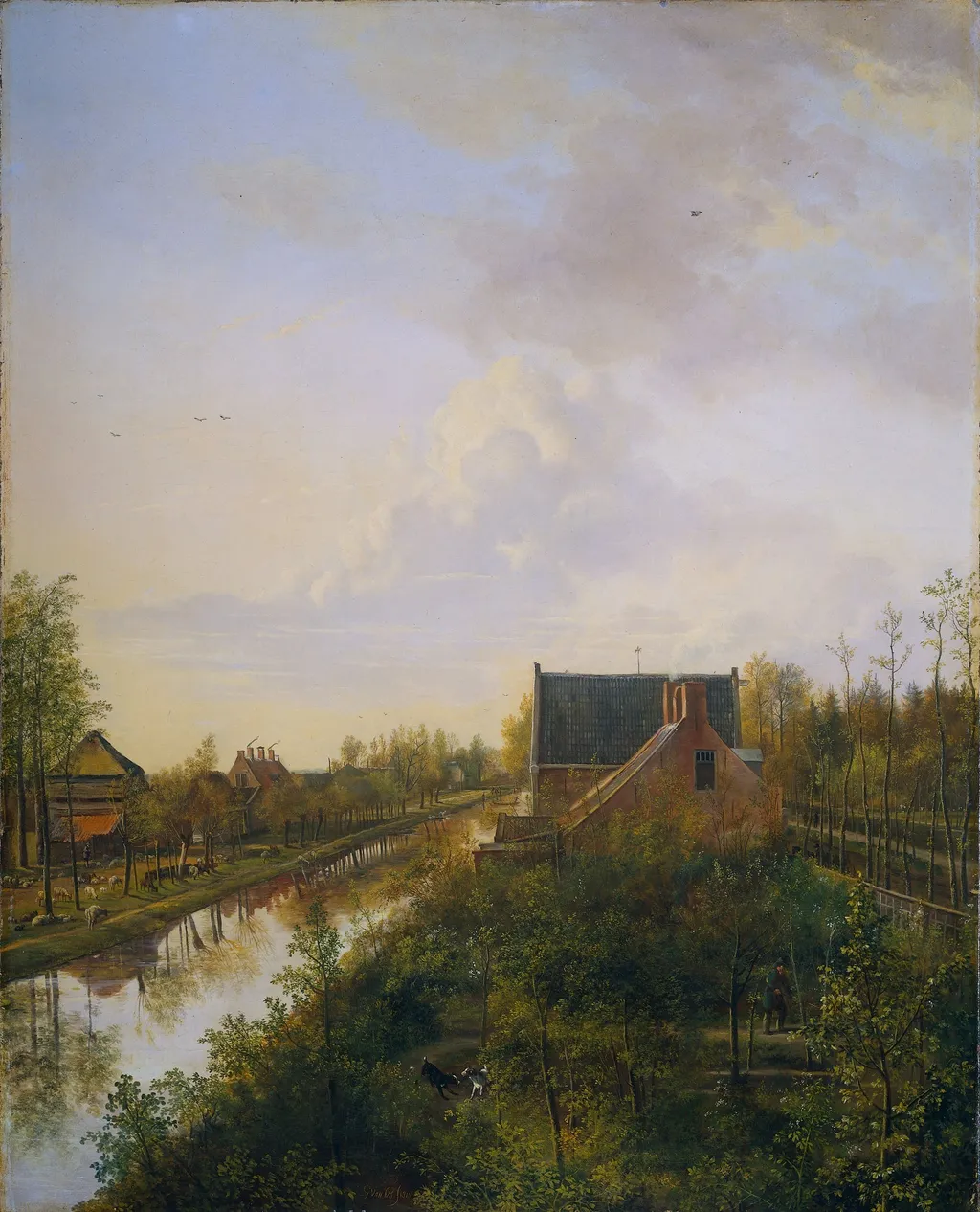
The canal at 's-Graveland is an oil painting by Pieter Gerardus van Os. It dates from 1818 and is held in the collection of the Rijksmuseum.
About this work
Subject & Meaning
Contemporary critics, however, found the subject too ordinary and lacking the grandeur of seventeenth‑century ideals.
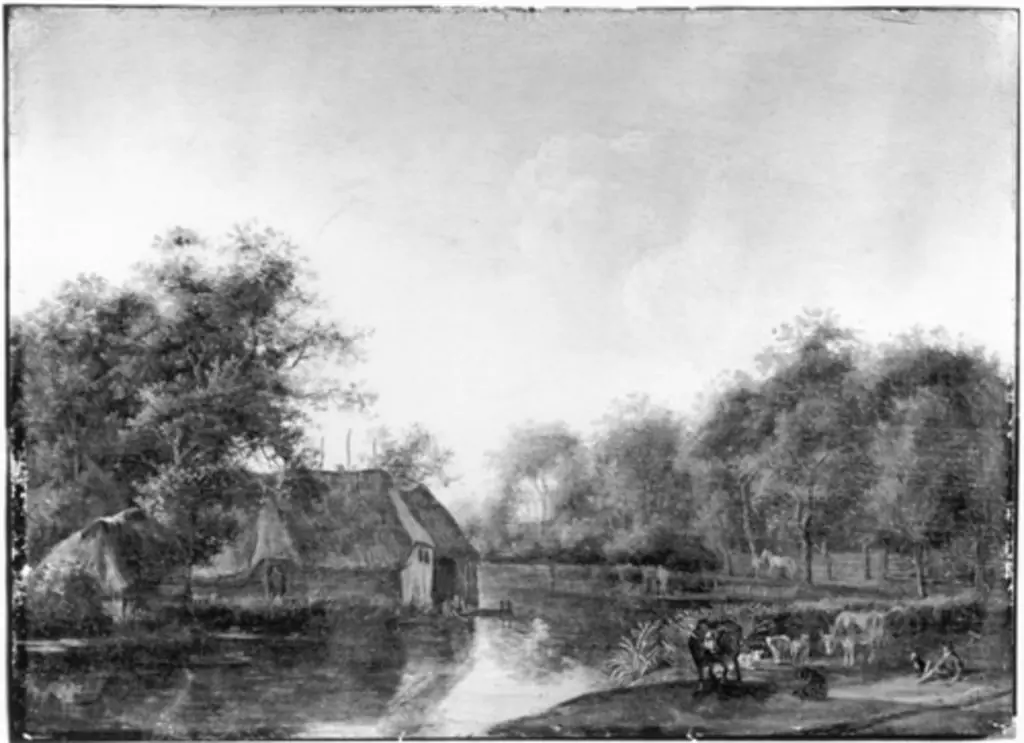
The painting depicts the 's-Gravelandsevaart canal flanked by houses, trees, and a farm, observed from an elevated viewpoint that gives an unusual, almost secretive perspective. On the left a shepherd tends a flock of sheep, while the right side shows a lively orchard with fruit trees, two barking dogs and an elderly gardener; birds and grazing animals animate the scene. The work’s focus on an everyday, incidental landscape, without the prominent cattle that characterized van Os’s reputation, was considered strikingly modern for 1818, anticipating the naturalist tendencies that would dominate later nineteenth‑century art. Contemporary critics, however, found the subject too ordinary and lacking the grandeur of seventeenth‑century ideals.
Technique & Style
The canal at 's-Graveland is an oil-on-canvas painting measuring 111.5 by 89.5 centimeters, executed in 1818 by Pieter Gerardus van Os. Van Os worked the canvas from the attic window of the Amsterdam merchant Herman Waller's country house, adopting an unusually elevated vantage point that produced an unconventional high perspective on the canal and surrounding grounds. The composition is notable for its abrupt cropping of the 's-Gravelandsevaart at the lower left, and for its incidental, almost candid arrangement of houses, a shepherd with sheep, an orchard rendered in vivid color with two yapping dogs and an old gardener concealed within it, and atmospheric sky with clouds and their reflections on the water.
The elevated viewpoint yields a near-secretive glimpse into the garden. Critics at the 1818 'Tentoonstelling van Levende Meesters' found the subject too ordinary and the high vantage overly artful rather than beautiful, judging that the work lacked the seventeenth-century aura then prized. This unconventional handling has been characterized as strikingly modern, anticipating pictorial approaches that became common only in the second half of the nineteenth century.
History & Provenance
The canal at 's-Graveland was commissioned in 1817 by the Amsterdam merchant Herman Waller, who asked Pieter Gerardus van Os for views of the area. Van Os executed the oil-on-canvas work in 1818, painting it from the attic window of Waller’s country house, which afforded the elevated viewpoint seen in the composition. The painting remained in the Waller family and was presented to the Rijksmuseum in Amsterdam in 1934 by Waller’s great‑grandson, where it has remained since.
It was earlier shown in 1818 at the 'Tentoonstelling van Levende Meesters' (Exhibition of Living Masters) in Amsterdam, displayed alongside several cattle paintings by the same artist, where contemporary critics reacted negatively to its elevated viewpoint and mundane subject matter.
Context
After moving to 's-Graveland in 1810, Pieter Gerardus van Os retained his reputation as a leading cattle painter, yet his later works from 1817‑1818, commissioned by Herman Waller, broke with that tradition. De vaart bij 's-Graveland, painted from an attic window with a high viewpoint, presents a modern, almost precocious landscape that foregrounds incidental details and a subtle garden glimpse, anticipating 19th‑century developments. The canvas was shown at the 1818 Tentoonstelling van Levende Meesters, where critics dismissed it as ‘not beautiful’ and faulted its elevated perspective as overly artificial, while praising Van Os’s cattle scenes.
Today the work belongs to the Rijksmuseum, having been gifted in 1934 by the great‑grandson of Waller, and is discussed in scholarly studies of Dutch nineteenth‑century art.
Legacy
Upon its 1818 debut at the Exhibition of Living Masters, The Canal at 's-Graveland received harsh criticism for its unconventional high viewpoint and mundane subject matter, which detractors deemed lacking the aesthetic beauty and seventeenth-century atmosphere favored at the time. Despite this initial rejection, the work's reputation has undergone a significant reversal in modern scholarship. Contemporary art historians now regard it as a remarkably progressive piece that anticipated the developments of modern painting in the late nineteenth century.
Its unique elevated perspective and incidental composition are currently celebrated as artistically significant, distinguishing it from Van Os's more traditional cattle paintings. Today, the painting is recognized as a key example of the artist's most innovative output from his 's-Graveland period and remains a notable entry in the Rijksmuseum collection, having been gifted to the institution in 1934.
Overview
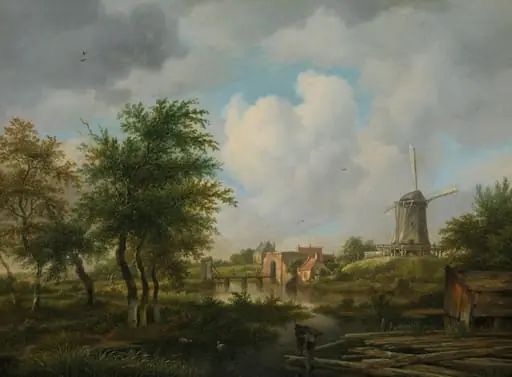
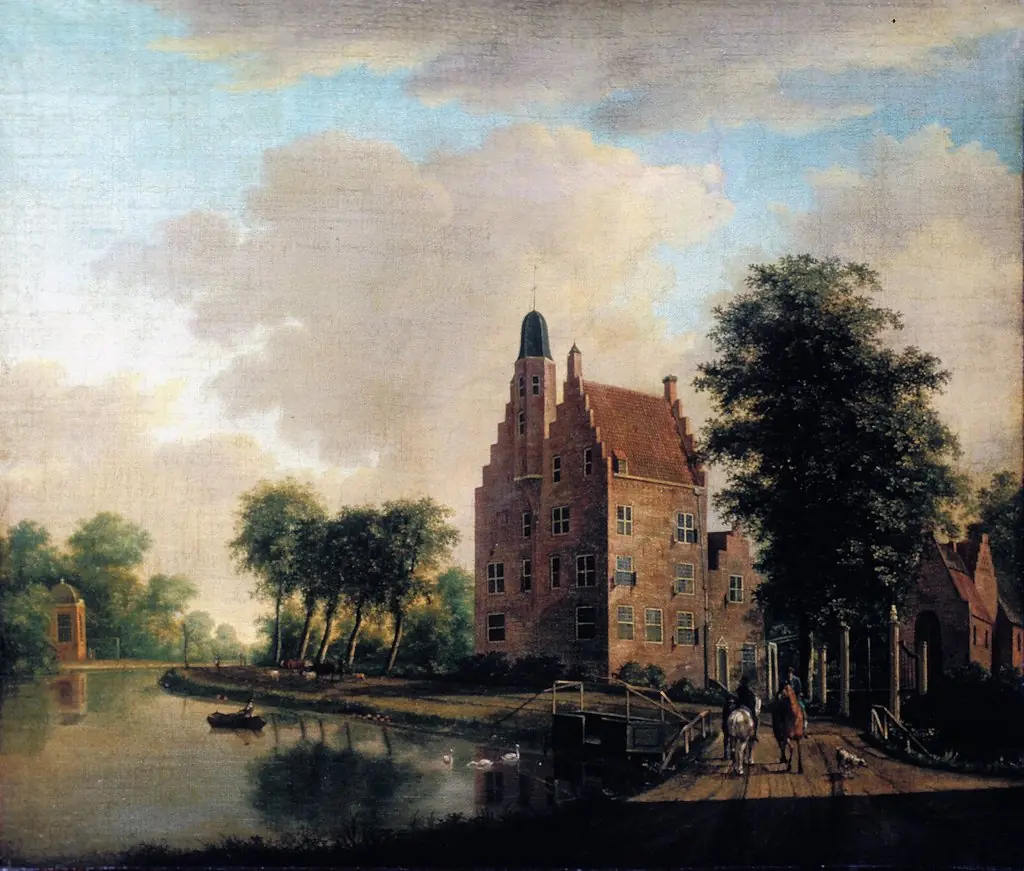
The oil painting titled "The canal at 's-Graveland" presents a tranquil landscape scene. It captures a quiet canal bordered by an abundance of trees and bushes, evoking a sense of peaceful rural life. The artist focuses on conveying the serene atmosphere of the Dutch countryside, highlighting the subtle beauty found in everyday natural settings and their interaction with human activity.
Own this work as a print
Artist & collection
Artist
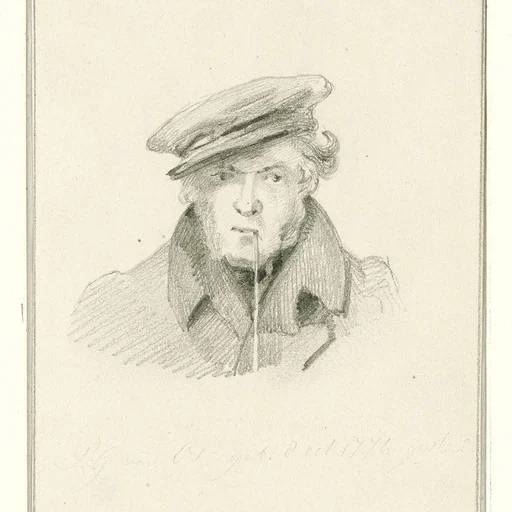
Pieter Gerardus van Os (8 October 1776 – 28 March 1839) was a Dutch painter and engraver and a member of the renowned Van Os family of artists.