Artwork
Madonna and Child with Saints
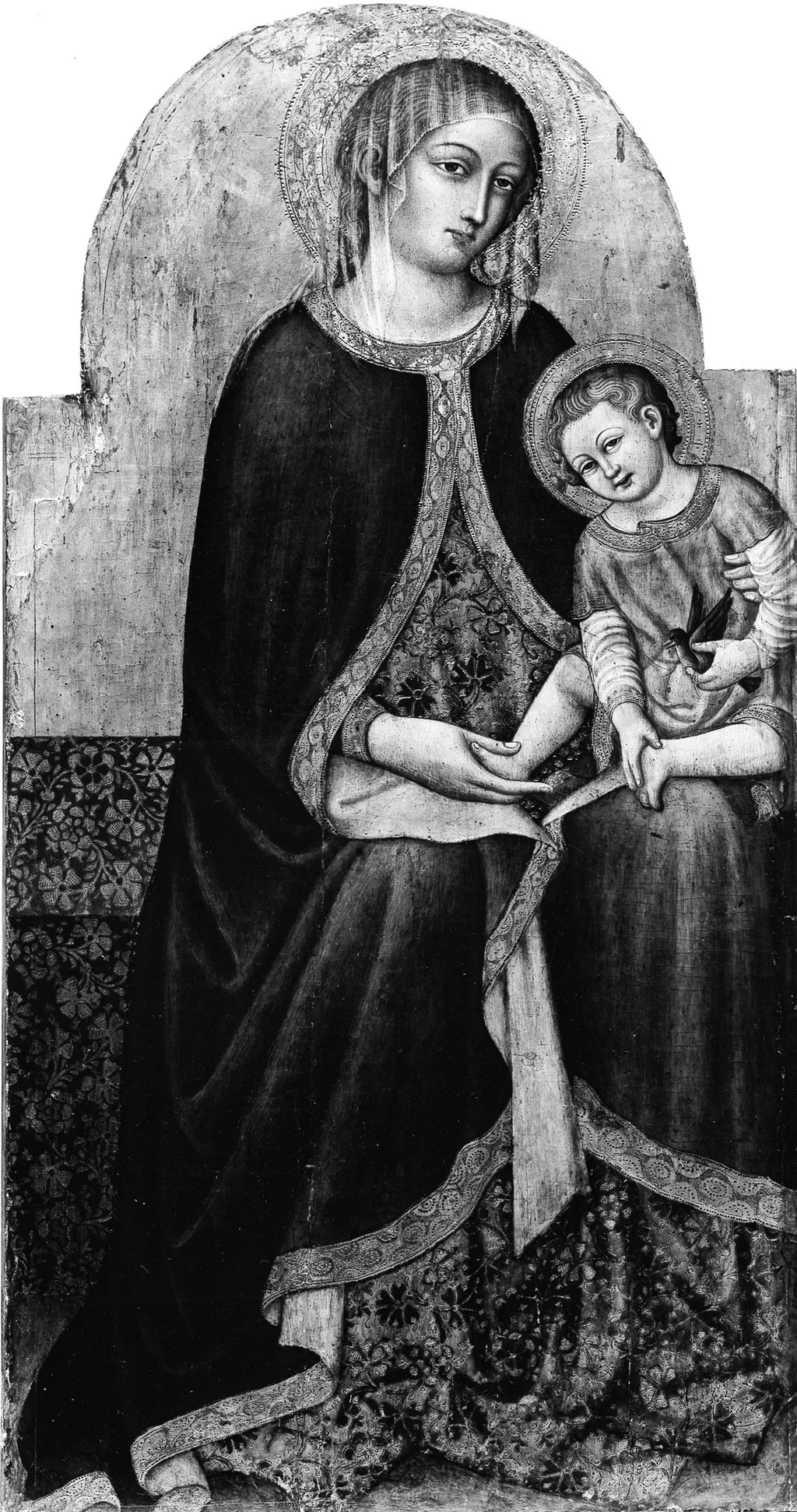
Madonna and Child with Saints is a tempera painting by the Early Renaissance artist Priamo della Quercia. It dates from 1442 and is held in the collection of the Metropolitan Museum of Art.
About this work
Subject & Meaning
The painting presents the Madonna and Child as its central devotional subject, depicting the Virgin Mary holding the Christ Child in a sacred maternal pairing.
The painting presents the Madonna and Child as its central devotional subject, depicting the Virgin Mary holding the Christ Child in a sacred maternal pairing. Classified within the genre of religious art, the work belongs to the long-standing Christian iconographic tradition of the Madonna and Child, a devotional image type that emphasizes Mary's role as the Mother of God and the infancy of Christ. The main subject is identified explicitly as the Madonna and Child, with the figures of Mary and the Christ Child serving as the focal point of veneration and contemplation.
While the full title references additional saints, the available documentation specifies only Mary and the Christ Child as the depicted figures, situating the panel within a sacred conversation format common to fifteenth-century Italian religious painting.
Technique & Style
Created in 1442 by Priamo della Quercia, this religious painting is executed in tempera on a wooden panel. The work measures 114.9 cm in height and 56.5 cm in width, presenting a vertical format typical of devotional imagery from the period. The composition features the Madonna and Child as the central subjects.
While the specific handling of the brushwork and the current physical condition of the surface are not detailed in the available records, the choice of tempera on panel reflects the standard technical approach for Italian religious art of the mid-15th century. The piece is currently held in the collection of the Metropolitan Museum of Art.
History & Provenance
The painting titled Madonna and Child with Saints was created in 1442 by the artist Priamo della Quercia, also known as Priamo del Pietro. Executed in tempera on a panel, the work depicts the Virgin Mary and the Christ Child as its main subjects within a religious genre. While the specific commissioning body and the initial ownership history prior to its current location are not detailed in the available records, the work is currently held in the collection of the Metropolitan Museum of Art.
The piece measures 114.9 cm in height and 56.5 cm in width. Its creation date is firmly established as 1442, marking it as a mid-15th-century example of religious art attributed to this specific Sienese painter.
Overview
Priamo della Quercia, an Italian painter and miniaturist active in the early Renaissance, completed Madonna and Child with Saints in 1442. This religious panel painting, executed in tempera, features the Virgin Mary tenderly holding the Christ Child, accompanied by other holy figures. The work exemplifies the devotional art prevalent during its period, characterized by a focus on sacred narratives and figures. It is currently part of the collection at The Metropolitan Museum of Art.
Artist & collection
Artist
Priamo della Quercia (c. 1400 – 1467) was an Italian painter and miniaturist of the early Renaissance. He was the brother of the famous sculptor Jacopo della Quercia.

- Madonna and Child
 Virgin and Child with Saints Mary Magdalen and John the Baptist
 Virgin and Child
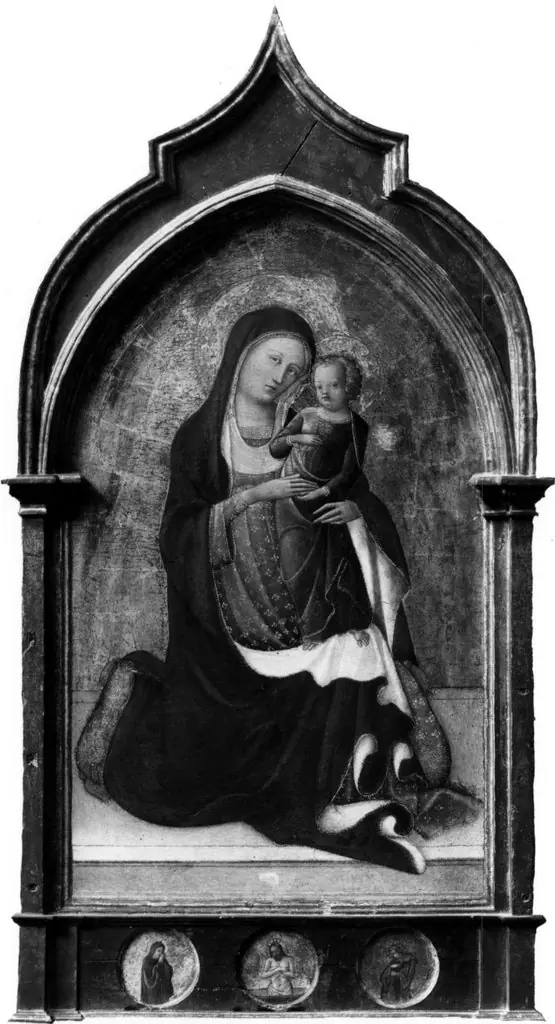 Mary with the Child
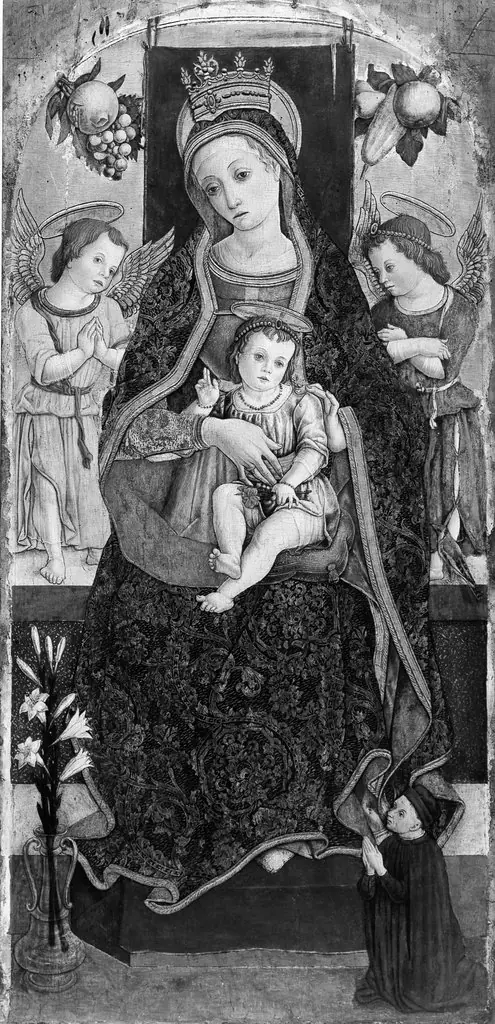 Madonna and Child Enthroned with Two Angels and a Donor
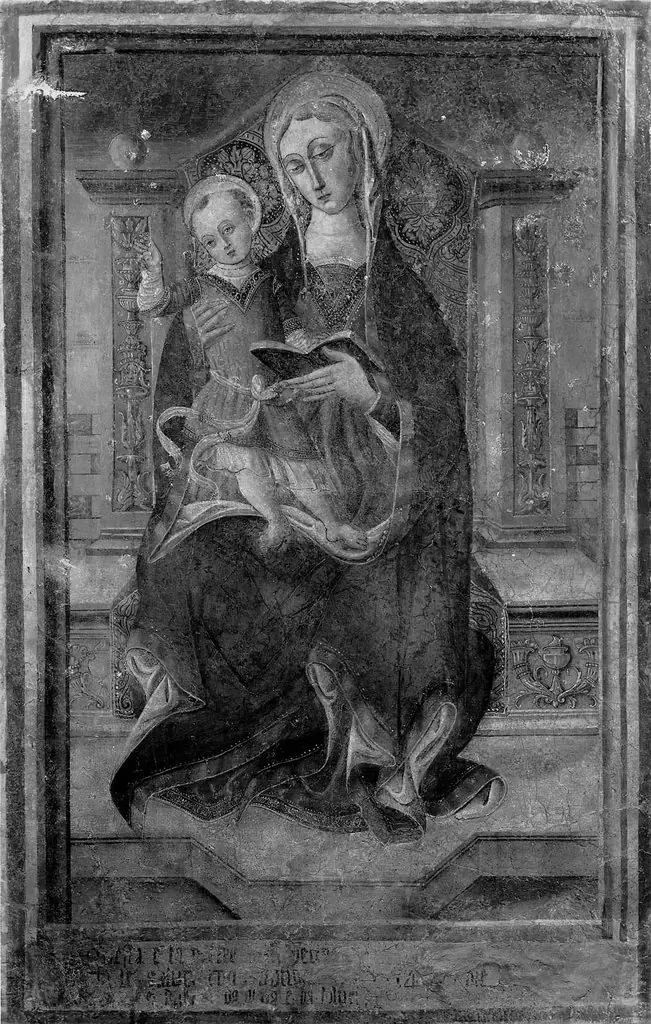 Virgin and Child Enthroned
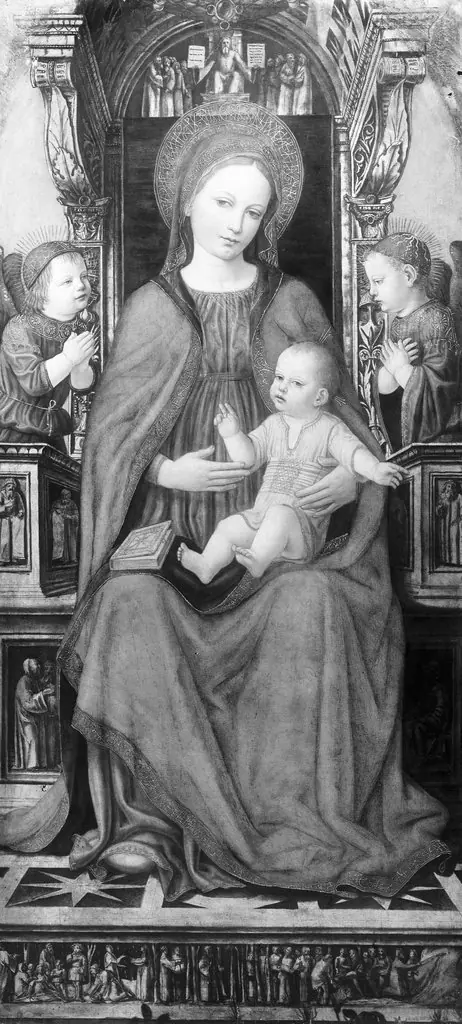 Mary enthroned with child
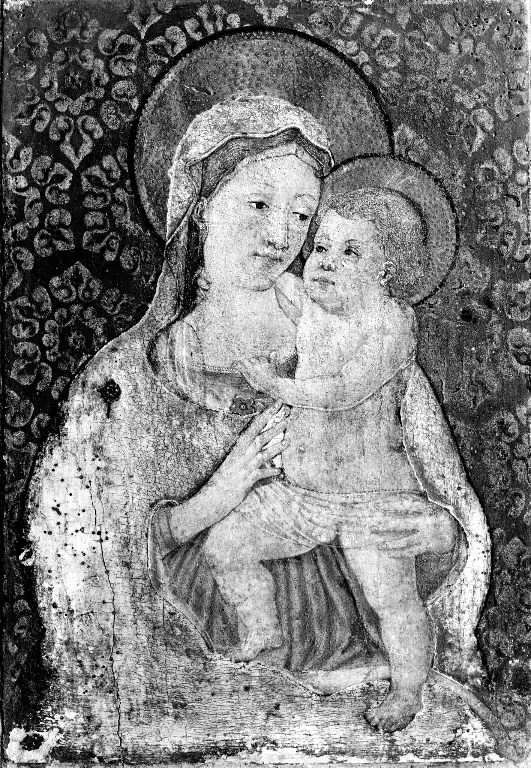 The Virgin and Child
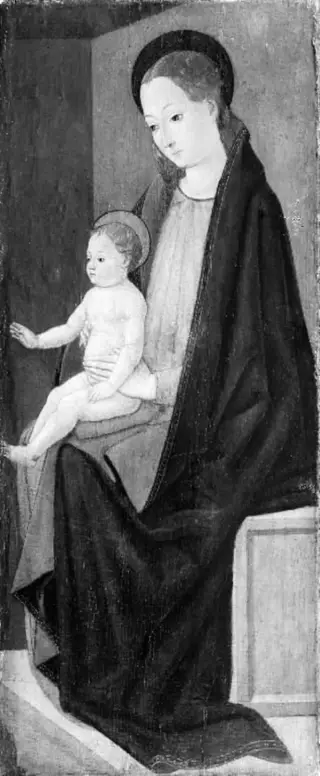 The Virgin and Child
 The Virgin and Child
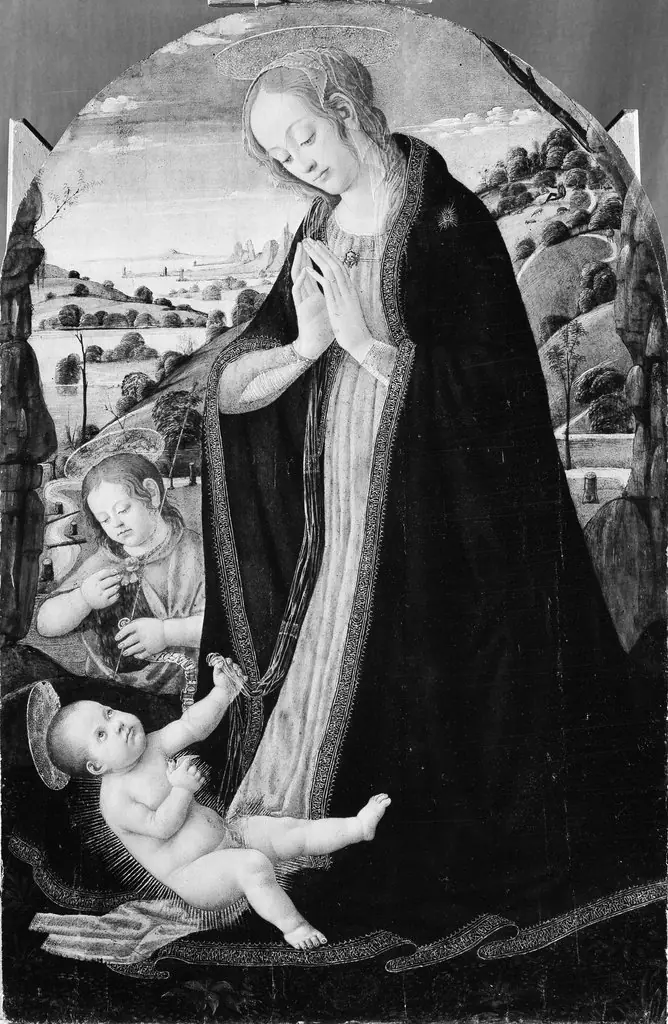 The Nativity
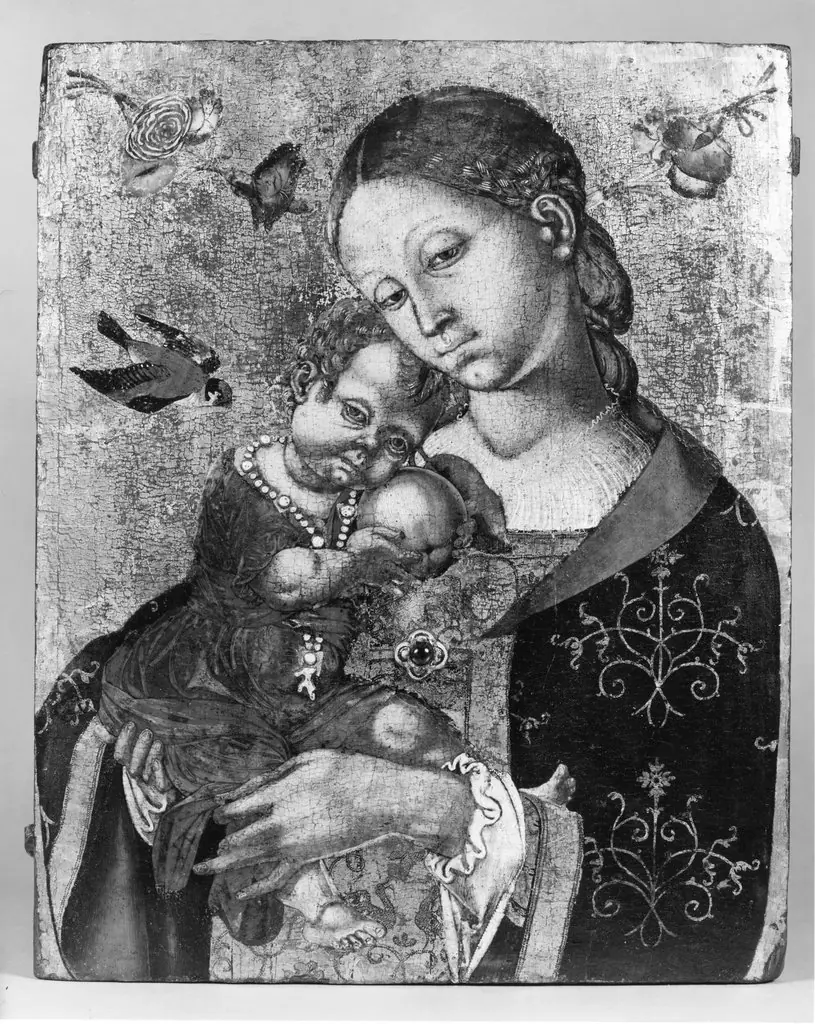 Madonna and Child