Artwork
Madonna and Child
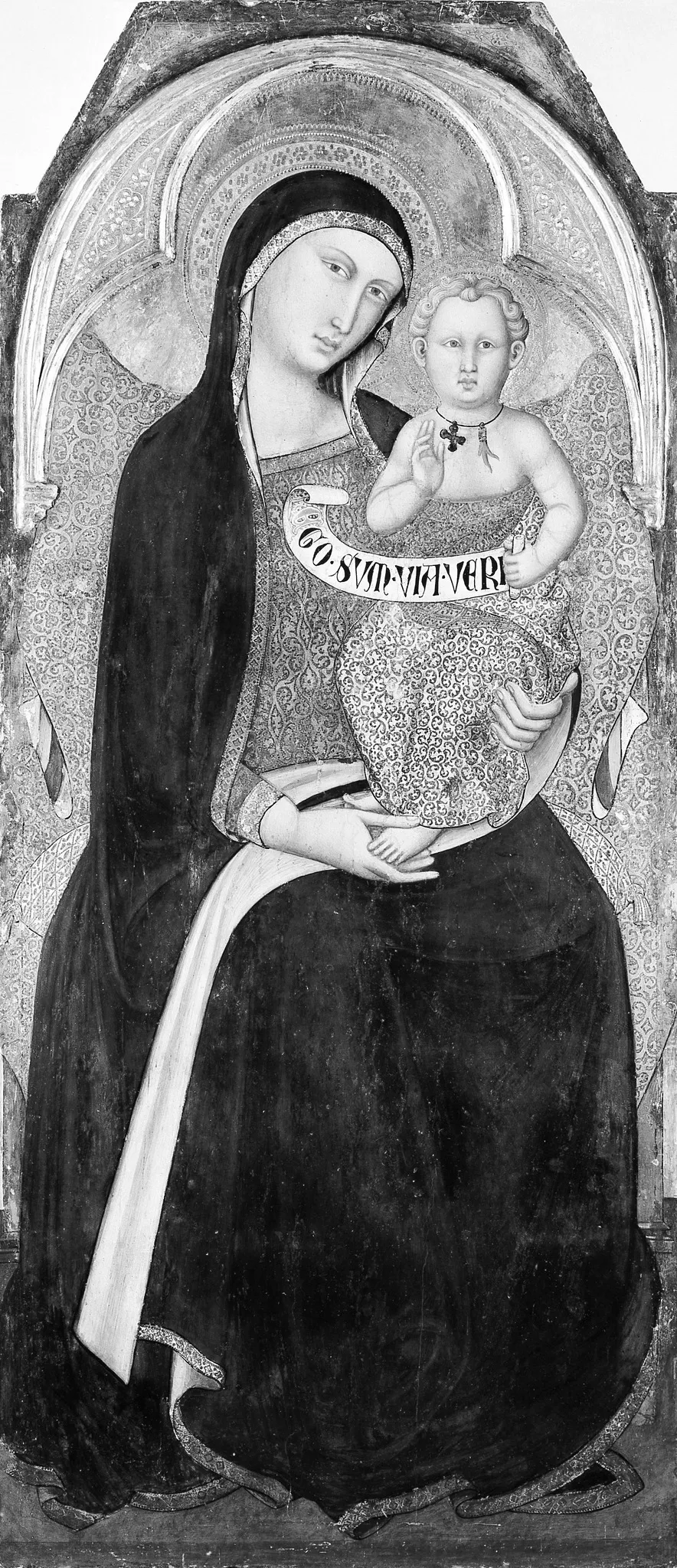
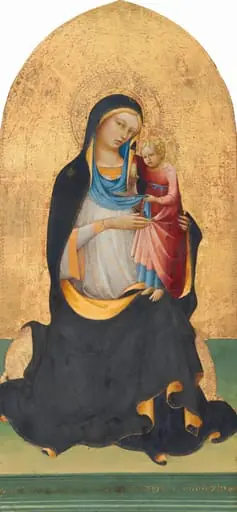
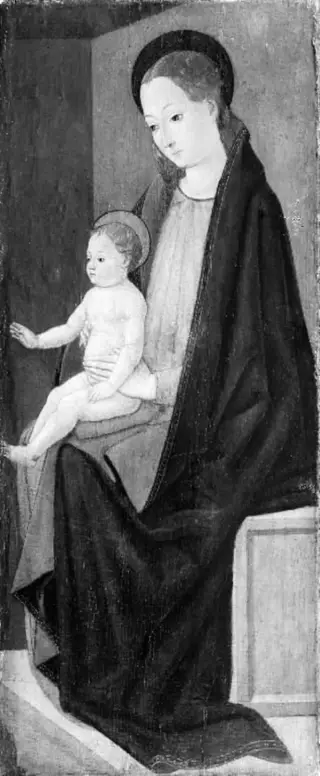
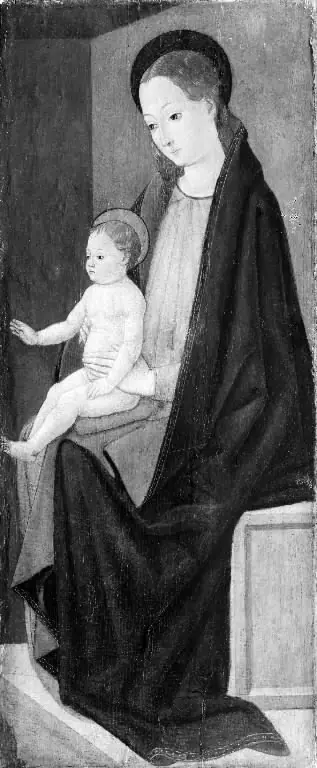
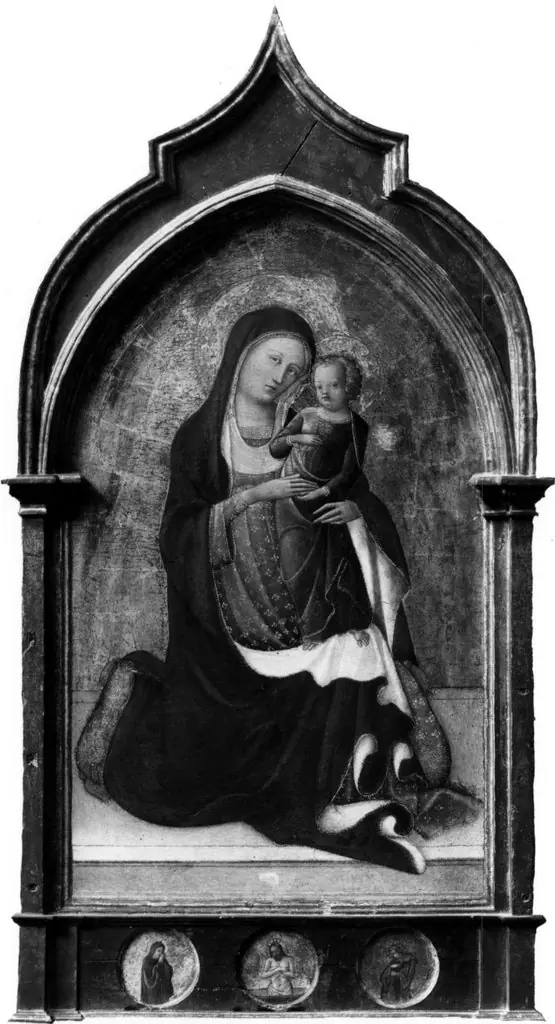
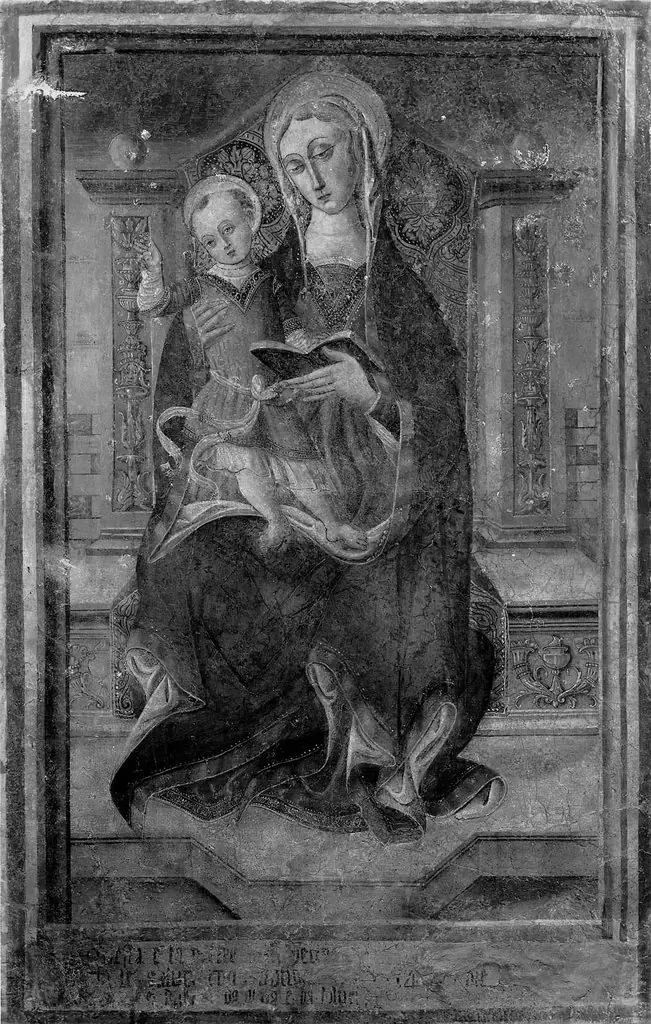
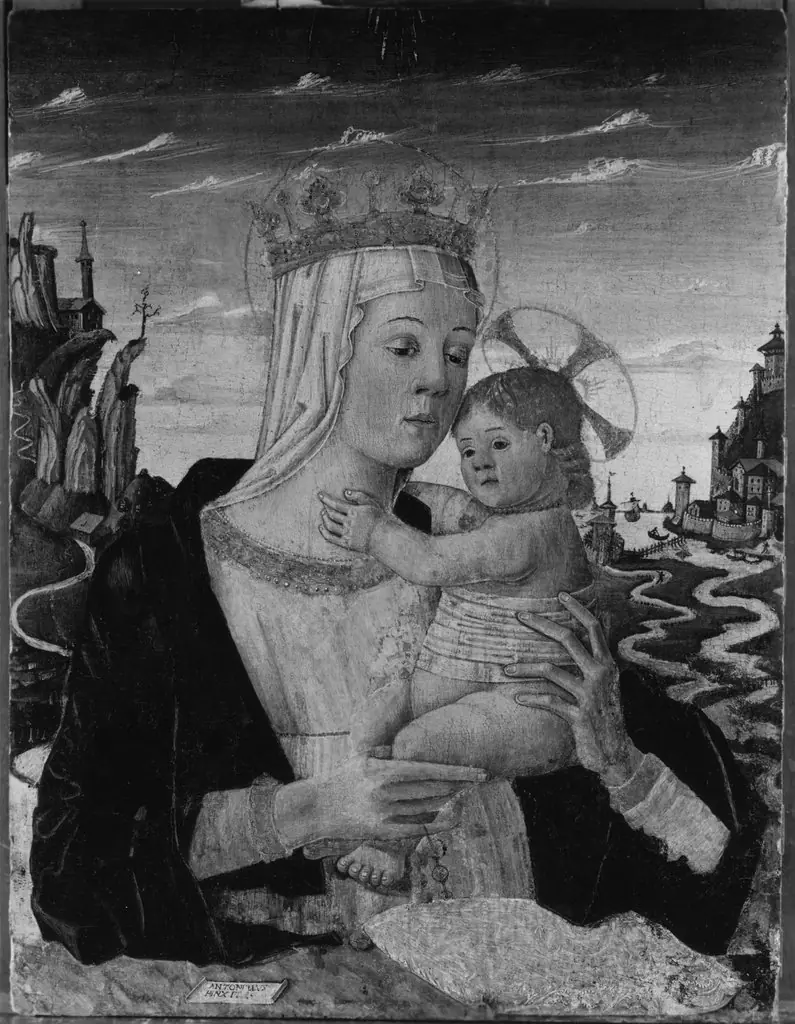
Madonna and Child is a tempera painting by the Sienese School artist Luca di Tommè. It dates from 1360 and is held in the collection of the Metropolitan Museum of Art.
About this work
Subject & Meaning
The painting depicts the Madonna and Child, a foundational subject in Christian devotional art showing the Virgin Mary holding the infant Jesus.
The painting depicts the Madonna and Child, a foundational subject in Christian devotional art showing the Virgin Mary holding the infant Jesus. Classified as religious art and associated with the Sienese school, the image belongs to a long iconographic tradition in which maternal tenderness and the humanity of Christ are foregrounded for devotional contemplation. The use of gold leaf and tempera on wood is consistent with the sacred status of the subject, where luminous gilded grounds typically evoke a heavenly realm and underscore the divine nature of the figures.
The composition thus functions both as a tender image of mother and son and as a vehicle for theological reflection on the Incarnation.
Technique & Style
This Madonna and Child by Luca di Tommè is executed in tempera on wood, with gold leaf applied as part of the decorative program, consistent with mid-fourteenth-century Sienese panel practice. The support is a vertical wooden panel measuring 134.3 by 58.7 centimetres, an elongated format suited to a standing devotional figure. The combination of egg tempera, gesso-prepared wood, and burnished gold ground points to the traditional layered technique used by Sienese painters of the period, in which gold leaf would typically frame the holy figures and enrich the background.
Stylistically, the work belongs to the Sienese school, retaining the elegant linearity and sacred iconography characteristic of that tradition.
History & Provenance
Created circa 1360, this tempera and gold leaf panel on wood was executed by the Sienese artist Luca di Tommè. Its documented ownership traces to the prominent Florentine dealer Stefano Bardini, from whom it passed to George Blumenthal, who transferred the painting to the Metropolitan Museum of Art, where it remains. The museum records the piece as a Sienese-school work in tempera and gold leaf on wood panel, dating to approximately 1360.
The sources confirm the location and provenance but do not provide a specific accession number or a detailed exhibition history.
Overview
Luca di Tommè, an Italian painter active in Siena during the latter half of the 14th century, created this Madonna and Child around 1360. Executed in tempera on wood, the painting exemplifies the distinctive artistic traditions of the Sienese school. It presents the Virgin Mary cradling the Christ Child, a prevalent theme in religious art of the period, rendered with the characteristic devotional quality of its time.
Artist & collection
Artist
Luca di Tommè (or Luca Thome) (c. 1330–1389) was an Italian painter active between 1356 and 1389 in Siena. He worked in the style established by earlier Sienese painters Duccio, Simone Martini, Pietro Lorenzetti and…