Artwork
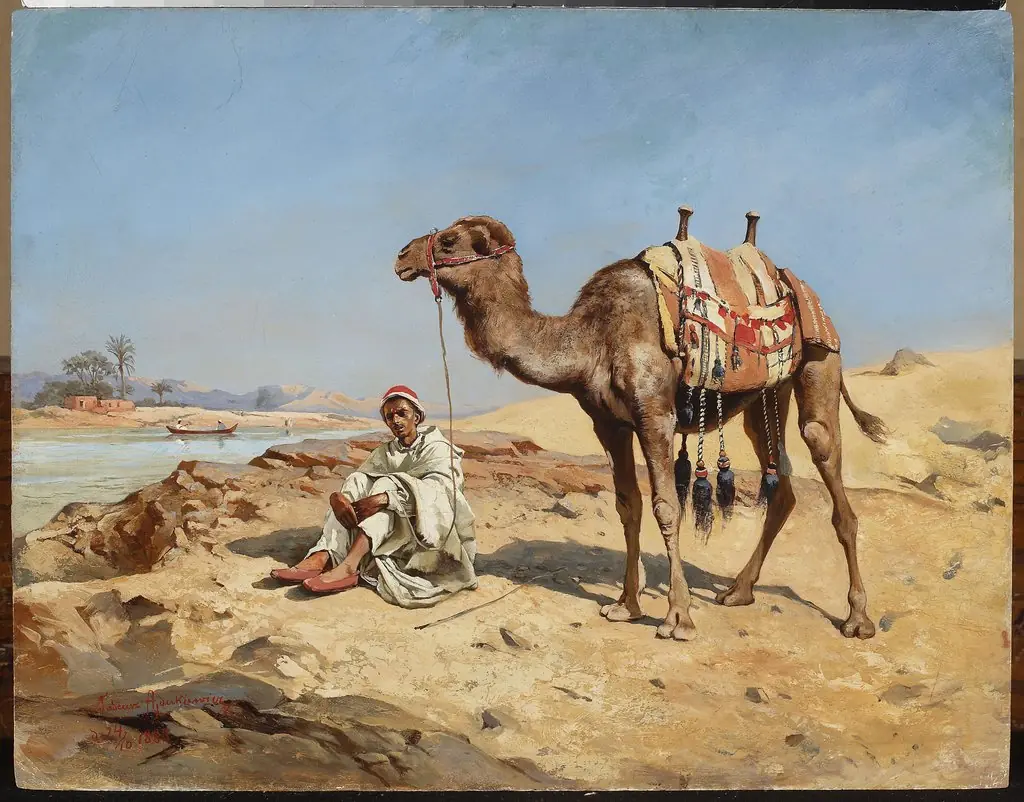
A Bedouin beside his Camel, probably in Egypt
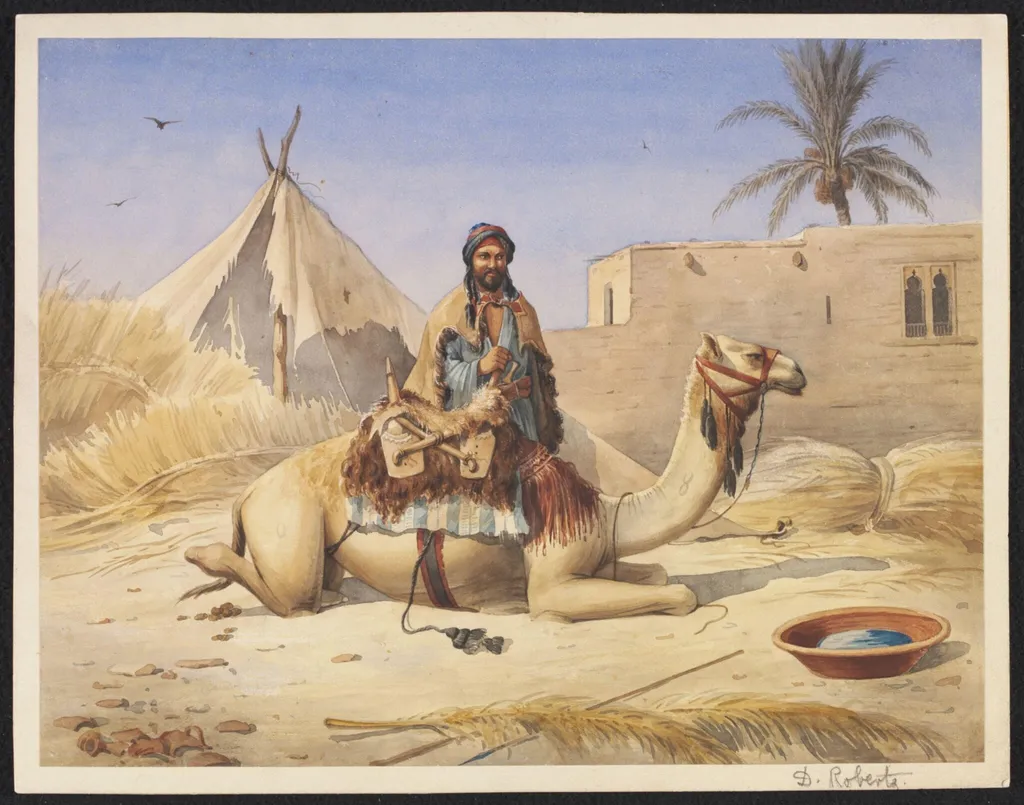
A Bedouin beside his Camel, probably in Egypt is a watercolor work on paper by the Orientalist artist Achille-Constant-Théodore-Emile Prisse d'Avennes. It dates from 1840 and is held in the collection of the Victoria and Albert Museum.
About this work
Overview
A watercolour painting titled 'A Bedouin beside his Camel, probably in Egypt' was created around 1840 by Achille-Constant-Théodore-Emile Prisse d'Avennes. It is now held at the Victoria and Albert Museum.
Subject & Meaning
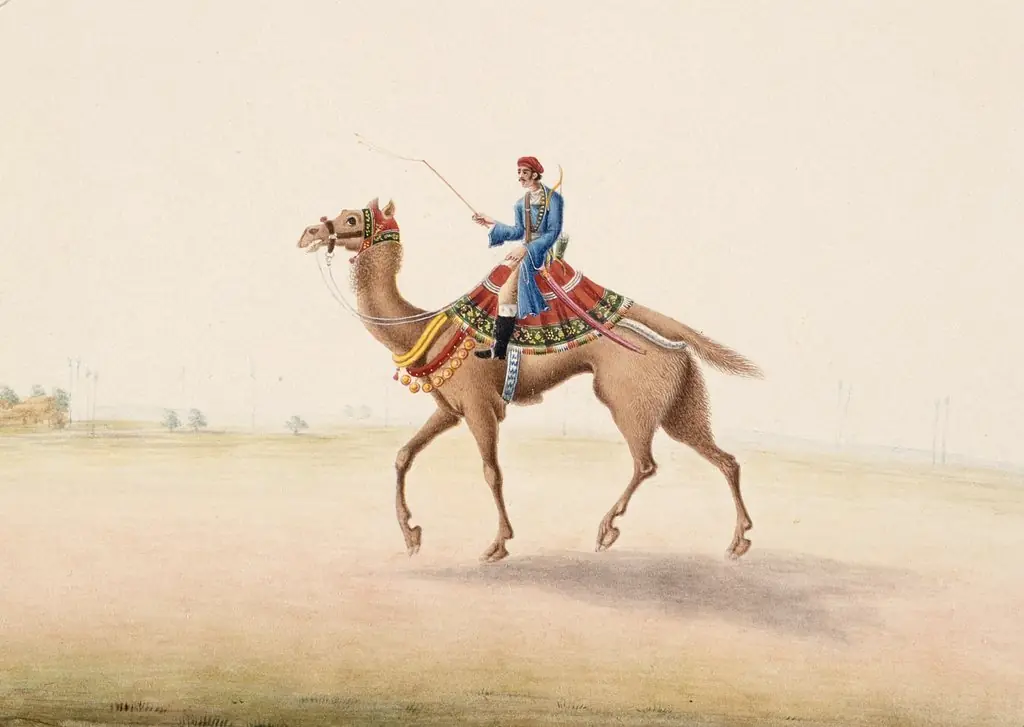
The painting depicts a Bedouin man on a camel, dressed in a blue robe and head covering, holding a stick. The camel is adorned with a saddle and red bridle, set against a backdrop of a tent, building, and palm tree, evoking a serene atmosphere.
Technique & Style
The work exemplifies Romanticism, a movement emphasizing emotion and imagination, through its tranquil and simple depiction of a desert scene.
Own this work as a print
Artist & collection

Artist
Achille-Constant-Théodore-Emile Prisse d'Avennes
Achille-Constant-Théodore-Émile Prisse d'Avennes was a French archaeologist, Egyptologist, architect and writer.

![A Nubian Girl standing beside the First[?] Cataract of the Nile, by Achille-Constant-Théodore-Emile Prisse d'Avennes](https://artifactworldgallery.com/img/achille-constant-theodore-emile-prisse-d-avennes--a-nubian-girl-standing-beside-the-first-cataract-of-the-nile--50be460b2df7006f-w320.webp)
![Arabs and camels beside a Tomb, Algeria[?], by Victor-Pierre Huguet](https://artifactworldgallery.com/img/victor-pierre-huguet--arabs-and-camels-beside-a-tomb-algeria--d8831a130920c80b-w320.webp)