Artwork
J.W.P.'s Kanja moored beside the East bank of the Nile at Luxor
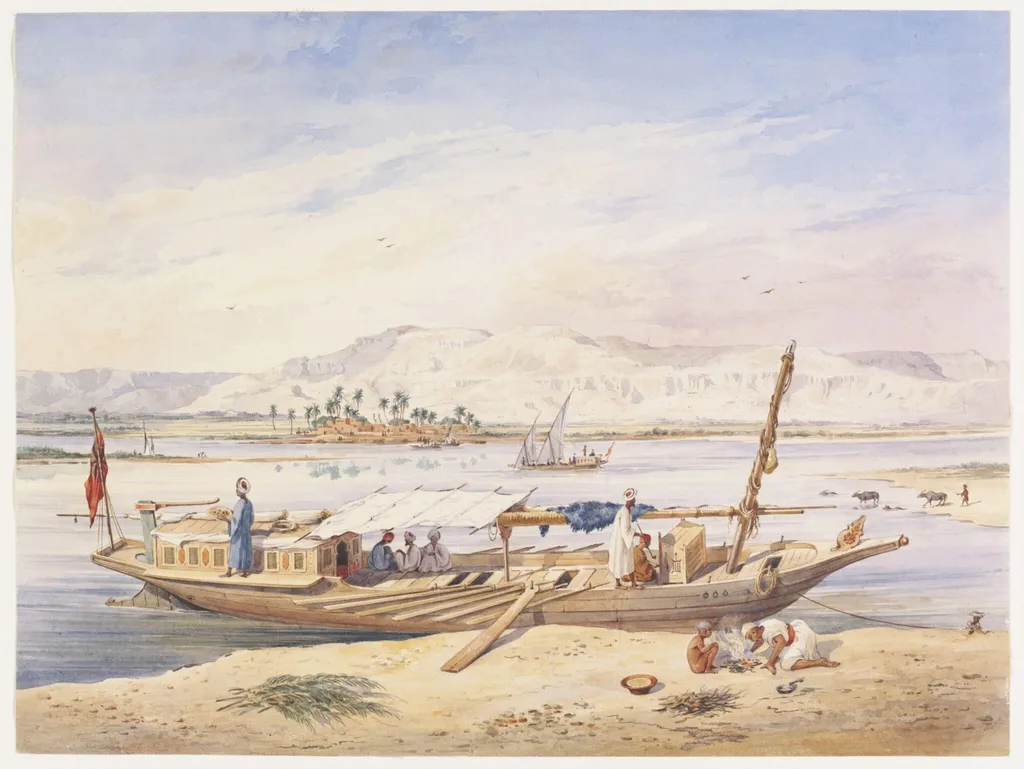
J.W.P.'s Kanja moored beside the East bank of the Nile at Luxor is a watercolor work on paper by the Orientalist artist Achille-Constant-Théodore-Emile Prisse d'Avennes. It dates from 1840 and is held in the collection of the Victoria and Albert Museum.
About this work
Overview
This watercolour depicts a wooden boat moored on the Nile River at Luxor, created by Prisse d'Avennes, a multifaceted figure who worked as an engineer, archaeologist, and artist.
Subject & Meaning
The scene shows a boat, referred to as 'Kanja' on the mount, tied to the shore, with its mast and striped sail casting shadows on the water, capturing a moment in the life of the Nile.
Technique & Style
The watercolour is characterised by its accuracy and vividness, with visible brushstrokes giving it a sense of immediacy, blending the precision of a drawing with the looseness of a watercolour.
History & Provenance
Prisse d'Avennes created this work while living in Egypt, where he initially worked as an engineer before pursuing his own projects, including accompanying travellers down the Nile and illustrating their journeys.
Context
The artwork is part of a larger body of work by Prisse d'Avennes, who was known for his detailed drawings and illustrations of Egyptian antiquities and landscapes.
Own this work as a print
Artist & collection

Artist
Achille-Constant-Théodore-Emile Prisse d'Avennes
Achille-Constant-Théodore-Émile Prisse d'Avennes was a French archaeologist, Egyptologist, architect and writer.

![A Nubian Girl standing beside the First[?] Cataract of the Nile, by Achille-Constant-Théodore-Emile Prisse d'Avennes](https://artifactworldgallery.com/img/achille-constant-theodore-emile-prisse-d-avennes--a-nubian-girl-standing-beside-the-first-cataract-of-the-nile--50be460b2df7006f-w320.webp)
 Egyptian Village Scene
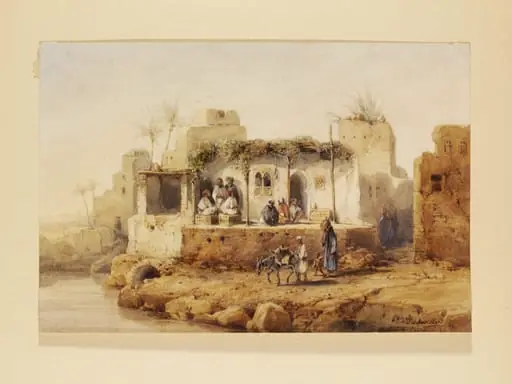 à Minieh, Egypte
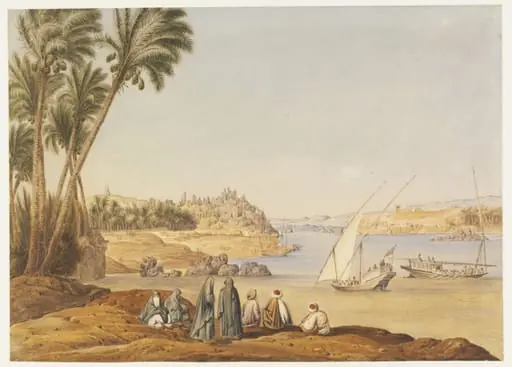 Aswan; looking south up the Nile
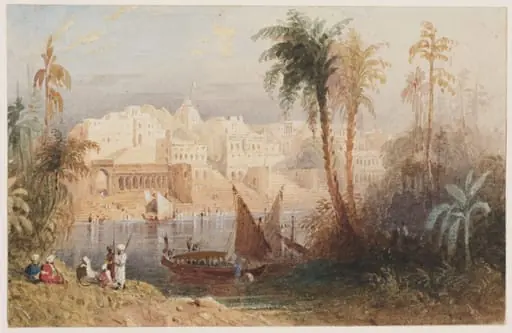 A view of an Indian city beside a river
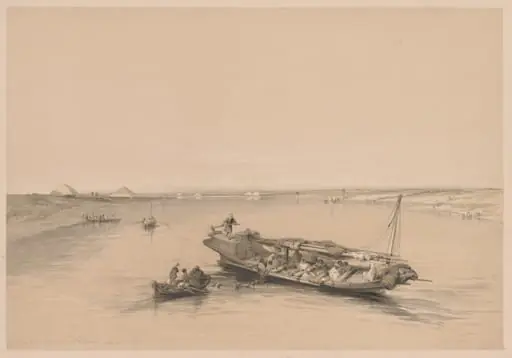 Egypt and Nubia: Volume I - No. 4, Slave Boats on the Nile, View Looking Towards the Pyramids of Dashour and Saccara
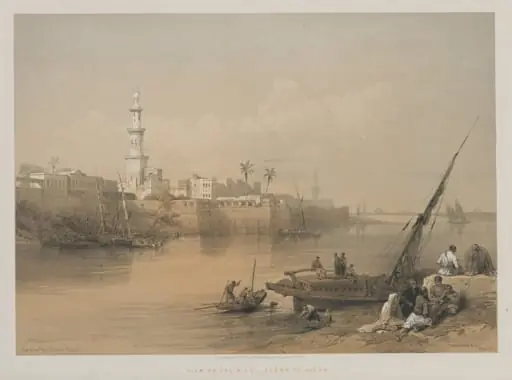 Egypt and Nubia, Volume III: View on the Nile, Ferry to Gizeh
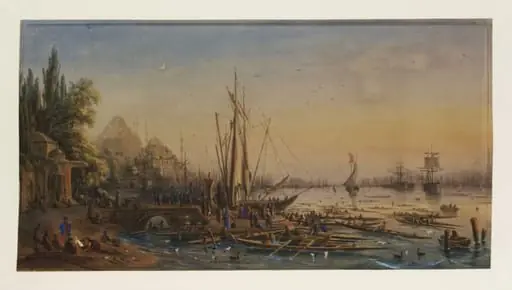 Harbour of Constantinople
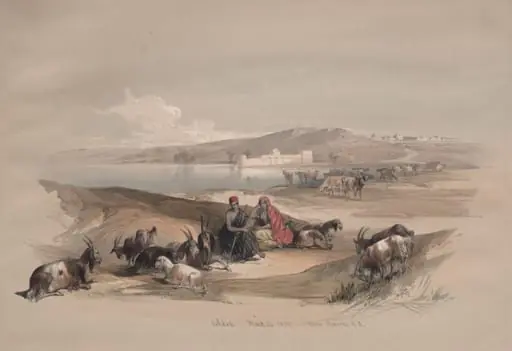 Ashdod
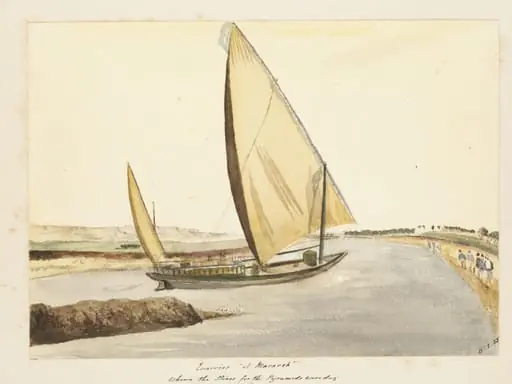 `Quarries "el. Masareh." Whence the Stones for the Pyramids were dug. On the Nile'