Artwork
An Alpine Village
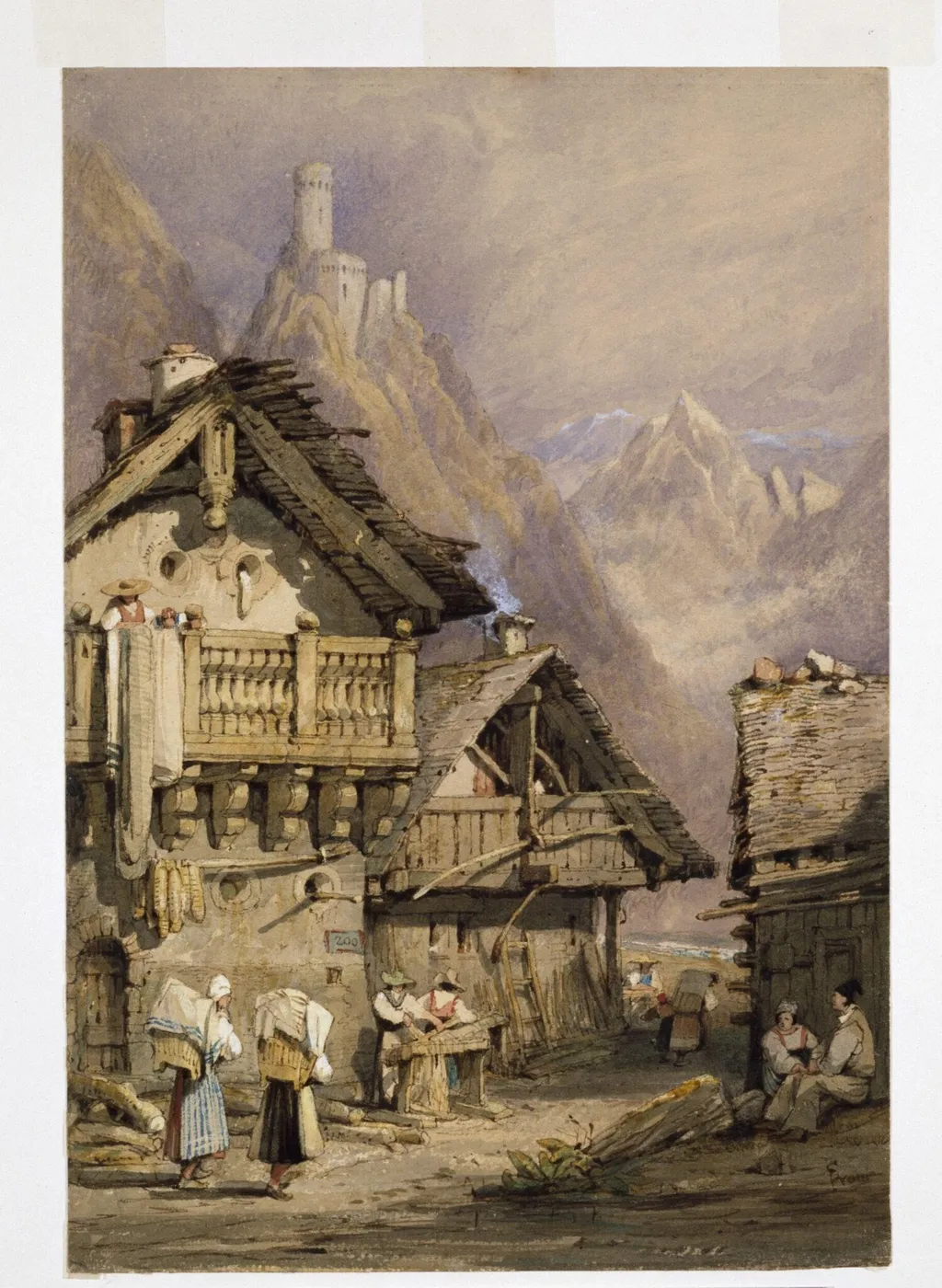
An Alpine Village is a watercolor work on paper by the Biedermeier artist Samuel Prout. It dates from 1800 and is held in the collection of the Victoria and Albert Museum.
About this work
Overview
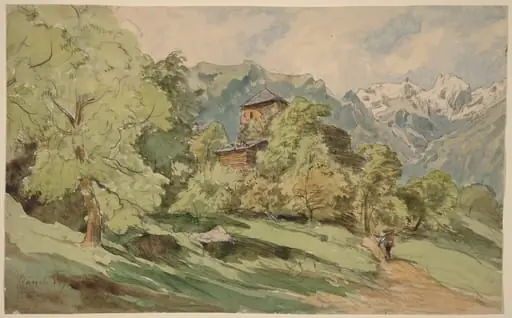
Samuel Prout’s watercolour An Alpine Village, executed in 1800, depicts a tranquil settlement set within a mountainous valley.
Samuel Prout’s watercolour An Alpine Village, executed in 1800, depicts a tranquil settlement set within a mountainous valley. The composition centers on a narrow dirt track flanked by modest wooden houses with steep, thatched roofs, while a modest balcony with carved detailing adds a touch of ornamentation. Snow‑capped peaks loom in the distance beneath a soft, muted sky, conveying a serene, timeless atmosphere.
Subject & Meaning
The work presents a quiet, everyday scene of rural life, emphasizing the harmonious relationship between human habitation and the surrounding alpine environment. Figures in simple attire are shown strolling or resting outdoors, suggesting a moment of communal repose. The painting invites contemplation of the simplicity and stability of village existence amid the grandeur of nature.
Technique & Style
Prout employs delicate washes of transparent pigment to integrate the village into the misty mountain backdrop. Light, layered strokes render the texture of wooden façades and thatched roofs, while subtle tonal gradations suggest atmospheric depth. The approach reflects the Biedermeier aesthetic’s preference for intimate, orderly scenes rendered with precise yet gentle observation.
History & Provenance
Since its creation, the watercolour has remained in public collections, currently residing in the Victoria and Albert Museum in London. The piece forms part of Prout’s extensive output that secured his appointment as Painter in Water‑Colours in Ordinary to King George IV and later to Queen Victoria, underscoring his official recognition in the early nineteenth century.
Context
Created during the Biedermeier period, An Alpine Village aligns with the era’s fascination with picturesque depictions of continental locales. Prout, known primarily for architectural subjects, extended his interest to rural landscapes, offering a balanced view of built and natural environments that catered to contemporary tastes for orderly, idyllic scenes.
Own this work as a print
Artist & collection
Artist
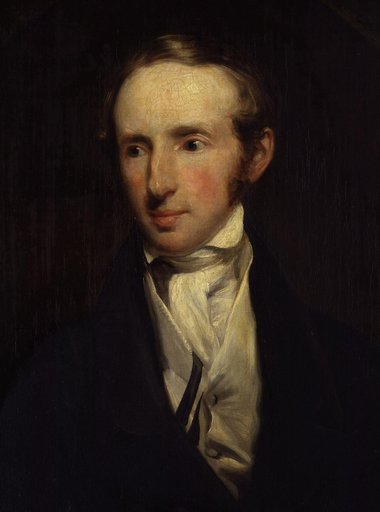
Samuel Prout was a British watercolourist, and one of the masters of watercolour architectural painting, who largely invented the genre of the grand steet scene in British watercolour painting, mostly with picturesque scenes from…

 Untitled
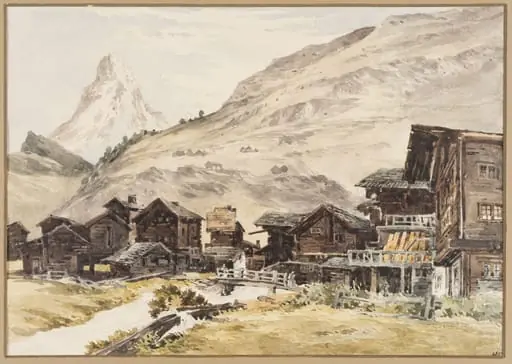 Houses and Stream at Zermatt, Switzerland
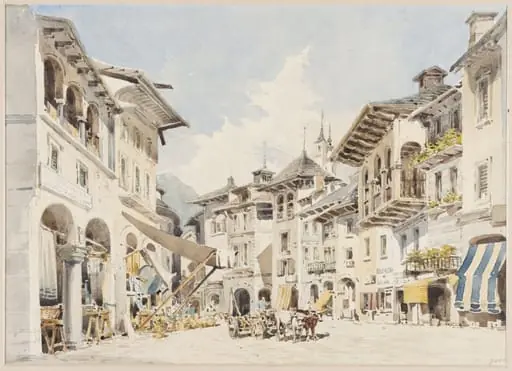 Duomo D'Ossola, Piedmont
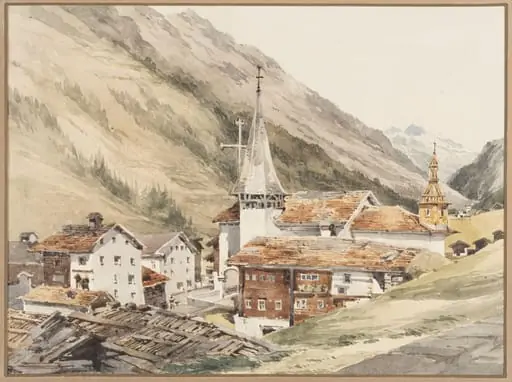 Village in the Saas Valley, Switzerland.
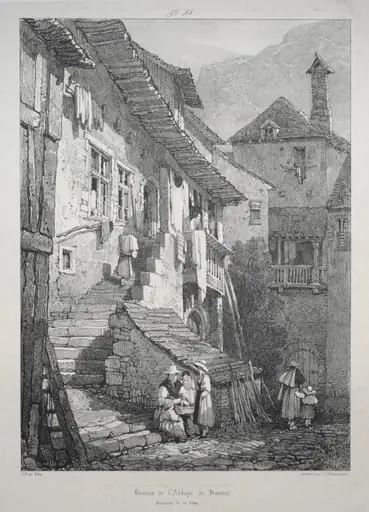 Ruins of the Abbey of Baume. Interior of the Court
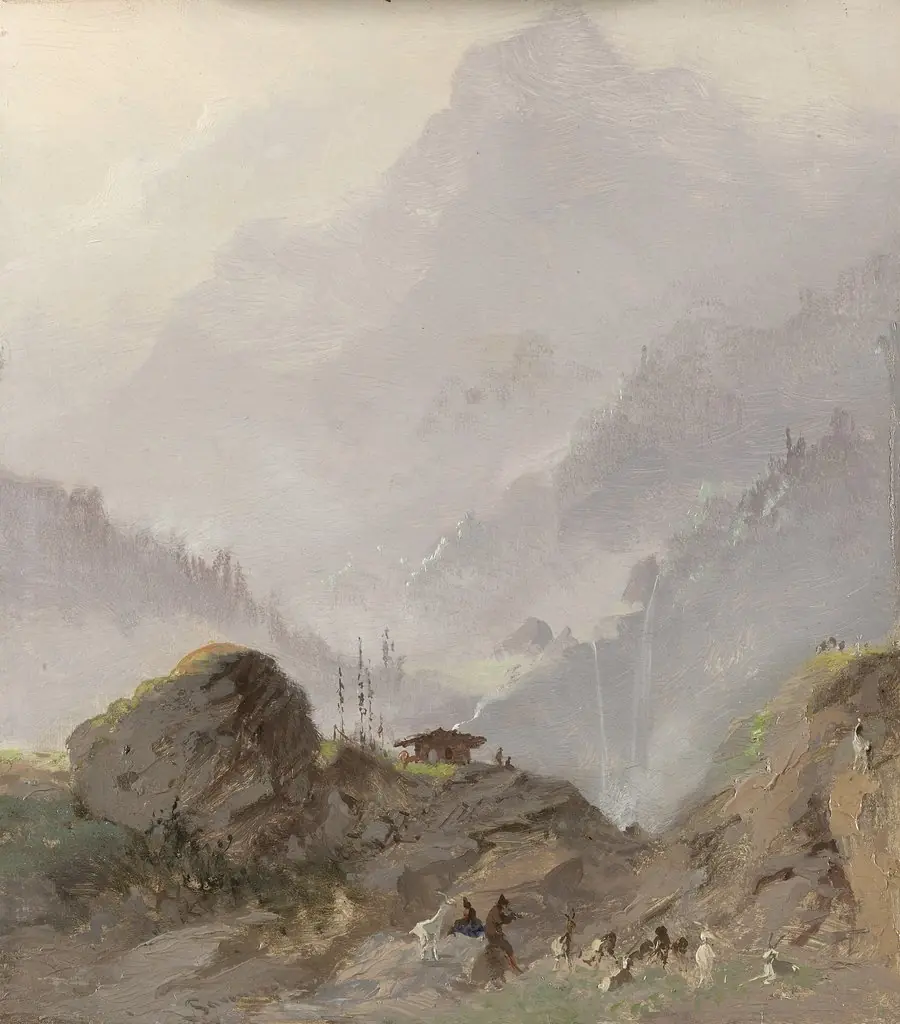 Alpine Landscape in Tyrol with Chamois Herd
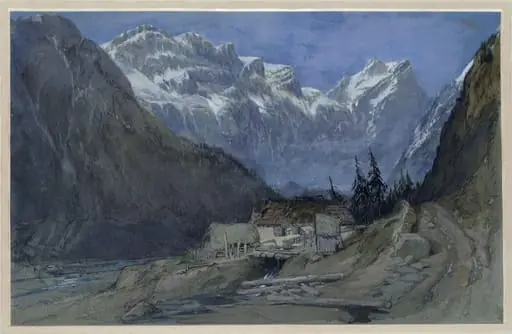 Val d'Orso
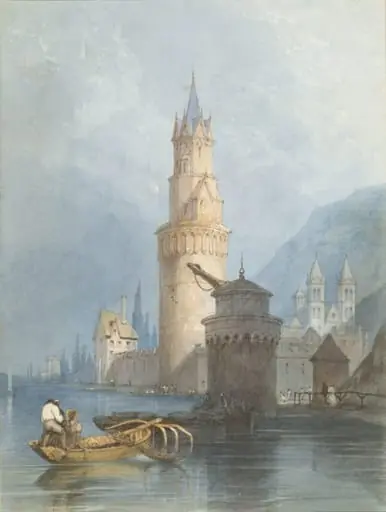 Tower and Mill at Andernach on the Rhine
 Berglandschap in Tirol met gemzen
 Gateway and buildings in Spain
 The Castle of Bürglen with the Alps Beyond
- An Alpine Valley