Artwork
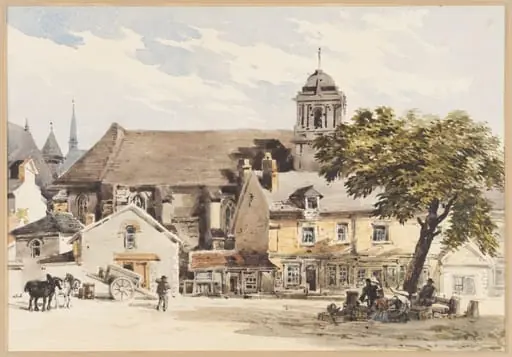
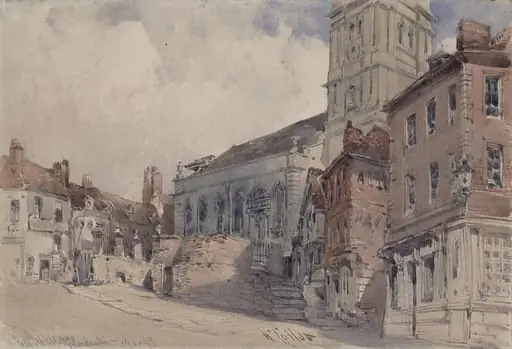
Street View, Mortagne, Normandy
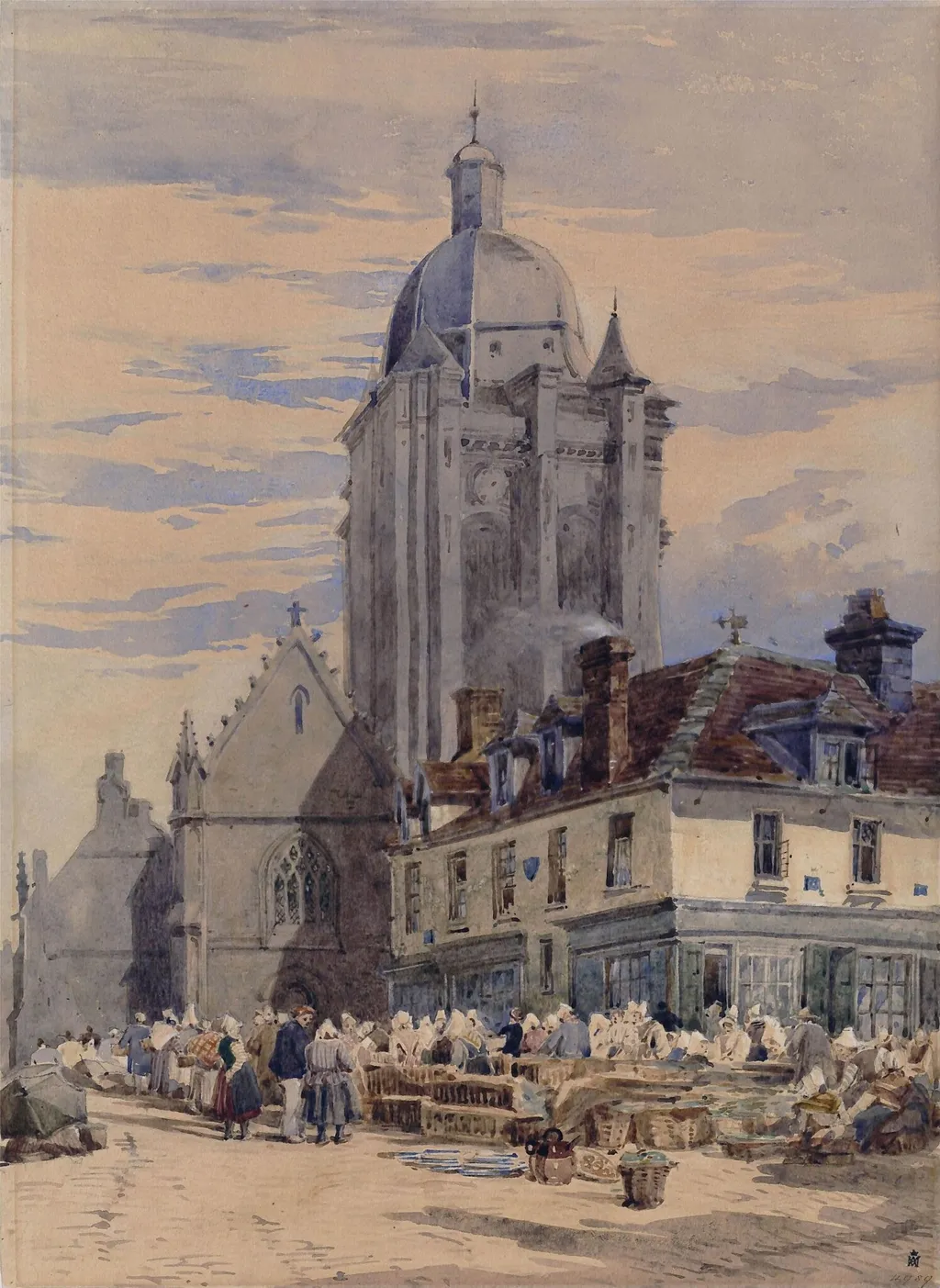
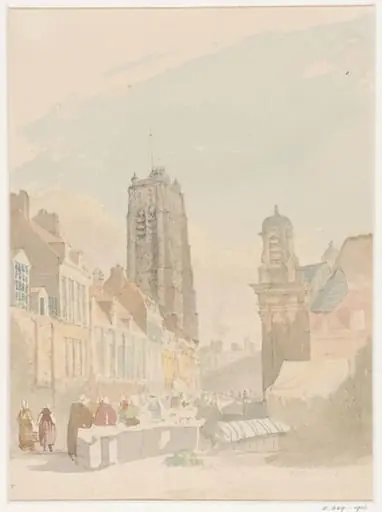
Street View, Mortagne, Normandy is a watercolor work on paper by the Plein Air artist Charles Claude Pyne. It dates from 1850 and is held in the collection of the Victoria and Albert Museum.
About this work
Overview
The work is a modestly scaled study of daily life in a rural French town, executed with restrained tonalities and delicate brushwork.
Charles Claude Pyne created this watercolour in 1850, capturing a quiet street in Mortagne, Normandy. The work is a modestly scaled study of daily life in a rural French town, executed with restrained tonalities and delicate brushwork. Unlike grand historical scenes, it focuses on ordinary surroundings, reflecting a quiet interest in the textures of provincial existence during the mid-nineteenth century.
Subject & Meaning
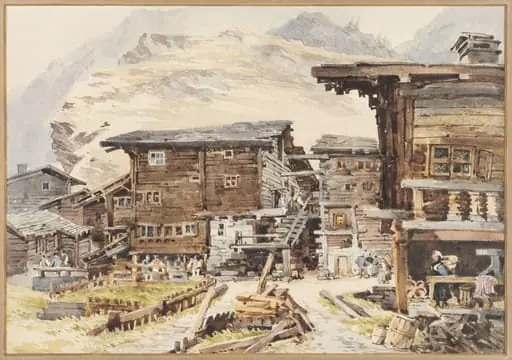
The scene portrays townspeople engaged in routine activities, carrying goods, walking, pausing near stalls. Baskets, household items, and modest architecture suggest local commerce and domestic life. There is no dramatic narrative; instead, the painting conveys stillness and routine, emphasizing the dignity of unremarkable moments in a small community.
Technique & Style
Pyne employed transparent watercolour washes to build soft, layered hues, avoiding sharp outlines. The palette is subdued, ochres, greys, and pale greens, enhancing the hazy, atmospheric quality. Brushstrokes are light and deliberate, suggesting form through tone rather than detail, creating a sense of quiet immersion rather than precise documentation.
History & Provenance
The work’s early ownership is undocumented, but it likely remained in private hands in Normandy or northern France. Pyne, a lesser-known artist of the period, produced numerous topographical watercolours, many of which circulated locally. This piece survives as one of the few recorded examples of his observational work outside major urban centers.
Context
In 1850, France was undergoing rapid industrialization, yet many rural communities like Mortagne retained traditional rhythms. Artists such as Pyne, working outside academic circles, documented these places with quiet precision. His watercolours reflect a growing interest in regional life, distinct from the romanticized landscapes favored by official salons.
Legacy
Pyne’s work remains obscure in broader art histories, but his watercolours offer valuable insight into provincial French life before widespread modernization. This piece, like others in his oeuvre, contributes to a quieter tradition of documentary art, unassuming, personal, and grounded in the observation of everyday place.
Own this work as a print
Artist & collection