Artwork
Opstilling med vandkande, håndklæde og krukker
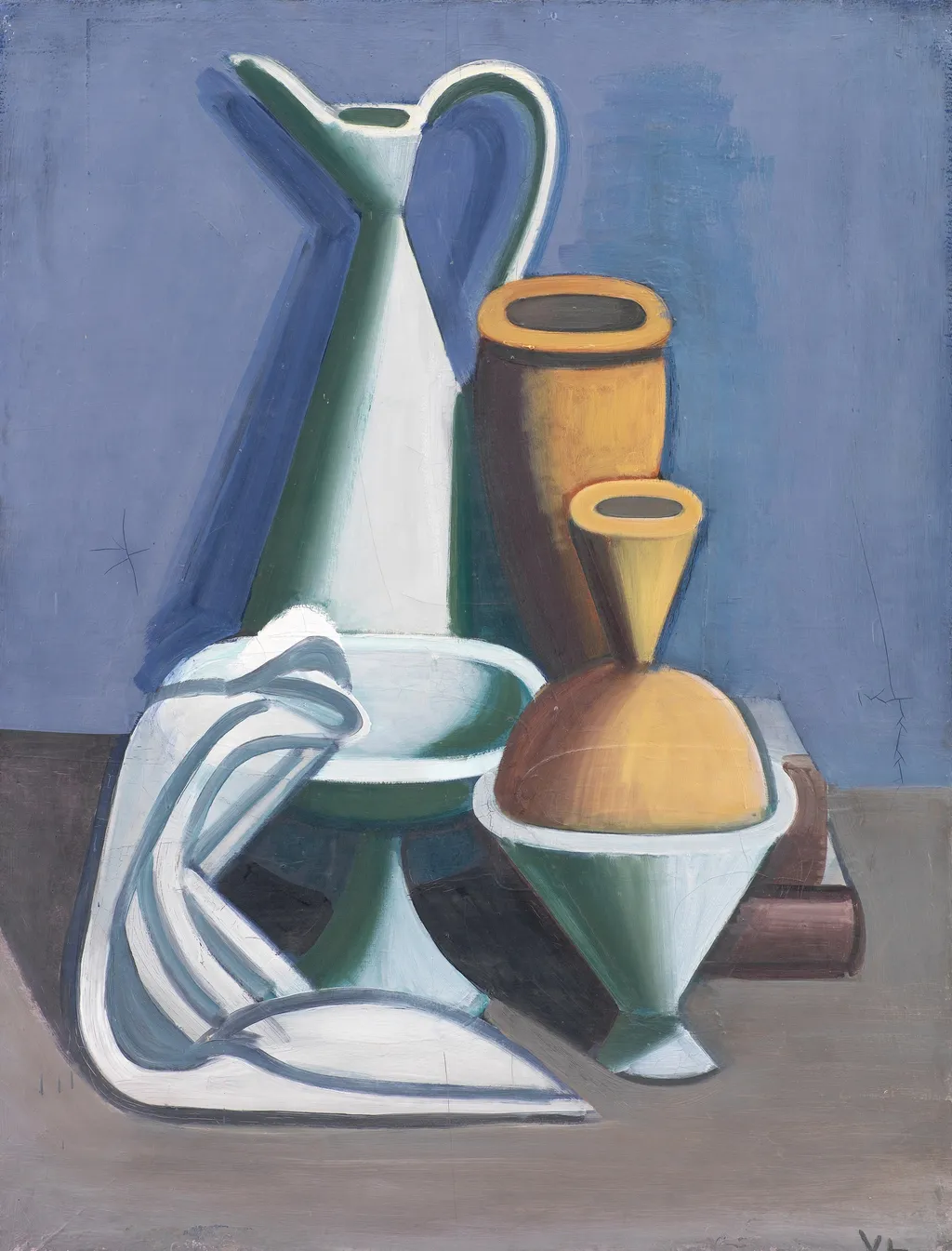
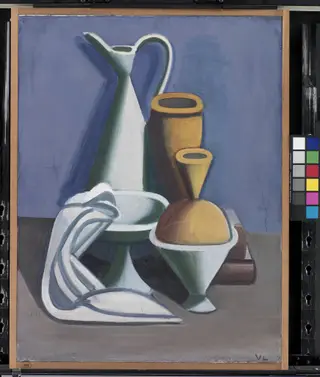
Opstilling med vandkande, håndklæde og krukker is an oil painting by Vilhelm Lundstrøm. It dates from 1929 and is held in the collection of the Statens Museum for Kunst.
About this work
Subject & Meaning
These utilitarian household items are arranged together as the sole subject of the composition, with no figures, landscape, or narrative scene present.
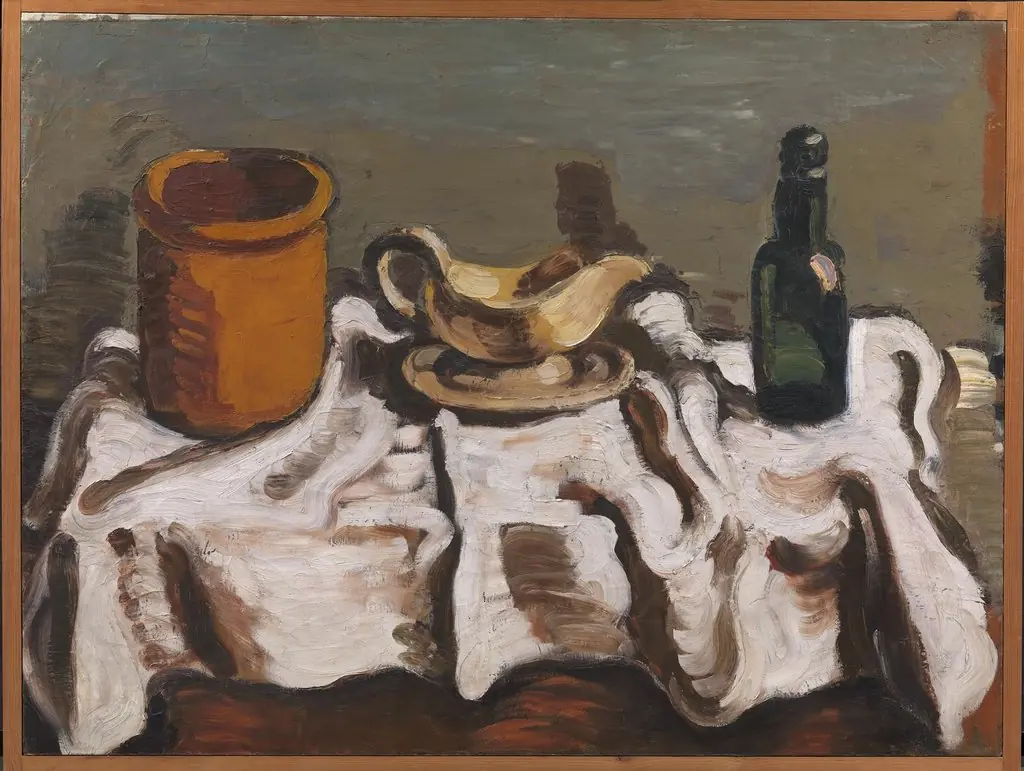
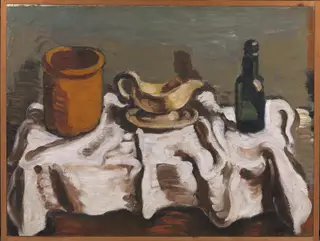
The painting is a still life composed of three domestic objects: a watering can, a towel, and jars. These utilitarian household items are arranged together as the sole subject of the composition, with no figures, landscape, or narrative scene present. By isolating such ordinary, functional objects as the focus of an oil painting, the work treats everyday domestic equipment as worthy of formal pictorial attention, a hallmark approach of the still life genre.
The combination of a watering can, a towel, and jars evokes the routines of the home, presenting items associated with washing, pouring, and storage as a quiet meditation on daily life rather than as symbolic attributes carrying specific allegorical meaning.
In the context of Vilhelm Lundstrøm's 1929 practice, the choice of such humble, recognizable objects reflects a modernist interest in stripping subject matter down to common, unpretentious things, allowing their shapes, surfaces, and spatial relationships to carry the visual interest of the work.
Technique & Style
Executed in 1929, this still life by Vilhelm Lundstrøm is an oil painting on canvas. The work depicts a composition featuring a watering can, a towel, and jars, arranged within the frame. Measuring 116 cm in height and 89 cm in width, the piece utilizes oil paint as its primary medium to render these domestic objects.
The classification of the work confirms its status as a painted still life, held within the collection of the Statens Museum for Kunst.
History & Provenance
Vilhelm Lundstrøm created the oil painting Opstilling med vandkande, håndklæde og krukker in 1929. Executed on canvas, the work measures 116 cm in height and 89 cm in width. The piece is classified as a still life and currently resides in the collection of the Statens Museum for Kunst.
The painting is held in the collection of Statens Museum for Kunst, where it is listed under the inventory number 1955.123.
It was included in the museum's 1998 retrospective of Lundstrøm's still-life works and again in the 2005 exhibition Danish Art of the 20th Century.
The work was created in 1929 and measures 116 cm in height by 89 cm in width.
Context
Critical reception of Opstilling med vandkande, håndklæde og krukker has been limited, with no major contemporary reviews identified in accessible records. Scholarship situates the work within Lundstrøm's exploration of everyday domestic objects, aligning with his broader stylistic focus on still life arrangements from the late 1920s. The painting's placement in the Statens Museum for Kunst collection underscores its significance within Danish modernism, where it is contextualized alongside other works examining ordinary household items through a refined compositional lens.
Overview
Opstilling med vandkande, håndklæde og krukker (Still Life with Watering Can, Towel, and Jars) is a 1929 oil painting by the Danish artist Vilhelm Lundstrøm. The work depicts a domestic arrangement featuring a green watering can, a white bowl draped with a striped towel, and two stacked yellowish-brown jars resting on a rounded form. Executed during Lundstrøm's mature period, the composition is defined by a radical simplification of form and a rejection of traditional modeling.
The artist employs flat, unmodulated planes of bold color, eliminating shadows and highlights to create a two-dimensional pictorial space. Thick, deliberate brushstrokes define the contours, lending the objects a sculptural, almost geometric solidity. This approach aligns with Lundstrøm's development of a distinct Danish modernist style, influenced by Cézanne and early Cubism, which prioritized structural clarity over naturalistic representation.
Created in 1929, the painting exemplifies the artist's ongoing exploration of still life as a vehicle for formal experimentation, where everyday objects are transformed into enduring, rhythmic compositions through the reduction of detail and the emphasis on color relationships.
Own this work as a print
Artist & collection
Artist
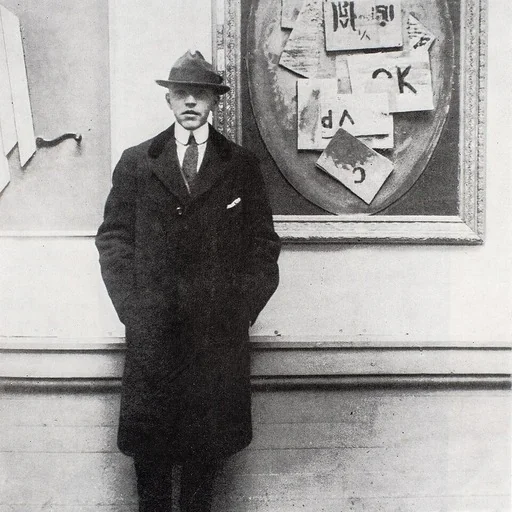
Vilhelm Lundstrøm (26 May 1893 – 9 May 1950) was a Danish modernist painter. He was a central figure in early Danish experimental art and introduced French cubism to Denmark.