Artwork
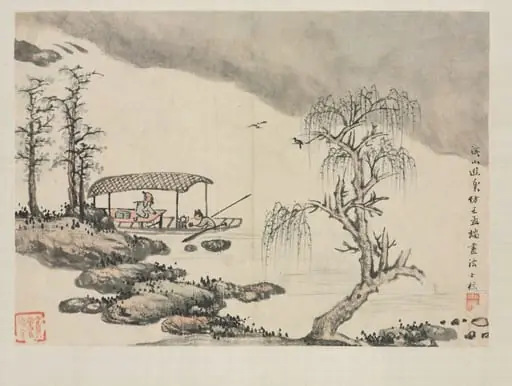
Fisherman's Joy

Fisherman's Joy is an unspecified painting by the Ming dynasty painting artist Qian Gu. It dates from 1572 and is held in the collection of the Cleveland Museum of Art.
About this work
History & Provenance
The provided sources do not contain specific records regarding the work's exhibition history or prior ownership before entering the Cleveland Museum of Art.
The hanging scroll Fisherman’s Joy is dated 1572 on the artist’s inscription and is firmly attributed to Qian Gu, a painter active in the sixteenth-century Jiangnan region. The work entered the Cleveland Museum of Art in 1977 as accession number 1977.56, where it remains in the permanent collection. No record of a specific patron or commission survives in the museum’s files or in Qian Gu’s known oeuvre, so the original commissioning context remains undocumented.
Fisherman's Joy is held in the collection of the Cleveland Museum of Art in Cleveland, Ohio. The museum acquired the work under the accession number 1977.56. Created by the artist Qian Gu in 1572, the painting originates from China.
The provided sources do not contain specific records regarding the work's exhibition history or prior ownership before entering the Cleveland Museum of Art.
Overview
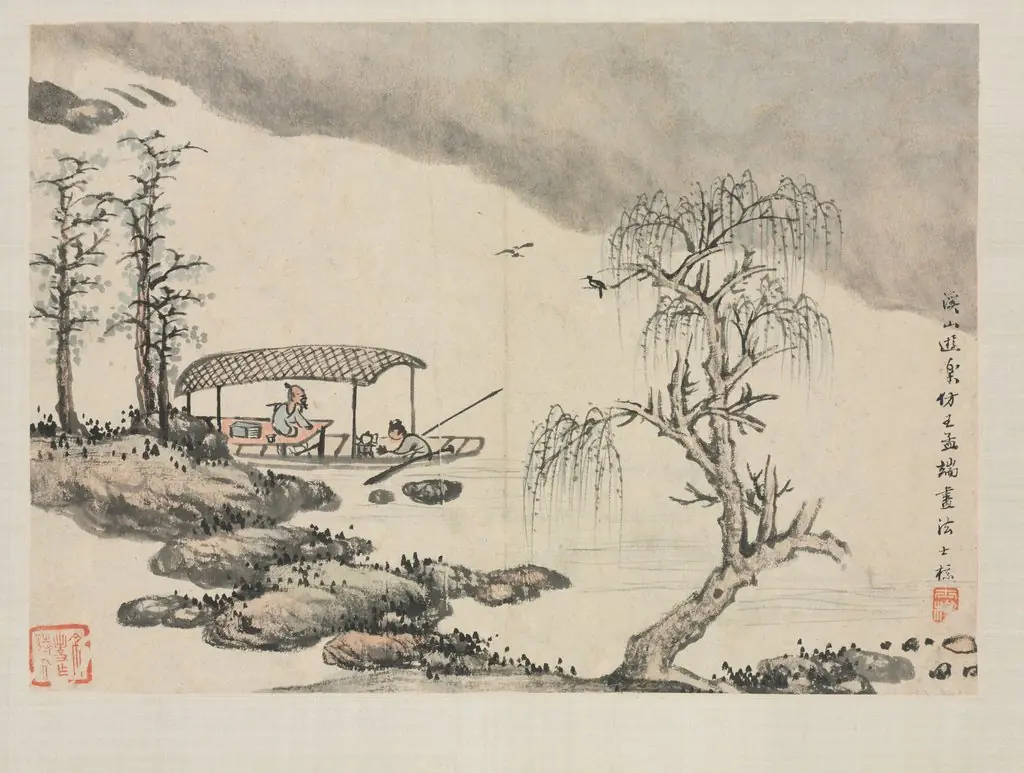
Fisherman's Joy, painted by Qian Gu in 1572, is a narrow, horizontal composition that captures a tranquil riverbank scene. The work resides in the collection of the Cleveland Museum of Art. Its muted palette of grays, greens, and earth tones conveys a calm atmosphere, while the arrangement of boats and figures suggests a leisurely day spent fishing.
Subject & Meaning
The painting depicts a stretch of water bordered by trees and low vegetation, where several small fishing vessels navigate the current. Figures are dispersed both on the shore and within the boats, engaged in routine activities rather than heroic exploits. The inclusion of a brief inscription on the left side hints at a poetic or reflective commentary on the everyday pleasures of river life.
Technique & Style
Qian Gu employs light, fluid brushwork that resembles rapid sketches, allowing forms to emerge with minimal detail. This approach emphasizes the overall mood over precise rendering, creating a sense of immediacy. The artist’s focus on natural surroundings and ordinary labor aligns with a broader Ming‑dynasty interest in depicting quotidian scenes with understated elegance.
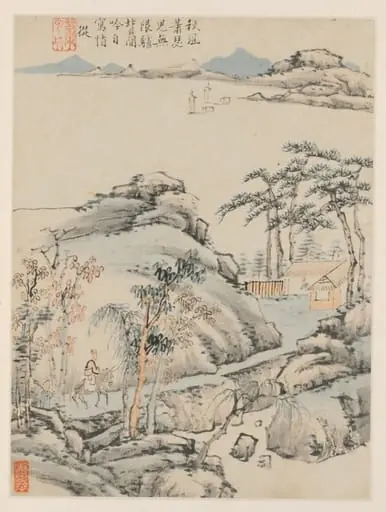
Artist & collection


- Album of Seasonal Landscapes, Leaf F (previous leaf 5)
 Fisherman's Joy
 Landscape Album in Various Styles: Pleasure in a Mountain Brook
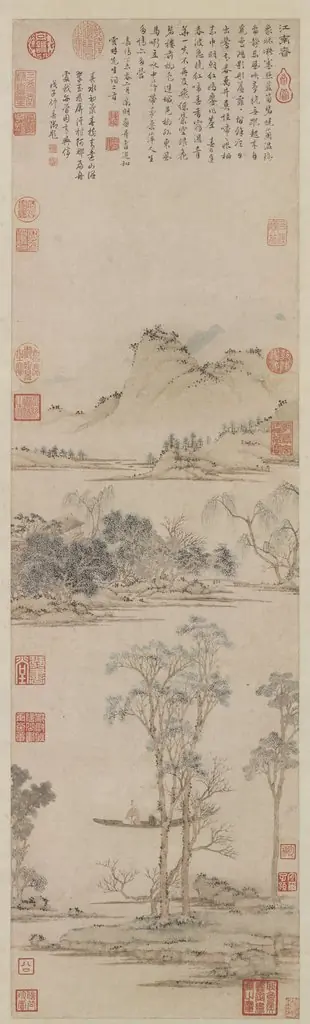 Spring in Chiang-nan
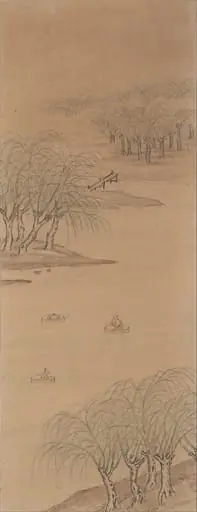 Untitled
 Untitled
 明 文徵明 東林避暑圖 卷 |Summer retreat in the eastern grove
 明 佚名 仿趙孟頫 垂虹亭圖 卷|Pavilion of the Hovering Rainbow Bridge
 Untitled
 Tao Yuanming's Return Home
 View from the Keyin Pavilion on Paradise (Baojie) Mountain
 Landscape Album in Various Styles: Pleasure in a Mountain Brook