Artwork
Flower still-life
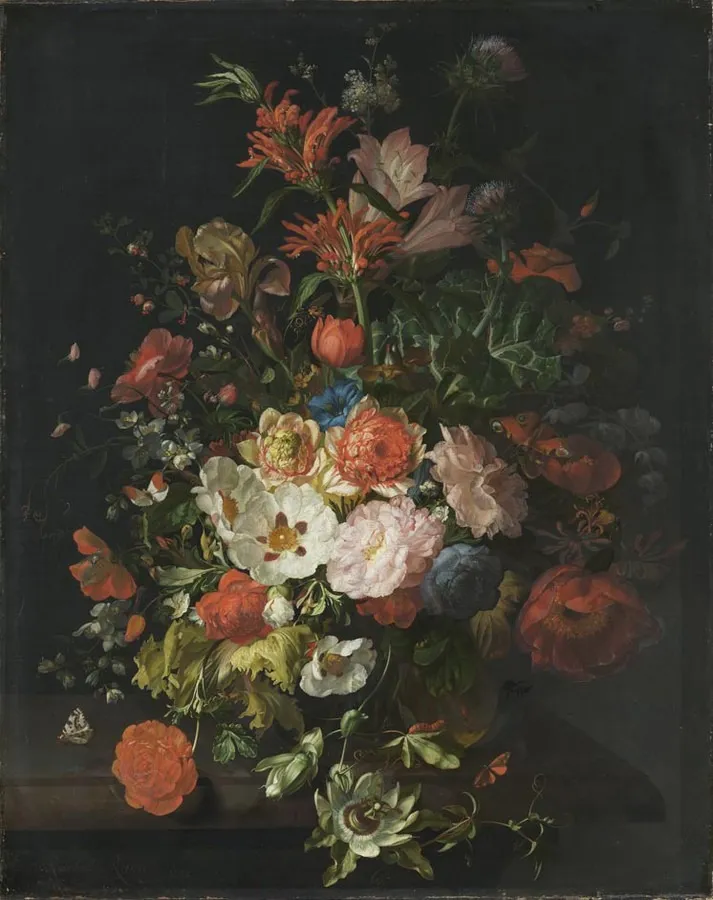
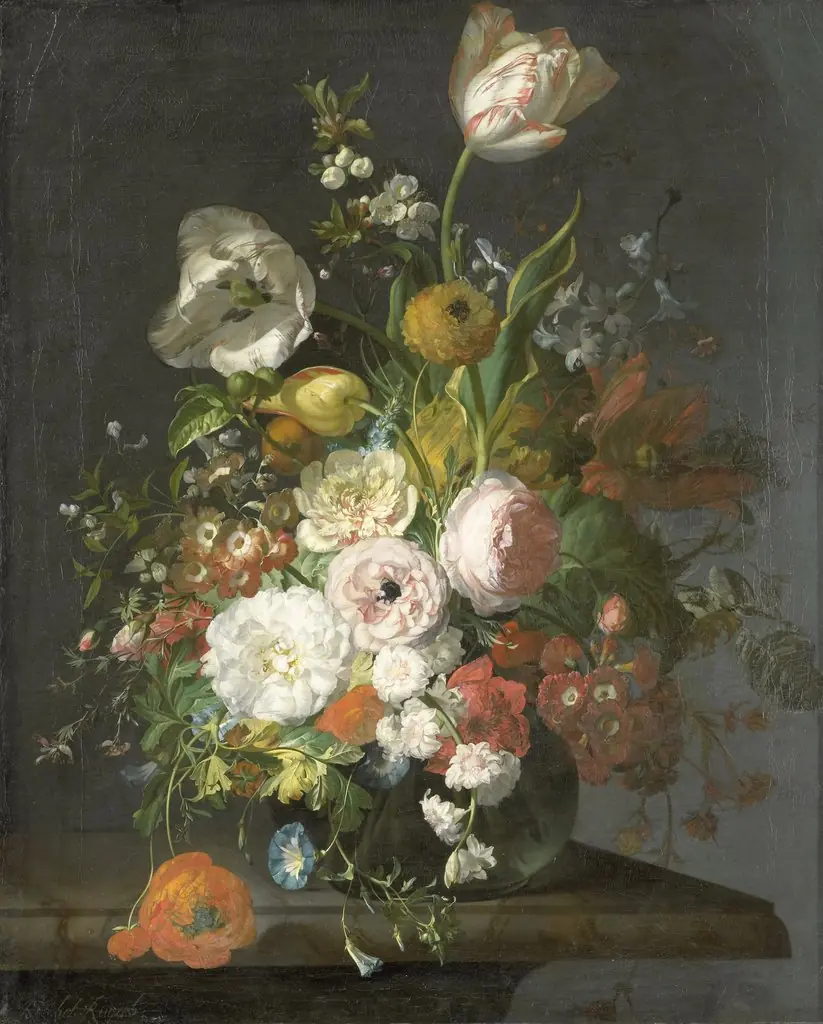
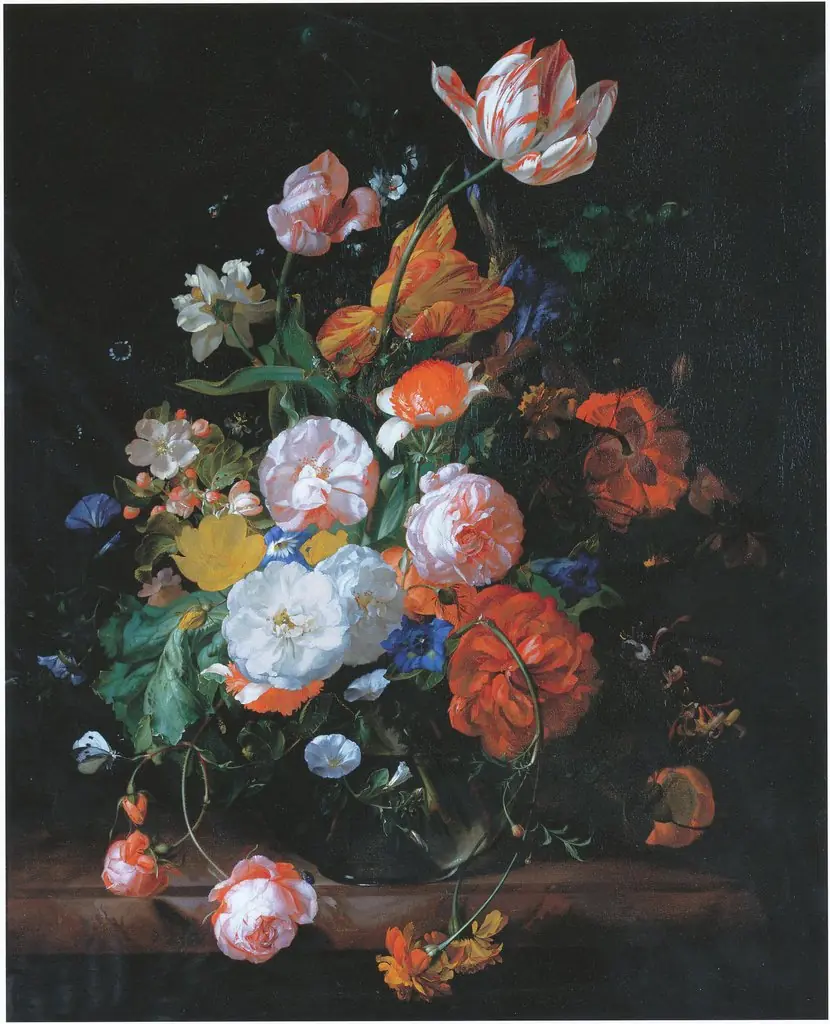
Flower still-life is an oil painting by the Dutch Golden Age artist Rachel Ruysch. It dates from 1715 and is held in the collection of the Bavarian State Painting Collections.
About this work
Subject & Meaning
The bouquet’s opulence may also reflect the collector’s status, aligning with the provenance linking the work to Johann Wilhelm von der Pfalz.
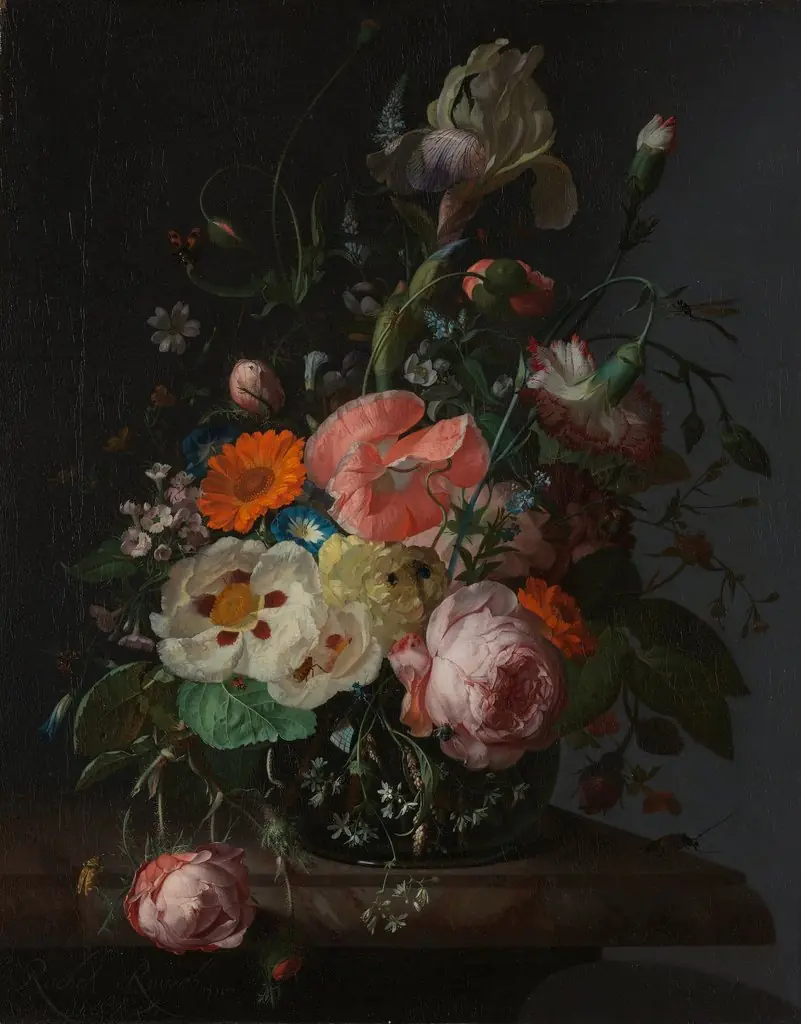
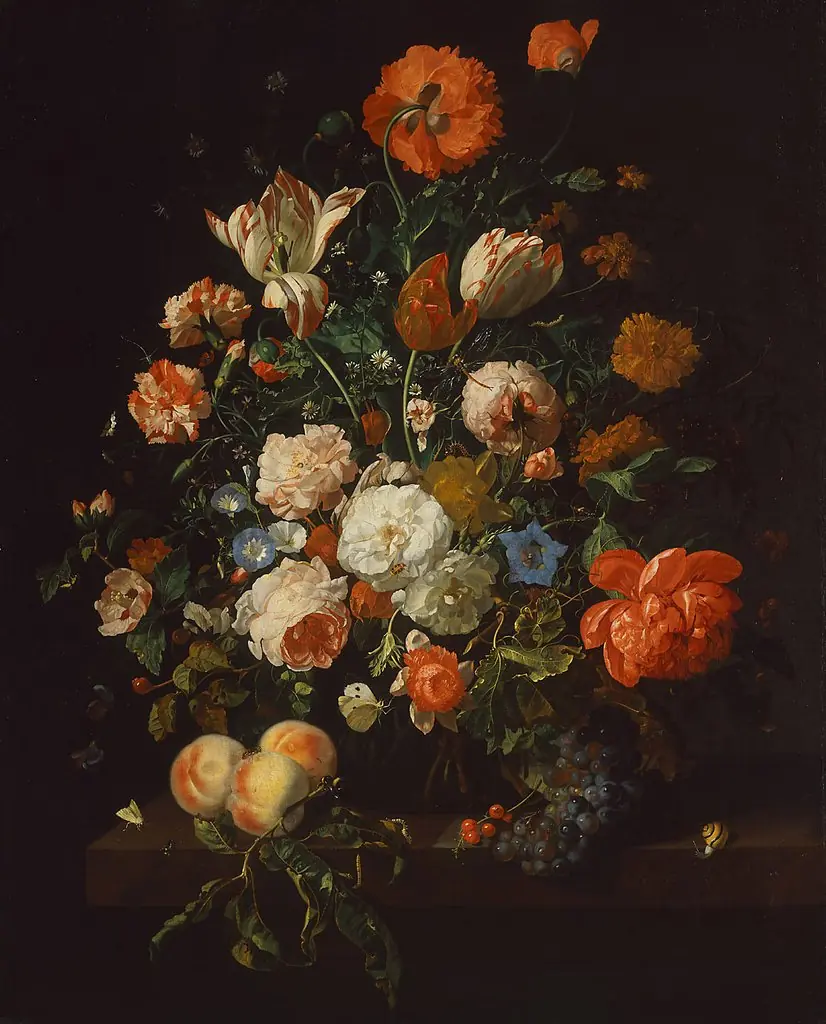
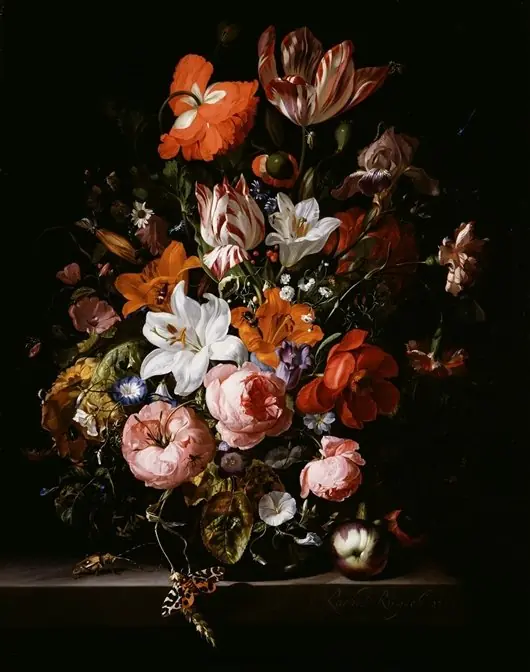
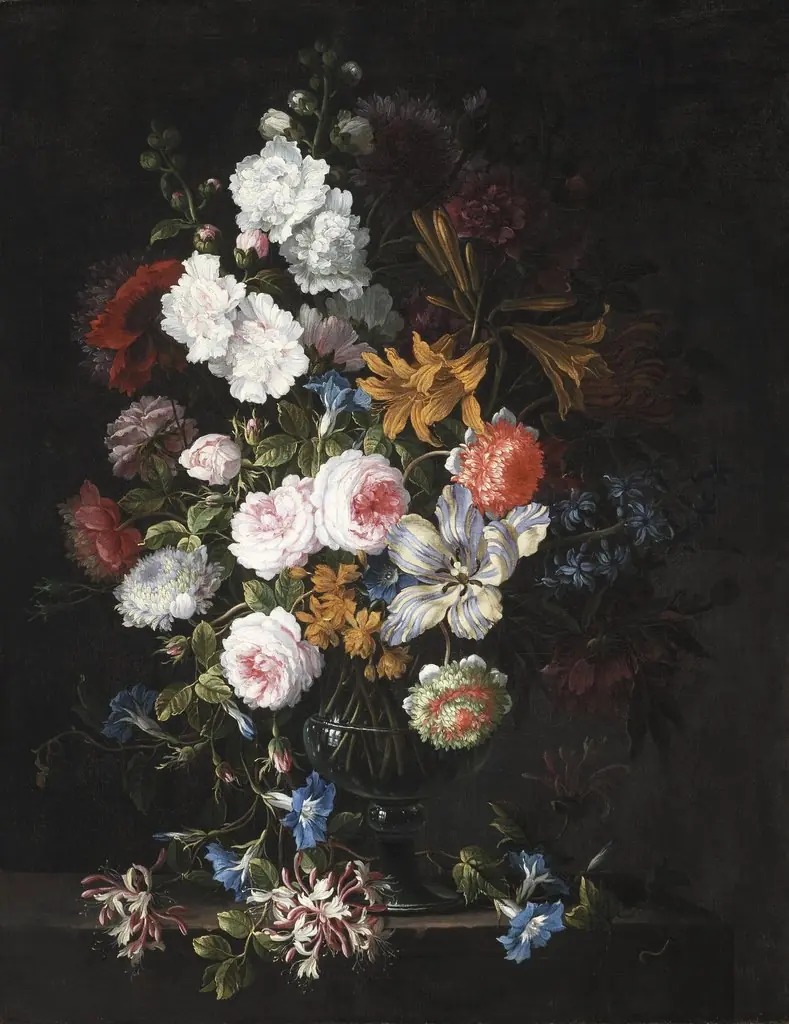
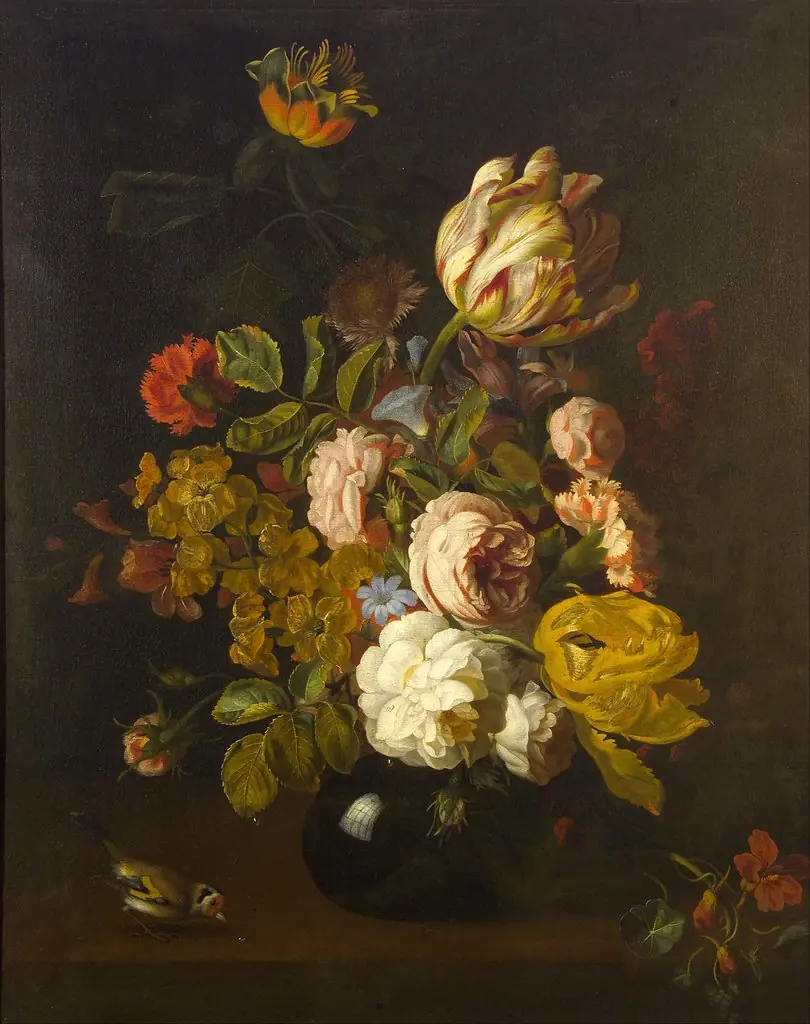
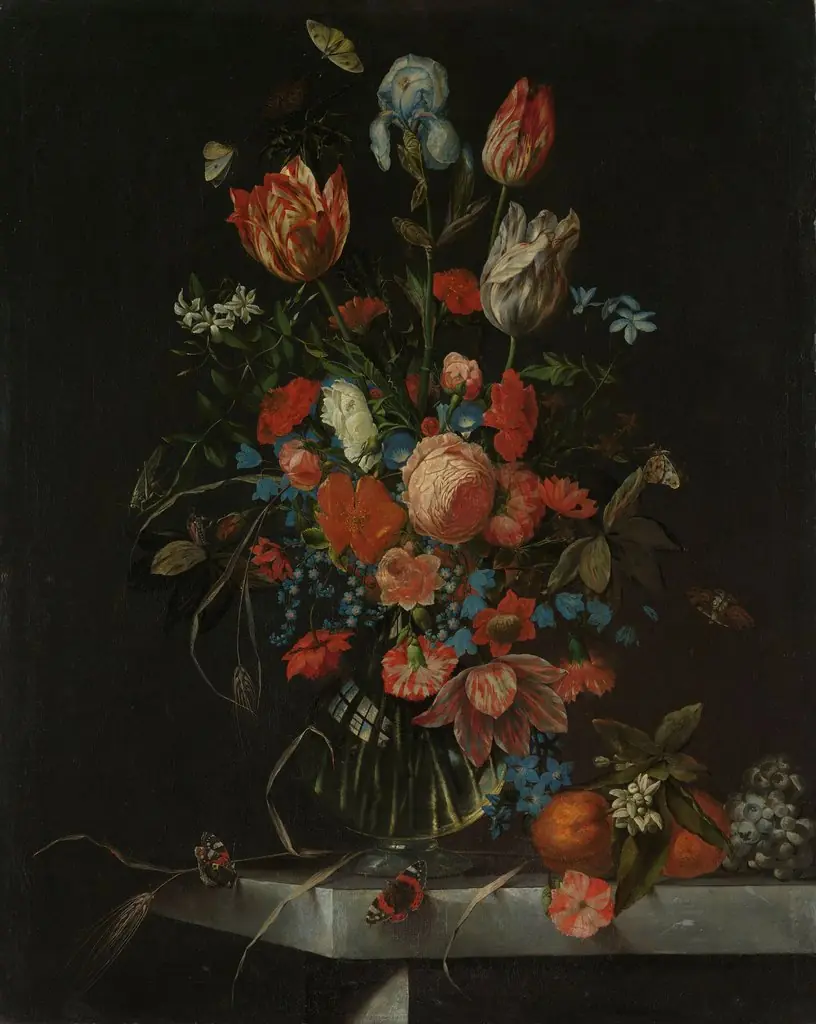
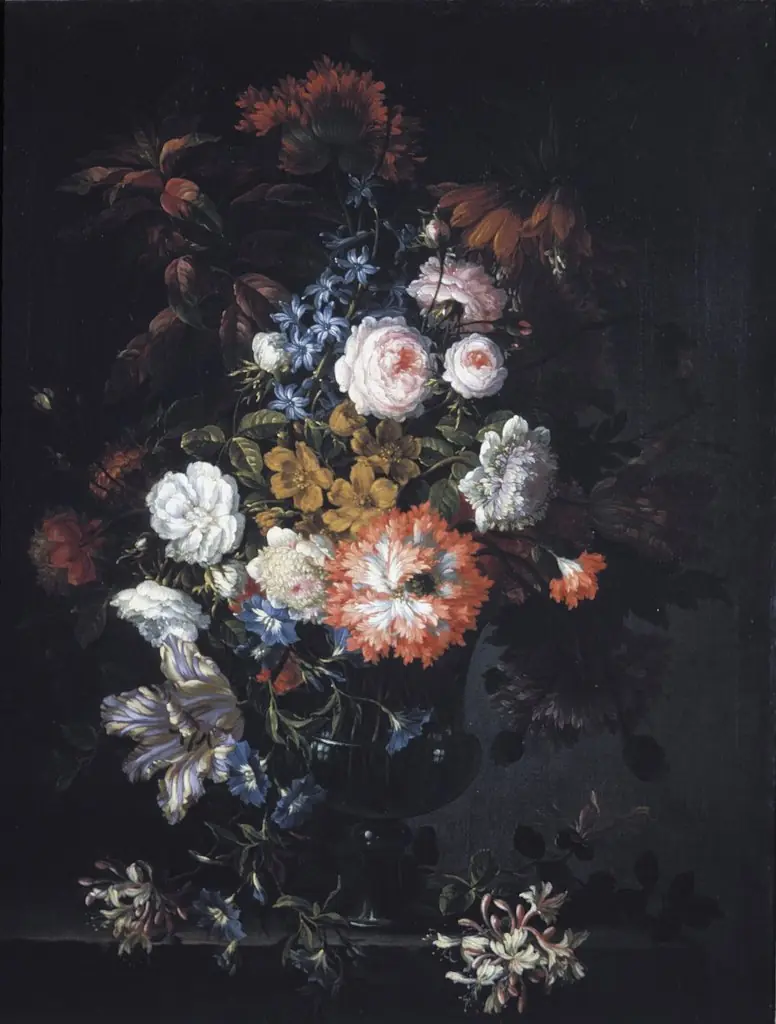
The painting depicts a lush bouquet arranged in a glass vase, rendered with botanical precision and luminous color. Ruysch’s composition centers on a dense cluster of peonies, roses, and other blooms, interspersed with insects such as a butterfly and a bee that animate the scene with implied movement.
In keeping with the Dutch still-life tradition, the arrangement conveys themes of transience and abundance. The inclusion of insects and fading petals suggests the fleeting nature of life, while the vibrant, carefully observed flora underscores nature’s generative power. The bouquet’s opulence may also reflect the collector’s status, aligning with the provenance linking the work to Johann Wilhelm von der Pfalz.
Technique & Style
Executed in oil on canvas in 1715, the painting measures 75 cm in height and 60.3 cm in width. The handling shows the layered glazes and delicate stippling characteristic of Ruysch’s botanical still lifes, with translucent petals built up over a warm imprimatura to render subtle tonal shifts.
The bouquet is arranged in a loosely pyramidal composition against a dark ground, highlighting the luminous contrasts between light and shadow. Minute details such as dewdrops and insect trails are rendered with precise brushwork, while the overall surface retains a refined finish typical of Ruysch’s mature works.
History & Provenance
Flower still-life is an oil painting on canvas created in 1715 by Rachel Ruysch. It measures 75 cm by 60.3 cm and depicts a bouquet of flowers. The work belongs to the floral painting genre and was originally part of the Johann Wilhelm von der Pfalz collection within the Bavarian State Painting Collections.
It remains in the Alte Pinakothek in Munich. The painting was produced during the Baroque period and exemplifies Ruysch’s detailed still-life technique.
The provenance traces back to the Pfalz collection before entering the Alte Pinakothek, where it has been displayed since its acquisition.
Rachel Ruysch's 1715 oil painting, Flower still-life, is held by the Bavarian State Painting Collections within the Alte Pinakothek in Munich. The work belongs to the Johann Wilhelm von der Pfalz collection and depicts a floral bouquet on canvas. While the specific inventory or accession number is not provided in the available records, the painting's dimensions are recorded as 75 cm in height and 60.3 cm in width. No exhibition history is documented in the current sources.
Legacy
Flower still-life by Rachel Ruysch, painted in 1715, contributed to the evolution of Dutch floral painting through its intricate botanical detail and compositional balance. Its inclusion in the Johann Wilhelm von der Pfalz collection at the Alte Pinakothek cemented its historical significance within German Rococo art circles. The work's technical mastery of oil paint and depiction of bouquet arrangements influenced later interpretations of still-life subjects in European art traditions.
Overview
Rachel Ruysch’s Flower still-life (1715) is an oil painting that presents a densely packed bouquet spilling from a narrow, dark vase. The composition is set against a stark black background, which heightens the vivid hues of white roses, orange tulips, tiny blue blossoms and interwoven green foliage. The work exemplifies the meticulous naturalism for which Ruysc h is celebrated.
Context
Ruysch was one of the most documented female artists of her era, achieving international reputation while specializing in floral still‑lifes. Her work responded to a market demand for elaborate, naturalistic bouquets that demonstrated both artistic skill and scientific observation of plant forms.
Artist & collection
Artist
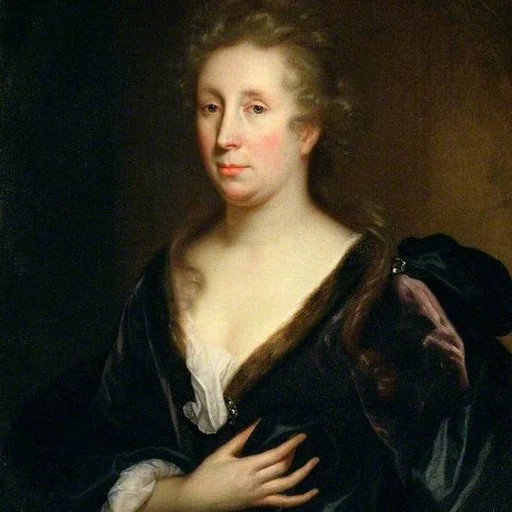
Rachel Ruysch (3 June 1664 – 12 October 1750) was a Dutch still-life painter from the Dutch Republic.