Artwork
Ervigio
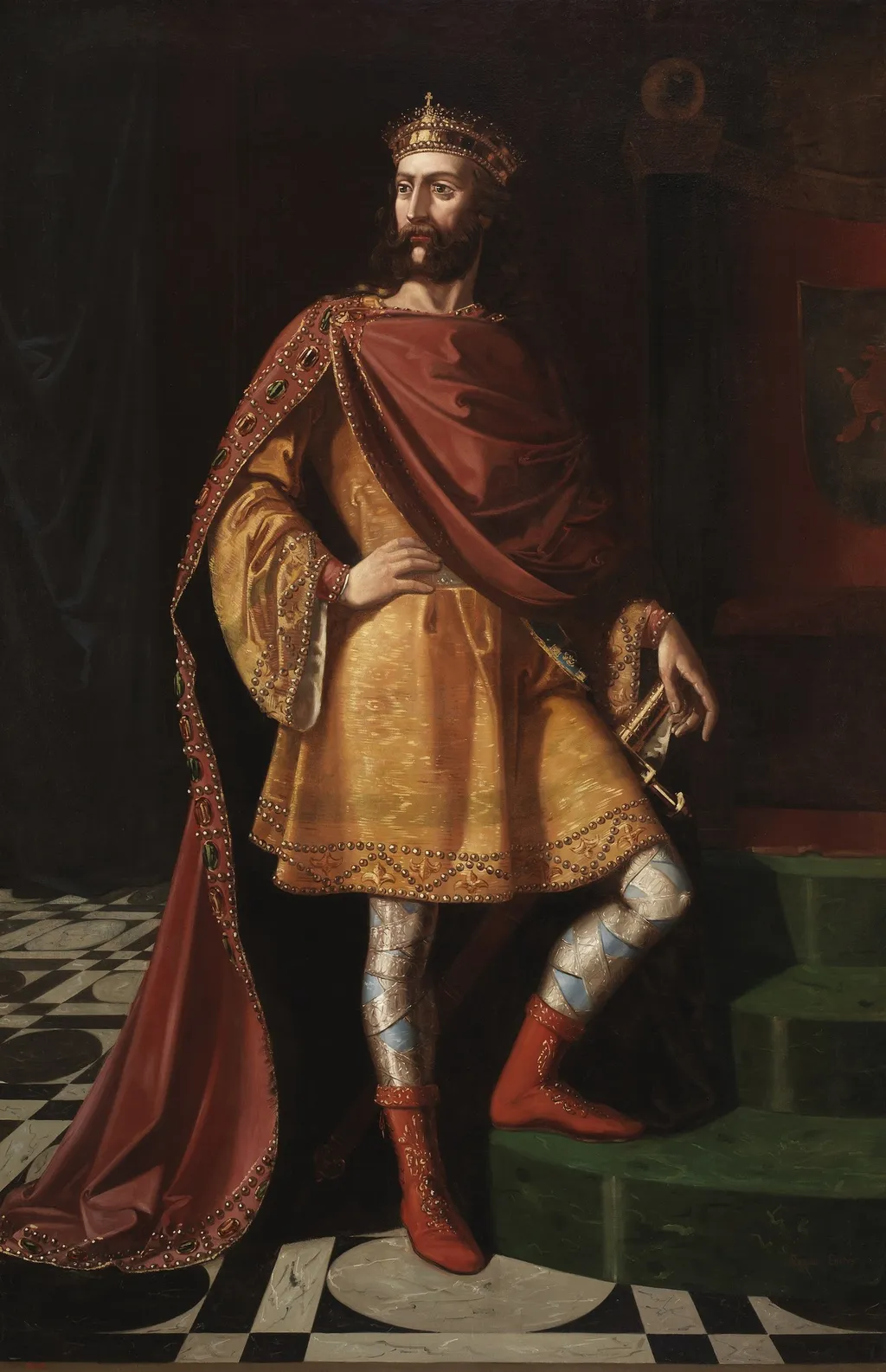
Ervigio is an oil painting by Ramón Cortés. It dates from 1850 and is held in the collection of the Museo del Prado.
About this work
Subject & Meaning
The composition features a crown, a royal mantle, and a sword, which collectively serve as iconographic symbols of his sovereign status and military command.
The painting portrays Ervigio, a Visigothic monarch, surrounded by the traditional regalia of royal authority. The composition features a crown, a royal mantle, and a sword, which collectively serve as iconographic symbols of his sovereign status and military command. A coat of arms is also present, further emphasizing his dynastic legitimacy and role as head of state.
These elements function together to represent the power and dignity of the Visigothic throne, visually defining the subject through the attributes of kingship rather than a specific narrative action.
Technique & Style
Ramón Cortés’s Ervigio (1850) is executed in oil paint on canvas, adhering to the conventions of mid-nineteenth-century academic portraiture. The support measures 224 × 140 cm, providing a substantial vertical format suited to full-length royal representation.
Technique and handling reflect meticulous brushwork, with smooth, controlled layers applied to render textiles and regalia. The royal mantle, crown, and coat of arms are depicted with precise, almost linear detail, emphasizing the symbolic attributes of power. Stylistically, the work aligns with the restrained elegance of Spanish academicism, prioritizing clarity of form and polished finish over expressive brushstrokes.
History & Provenance
The painting Ervigio was created by the artist Ramón Cortés. While one record assigns the work to 1850, other data indicates an inception range spanning from 1850 to the beginning of 1853. Executed in oil on canvas, the piece measures 224 cm in height and 140 cm in width.
The work is currently held in the collection of the Museo del Prado, where it remains located. No specific details regarding the original commission or a detailed chain of ownership prior to its museum acquisition are provided in the available records.
Ervigio is held by the Museo del Prado in Madrid, where it forms part of the museum's permanent collection. The work is catalogued under the inventory designation P003766, as recorded in its Wikidata entry. Its dimensions are 224 cm in height by 140 cm in width, and it is executed in oil on canvas.
The painting, dated 1850, depicts the Visigothic king Ervigio with attributes including a sword, coat of arms, royal mantle, and crown. No exhibition history beyond its residence in the Museo del Prado collection is documented in the available sources.
Overview
Created around 1850, this oil work by Spanish painter Ramón Cortés portrays a solitary figure in sumptuous attire. The composition centers on a man clad in a gilded tunic, red leggings and boots, and a flowing crimson cape, crowned and bearing a sword. A darkened backdrop accentuates the luminous details, while the inclusion of a coat of arms and royal mantle underscores the subject’s aristocratic status.
Own this work as a print
Artist & collection
Artist
Ramón Cortés kept a tiny paintbrush in his vest pocket and used it to touch up the café napkins where he sketched the Madrid street life he saw every afternoon.

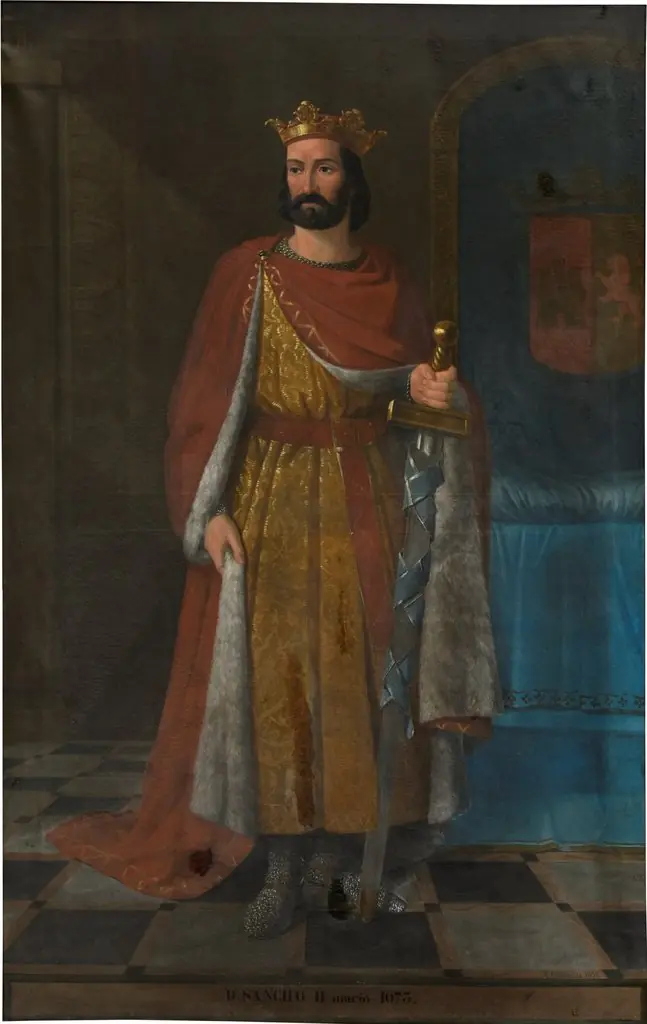 Sancho II
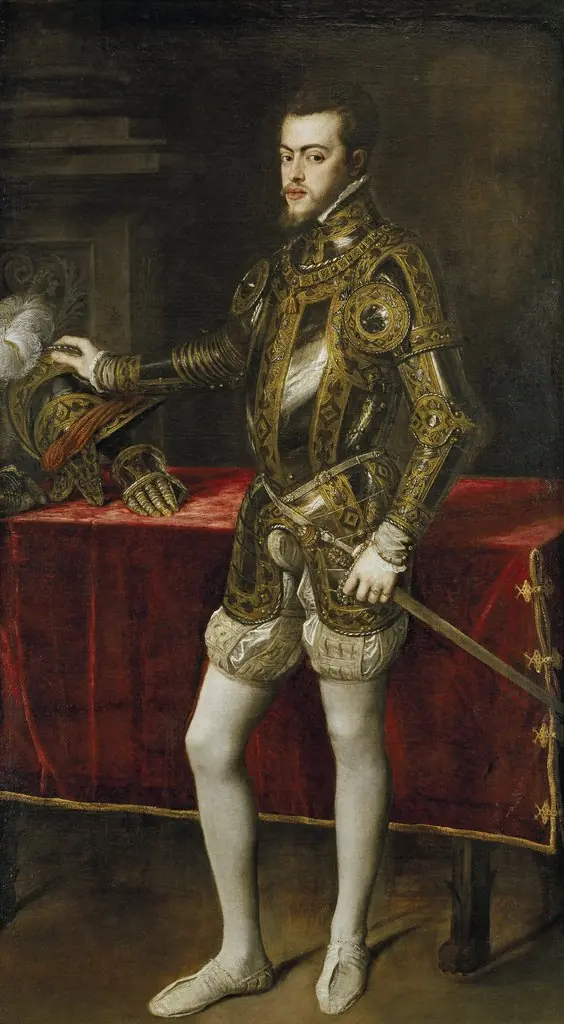 Philip II in Armour
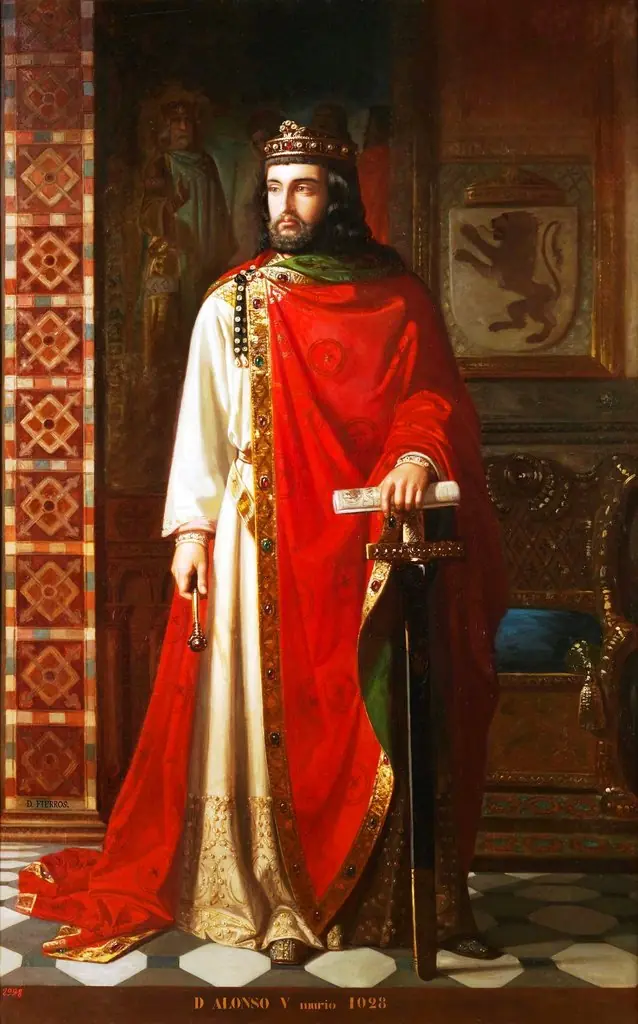 Alfonso V
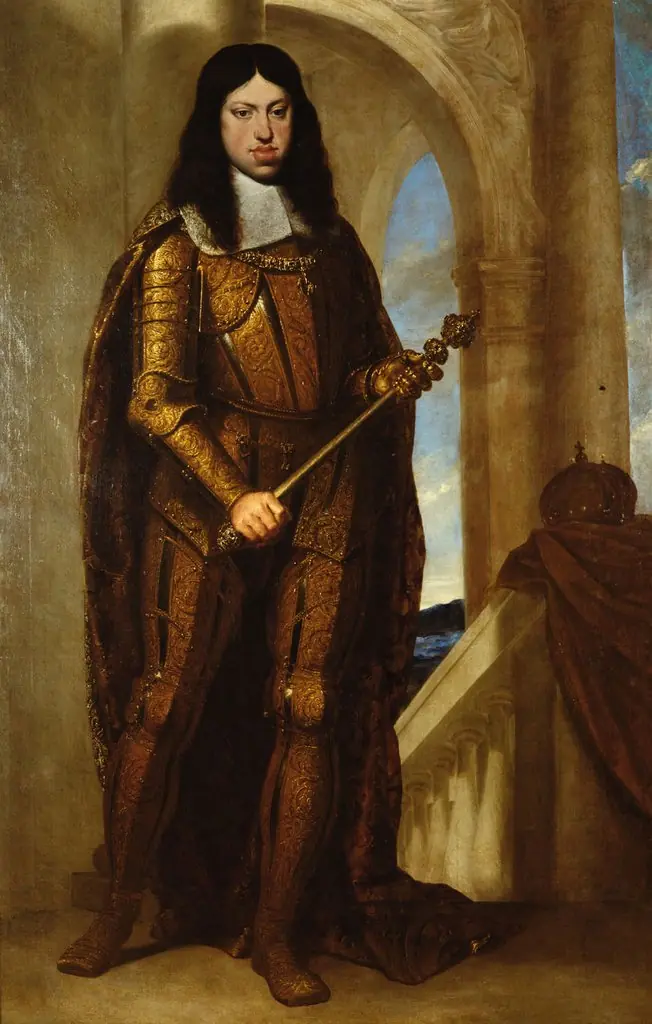 Emperor Leopold I in coronation armor
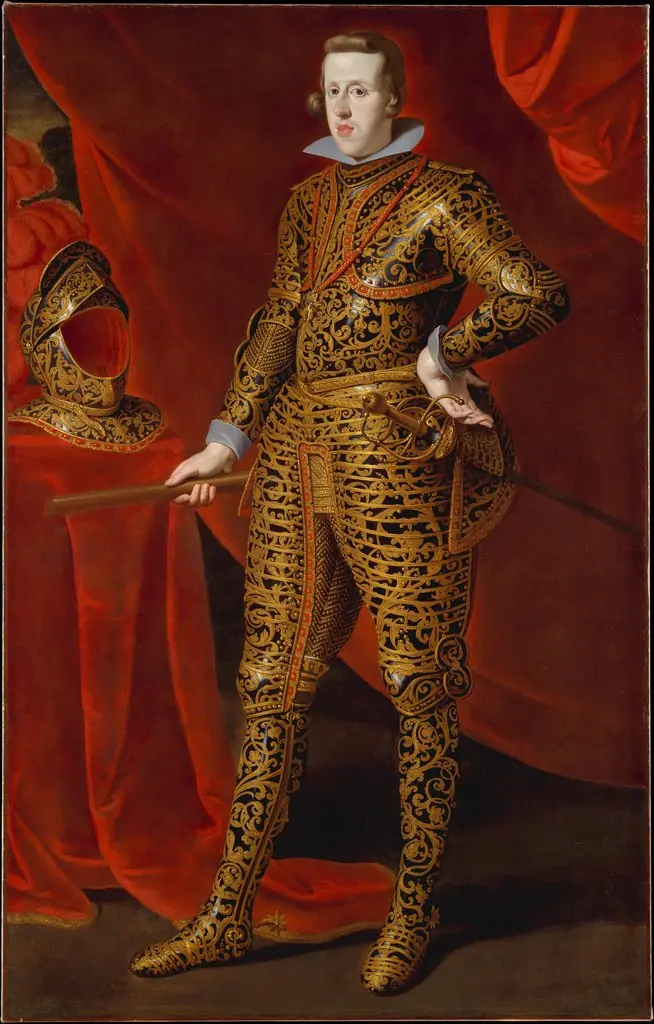 Philip IV (1605–1665) in Parade Armor
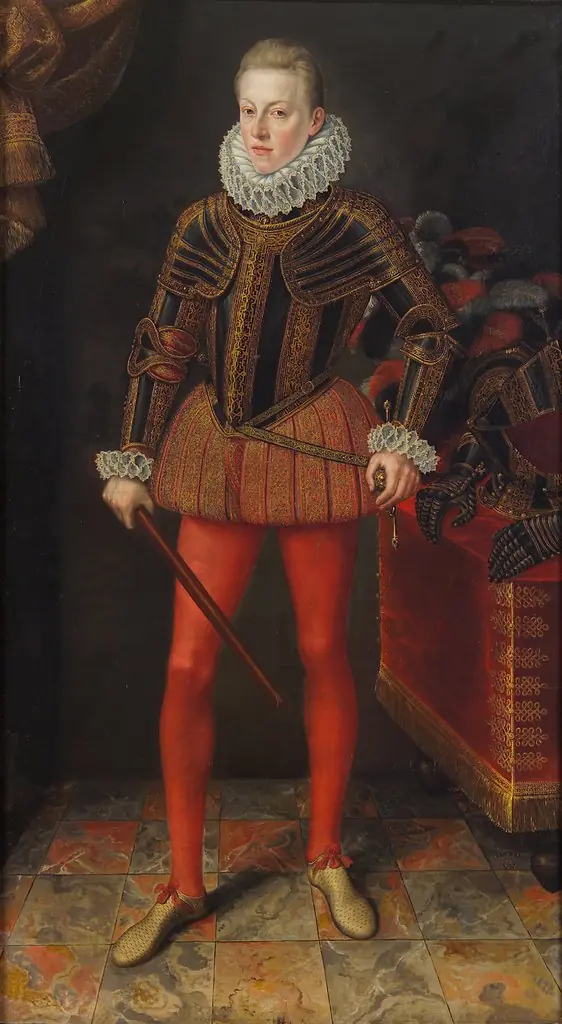 Portrait of Matthias II of Habsburg (1557-1619), the future Holy Roman Emperor
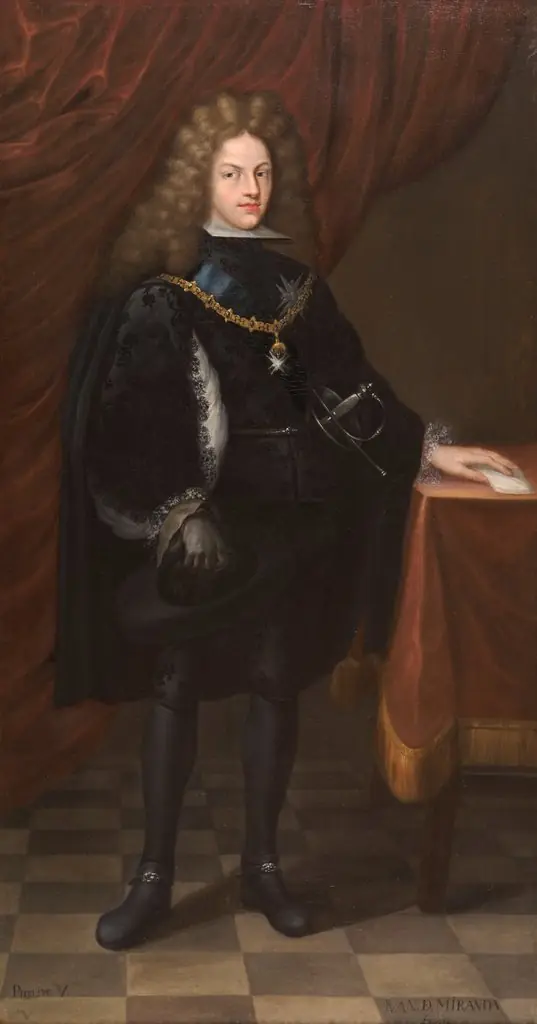 Philip V of Spain
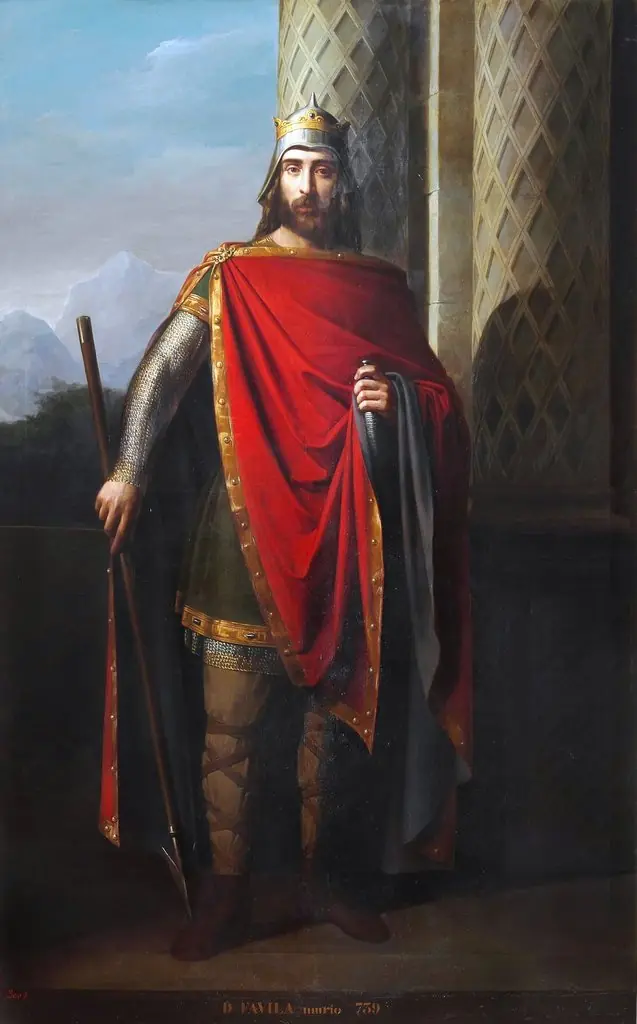 Favila
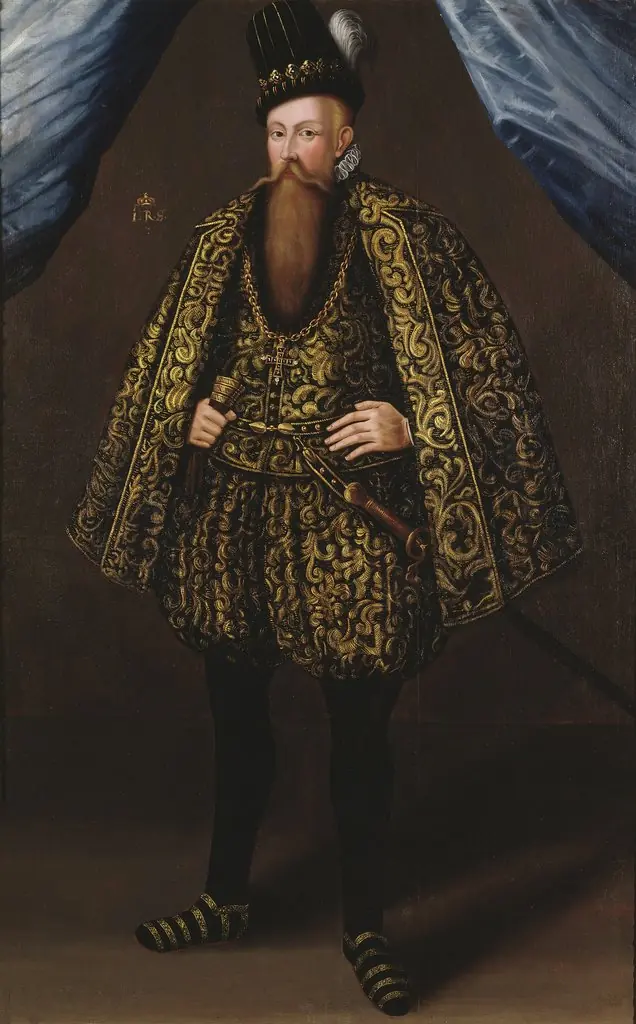 Johan III, 1537-92, konung av Sverige
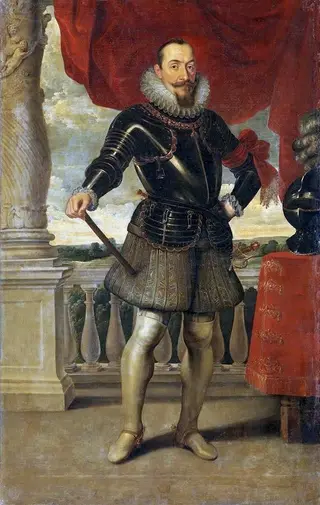 Portrait of King Sigismund III Vasa.
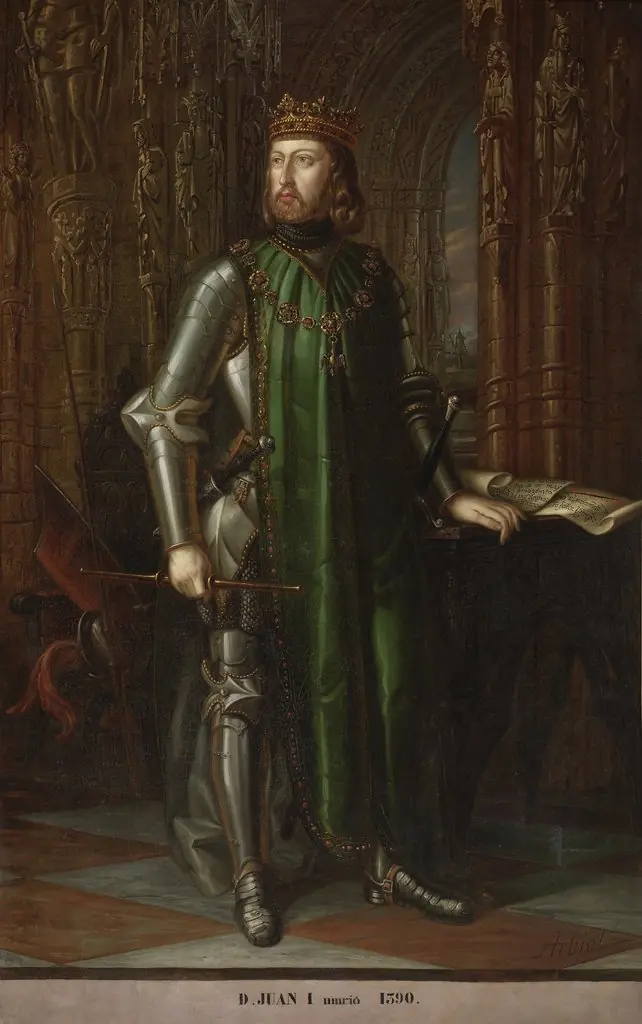 Portrait of John I of Castile
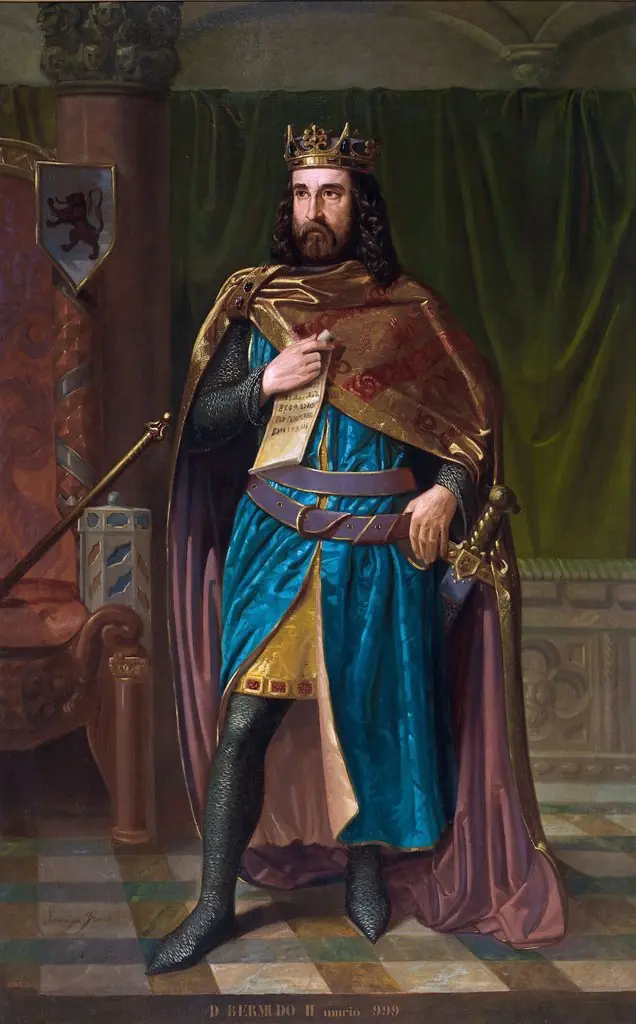
- Bermudo II
 The Pérussis Altarpiece
 Madonna and Child with the Donor, Pietro de' Lardi, Presented by Saint Nicholas
 The Virgin Mary and Five Standing Saints above Predella Panels
 Portrait of a Woman, possibly Ginevra d'Antonio Lupari Gozzadini
 The Seven Sacraments
 Portrait of a Woman Holding a Book
 An Artist Painting a Heraldic Shield in a Cabinet of Curiosities
 Angel Supporting a Heraldic Shield