Artwork
Philip II in Armour
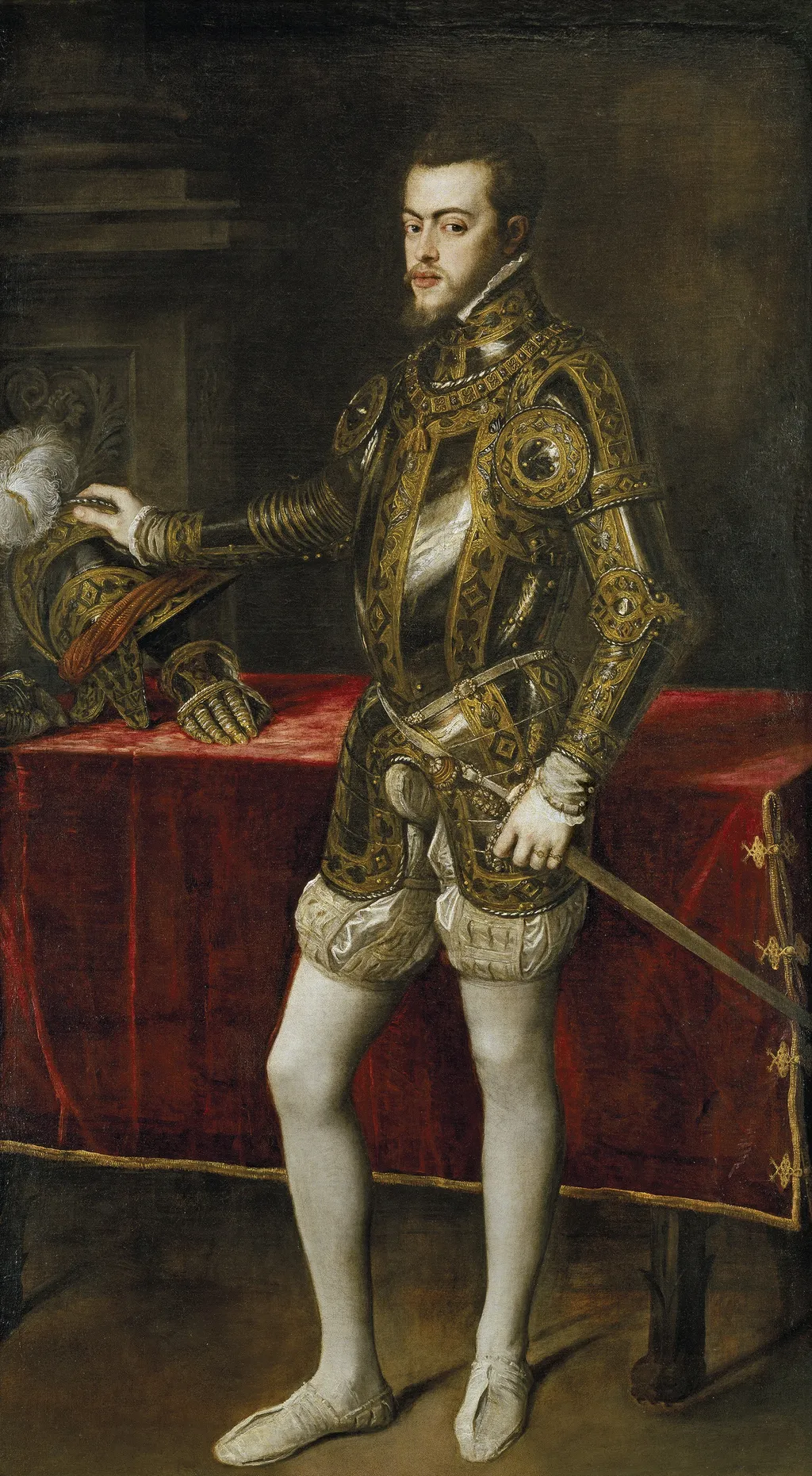
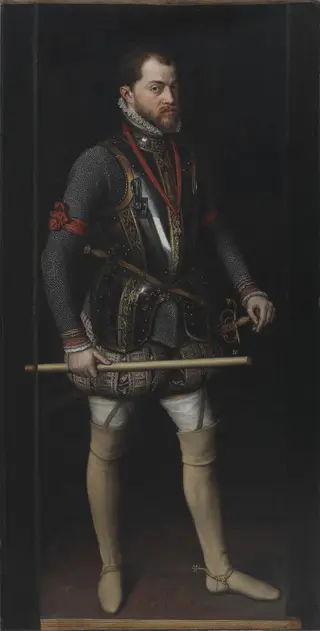
Philip II in Armour is an oil painting by the High Renaissance artist Titian. It dates from 1551 and is held in the collection of the Museo del Prado.
About this work
Subject & Meaning
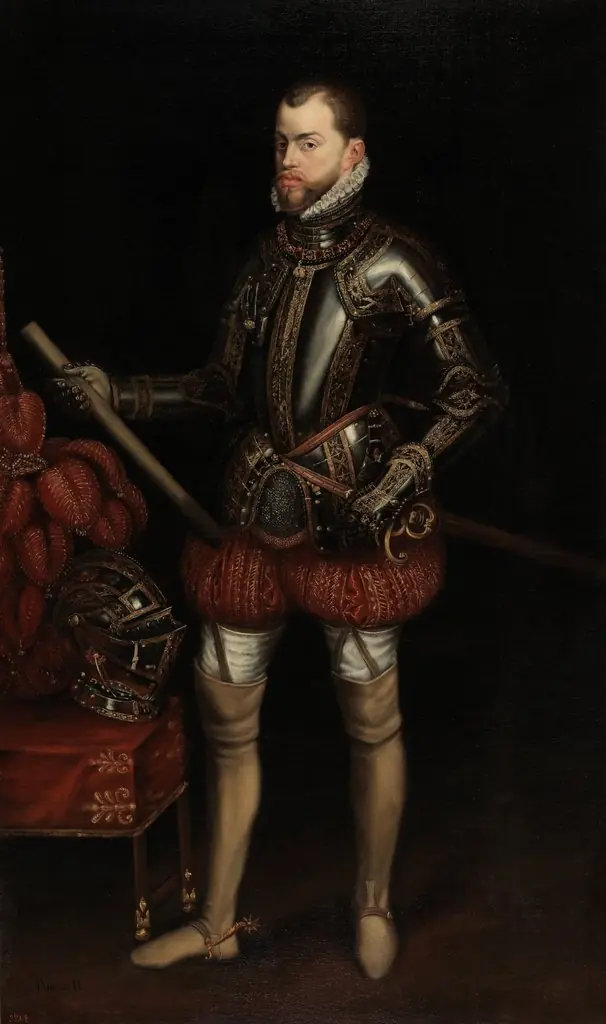
The painting depicts Philip II of Spain as a prince, standing in full damascened parade armor that is currently preserved in the Royal Armoury of Madrid.
The painting depicts Philip II of Spain as a prince, standing in full damascened parade armor that is currently preserved in the Royal Armoury of Madrid. He is shown with a combat helmet and sword, wearing the collar of the Order of the Golden Fleece. The composition incorporates specific symbols of royal majesty, including a classical column and a table draped in a velvet mantle.
Titian stylized the figure to project an aura of solemnity and idealized power, echoing his earlier approach to Philip's father, Charles V. While the future king initially felt the facial rendering in a replica was too hasty, the original work is recognized for its high resolution and successful translation of Venetian style into a statement of imperial authority.
Technique & Style
The painting is an oil work on canvas, executed in 1551 in Augsburg. Titian used oil paint on a canvas support, applying the techniques of the Venetian school to render a portrait rich in symbolic detail. The canvas measures 193 cm in height by 111 cm in width and features a column, a velvet mantle and a finely damascened suit of armour.
The armour is depicted with a high degree of resolution, allowing individual links and ornamental motifs to be distinguished, which enhances the sense of regal authority. The stylised figure of Philip II reflects the influence of Venetian colour and brushwork, while the handling of light and texture demonstrates Titian's mastery of formal balance and material richness.
History & Provenance
The full-length portrait was commissioned by Philip II during his second meeting with Titian in Augsburg between late 1550 and early 1551. In May 1551 the prince dispatched a replica of the work to his aunt Mary of Hungary, which is now lost.
By 1600 the original canvas was recorded in inventories of the Royal Alcázar in Madrid. It remained in the Spanish royal collection until transferred to the Museo del Prado in 1827, where it has been held since.
Context
Painted in 1551 during Titian's second meeting with the then-prince Philip II at Augsburg, the portrait belongs to the Venetian school and reflects Titian's mature portrait practice, stylising the sitter's figure in the manner he had earlier employed for the Equestrian Portrait of Charles V (1548). The work is regarded as a painting of the highest quality, with a remarkable degree of resolution in the depiction of the armour, and scholars generally treat Philip's documented dissatisfaction with the facial rendering as referring to the replica sent to Mary of Hungary rather than to the Prado original. The painting entered the Spanish royal inventories by 1600 and was copied there by Peter Paul Rubens in 1628, before being transferred to the Museo del Prado in 1827.
A seventeenth-century copy at the Palacio de La Quinta in Asturias has been attributed by some sources to Rubens.
The portrait is catalogued in Harold E. Wethey, The Paintings of Titian (London: Phaidon, 1971).
Overview
This oil painting, titled Philip II in Armour, is a formal portrait created by the Venetian artist Titian in 1551. It depicts Philip II of Spain, then a prince, clad in elaborate armor. The artwork is presently housed in the collection of the Museo del Prado in Madrid, serving as a significant representation of the future monarch during a pivotal period.
Artist & collection
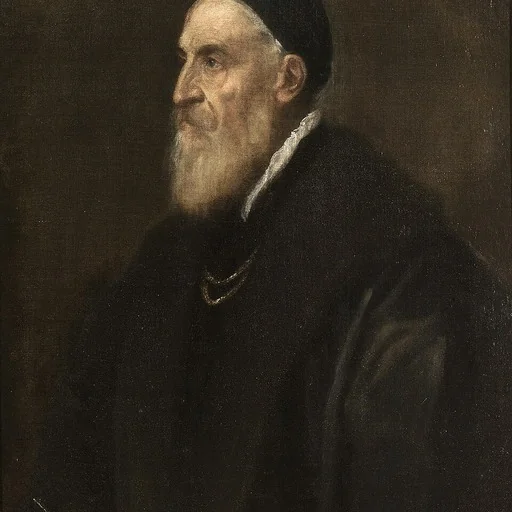
Artist
Tiziano Vecellio (Italian:; c. 1488/1490 – 27 August 1576), Latinized as Titianus, hence known in English as Titian ( TISH-ən), was an Italian Renaissance painter. The most important artist of Renaissance Venetian…