Artwork
The Seven Sacraments
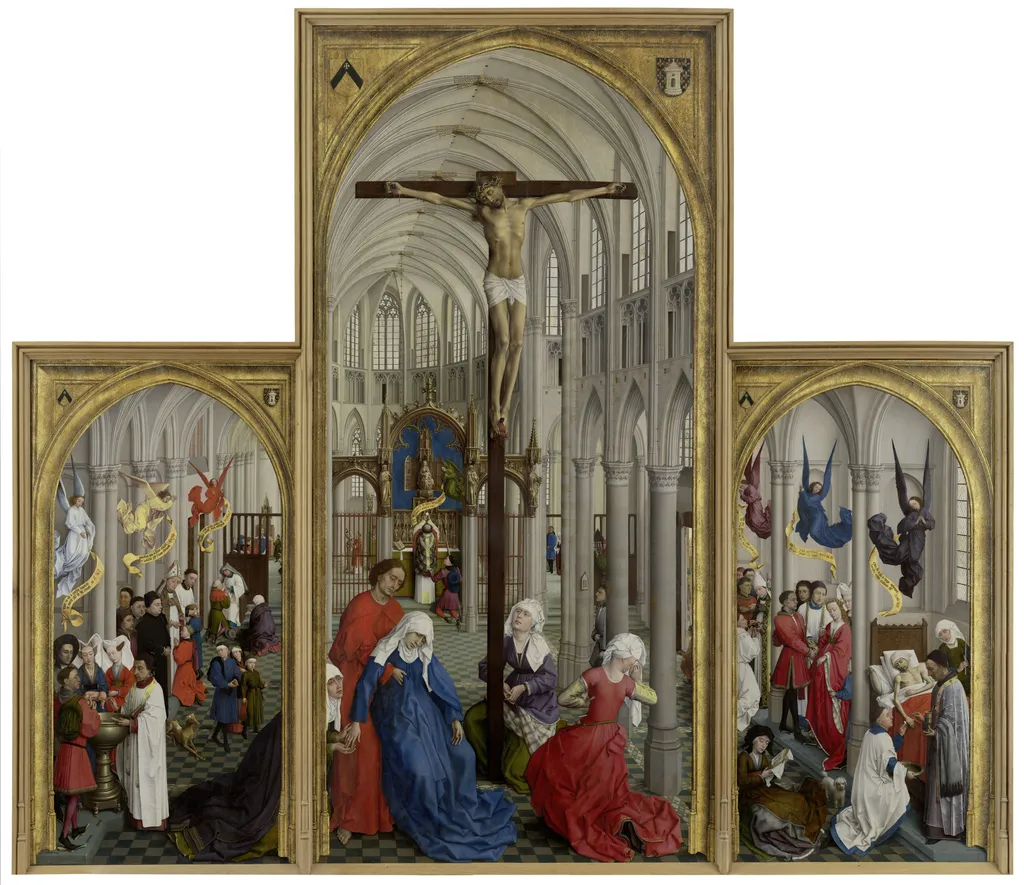
The Seven Sacraments is an oil painting by the Northern Renaissance artist Rogier van der Weyden. It dates from 1440 and is held in the collection of the Royal Museum of Fine Arts Antwerp.
About this work
Subject & Meaning
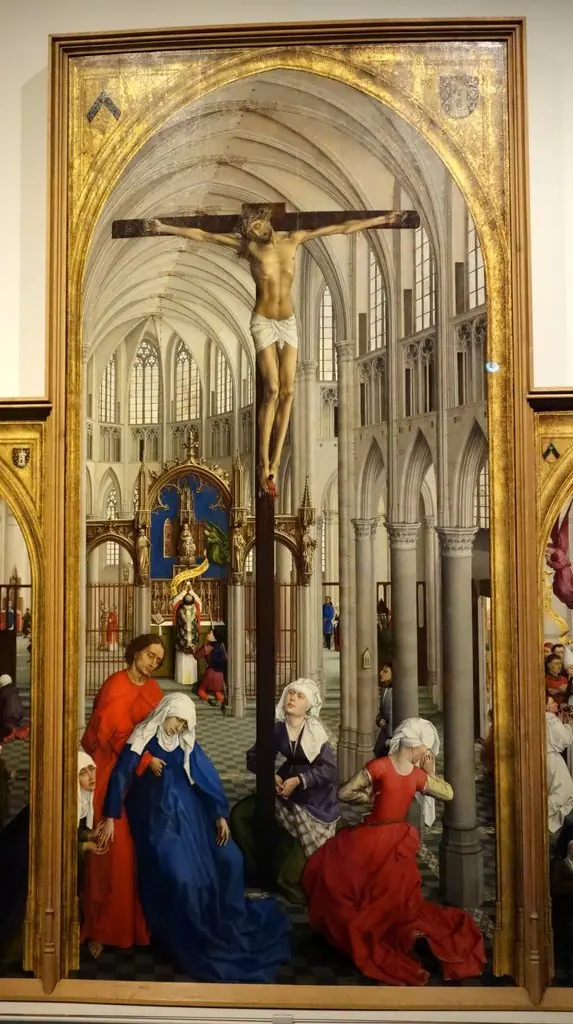
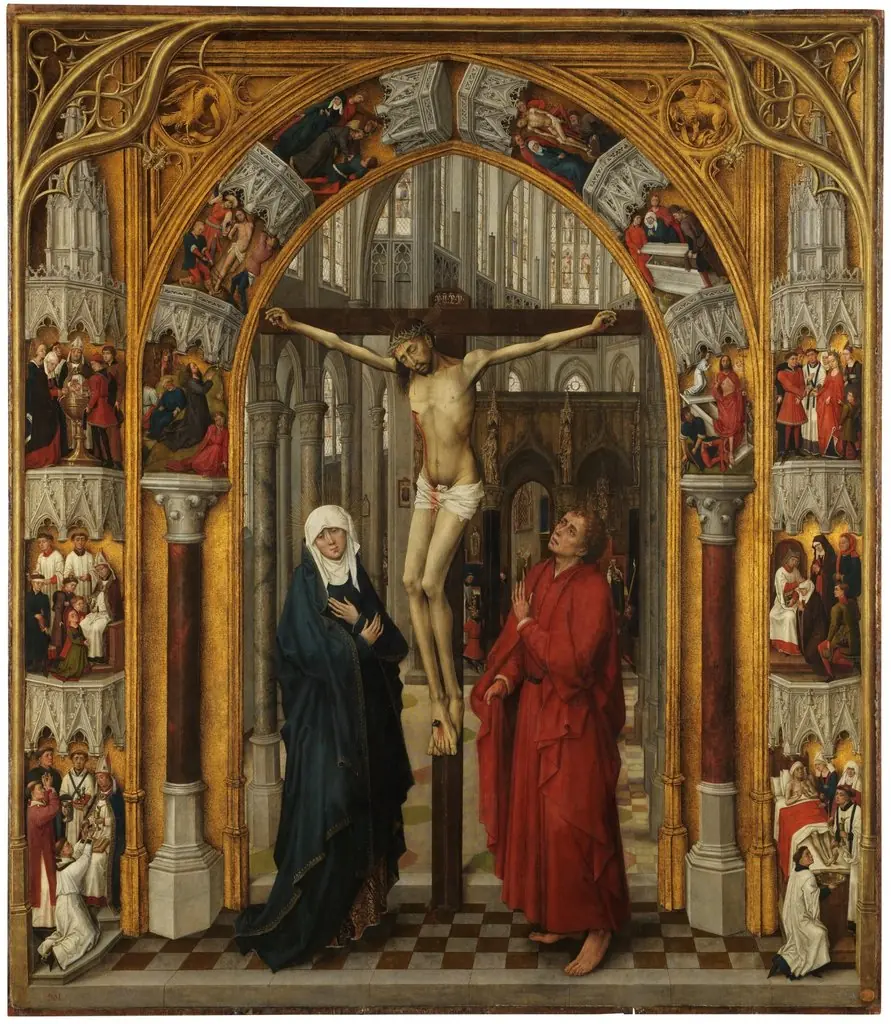
The central panel uniquely combines the Crucifixion with the Eucharist, emphasizing the theological link between Christ’s sacrifice and the Mass.
The triptych depicts the seven sacraments of the Roman Catholic Church, arranged across three panels: baptism, confirmation, and confession on the left; the Eucharist and Crucifixion in the center; and ordination, marriage, and anointing of the sick on the right. Each sacrament is framed within a Gothic church interior, reinforcing their sacramental context. Angels hover above with scrolls whose colors correspond to the sacraments, white for baptism, yellow for confirmation, red for confession, black for anointing of the sick, and bear Latin inscriptions explaining their meaning.
The central panel uniquely combines the Crucifixion with the Eucharist, emphasizing the theological link between Christ’s sacrifice and the Mass. The inclusion of contemporary figures, possibly donors, and heraldic emblems in the spandrels further situates the work within its liturgical and devotional purpose.
Technique & Style
The Seven Sacraments is a fixed-wing triptych painted in oil on oak panels between 1445 and 1450. The central panel is executed in oil with meticulous glazing to render the crucifixion and Eucharist, while the lateral panels show architectural elements and some figures delegated to workshop assistants, as revealed by a 2006–2009 restoration that removed yellowed varnish and clarified the division of autograph and collaborative passages. The composition employs a unified Gothic church interior with pointed arches, triforium, clerestory, and groin vaulting to stage the seven sacraments, each marked by an angelic figure whose vestments correspond to liturgical color symbolism from white for baptism to black for extreme unction.
The central panel’s foreground is dominated by a crucifixion treated with heightened emotional realism, while the background shows a priest elevating the Host, linking Christ’s sacrifice to the Eucharist. Latin banderoles above each scene carry ecclesiastical texts.
History & Provenance
The Seven Sacraments Altarpiece, a fixed-wing triptych by Rogier van der Weyden and his workshop, was created between 1440 and 1450, with specific scholarly consensus placing its execution from 1445 to 1450. It was likely commissioned by Jean Chevrot, Bishop of Tournai, for his private chapel in the collegiate church of Saint-Hippolyte in Poligny, France, or possibly for a church in that city. The central panel is attributed to van der Weyden himself, while the side panels were executed by his assistants.
The work entered the collection of the Royal Museum of Fine Arts Antwerp in 1841, having been bequeathed by the collector Florent van Ertborn, who acquired it in 1826 from the heirs of Jean Perrault, a previous owner in Paris dating back to 1681.
La obra se conserva en el Museo Real de Bellas Artes de Amberes, donde forma parte de la colección permanente del instituto. El tríptico está registrado bajo los números de inventario 393 (panel central) y 394 (ala izquierda), según el catálogo del museo. Su trayectoria expositiva incluye una aparición en la lista de "topstukkenraad" en 2009, lo que la colocó entre las piezas destacadas de una exposición especial del museo.
Context
The Seven Sacraments Altarpiece occupies a distinctive place within the Early Netherlandish tradition. Alongside Jan van Eyck, Rogier van der Weyden is regarded as one of the leading masters of the fifteenth-century Flemish Primitives, having trained under Robert Campin in Tournai before becoming the official painter of Brussels. His religious work characteristically emphasizes emotional engagement, particularly the suffering and compassion associated with the Passion, and the crucifixion and Deposition serve as recurring leitmotifs throughout his oeuvre.
The triptych exemplifies the altarpiece as a common devotional format in the fifteenth-century Southern Netherlands, where embedding sacred narratives within contemporary settings made Christian doctrine accessible and stimulated piety. The work's innovative depiction of all seven sacraments within a single Gothic church interior, linking the Crucifixion in the foreground to the elevation of the Host behind it, is considered highly original. Curator Lorne Campbell has described it as one of the most important masterpieces of European art, noting its resemblance to the Sint-Goedelekerk in Brussels.
Scholarship on the altarpiece includes contributions by Max J. Friedländer, Felix Thürlemann, Martin Davies, Pierre Quarré, and Albert Châtelet.
Overview
Rogier van der Weyden and his workshop created The Seven Sacraments Altarpiece, a fixed-wing oil triptych, between 1445 and 1450. This large-scale painting systematically illustrates the seven sacraments of the Roman Catholic Church. The work is renowned for its detailed narrative and its comprehensive theological program, presenting a visual catechism within a unified architectural space. It currently resides in the Royal Museum of Fine Arts, Antwerp.
Own this work as a print
Artist & collection
Artist
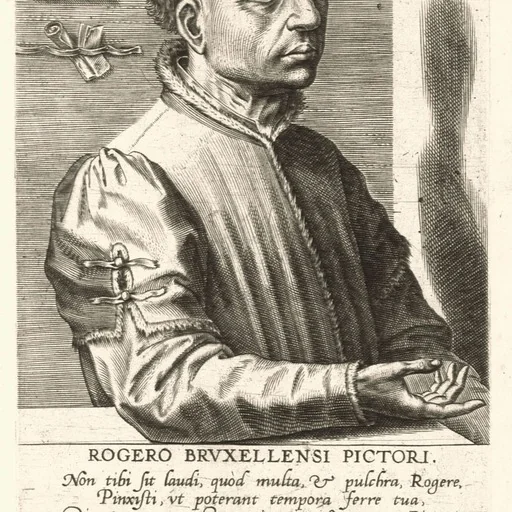
Rogier van der Weyden (Dutch:; 1399 or 1400 – 18 June 1464), initially known as Roger de la Pasture (French: ), was an early Netherlandish painter whose surviving works consist mainly of religious triptychs,…

 Redemption Triptych: The Crucifixion
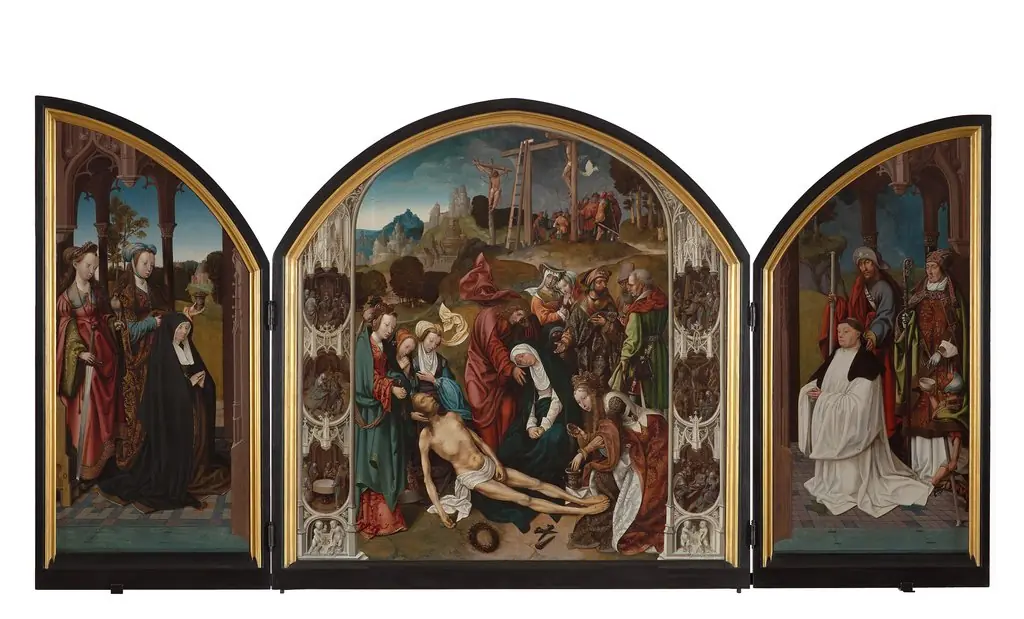 Ss Cecilia,Mary Magdalene with donatrix,lamentation flanked by other six Sorrows of Mary, Ss James Great,Martin of Tours an Augustine monk
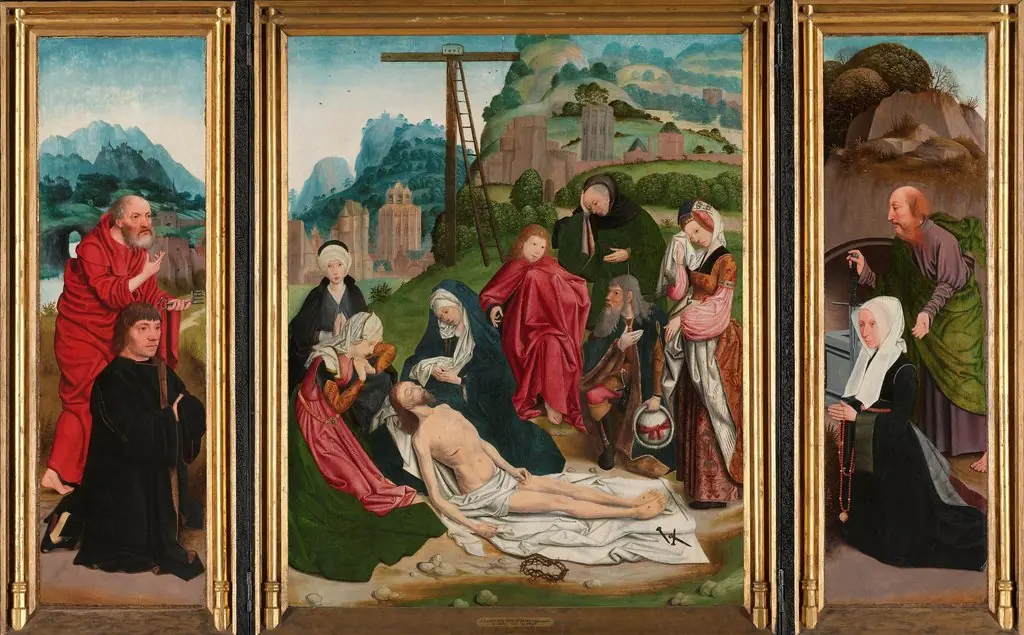 Triptych with the Lamentation (centre panel), the donor with St Peter (inner left wing), the donor’s wife with St Paul (inner right wing) and the donors’ coats of arms (outer wings)
 Drieluik met de kruisiging
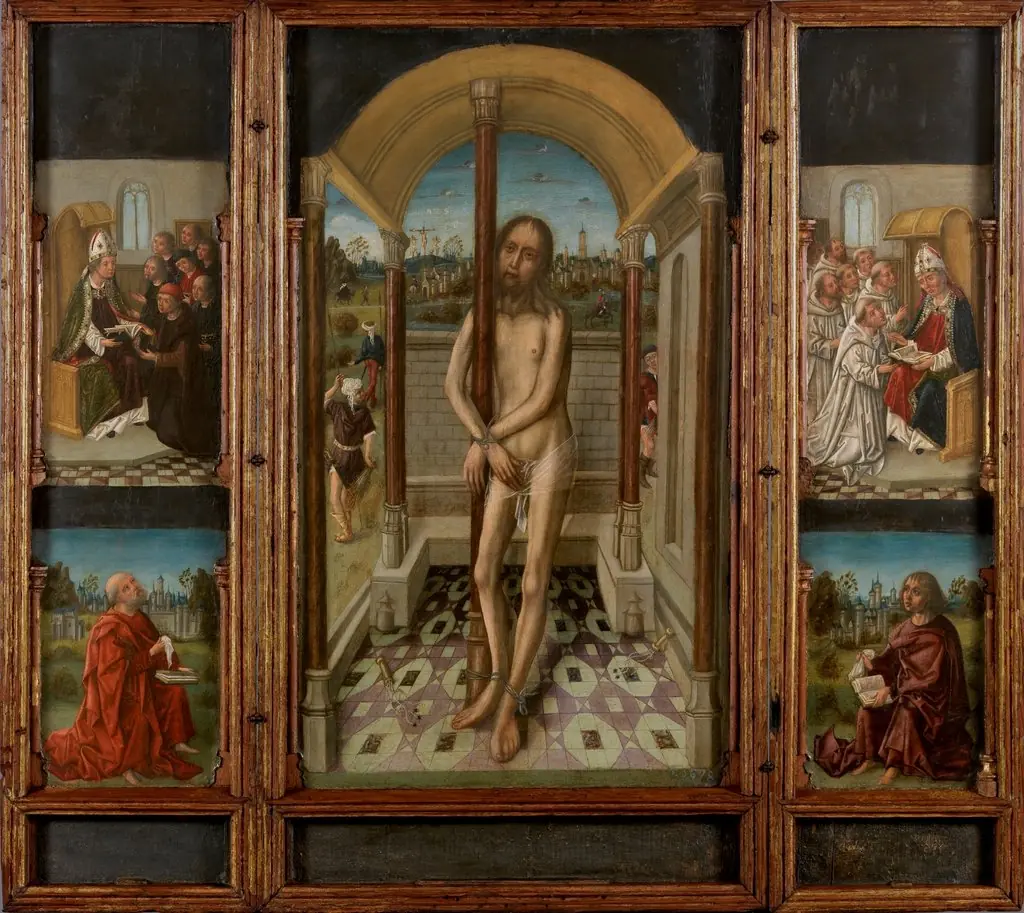 Tríptico de la Flagelación
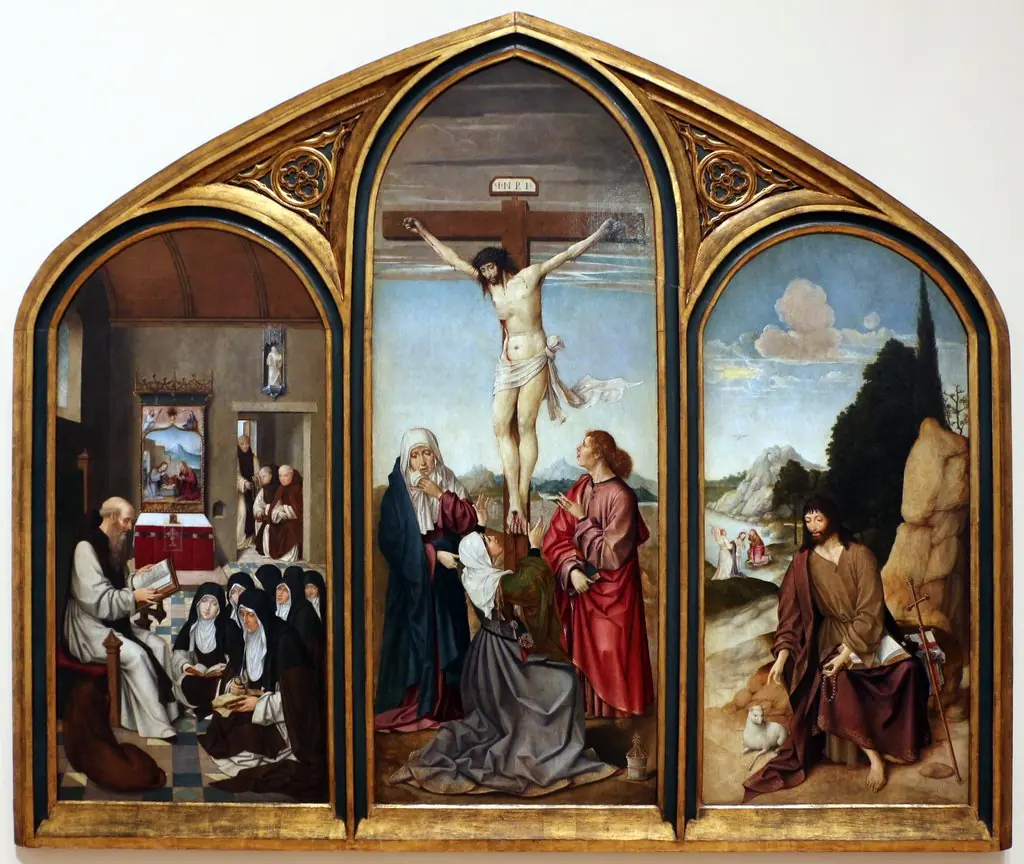 Triptych of Calvary
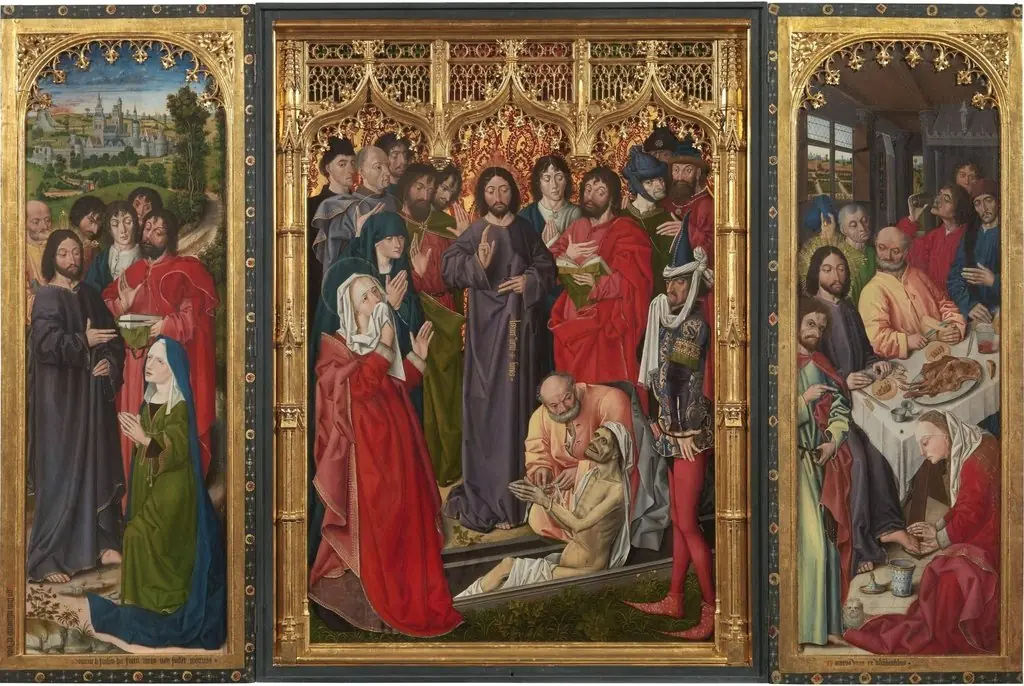 Resurrection of Lazarus
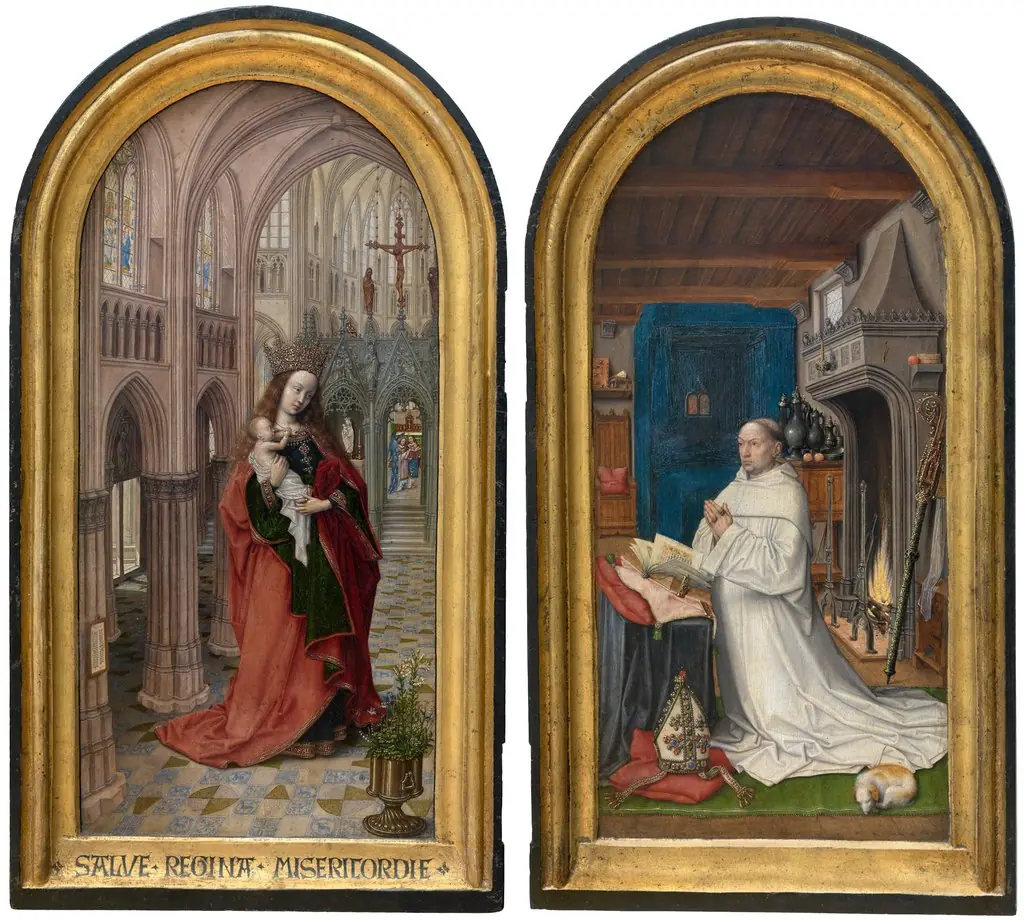 Diptych of Christiaan de Hondt, abbott at Ter Duinen
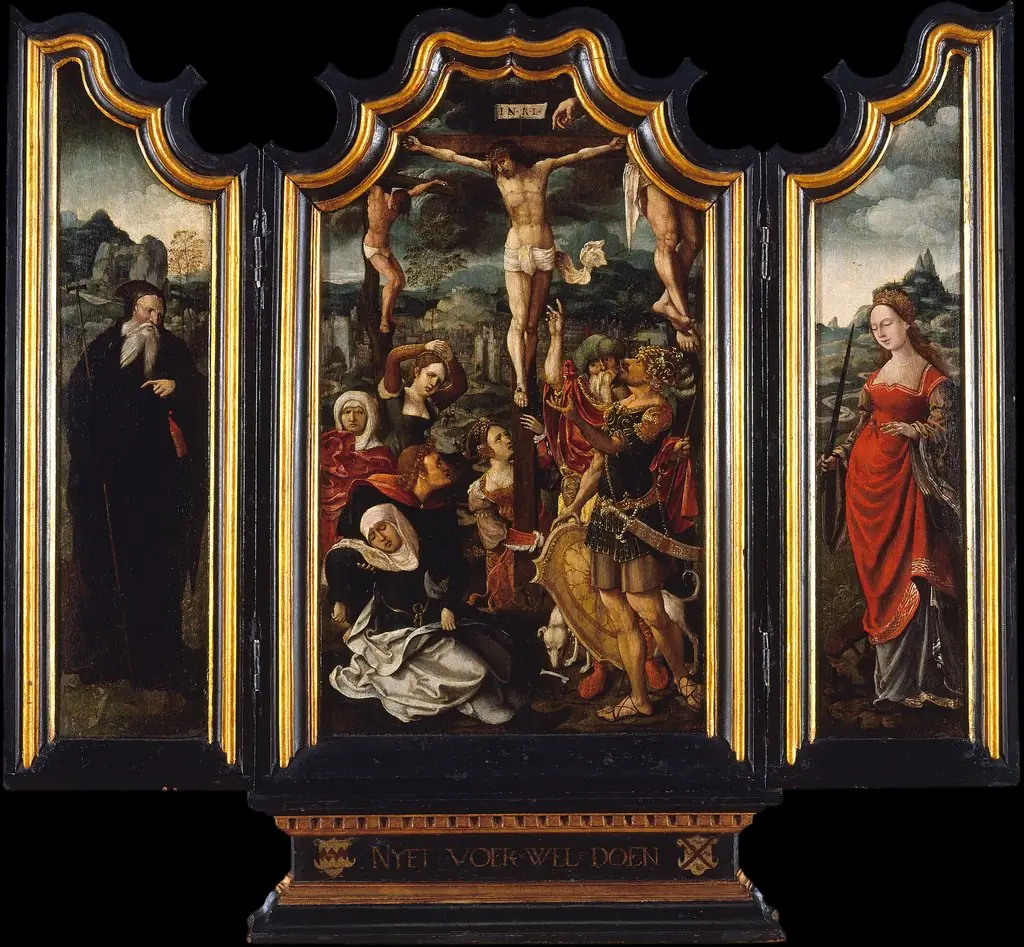 Triptych with Calvary, Saint Anthony the Abbot and Saint Catherine
![Altarpiece showing scenes from the Infancy of Christ: The Adoration of the Magi [center]; The Annunciation; The Presentation of Christ in the Temple; The Flight into Egypt; The Nativity [clockwise from upper left], by Master of Hoogstraeten](https://artifactworldgallery.com/img/master-of-hoogstraeten--altarpiece-showing-scenes-from-the-infancy-of-christ-the-ado--6a236bfea3373486-w320.webp) Altarpiece showing scenes from the Infancy of Christ: The Adoration of the Magi [center]; The Annunciation; The Presentation of Christ in the Temple; The Flight into Egypt; The Nativity [clockwise from upper left]
Altarpiece showing scenes from the Infancy of Christ: The Adoration of the Magi [center]; The Annunciation; The Presentation of Christ in the Temple; The Flight into Egypt; The Nativity [clockwise from upper left]- The Seven Sacraments (central panel)