Artwork
The Pérussis Altarpiece
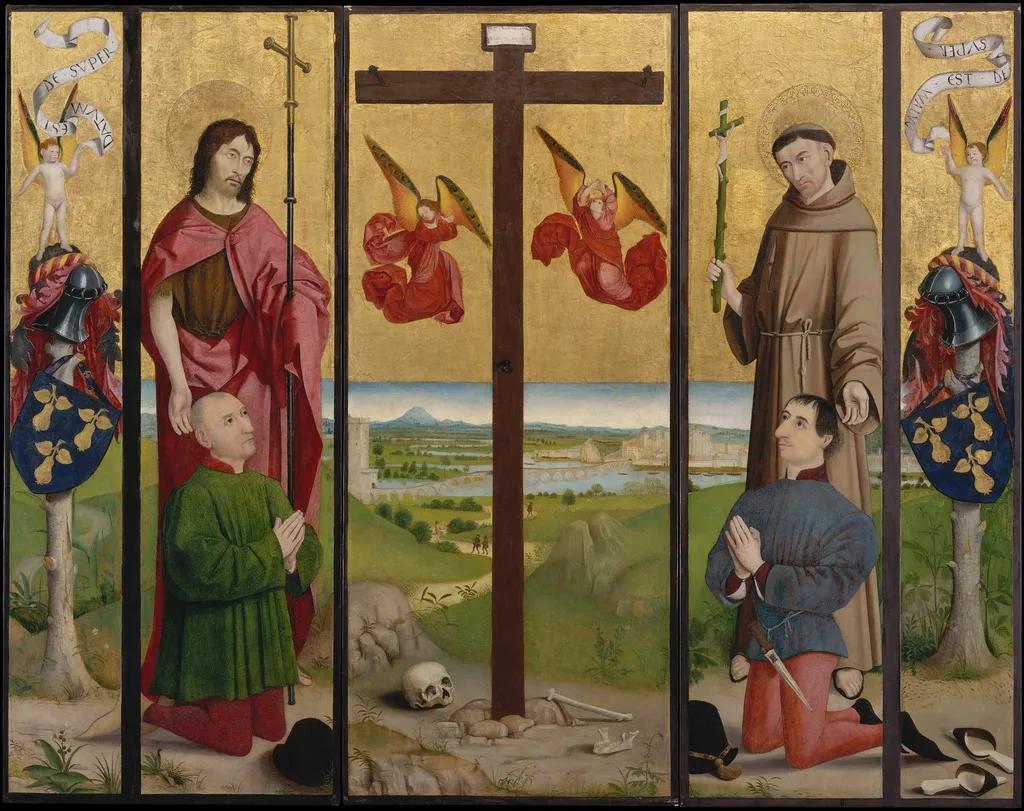
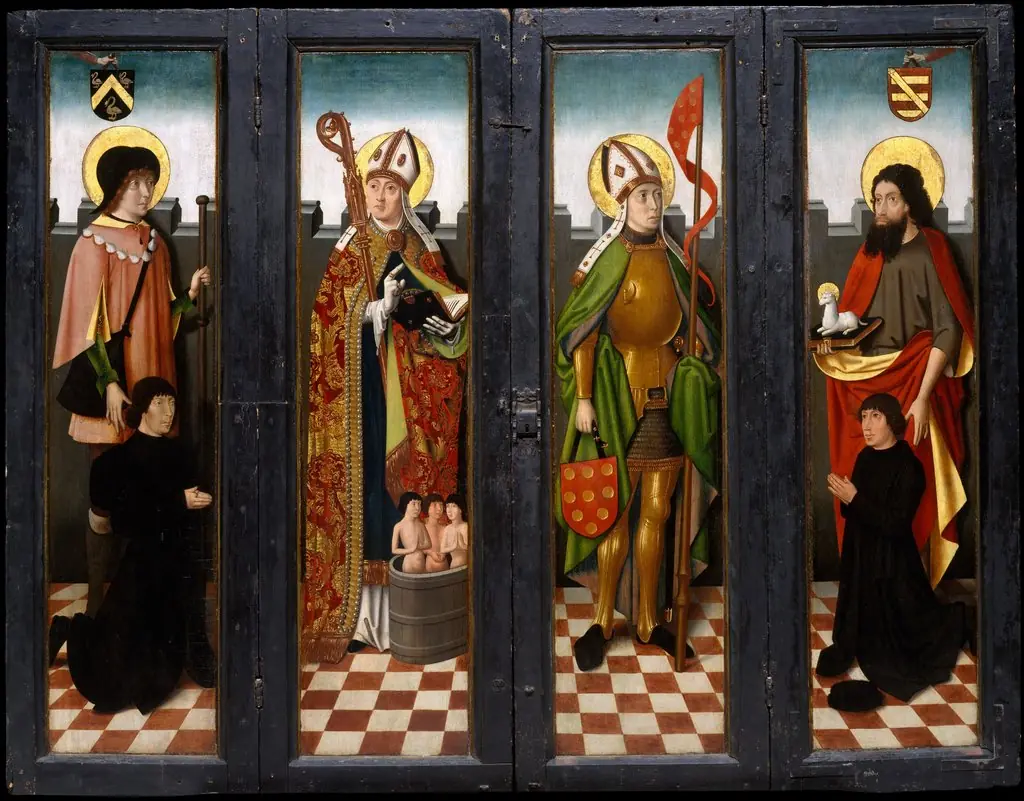
The Pérussis Altarpiece is an unspecified painting. It dates from 1490 and is held in the collection of the Metropolitan Museum of Art.
About this work
Subject & Meaning
Together, these elements convey a meditation on saintly intercession, penitence, and the hope of eternal life within a Franciscan framework.
The Pérussis Altarpiece presents a complex devotional tableau centered on Franciscan piety and mortality. At its core stands Francis of Assisi, flanked by John the Baptist, whose role as Christ's forerunner underscores the theme of salvation. An angel hovers above, signaling divine intervention, while a prominent cross reinforces the sacrificial focus of the composition.
A skull placed in the lower register serves as a memento mori, reminding viewers of life's transience, and a coat of arms identifies the likely patron, linking personal devotion to the sacred imagery. Together, these elements convey a meditation on saintly intercession, penitence, and the hope of eternal life within a Franciscan framework.
Legacy
The Pérussis Altarpiece, painted circa 1490 by the Circle of Nicolas Froment, entered the collection of the Metropolitan Museum of Art, where its catalog entry identifies it as a religious work featuring symbolic elements such as a skull, a coat of arms, and figures of John the Baptist and Saint Francis. Its inclusion in a major museum's holdings and its documentation in scholarly databases reflect a sustained reputation in art-historical discourse.
Overview
The Pérussis Altarpiece is a devotional painting structured as a triptych, divided into three distinct panels. The central section depicts a landscape featuring a cross and two red-winged angels, while the flanking panels present figures engaged in prayer. This arrangement is characteristic of altarpieces designed for private contemplation or public veneration, inviting viewers into a narrative of spiritual reflection.
Artist & collection

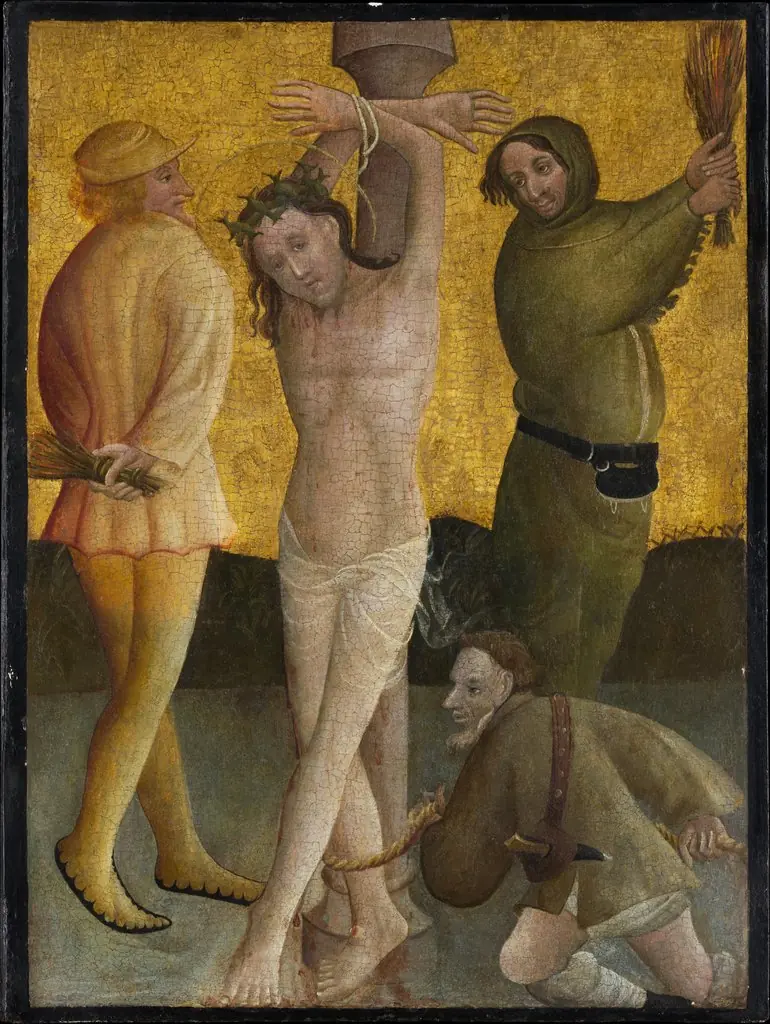 The Flagellation
 Drieluik met de kruisiging
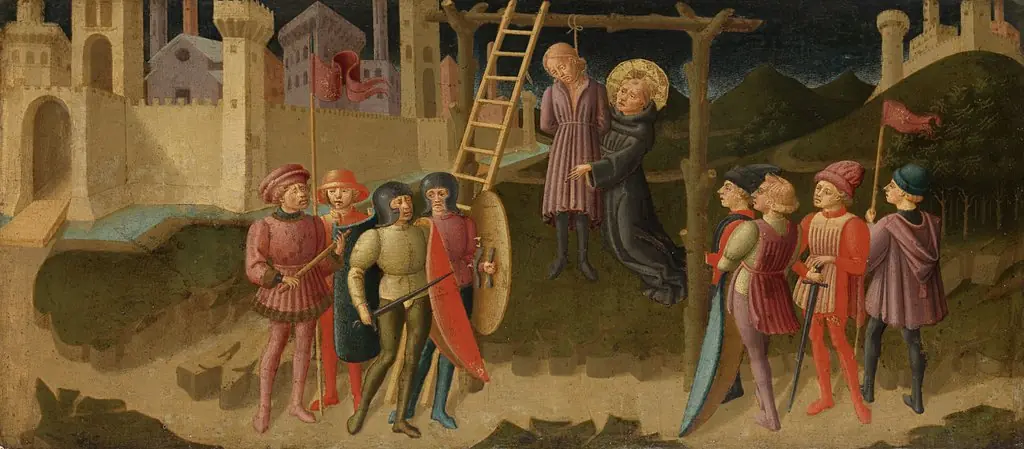 Saint Nicholas Saving a Hang
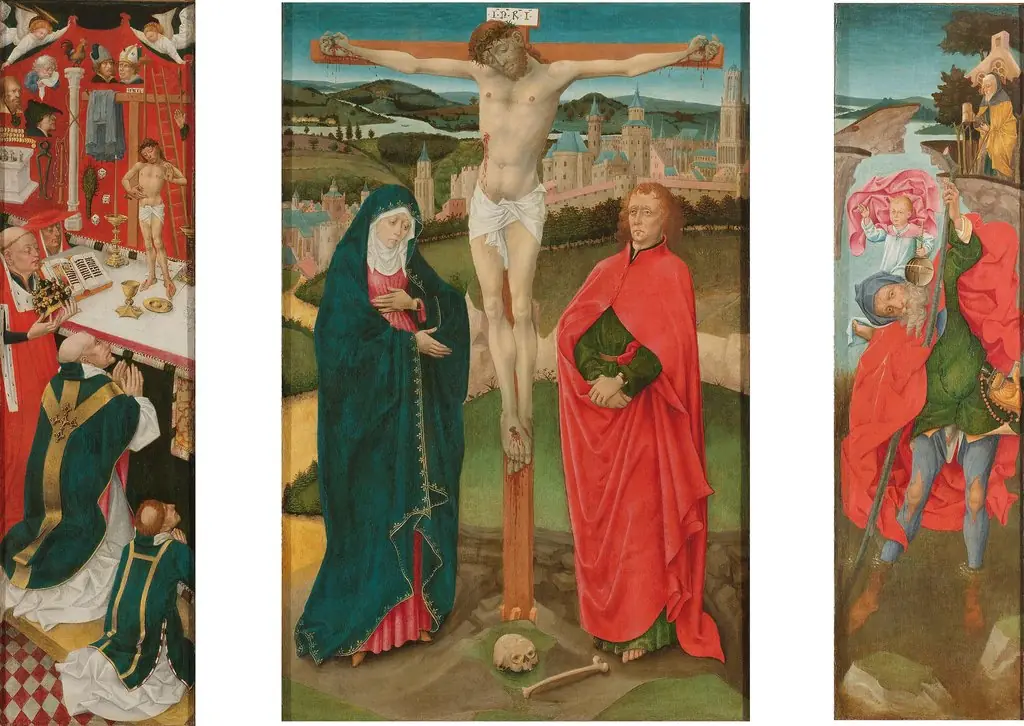 Triptych with the Crucifixion
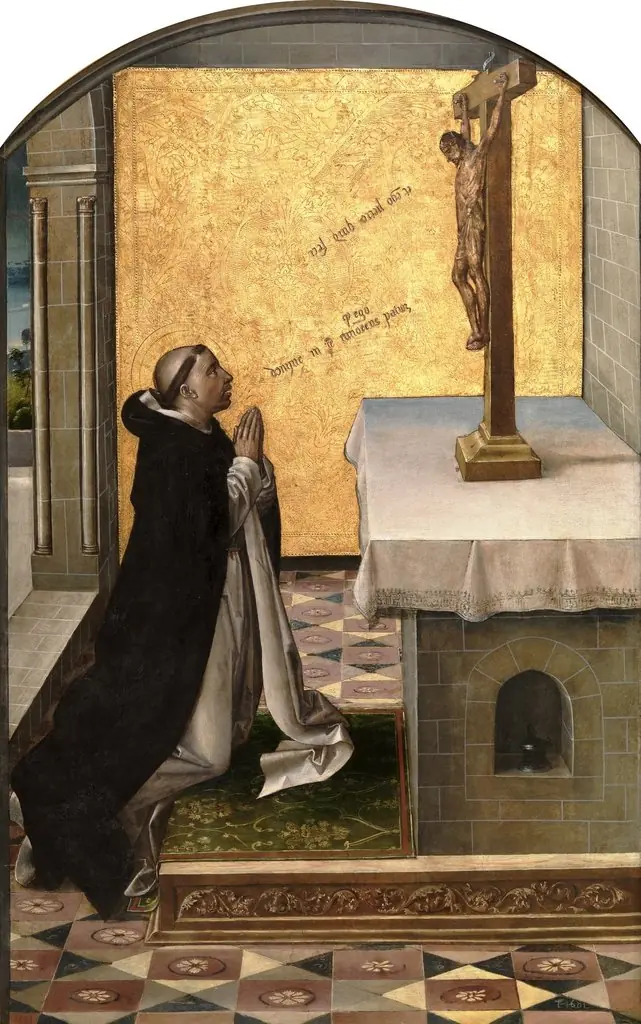 Saint Peter the Martyr praying
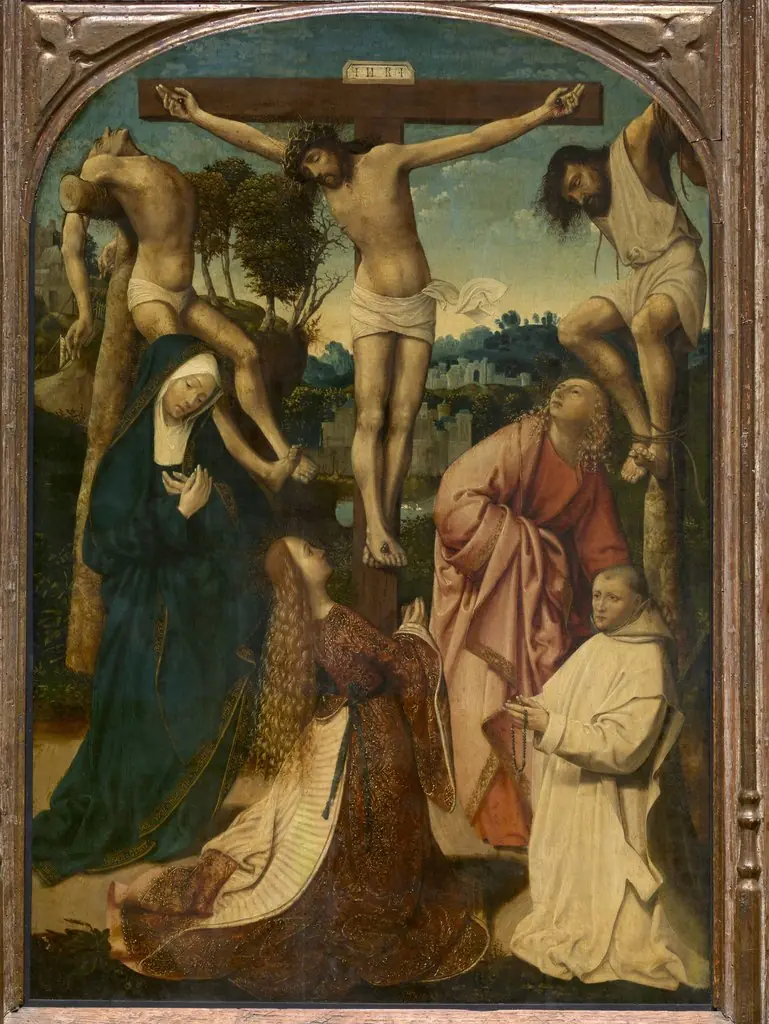 Crucifixion
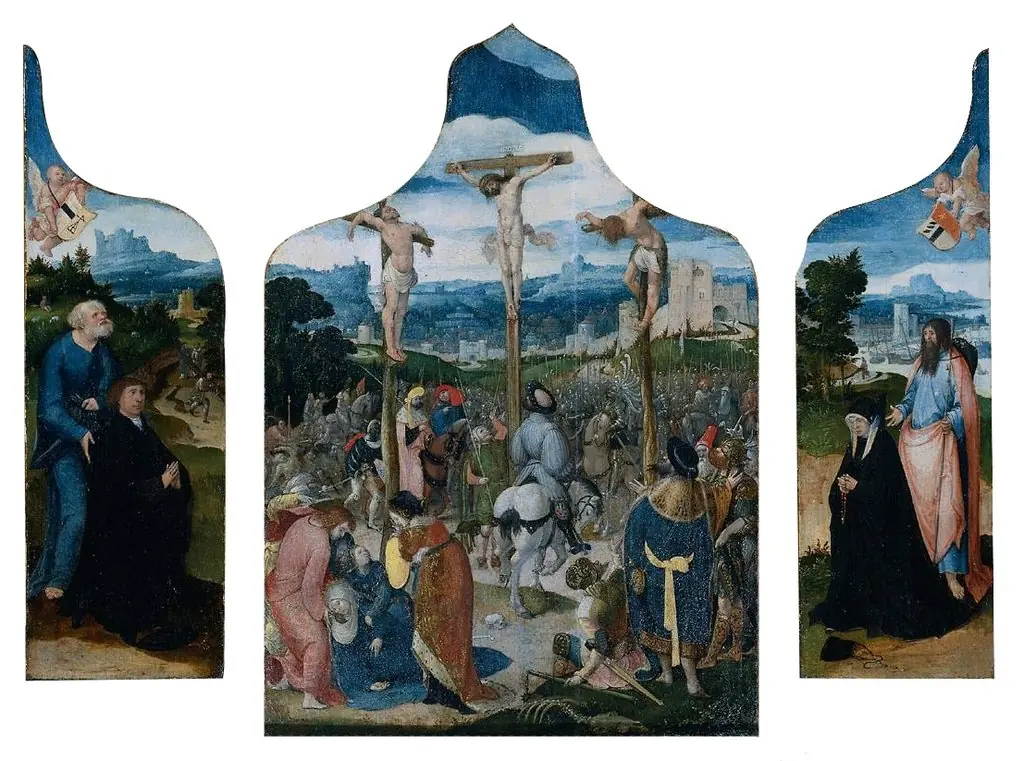 Triptych with the Crucifixion (centre panel), St Peter and a Male Donor (inner left wing), St James and a Female Donor (inner right wing), St Christopher and the Christ Child on the Road of Life (outer wings)
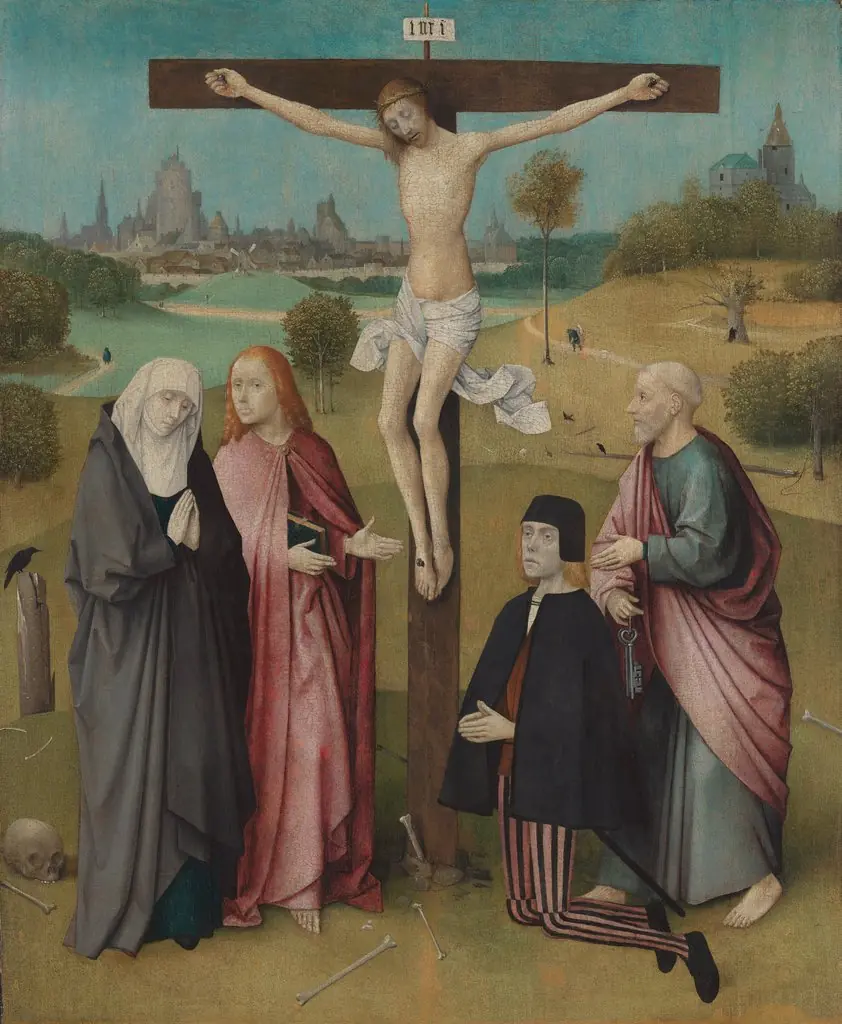 Crucifixion with a Donor
 The Life and Miracles of Saint Godelieve
 Christ crucified between Mary and John the Evangelist and the saints Adolphus and Ambrosius
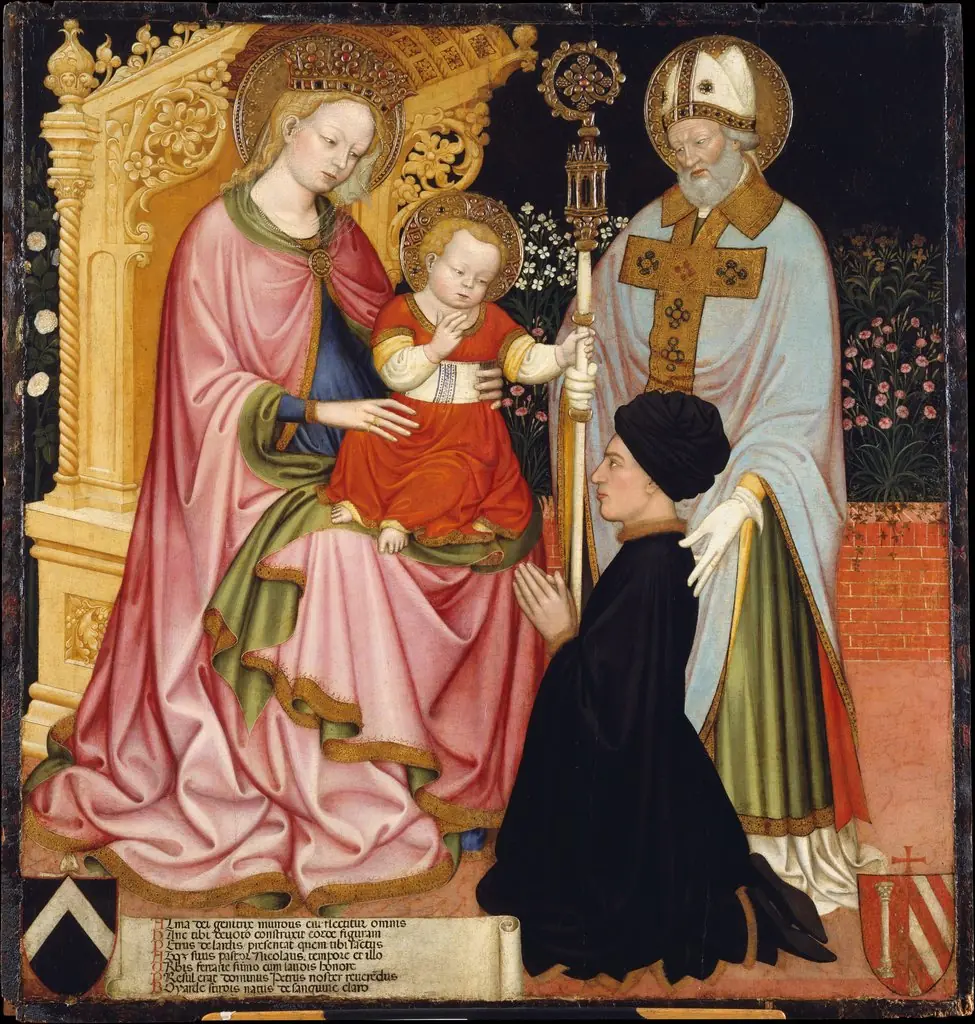 Madonna and Child with the Donor, Pietro de' Lardi, Presented by Saint Nicholas
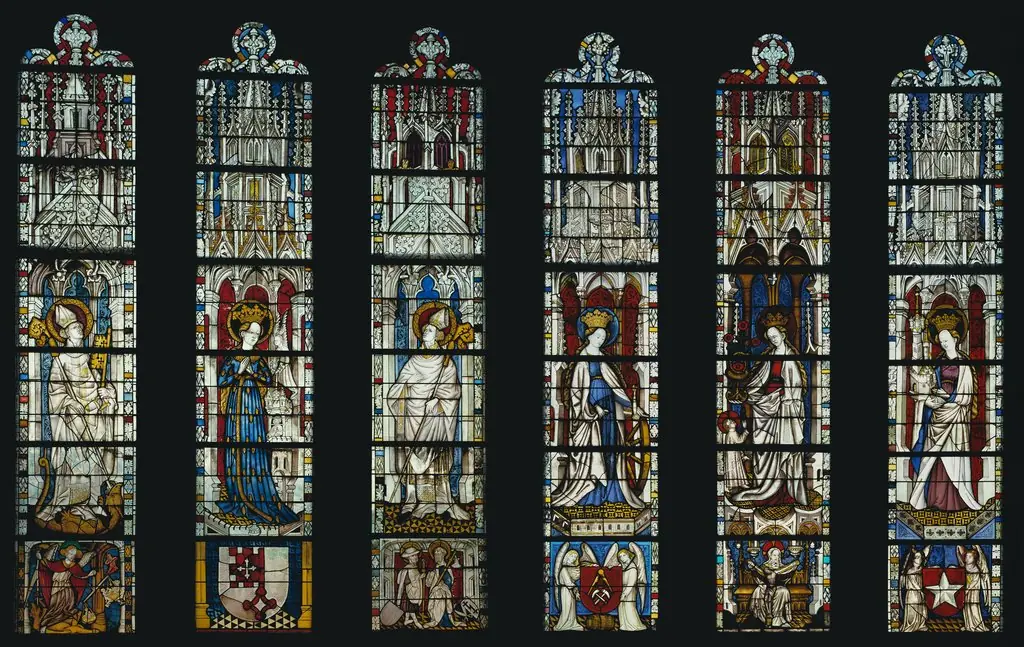 The Virgin Mary and Five Standing Saints above Predella Panels
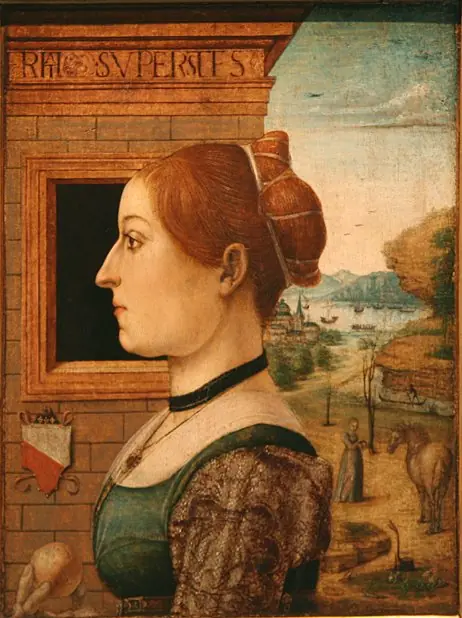 Portrait of a Woman, possibly Ginevra d'Antonio Lupari Gozzadini
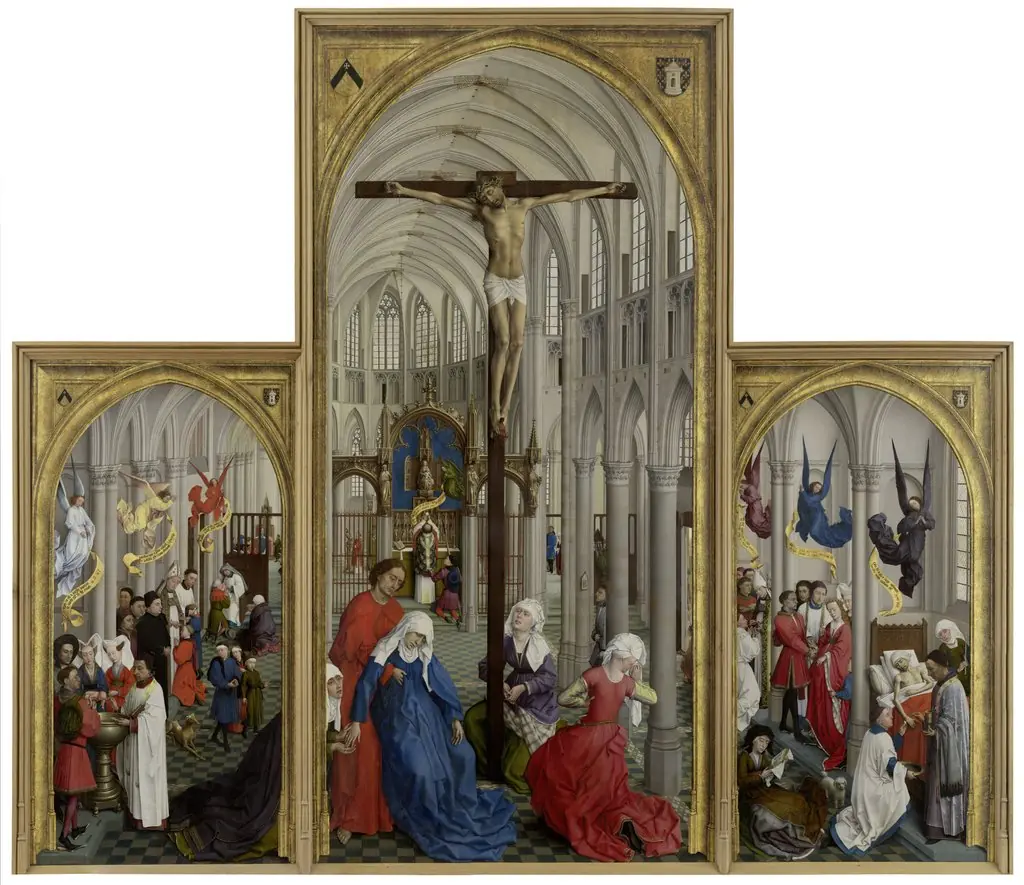 The Seven Sacraments
 Portrait of a Woman Holding a Book
 An Artist Painting a Heraldic Shield in a Cabinet of Curiosities
 Angel Supporting a Heraldic Shield
 Portrait of a Man of the Moncheaux Family