Artwork
Interior, Brick House Farm, Pleasant Valley, Dutchess County, New York State
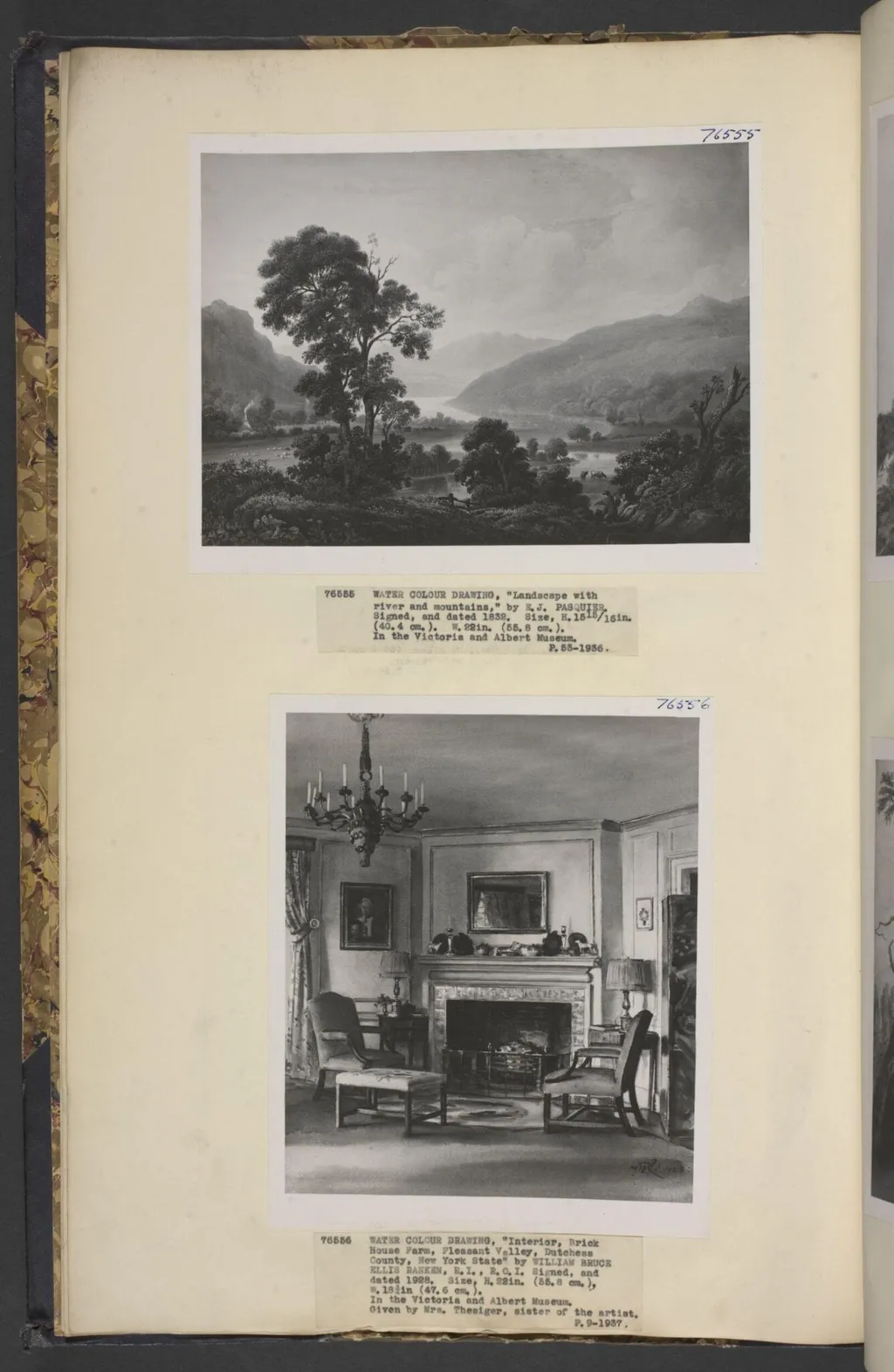
Interior, Brick House Farm, Pleasant Valley, Dutchess County, New York State is a watercolor work on paper by the Regionalist artist Ranken. It dates from 1928 and is held in the collection of the Victoria and Albert Museum.
About this work
The artist focused on everyday details, like the neat stack of books and the polished wood furniture.
This room looks like a cozy living space from long ago. A fireplace sits in the center, with a mirror above it reflecting the chandelier’s candles. Two armchairs face the fire, and a small table holds a lamp. The walls are plain, and a painting hangs above the mantel.
The artist focused on everyday details, like the neat stack of books and the polished wood furniture. This was made in 1928, showing how people lived in their homes back then.
Check out the Victoria and Albert Museum to see more drawings like this.
Overview
Created in 1928, this watercolour and bodycolour work by Ranken captures the interior of Brick House Farm in Dutchess County, New York. The piece is signed and dated by the artist, reflecting a quiet, observational approach to domestic space. Rendered with precision, it documents an ordinary room without idealization, emphasizing material textures and arranged furnishings as records of daily life.
Subject & Meaning
The scene centers on a hearth with a mirror above it, reflecting the glow of a chandelier. Two armchairs face the fire, flanking a small table bearing a lamp. Books are neatly stacked, furniture is polished, and a painting hangs above the mantel.
These elements suggest a lived-in, orderly home, where comfort is derived from routine and familiar objects rather than ornamentation.
Technique & Style
Ranken employed watercolour with bodycolour to build subtle layers of tone and texture. The light from the chandelier is suggested through delicate highlights, while the wood surfaces and plaster walls are rendered with restrained washes. The composition is balanced and quiet, avoiding dramatic perspective in favor of intimate, frontal observation that invites close looking.
History & Provenance
The work was completed during Ranken’s period of interest in American vernacular architecture. It remained in private hands until acquired by the Victoria and Albert Museum, where it is held as part of a collection documenting early 20th-century domestic interiors. Its survival reflects a growing interest in preserving everyday spaces as cultural artifacts.
Context
In 1928, as industrialization reshaped American life, artists like Ranken turned to rural and historic homes as subjects of quiet preservation. This interior, untouched by modernization, offered a contrast to urban change. The attention to detail, books, lamp, polished wood, aligns with broader efforts to document fading ways of life before they disappeared.
Legacy
The work contributes to a modest but significant body of American watercolours that treat domestic interiors as worthy of artistic attention. Its value lies not in grandeur but in its faithful recording of ordinary moments. It remains a reference for historians and artists interested in early 20th-century material culture and the aesthetics of stillness.
Own this work as a print
Artist & collection

Artist
Ranken is a name of Scottish and Irish origin. The name is cognate with the surname Rankin which is derived from the medieval personal name Rankin, a diminutive of Ronald or Rand, combined with the diminutive suffix…

- A Welsh Landscape
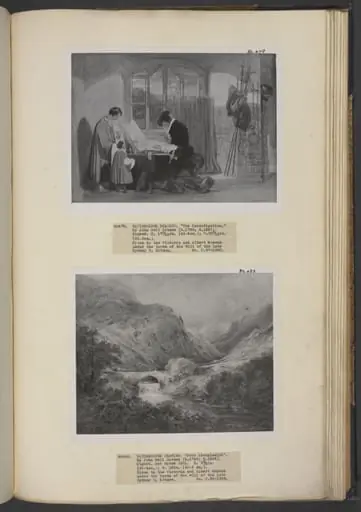 The Investigation
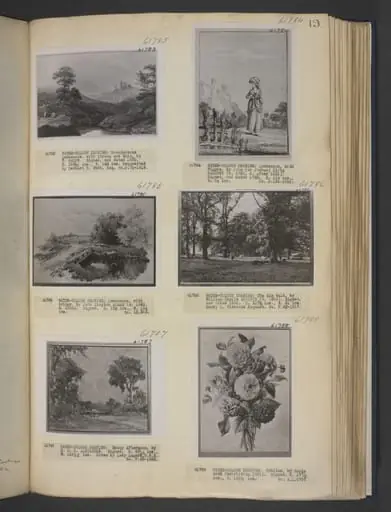 The Elm Walk. A Wooded Park
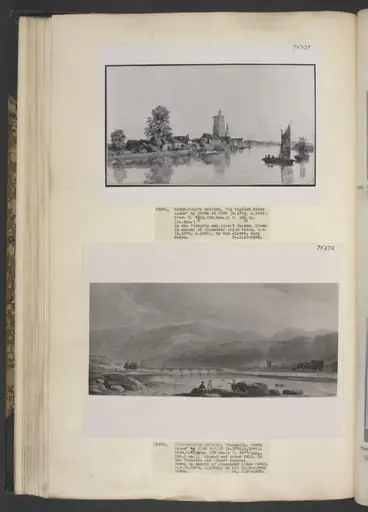 An English River Scene
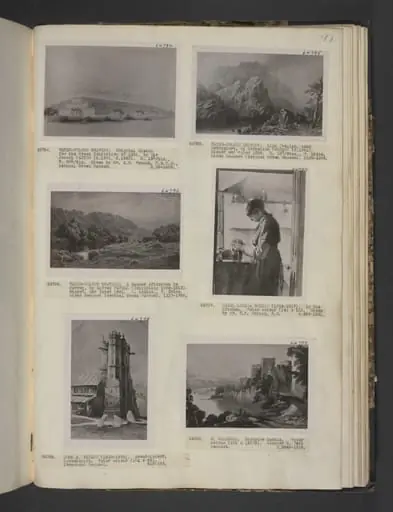 Chepstow Castle
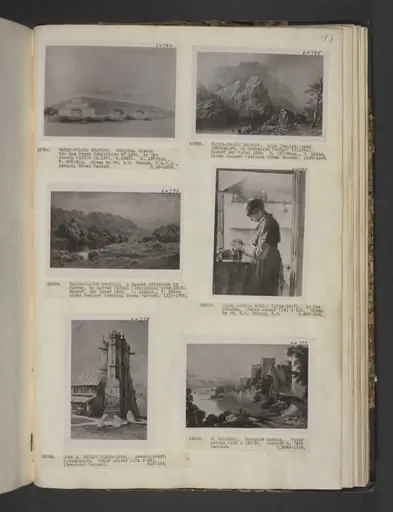 A Summer Afternoon in Surrey: Haymaking
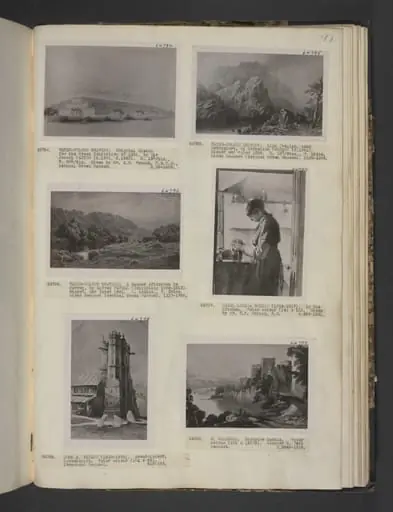 Llyn Cwellyn, near Beddgelert
 Colin Glen near Belfast
 Near the old bath, Matlock, Derbyshire : Wood scene, with cattle drinking at a river
 Man-of-War, off Dover
 Group of flowers
 Clubbington in Warwickshire