Artwork
Untitled
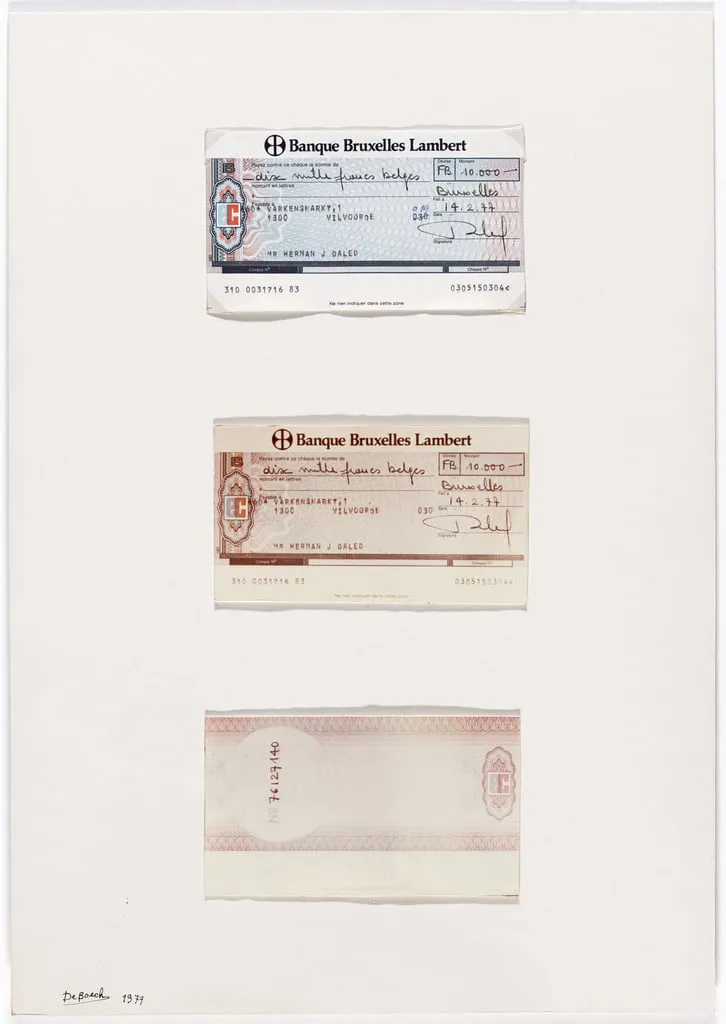
Untitled is an ink drawing by Robert De Boeck. It dates from 1977 and is held in the collection of the Museum of Modern Art.
About this work
Overview
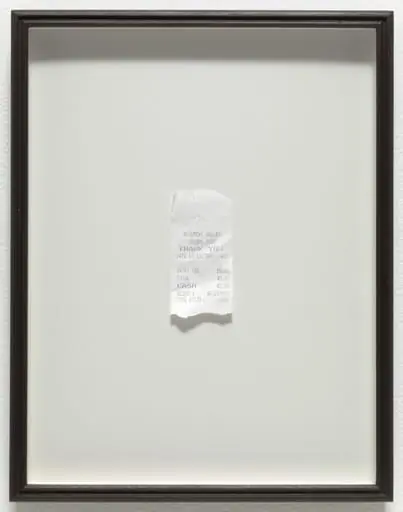
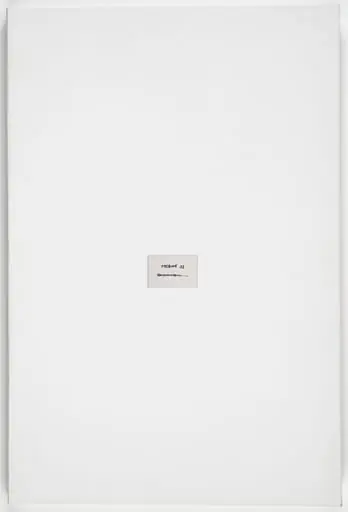
The composition arranges three check-like elements vertically against a plain white surface, emphasizing their material presence over narrative content.
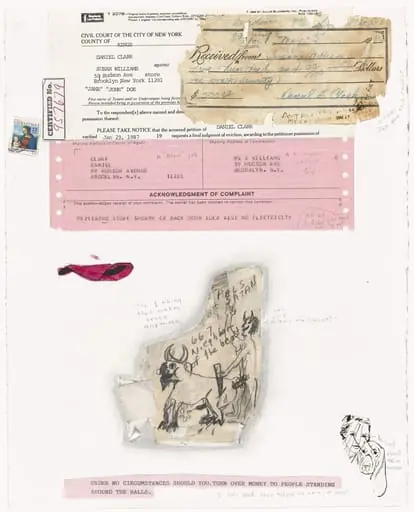
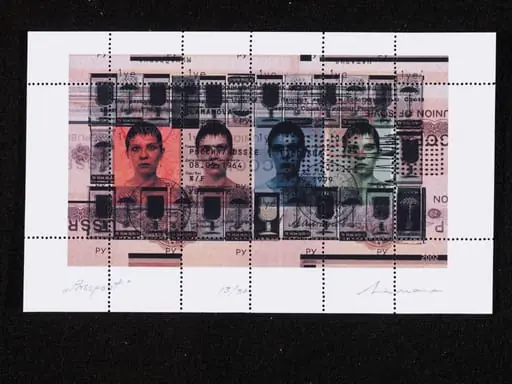
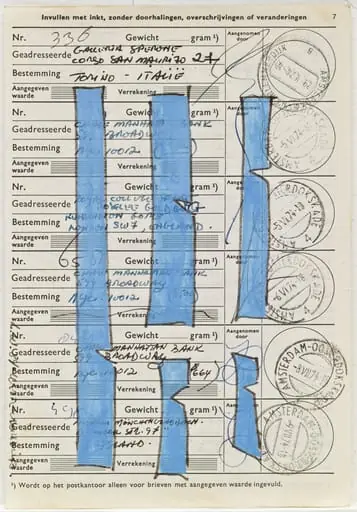
Created in 1977, this work by Robert De Boeck combines ink and ballpoint pen interventions on a printed bank check and two chromogenic color prints mounted on board. The composition arranges three check-like elements vertically against a plain white surface, emphasizing their material presence over narrative content. The work resists traditional categorization, existing at the intersection of drawing, collage, and found object.
Subject & Meaning
The three checks, two bearing handwritten annotations and one minimally marked, suggest the remnants of financial transactions, stripped of their functional context. Their arrangement invites contemplation of value, record-keeping, and the quiet persistence of everyday paper objects. The handwritten texts, though legible, offer no clear narrative, leaving interpretation open to the viewer’s own associations with bureaucracy and personal history.
Technique & Style
De Boeck overlays delicate ink and ballpoint pen marks onto commercial printed surfaces, altering their original purpose without obscuring them. The chromogenic prints, likely photographic reproductions, are integrated as flat, color-field elements. The restrained palette and precise placement reflect a minimalist sensibility, where the act of intervention becomes the subject, subtle, deliberate, and resistant to grand gesture.
History & Provenance
The work entered the collection of The Museum of Modern Art in New York, where it remains part of its holdings of postwar drawings and conceptual works. Its origin lies in De Boeck’s broader practice of repurposing mundane printed materials, a method aligned with European avant-garde traditions of the 1970s that questioned the boundaries between art and everyday life.
Context
Emerging in the late 1970s, this piece reflects a broader interest among European artists in using institutional and commercial ephemera as artistic material. De Boeck’s approach parallels contemporaries who explored the aesthetics of bureaucracy and the poetic potential of overlooked documents, situating his work within a quiet, critical lineage of conceptual drawing.
Legacy
Though not widely exhibited, the work contributes to an understudied strand of postwar European art that privileges restraint and material awareness. Its presence in MoMA’s collection signals its recognition as a quiet but significant example of how ordinary objects, when recontextualized, can provoke reflection on systems of value and meaning.
Artist & collection
Artist
This artist mixed everyday objects with drawing and photography in the 1970s. They mounted a gelatin silver print onto an alarm clock in 1974, and turned a printed check into a collage with ink and ballpoint pen plus…