Movement
Avant-garde
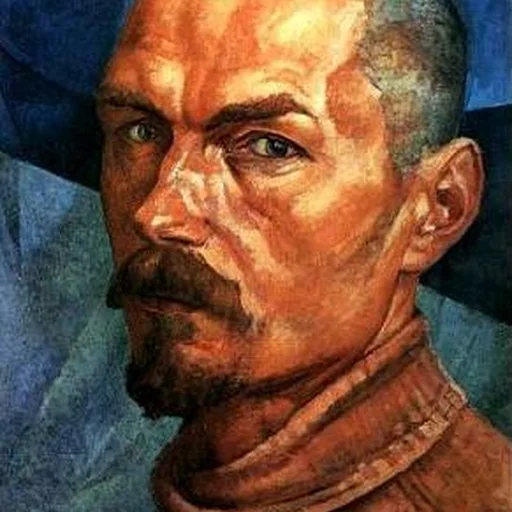
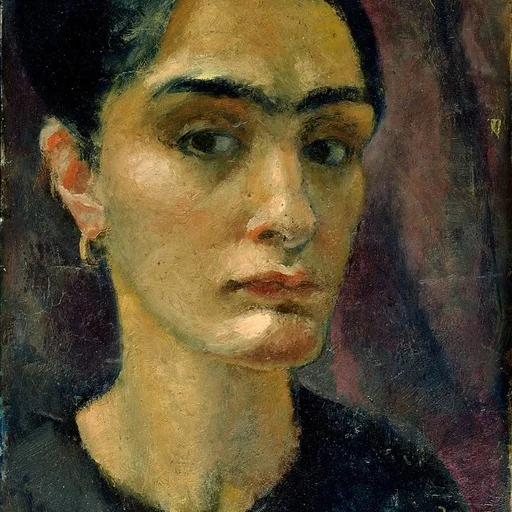
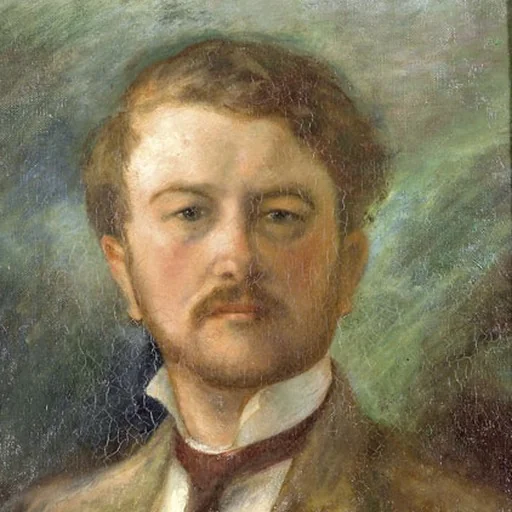
Avant-garde is an art movement dating from 1850. The gallery holds 1 work in this movement, including works by Kuzma Petrov-Vodkin, Anita Rée and Károly Kernstok. Browse Avant-garde paintings, portraits, pictures and artworks from the world's public-domain museum collections.
"Avant-garde" began not as an art term but as a military one: in French it named the vanguard, the advance guard that scouts ahead of the main body of an army. The social theorist Henri de Saint-Simon transferred the metaphor to culture in his Opinions littéraires, philosophiques et industrielles (1825), casting artists as the scouts of social progress—"It is we artists who will serve you as avant-garde." The idea took firmer shape in nineteenth-century France, especially in the politically charged decades between the July Revolution of 1830 and the upheavals of 1848, when radical thinkers treated art as a force for reform. The phrase came to designate work that runs ahead of established taste: experimental, innovative, and deliberately at odds with academic convention.
Rather than a single style, the avant-garde is a stance, expressed through successive movements that share a will to break with the past. Its visual hallmarks are the rejection of illusionistic representation and the foregrounding of the medium itself—fractured form, flattened space, pure color, geometric abstraction, collage, manifesto, and provocation. Cubism, invented around 1907–08 by Pablo Picasso and Georges Braque, splintered objects into simultaneous viewpoints. Futurism, launched by Filippo Tommaso Marinetti's manifesto in Le Figaro on 20 February 1909, glorified speed and the machine. Dada, born at the Cabaret Voltaire in Zurich in 1916, turned anti-war revulsion into anti-art absurdity.
The Russian wing pushed abstraction furthest. At the Last Futurist Exhibition 0,10 in Petrograd in 1915, Kazimir Malevich unveiled his Black Square and the doctrine of Suprematism—pure geometric form on a blank ground—while Vladimir Tatlin's counter-reliefs pointed toward Constructivism, an art conceived to be socially useful. Working alongside them, Kuzma Petrov-Vodkin fused Russian icon painting, Italian fresco, and modern color in Bathing the Red Horse (1912), now in the State Tretyakov Gallery and held in this collection—a canvas read by contemporaries as both a hymn and an omen.
The avant-garde's legacy is the modernist conviction that art should perpetually renew itself. Its lineage runs through Surrealism in the 1920s and into postwar abstraction and conceptual art, and the term still describes any practice that pushes the boundaries of form and idea.
Key artists
Works
Frequently asked questions
What is Avant-garde?
Avant-garde is an art movement. A broad label for art that breaks with existing conventions and tests radically new ideas, forms, or social roles.
Who are the key Avant-garde artists?
Key Avant-garde artists in the collection include Kuzma Petrov-Vodkin, Anita Rée and Károly Kernstok.
When did Avant-garde take place?
Avant-garde dates from around 1850.
Where can I see Avant-garde works?
Avant-garde works in the collection are held by Tretyakov Gallery.