Artwork
Untitled
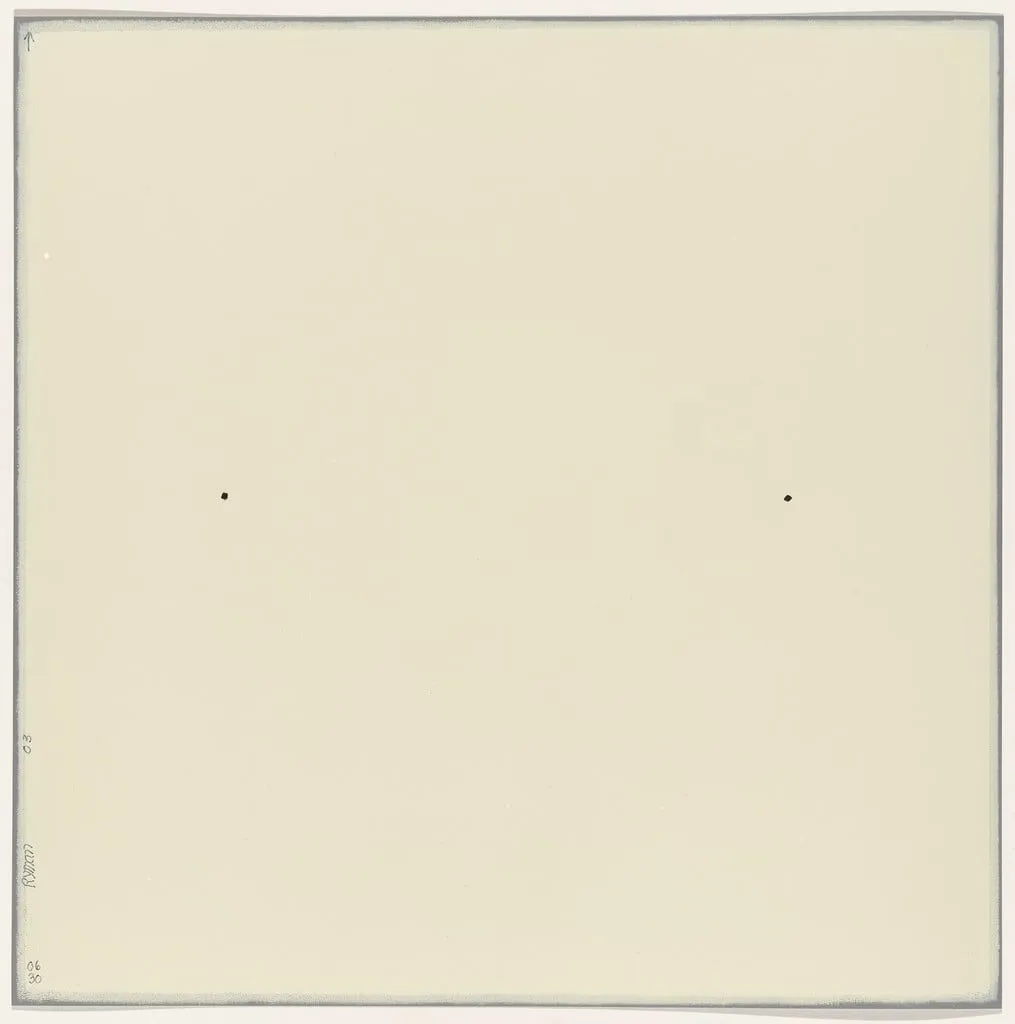
Untitled is a print by Robert Ryman. It dates from 2003 and is held in the collection of the Museum of Modern Art.
About this work
Overview
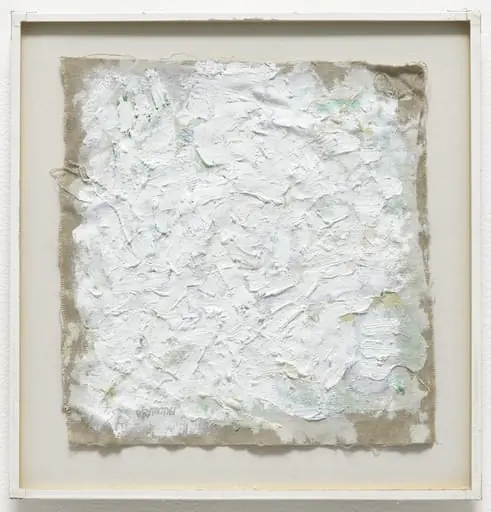
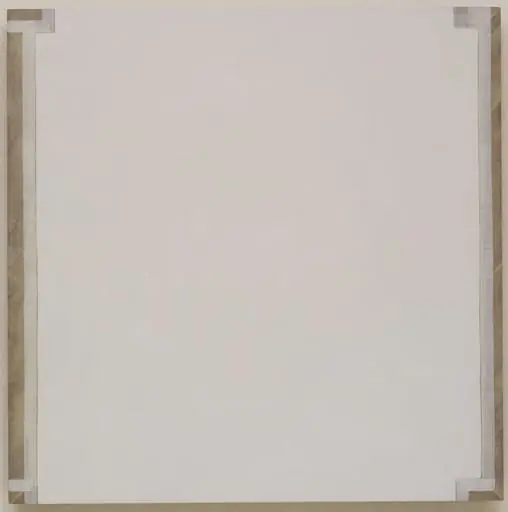
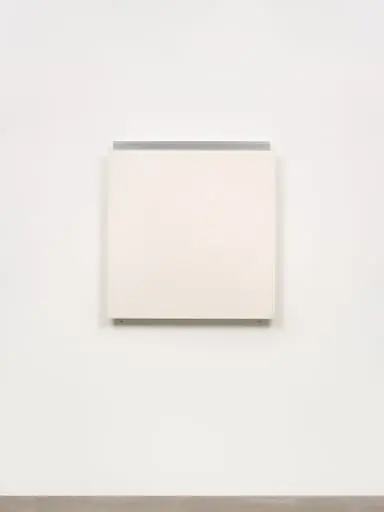
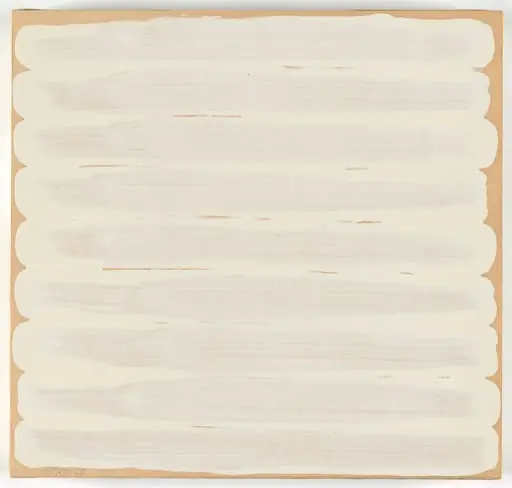
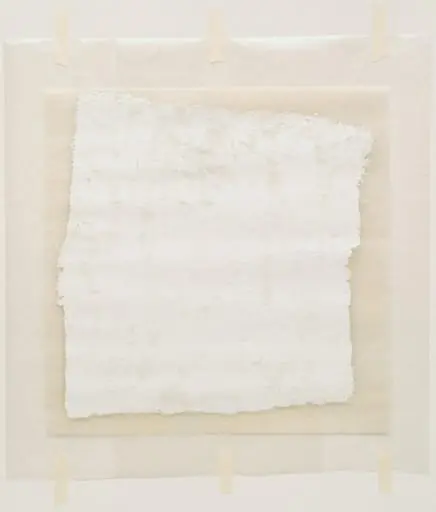
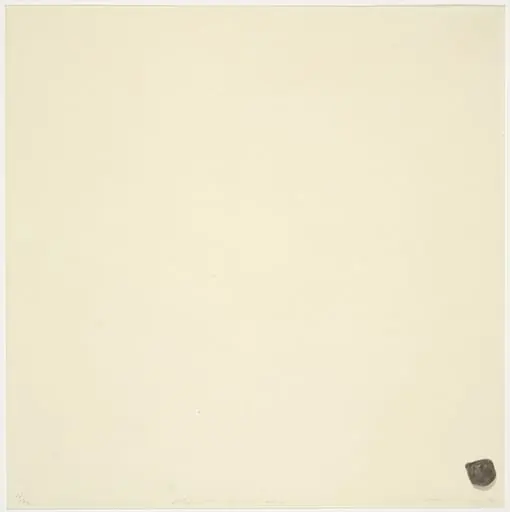
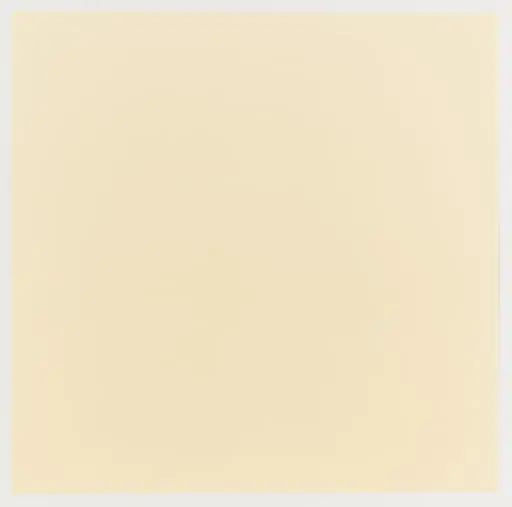
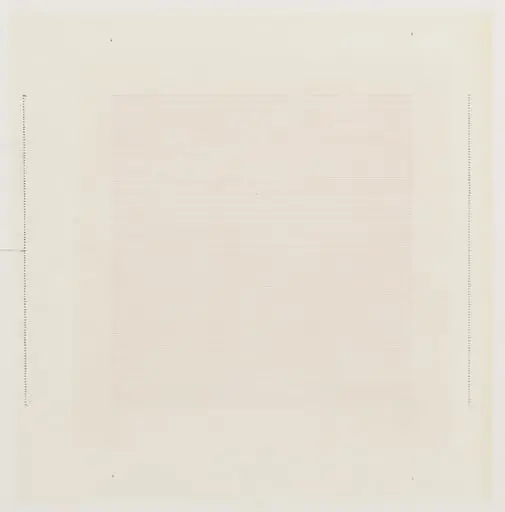
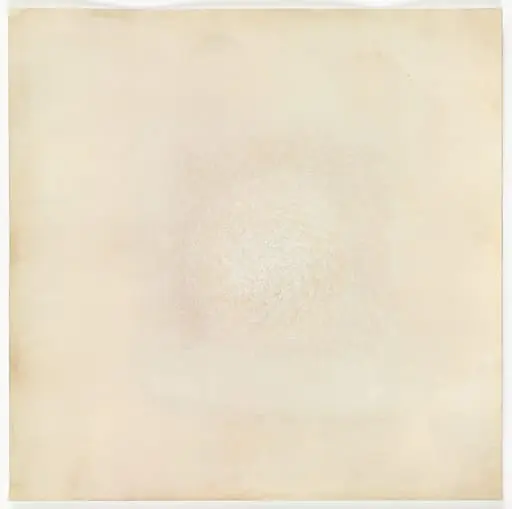
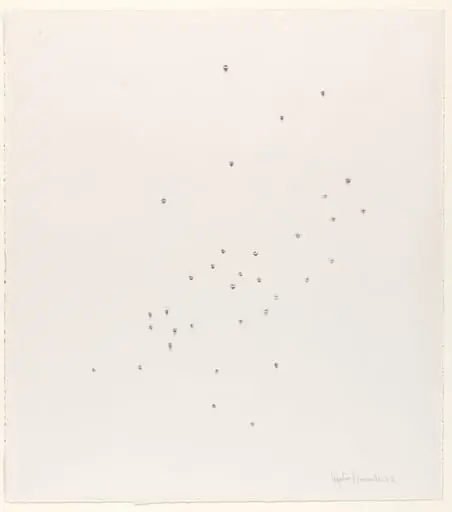
The surface is dominated by a uniform white field, with minimal intervention: two small black dots near the top and a faint pencil mark along the left edge.
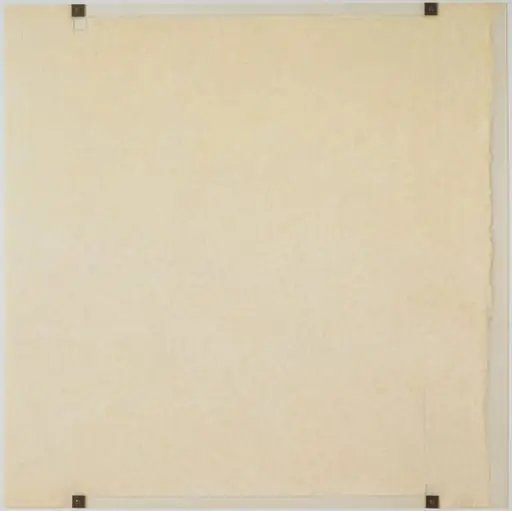
Created in 2003, this work by Robert Ryman consists of a linoleum cut mounted on an aluminum plate, secured with two nails. The surface is dominated by a uniform white field, with minimal intervention: two small black dots near the top and a faint pencil mark along the left edge. The entire piece is framed by a narrow gray border, reinforcing its restrained presence. The materials and method emphasize physicality over imagery.
Subject & Meaning
The work resists symbolic interpretation. Its apparent emptiness is not absence but focus, directing attention to material presence, surface, and the act of placement. The nails, dots, and pencil mark are not decorative but structural and observational, suggesting inquiry into how art is made and perceived. Meaning emerges through the viewer’s engagement with what is deliberately limited.
Technique & Style
Ryman employed a linoleum cut, typically a printmaking medium, but here used as a flat, monochromatic element adhered to aluminum. The nails serve both functional and aesthetic roles, anchoring the material while introducing subtle irregularities. The smooth, untextured white surface contrasts with the precise, almost imperceptible marks, reflecting Ryman’s long-standing interest in how support, medium, and method shape perception.
History & Provenance
The work entered the collection of The Museum of Modern Art in New York following its creation in 2003. It is part of a broader body of Ryman’s late-career investigations into white surfaces and material attachment. Unlike earlier works that explored paint on various substrates, this piece uses printmaking techniques to isolate form and support, continuing his decades-long examination of the boundaries of painting.
Context
Ryman’s practice emerged from postwar American minimalism and conceptual art, yet diverged by focusing on the physical properties of painting rather than its representational or ideological functions. This work aligns with his consistent refusal to embed narrative or symbolism, instead inviting scrutiny of the object’s construction, surface, and relationship to the wall. It reflects a quiet dialogue with artists like Ad Reinhardt and Donald Judd.
Legacy
This piece contributes to Ryman’s enduring influence on contemporary art’s engagement with materiality and perception. By reducing visual elements to near-zero, he expanded the definition of what a painting could be, prioritizing process, support, and context over image. His work continues to inform artists exploring austerity, presence, and the quiet authority of the mundane.
Artist & collection

Artist
Robert Ryman was an American painter identified with the movements of monochrome painting, minimalism, and conceptual art. He was best known for abstract, white-on-white paintings. He lived and worked in New York City.