Artwork
The Custom House at Greenock, Scotland
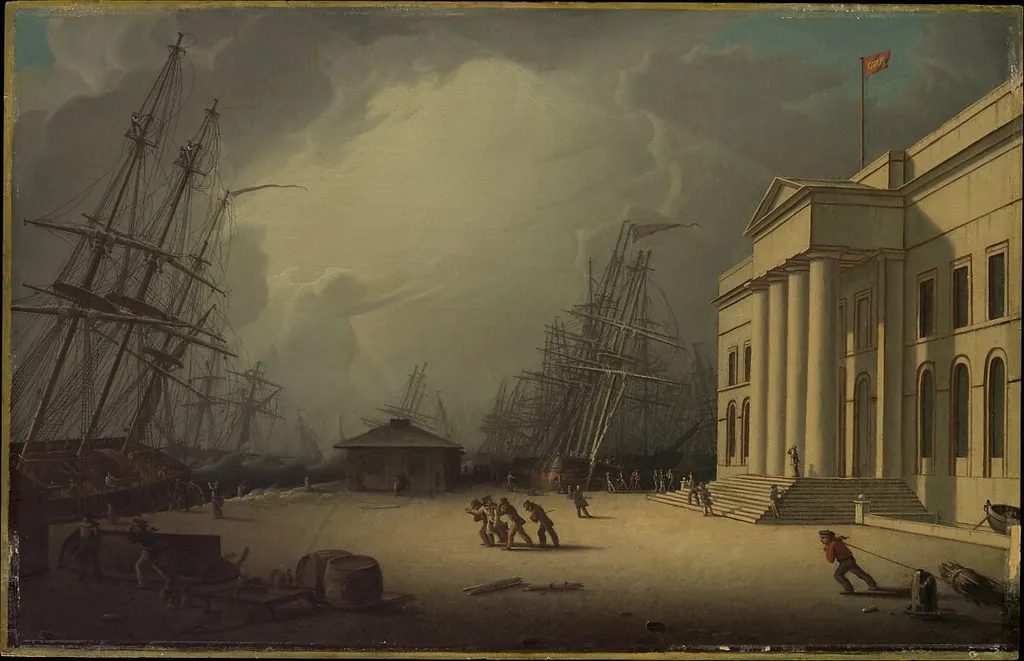
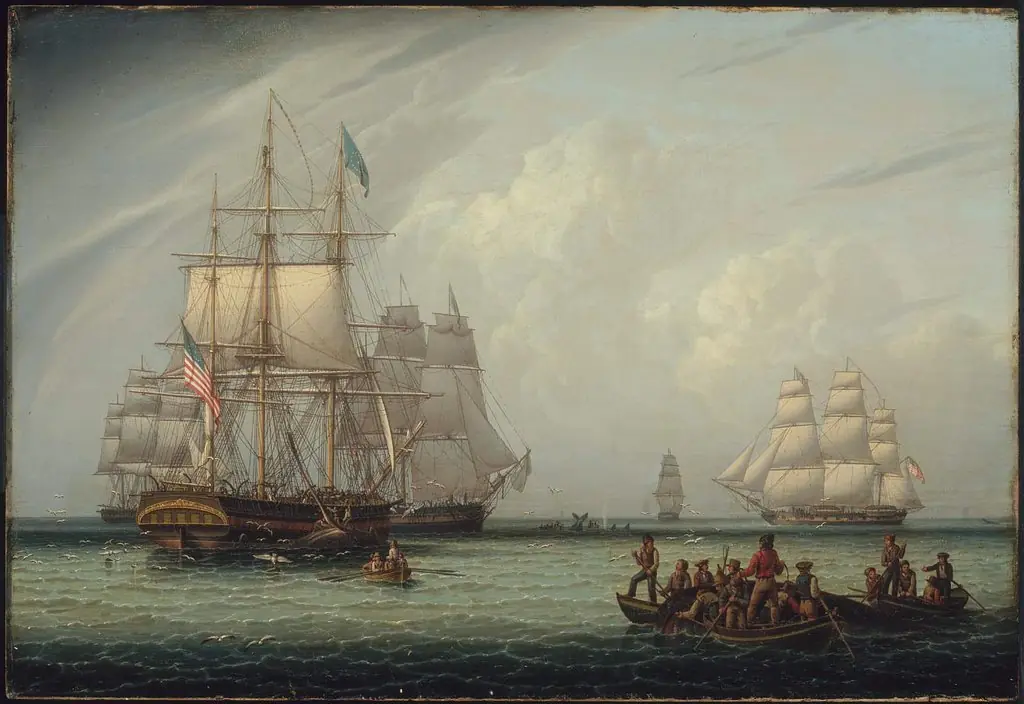
The Custom House at Greenock, Scotland is an oil painting by the Romanticist artist Robert Salmon. It dates from 1828 and is held in the collection of the Metropolitan Museum of Art.
About this work
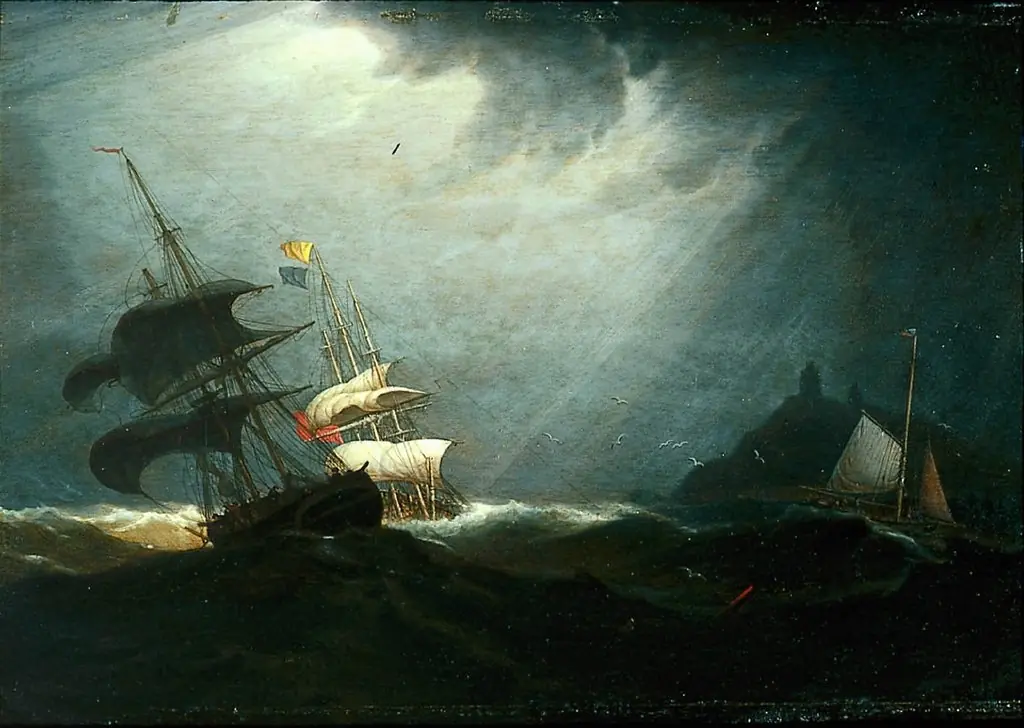
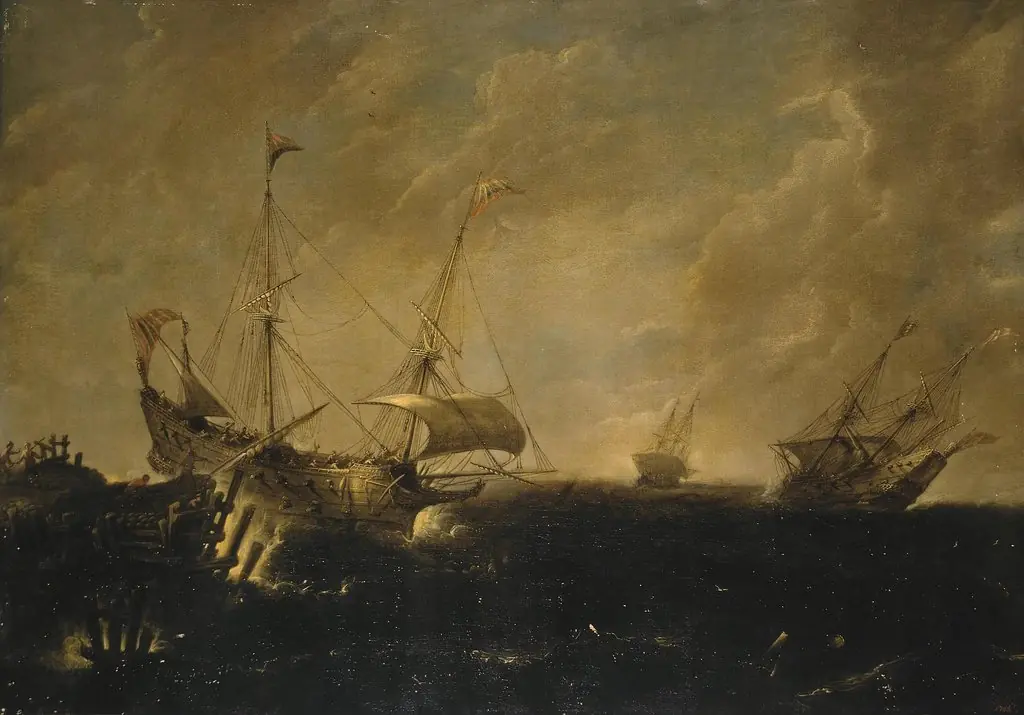
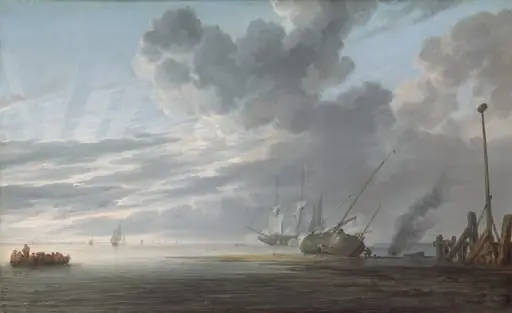
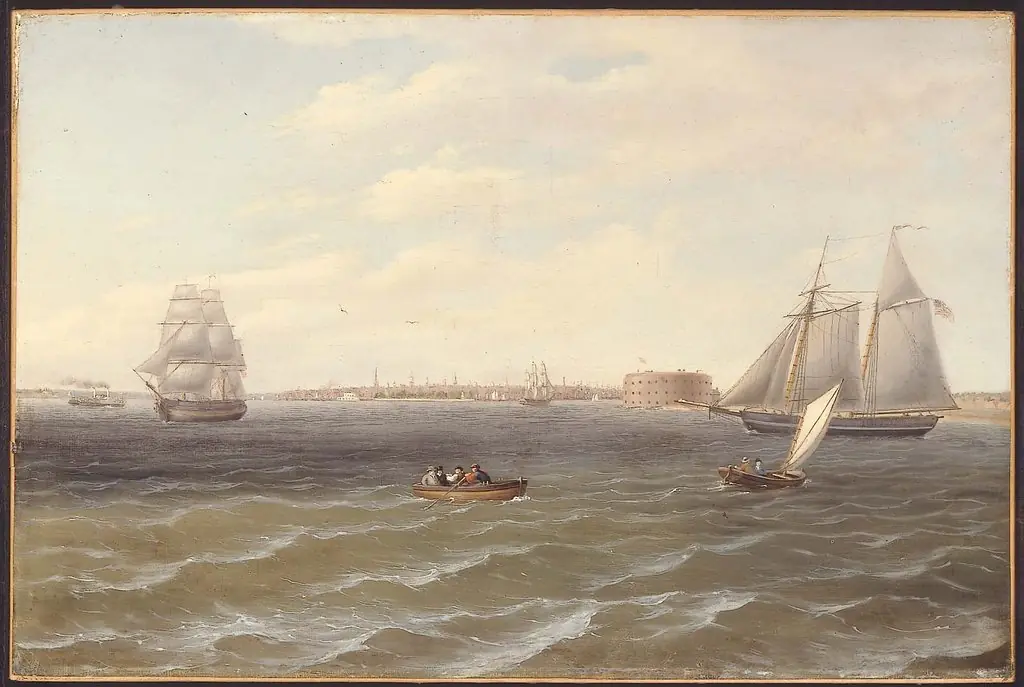
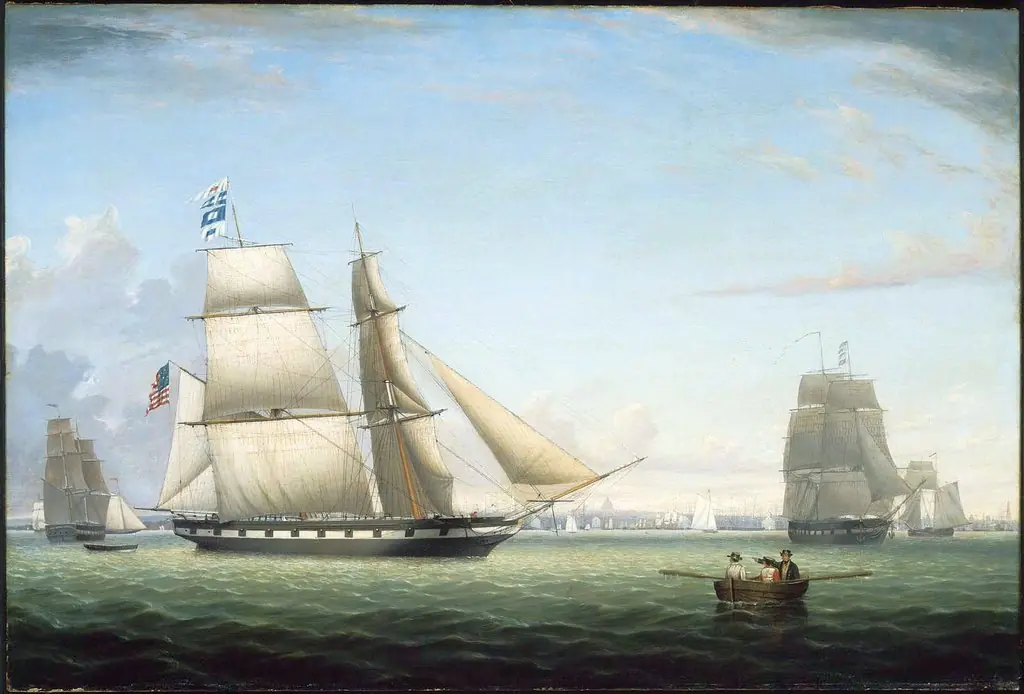
You see a stormy harbor in Scotland, waves crashing against stone walls while ships pitch in the wind.
You see a stormy harbor in Scotland, waves crashing against stone walls while ships pitch in the wind.
Robert Salmon painted this in 1828, just as steamships were starting to replace sail. He layered thin oil glazes, transparent paint, to make the water look deep and restless. The tiny figures on the dock feel real because he used a fine brush for their clothes and faces.
If you like how light dances on water, look up the subject ships.
Subject & Meaning
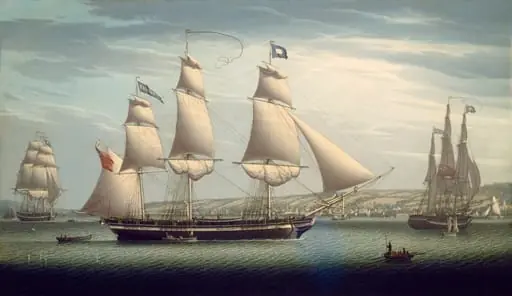
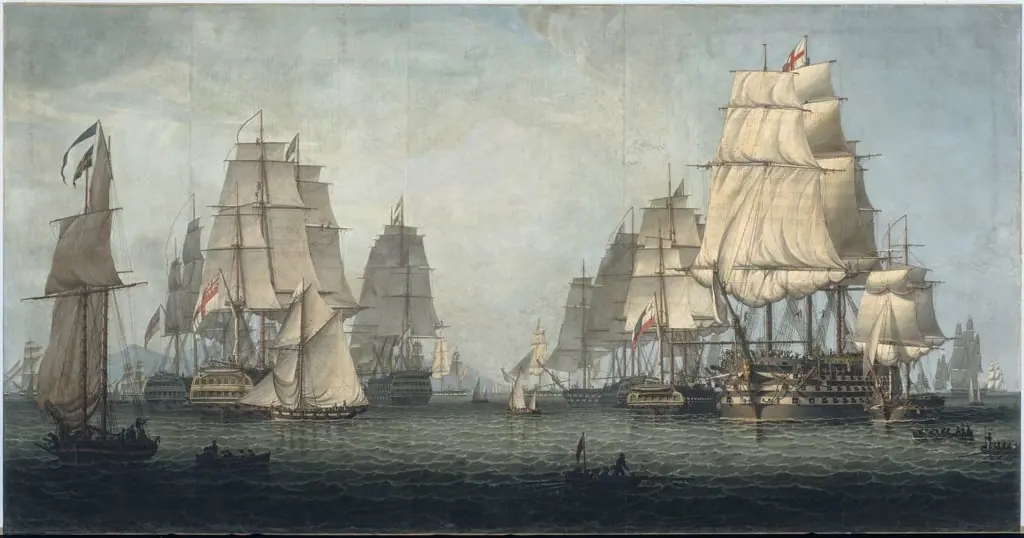
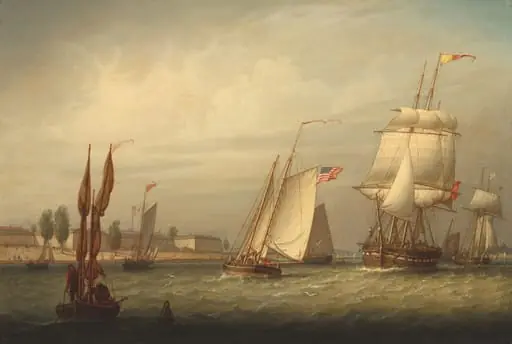
Robert Salmon's 1828 oil on wood depicts the Custom House at Greenock, Scotland, presenting a maritime landscape in which human activity, architecture, and weather converge. The composition centers on a building identified as the Custom House, flanked by figures and shipping, situating the viewer at a working port engaged in commerce and oversight. Ships occupy the harbor, signaling Greenock's role as a center of trade and naval activity on the Clyde, while the presence of men emphasizes the labor and human scale of the waterfront.
A storm, listed among the depicted elements, introduces atmospheric tension, dramatizing nature's power over the harbor and its vessels. Together, these iconographic components, official architecture, seafaring craft, working figures, and turbulent weather, frame the painting as a statement about the vitality, vulnerability, and economic importance of Greenock as a Scottish port in the early nineteenth century.
Technique & Style
Executed in 1828, Robert Salmon's The Custom House at Greenock, Scotland is an oil painting applied to a wood panel support. The work measures approximately 41.9 by 65.1 centimeters. Stylistically classified as a landscape, the composition integrates architectural and maritime elements, depicting a building alongside ships and human figures.
The scene is characterized by a dramatic atmospheric quality, specifically rendering a storm condition that unifies the depicted elements. The use of oil on panel allows for the detailed representation of the turbulent weather and the specific structures of the custom house and vessels.
History & Provenance
Robert Salmon painted The Custom House at Greenock, Scotland in 1828, executing the work in oil on wood panel (41.9 × 65.1 cm). The painting entered the collection of the Metropolitan Museum of Art, where it remains on view in The American Wing, and is catalogued as part of the museum’s landscape genre holdings. Its provenance is limited to the museum’s acquisition records, which do not specify an earlier owner or a commissioning patron; thus the work appears to have been created for the artist’s own exhibition purposes and subsequently acquired by the Met.
The painting is housed in the Metropolitan Museum of Art in New York, where it is part of the American Wing's collection. It entered the museum's holdings as part of the institution's assemblage of 19th‑century marine and coastal scenes, though the precise accession or inventory number is not recorded in the available documentation. The work has not been listed in publicly available exhibition catalogs or loan records within the provided sources, indicating that its display history remains limited to periodic inclusion in the permanent installation of the American Wing.
Overview
Robert Salmon, a prominent maritime painter active in both England and America, completed The Custom House at Greenock, Scotland in 1828. This oil-on-wood panel captures a dramatic scene within a Scottish harbor, depicting a custom house, various figures, and vessels contending with a turbulent sea. The work exemplifies Salmon's dedication to nautical themes, which dominated his extensive output throughout his career.
Context
Created in 1828, this painting reflects a period of significant transition in maritime technology. Salmon captured a traditional sailing harbor at a moment when steam-powered vessels were beginning to emerge, gradually altering the landscape of sea travel and commerce. The work thus serves as a visual record of an era on the cusp of industrial change, preserving the imagery of sail-dominated ports.
Artist & collection

Artist
Robert Salmon (1775 – c. 1845) was a maritime artist, active in both England and America. Salmon completed nearly 1,000 paintings, all save one of maritime scenes or seascapes. He is widely considered the Father of American Luminism.