Artwork
The Encampment
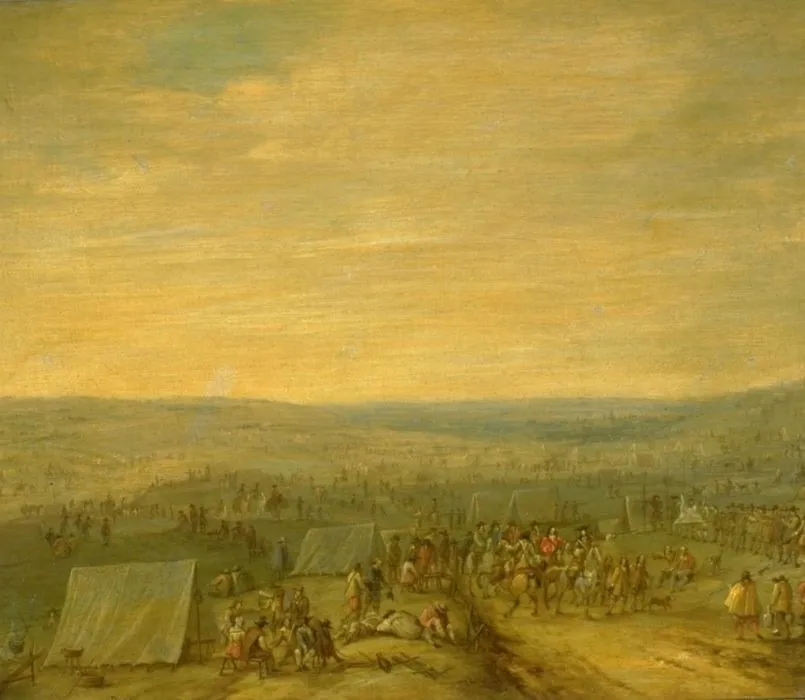
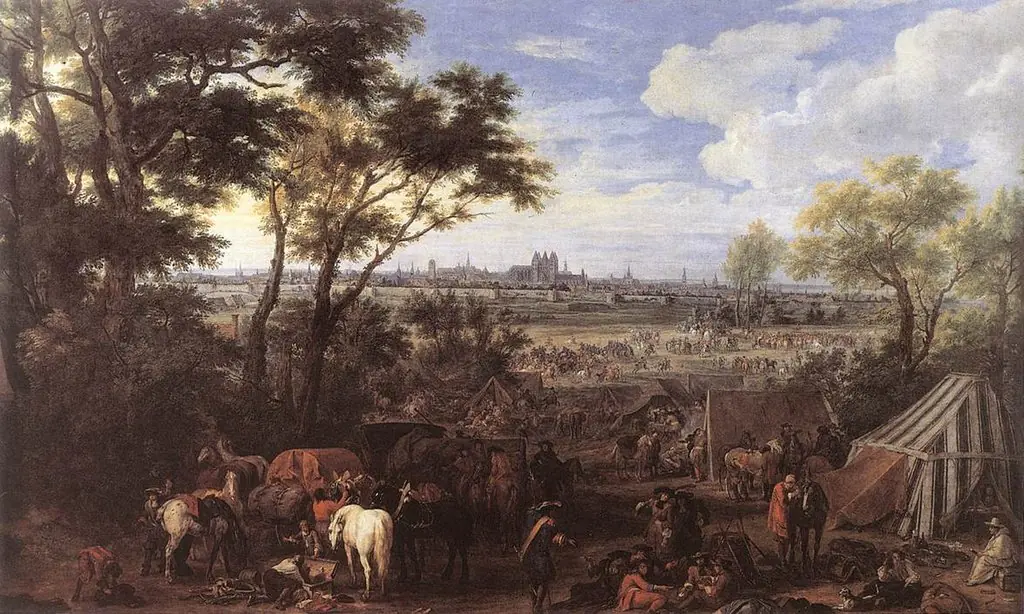
The Encampment is a paint painting by the Dutch Golden Age artist Robert van den Hoecke. It dates from 1659 and is held in the collection of the Gemäldegalerie Berlin.
About this work
Subject & Meaning
The Encampment depicts a military camp set in an open field, with tents and soldiers populating the landscape.
The Encampment depicts a military camp set in an open field, with tents and soldiers populating the landscape. Classified as a landscape painting, the work uses the encampment motif, a recurring theme in seventeenth-century Flemish and Dutch art, to stage figures within an expansive outdoor setting rather than to narrate a specific historical event. The combination of tents and troops in a field suggests an interest in the visual rhythms of camp life, where temporary architecture and military personnel animate the terrain.
As a cabinet-sized panel held by the Gemäldegalerie Berlin, the painting reflects the period's taste for refined military scenes that could function both as descriptive imagery and as evocations of the discipline and movement of armies in the landscape.
Technique & Style
The work is executed in oil paint on a wooden panel, reflecting the traditional technique of mid‑17th‑century Flemish landscape painting. The surface bears the characteristic handling of the artist’s brushwork, producing a finely detailed yet atmospheric rendering of a military encampment with tents, a field and a solitary soldier. The composition is structured around the linear arrangement of the tents and the placement of the figure, creating a balanced spatial rhythm that emphasizes the narrative content of the scene.
The painting’s condition is noted as well‑preserved, with the original panel support remaining intact and the varnish layer showing only minor aging.
History & Provenance
The Encampment, a 1659 landscape painting by Robert van den Hoecke, is held in the collection of the Gemäldegalerie in Berlin. The work, executed on panel, depicts a military camp scene featuring soldiers and tents. While its current location is established, the provided records do not list a specific inventory number or detail any past exhibition history for the piece.
Legacy
The Encampment has been recognized for its vivid portrayal of 17th-century military encampments and its role in advancing the landscape genre in Flemish art. Contemporary scholars cite its innovative composition and detailed rendering of tents and soldiers as influencing later artists who depicted similar camp scenes. The painting’s presence in the Gemäldegalerie Berlin has contributed to ongoing scholarship on van den Hoecke’s impact on Baroque landscape painting, though its reputation remains primarily within specialist art-historical discourse rather than broad public awareness.
Overview
Created in 1659 by Flemish artist Robert van den Hoecke, The Encampment is an oil painting that records a military encampment within a broad, flat landscape. The work belongs to the Dutch Golden Age tradition of detailed, panoramic scenes and is currently part of the collection of the Gemäldegalerie in Berlin.
Context
During the mid‑17th century, Flemish and Dutch artists often incorporated real topographical elements into imagined scenes, blending observation with narrative. Hoecke’s work follows this practice, using a realistic landscape as a stage for a staged military tableau, illustrating contemporary interest in both geography and martial organization.
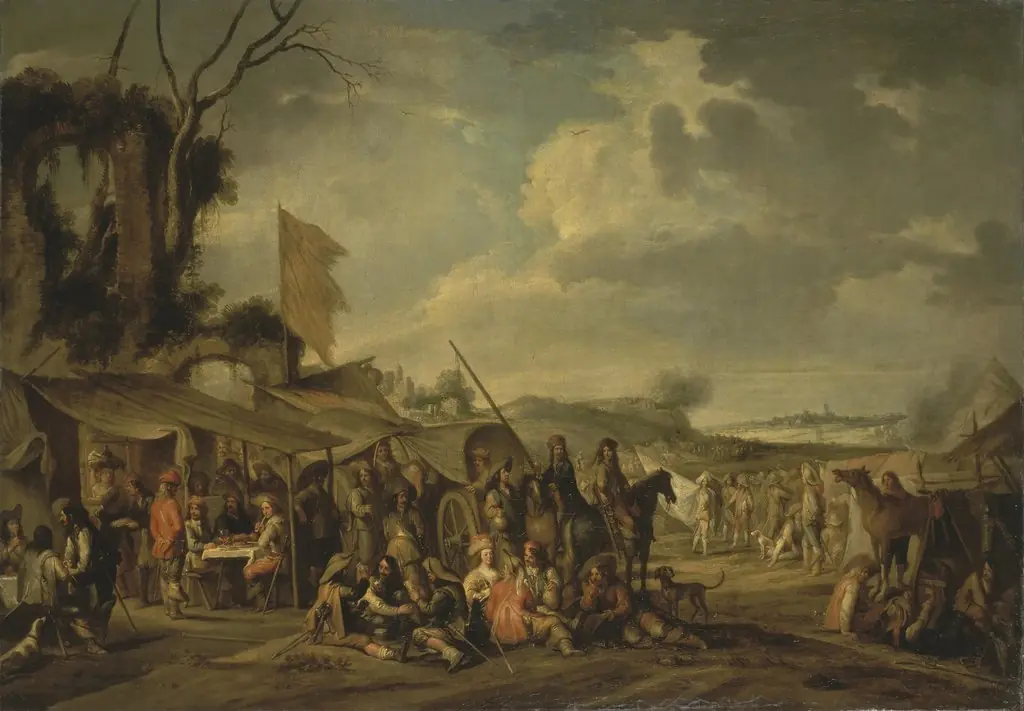
Artist & collection
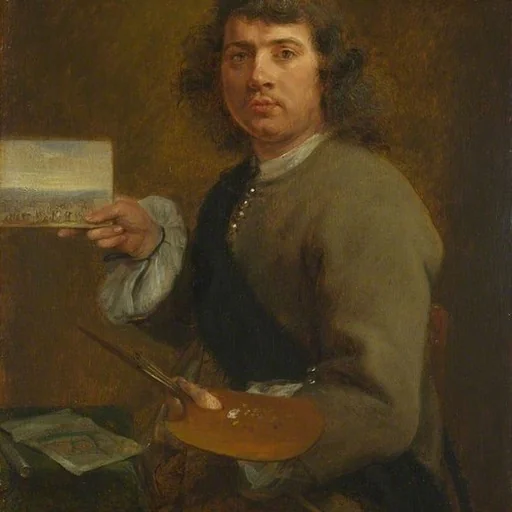
Artist
Robert van den Hoecke (30 November 1622 in Antwerp – 1668 in Bergues-Saint-Winoc) was a Flemish painter, engraver and architect.

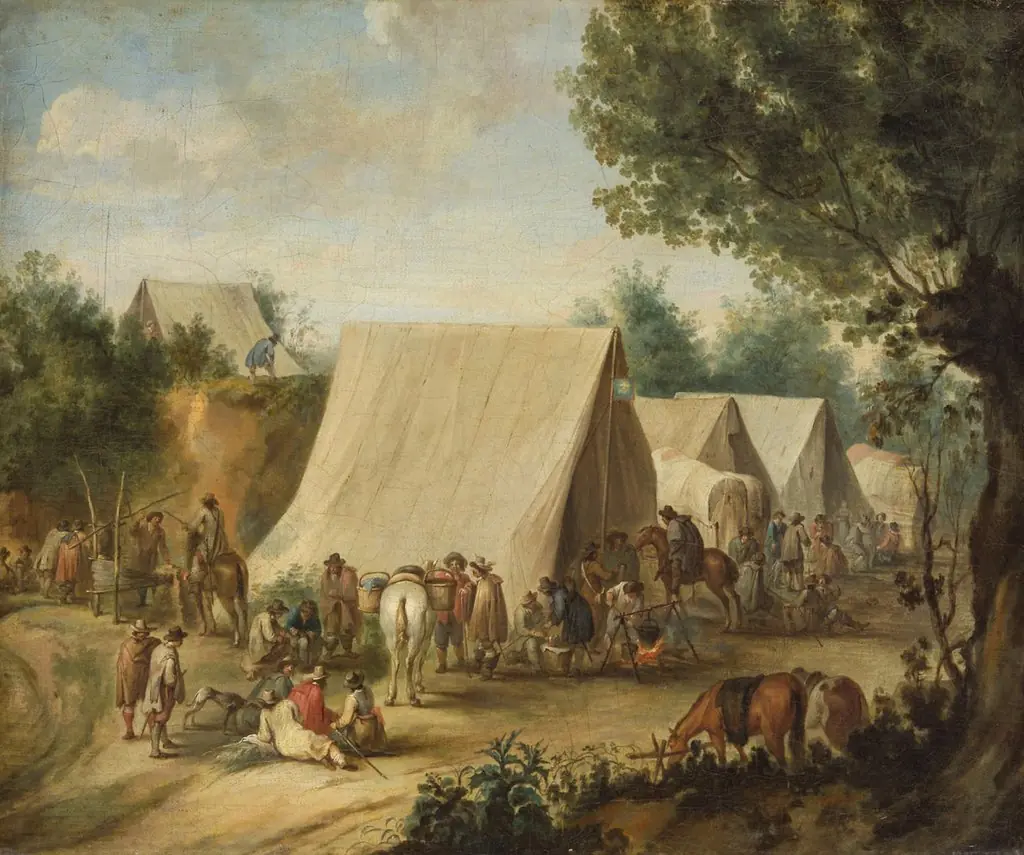 Camp
Camp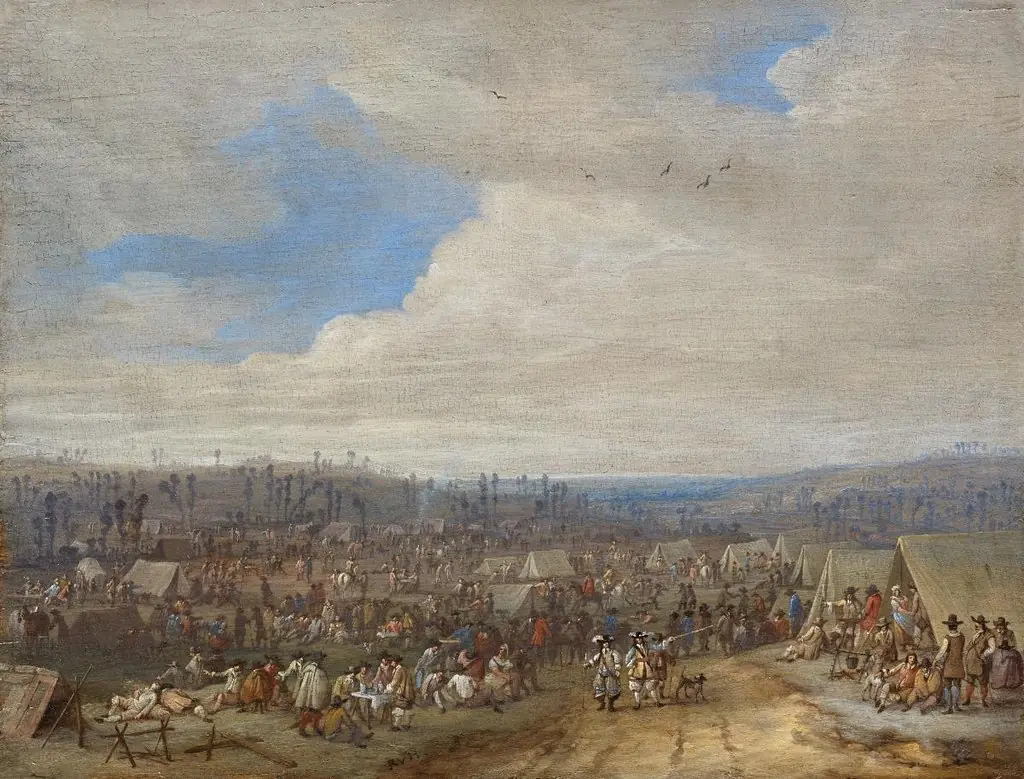 Soldaten im Lager
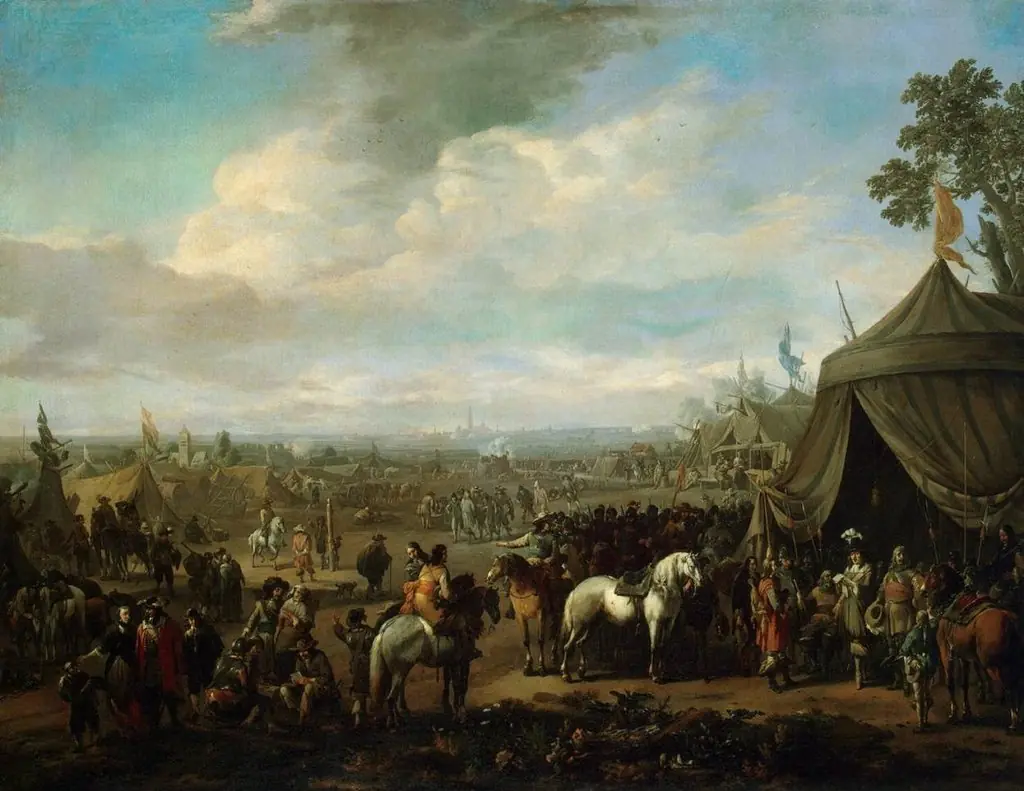 Flemish Town Sieged by the Spanish Soldiers
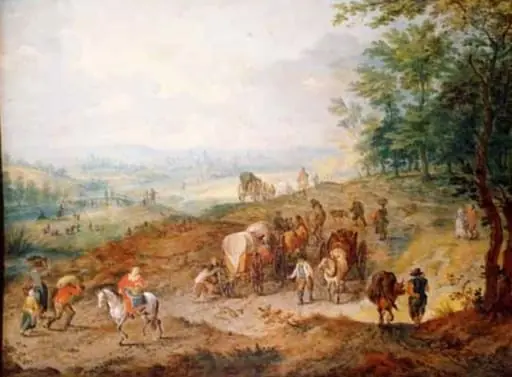 Drum lângă pădure
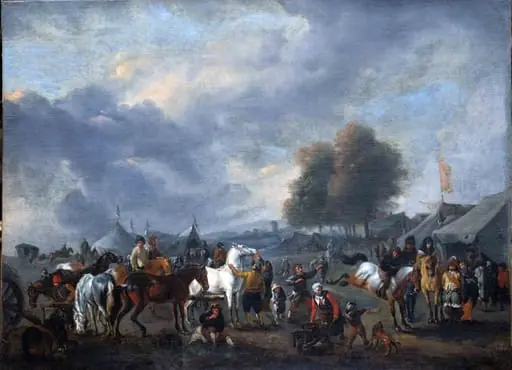 Târgul de cai
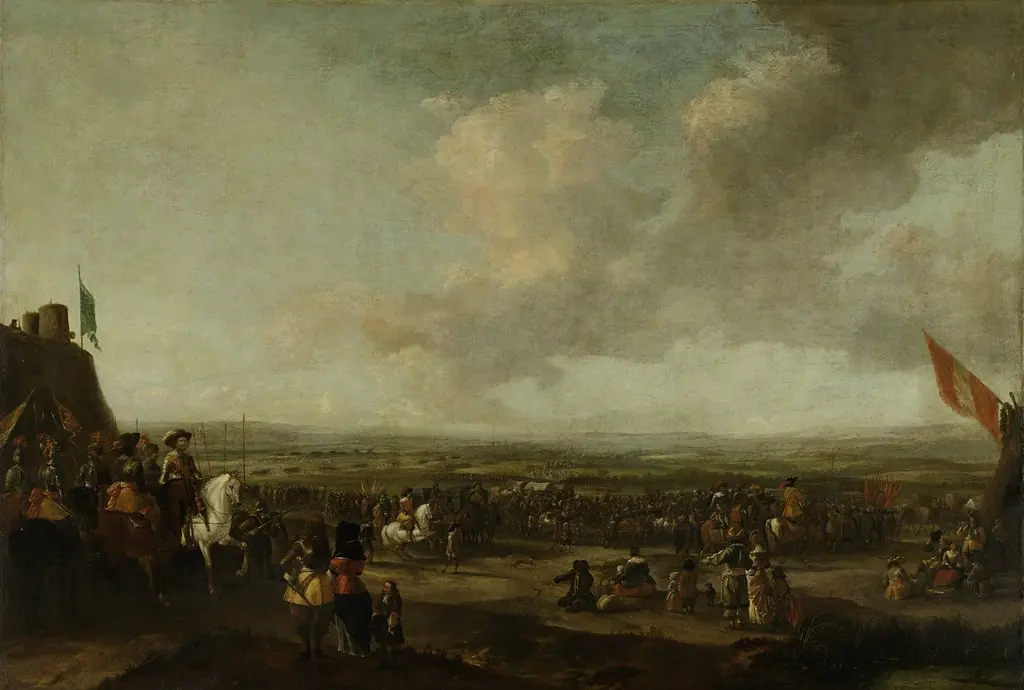 Frederik Hendrik at the surrender of Maastricht, 22 August 1632
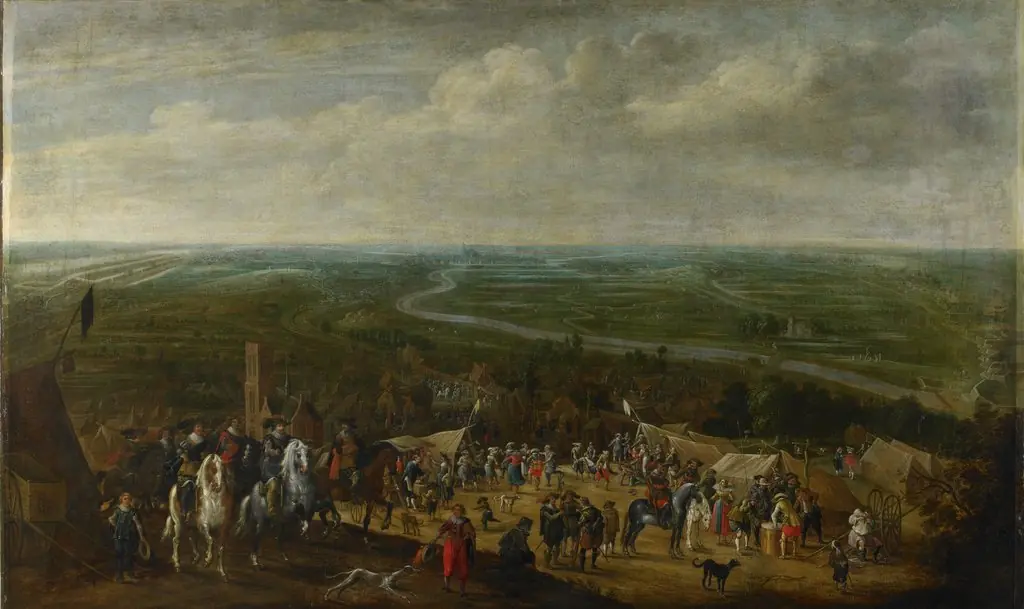 Prince Frederik Hendrik at the siege of 's-Hertogenbosch, 1629
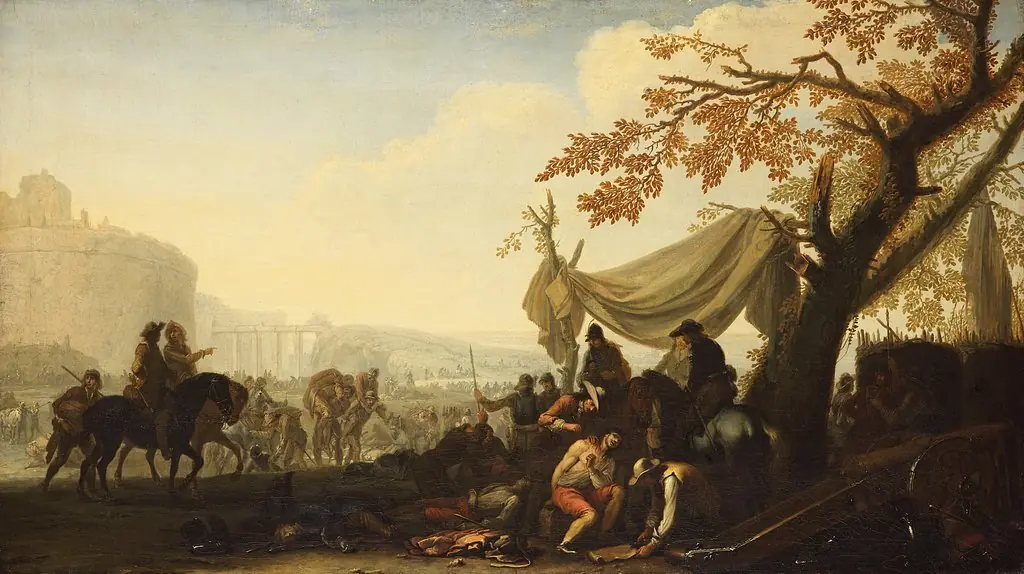 The Siege of a City
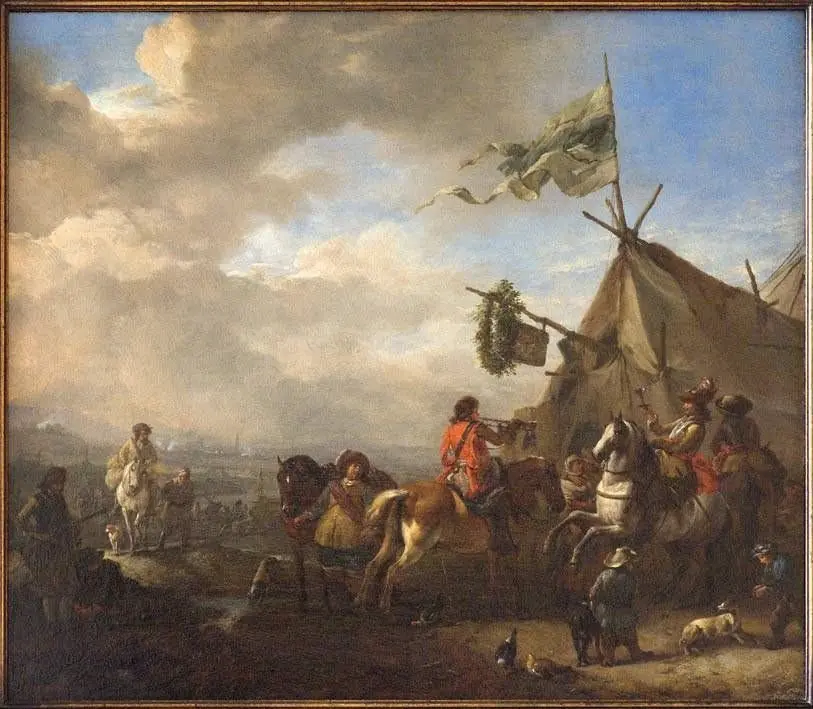 Soldatenlager
 The Army of Louis XIV in front of Tournai in 1667 (Brussels)
 Drum la marginea pădurii
- A Camp by the Ruins