Artwork
Slugs in a Sawpit
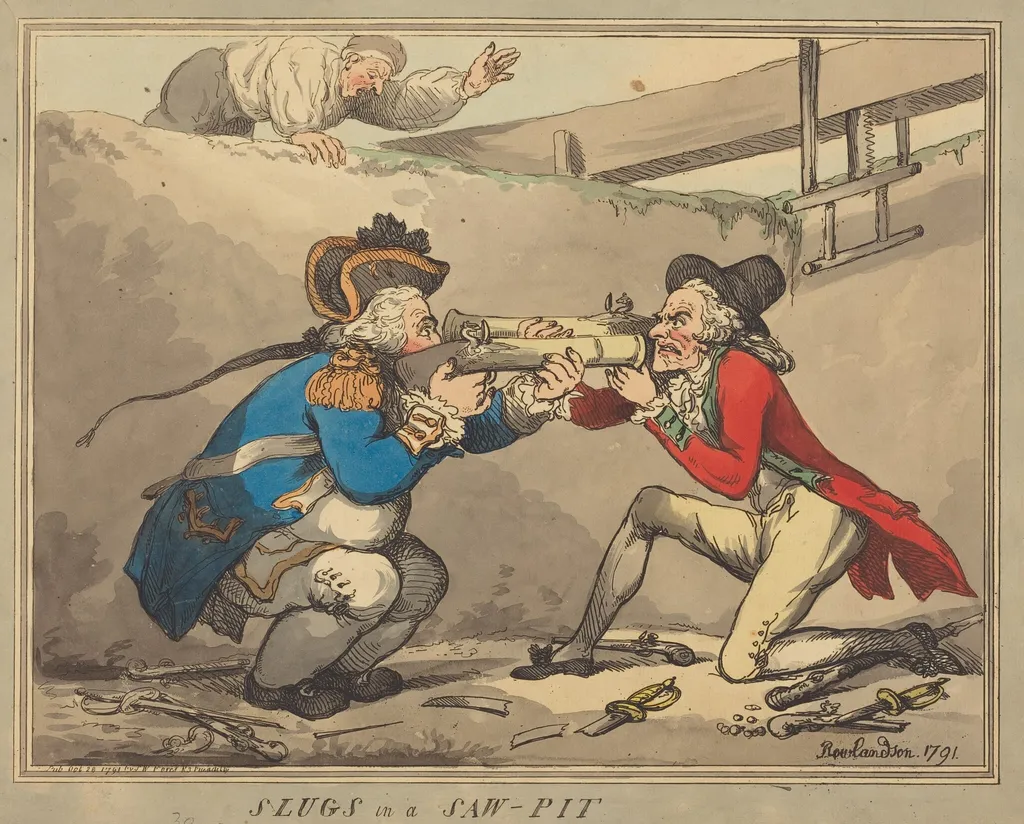
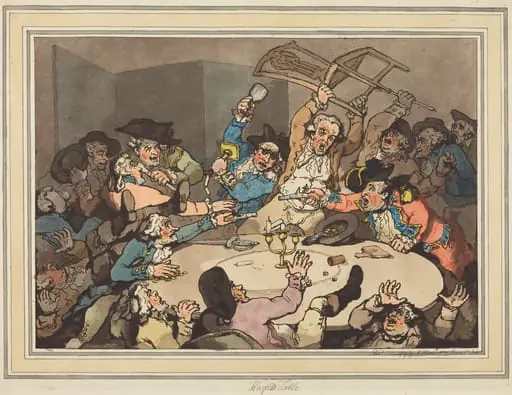
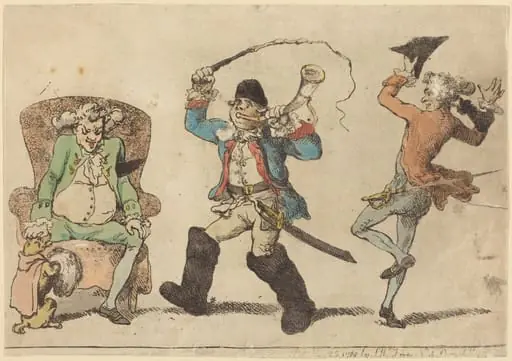
Slugs in a Sawpit is an ink print by the Romanticist artist Thomas Rowlandson. It dates from 1791 and is held in the collection of the National Gallery of Art.
About this work
Overview
Thomas Rowlandson’s hand‑colored etching Slugs in a Sawpit was issued in 1791. Executed in the popular print medium of the Georgian period, the work exemplifies the artist’s prolific output of satirical images that were widely distributed as inexpensive prints.
Subject & Meaning
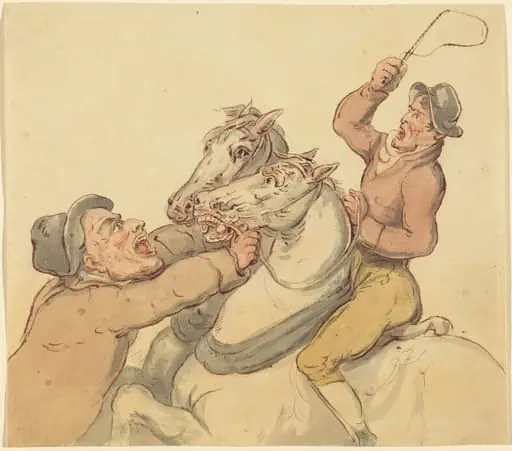
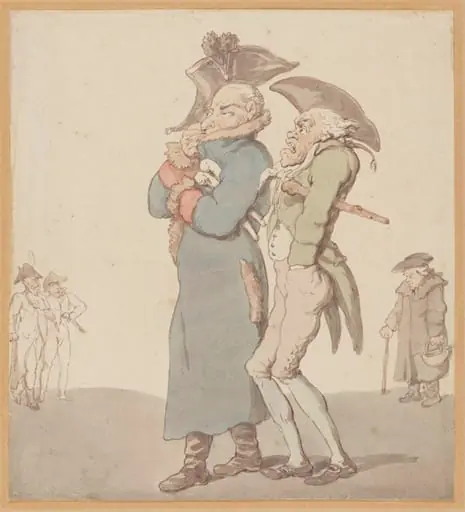
The composition presents a chaotic scene in a shallow pit: a man in a blue coat kneels while another, dressed in red and green, leans on a long staff as if defending himself. Above them, a third figure hangs from a broken ladder, scowling downward. The title suggests a comparison to sluggish or ineffective laborers, a common target of Rowlandson’s social commentary.
Technique & Style
Rowlandson employed a traditional etching process, incising the design onto a copper plate before printing. The image was subsequently hand‑colored, giving it a spontaneous, sketch‑like quality. Bold outlines and exaggerated gestures align the work with the bawdy, robust caricature style prevalent among his contemporaries.
Context
Produced during a period of intense political and social satire in England, the print reflects the broader market for caricature that lampooned public figures and everyday vices. Rowlandson’s prints often circulated in coffee houses and taverns, where they contributed to public discourse through humor and visual critique.
Legacy
Slugs in a Sawpit remains a representative example of late‑18th‑century British print culture, illustrating how artists used relatively low‑cost techniques to comment on societal attitudes. The work continues to inform studies of visual satire and the role of printed media in shaping public opinion during the Georgian era.
Own this work as a print
Artist & collection

Artist
Thomas Rowlandson (; 13 July 1757 – 21 April 1827) was an English artist and caricaturist of the Georgian Era, noted for his political satire and social observation.