Artwork
Representation des Machines qui ont servi à eslever les deux grandes pierres qui couvrent le fronton de la principale entrée du Louvre
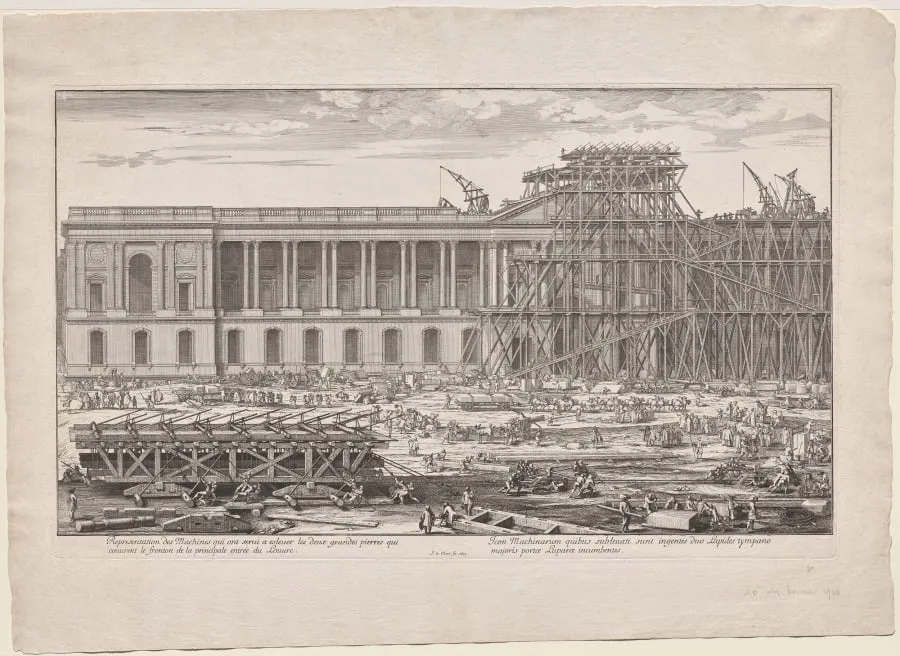
Representation des Machines qui ont servi à eslever les deux grandes pierres qui couvrent le fronton de la principale entrée du Louvre is a print by the Baroque artist Sébastien Leclerc. It dates from 1677 and is held in the collection of the Cleveland Museum of Art.
- Accession no.
- 2021.168
- Credit line
- L. E. Holden Fund
About this work
Overview
Sébastien Leclerc’s etching records a phase of construction on the Louvre’s main entrance façade. The image captures the logistical effort required to move and install a single stone slab measuring roughly sixty feet in length, illustrating the combination of ground‑level hauling and elevated lifting.
Subject & Meaning
The print focuses on the machinery and labor involved in placing the massive stone that would cover both sides of the pediment. In the foreground a wheeled device pulls the slab across the ground, while in the background a network of wooden cranes and scaffolding raises the block into position atop the roof.
Technique & Style
Executed as an etching, Leclerc renders the scene with precise line work, emphasizing the geometry of ropes, pulleys and structural timber. The composition balances detailed foreground activity with a broader view of the site, functioning almost as a technical illustration of 17th‑century construction methods.
History & Provenance
Leclerc was one of several artists employed by King Louis XIV to document the monarch’s extensive building projects and art acquisitions. This print, produced as part of that royal visual program, served both as a record of the Louvre’s expansion and as a visual testament to the king’s patronage of architecture and engineering.
Artist & collection

Artist
Sébastien Leclerc or Le Clerc ( 26 September 1637— 25 October 1714) was an artist from the French province of the Three Bishoprics.

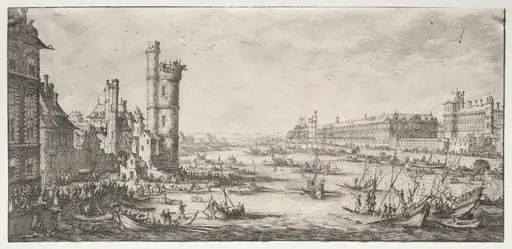
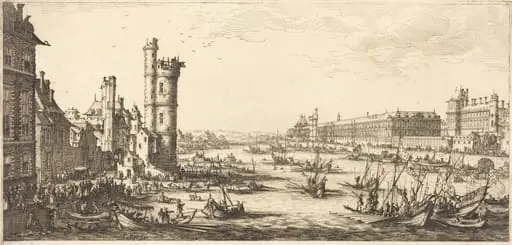
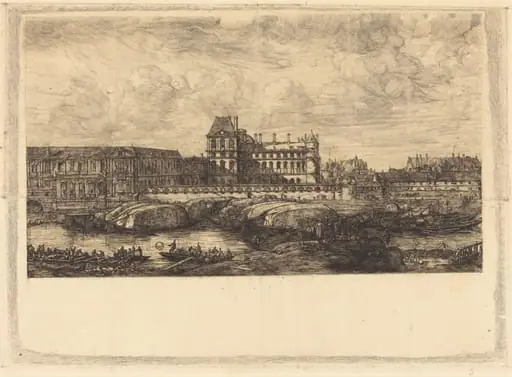 L'ancien Louvre d'après une peinture de Zeeman, 1651 (The Old Louvre, from a Painting by Zeeman, l651)
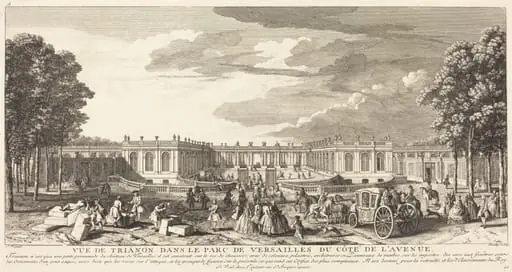 Vue de Trianon dans le Parc de Versailles du Cote de l'Avenue
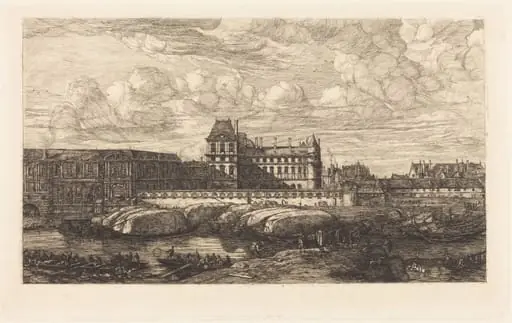 L'ancien Louvre d'après une peinture de Zeeman, 1651 (The Old Louvre, from a Painting by Zeeman, 1651)
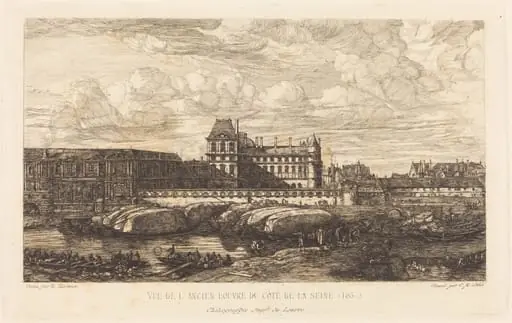 L'ancien Louvre d'après une peinture de Zeeman, 1651 (The Old Louvre, from a Painting by Zeeman, 1651)
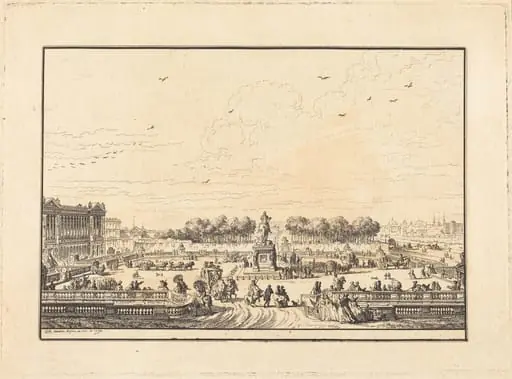 Place de Louis XV
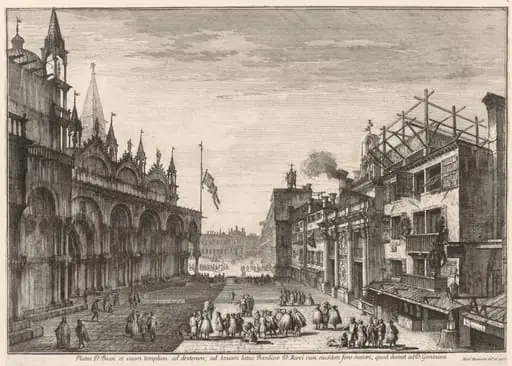 Views of Venice: Piazzetta S. Basso
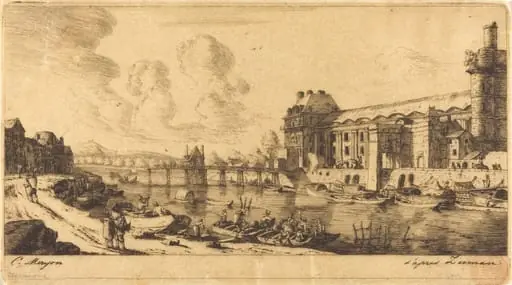
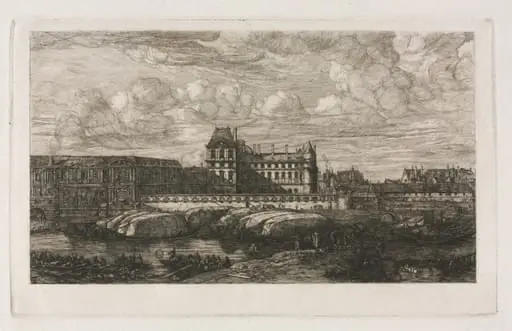 The Old Louvre from a Painting by Zeeman, 1651
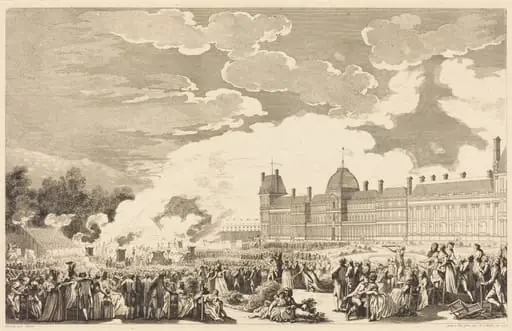 Pompe funèbre en l'honneur des Martyrs de la journée du 10, dans le Jardin National le 26 Aout 1792