Artwork
Maesincla Road, near Caernarvon
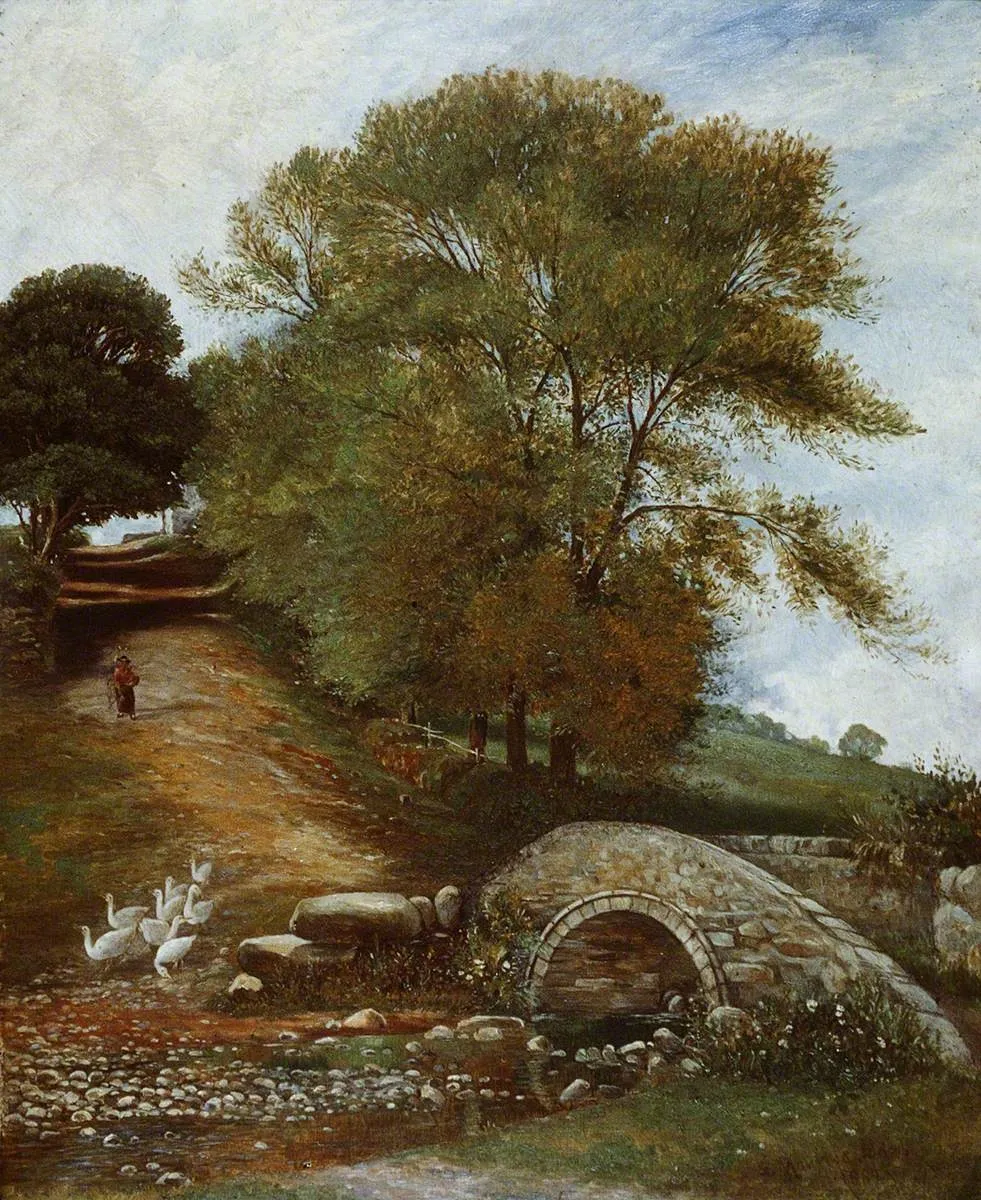
Maesincla Road, near Caernarvon is an oil painting by the Impressionist artist Samuel Maurice Jones. It dates from 1895 and is held in the collection of the National Library of Wales.
About this work
Overview
5 cm, the work depicts a rural scene near Caernarfon in North Wales, a region that dominated Jones's artistic output throughout his career.
Maesincla Road, near Caernarvon is an oil on canvas landscape painted in 1889 by the Welsh artist Samuel Maurice Jones (1853-1932). Measuring 68 by 55.5 cm, the work depicts a rural scene near Caernarfon in North Wales, a region that dominated Jones's artistic output throughout his career. The painting is held in the National Library of Wales, having been acquired in 1978 as part of its Framed works of art collection, and is designated as public domain. The work exemplifies Jones's commitment to recording the Welsh countryside with detailed naturalism, while also reflecting the broader Victorian landscape tradition that blended topographical accuracy with pastoral idealization. As a rare oil painting by an artist who worked principally in watercolour, it offers significant insight into his technical range and the market demands of late nineteenth-century Welsh landscape painting.
Subject & Meaning
The painting presents a view of a dirt road curving uphill from left to center, bordered by dense foliage in varied greens and browns. A large tree dominates the right middle ground, its spreading canopy occupying much of the upper portion of the composition. In the lower right foreground, a small stone bridge with a single arch spans a shallow stream, where water flows over visible pebbles. Seven white geese gather at the stream's edge near large rocks, while a small figure in red clothing.walks up the road carrying something in the right hand. Rolling green hills and additional trees recede into the distance beneath a pale blue sky with soft white clouds. The scene contains no buildings or animals besides the geese. The iconography aligns with the picturesque tradition: the solitary figure, the rustic bridge, and the domesticated geese all serve as markers of rural harmony and unspoiled nature. The red-clad figure provides a focal point of human presence without disrupting the pastoral mood, suggesting a way of life integrated with rather than dominating the landscape. The absence of modern infrastructure or industrial elements reinforces the idealized character typical of Jones's rural studies, which contemporary scholarship has noted possess an 'idealised, pastoral, character suggestive of the English picturesque and Romantic landscape traditions.'
Technique & Style
Executed in oil on canvas, the work demonstrates fine detail in the rendering of foliage and stonework, with smoother handling in the sky. Light falls evenly across the scene, creating gentle shadows beneath the trees and bridge. The palette consists of earthy browns, varied greens, and muted blues, consistent with naturalistic observation rather than the more dramatic chromatic effects Jones admired in J.M.W. Turner. The brushwork reveals Jones's training under William Collingwood in London between 1870 and 1873, who emphasized 'the importance of line and composition, shading, drawing carefully from nature and drawing from memory.' While Jones worked principally in watercolour throughout his career, his oil paintings such as this one allowed for greater textural build-up and more saturated colour. The even lighting and careful detail suggest the influence of Pre-Raphaelite principles, which Jones encountered through his meetings with John Ruskin and Holman Hunt, as well as through his study of Ruskin's Modern Painters. The composition's conventional structure, road, bridge, receding hills, reflects the academic landscape formulas Jones absorbed through his copying of works by Claude, Richard Wilson, and Turner during his student years.
History & Provenance
The painting is dated 1889, a period when Jones was well-established in his practice of depicting the Caernarfon area and had already been exhibiting for over a decade. He had been elected an Associate Member of the Royal Cambrian Academy in 1882 and would continue to exhibit there annually. The work was purchased from Mrs E. Ellis in 1978 by the National Library of Wales, where it entered the collection as accession number PB09038. This relatively late acquisition into a national collection reflects the gradual reassessment of regional Welsh artists in the later twentieth century. The painting's earlier provenance before Mrs. Ellis remains unrecorded in available sources. As a public domain work, it is now freely accessible through the Art UK platform, which facilitates broader public engagement with the National Library of Wales's holdings.
Context
Samuel Maurice Jones was born in Mochdre, near Colwyn Bay, and trained at the Caernarfon School of Art under John Cambrian Rowland before completing his studies in London. His return to Caernarfon to pursue his career established him as a significant figure in the artistic life of North Wales, though he did not attract considerable critical interest in his lifetime. His works were exhibited in London, Liverpool, Southport, and Manchester, and he was a founding member of the Royal Cambrian Academy in Conway. Jones's practice of depicting the fields near Caernarfon and the Conwy Valley positioned him within a broader Victorian taste for rural imagery that drew upon Romantic precedents. His growing engagement with Welsh cultural nationalism is evidenced by his contributions to the Welsh-language publication Cymru, edited by Owen M. Edwards, for which he provided both illustrations and cover designs, as well writing lectures on Welsh topics for the Liverpool Welsh National Society. The painting thus emerges from a period when Welsh landscape painting served both aesthetic and cultural purposes, asserting regional identity through visual means. Critical reception of Jones has remained modest, with scholarship focusing primarily on his watercolours and his role in documenting the built and natural environment of North Wales.
Legacy
Maesincla Road, near Caernarvon survives as a representative example of Samuel Maurice Jones's oil painting practice, a medium he employed less frequently than watercolour. The work's preservation in the National Library of Wales ensures its availability for study of late Victorian Welsh landscape painting and the visual culture of Caernarfon in the period. Its digitization and public domain status through Art UK have extended its accessibility beyond specialist audiences. The painting contributes to understanding how regional artists adapted metropolitan landscape conventions, picturesque composition, naturalistic detail, pastoral subject matter, to local topography and cultural contexts. Jones's broader legacy rests on his extensive documentation of North Welsh scenery and his role in institutions such as the Royal Cambrian Academy, where he was elected a full member in 1921, eleven years before his death. His work exemplifies the challenges faced by provincial artists in securing lasting critical recognition, even as they maintained active professional careers and contributed significantly to regional visual culture.
Artist & collection
Artist
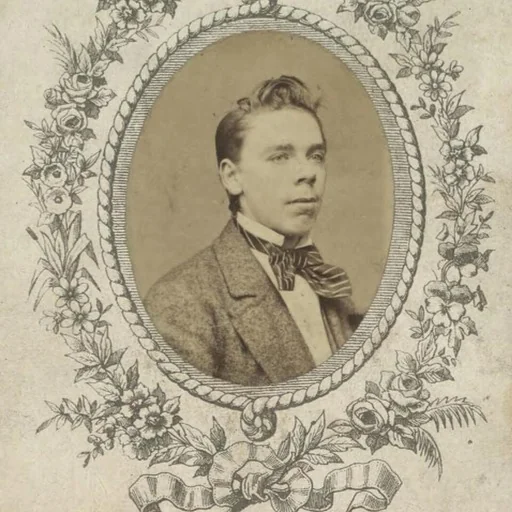
Samuel Maurice Jones R.C.A. (1853 – 30 December 1932) was a Welsh landscape painter and illustrator, particularly active in North Wales. Working principally in watercolour, Jones made numerous studies and paintings of…

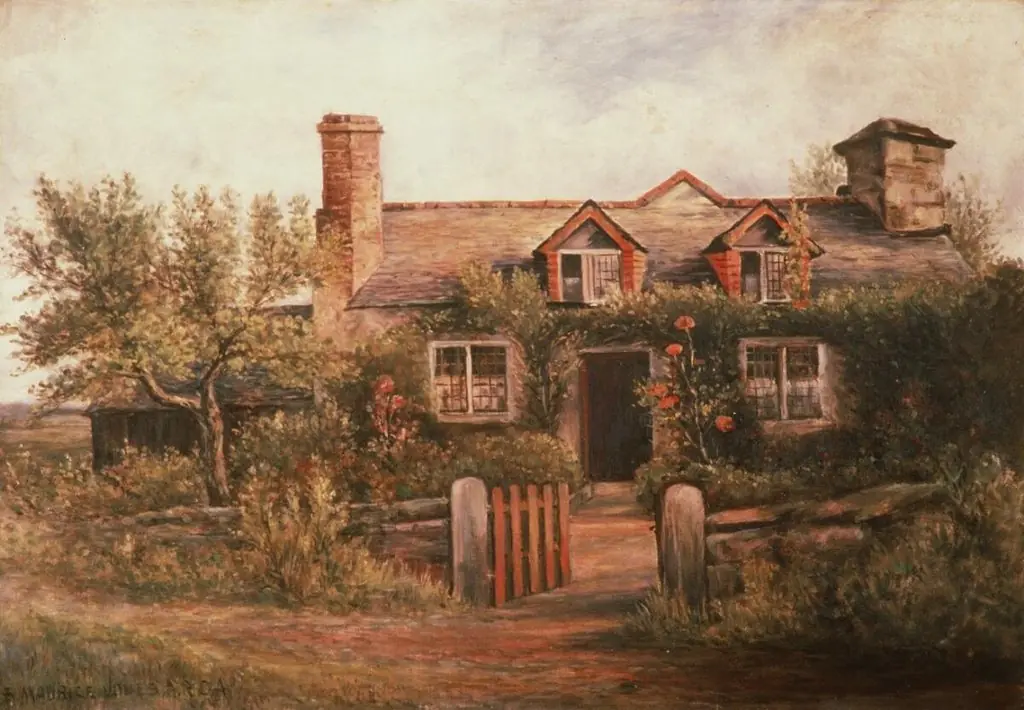
- An Old English Homestead
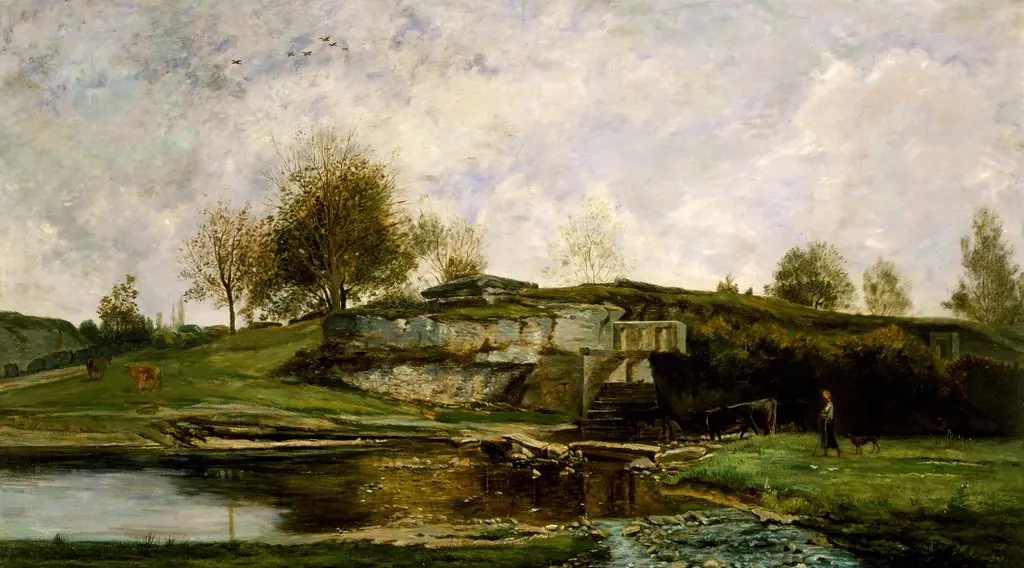 Sluice in the Optevoz Valley
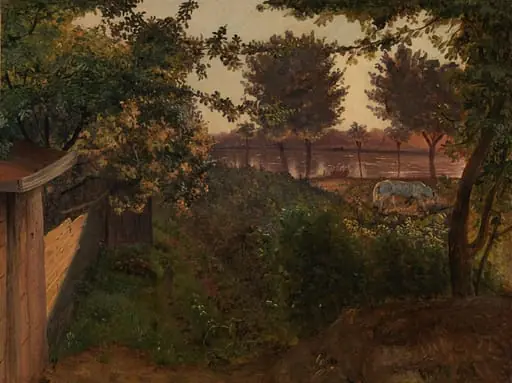 Bag kunstnerens have på Farimagsvej ved St. Jørgens Sø
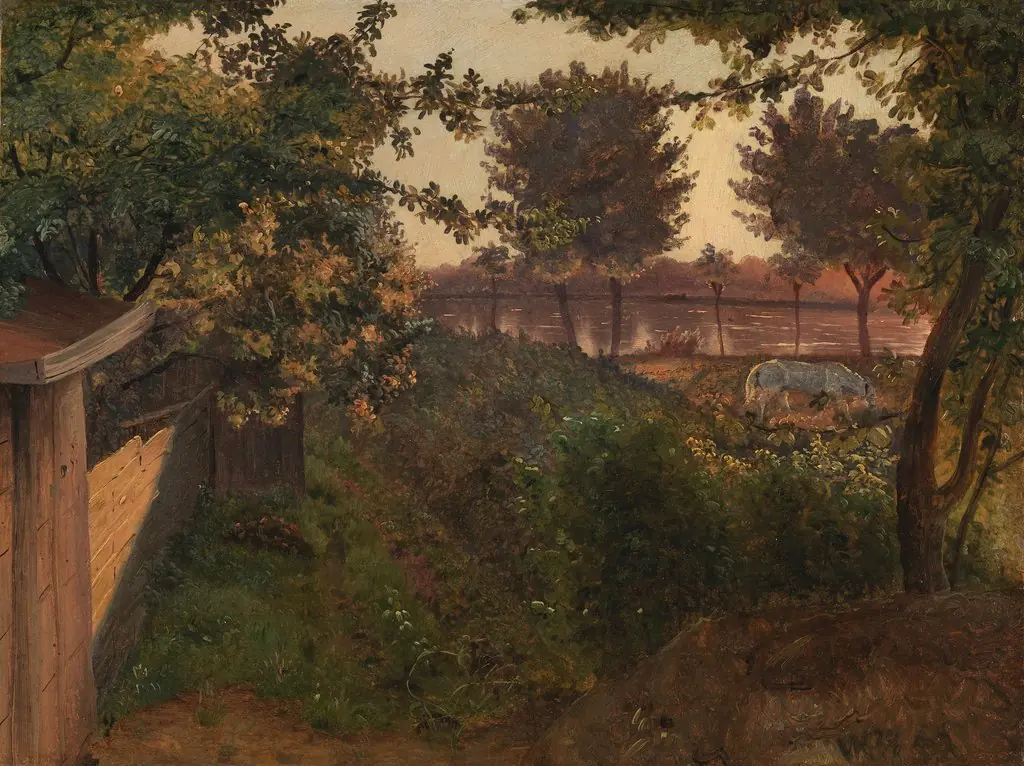 Bag kunstnerens have på Farimagsvej ved St. Jørgens Sø
 Autumn River Scene, The Brook
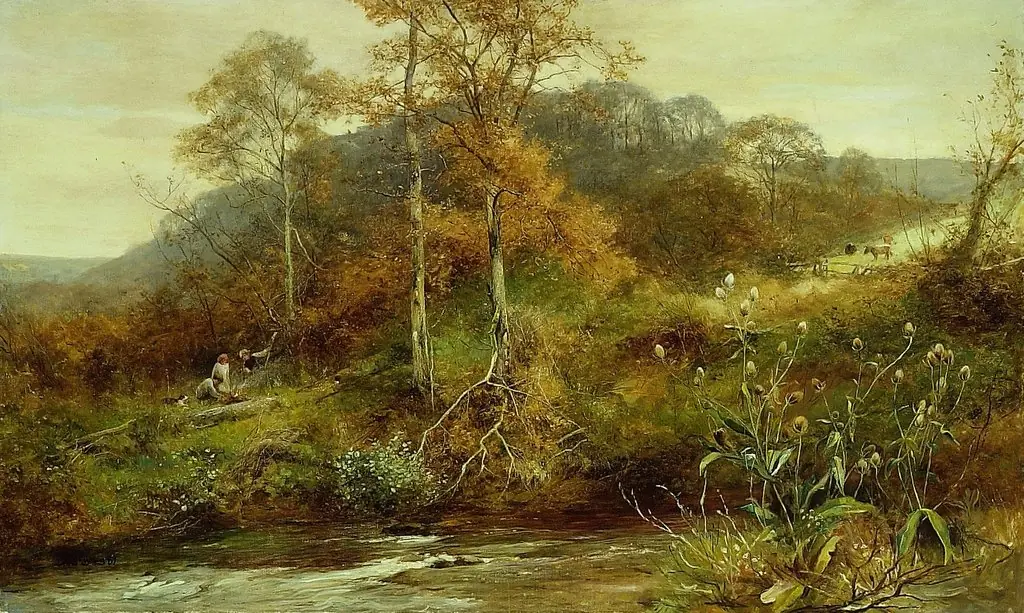 Autumn River Scene, The Brook
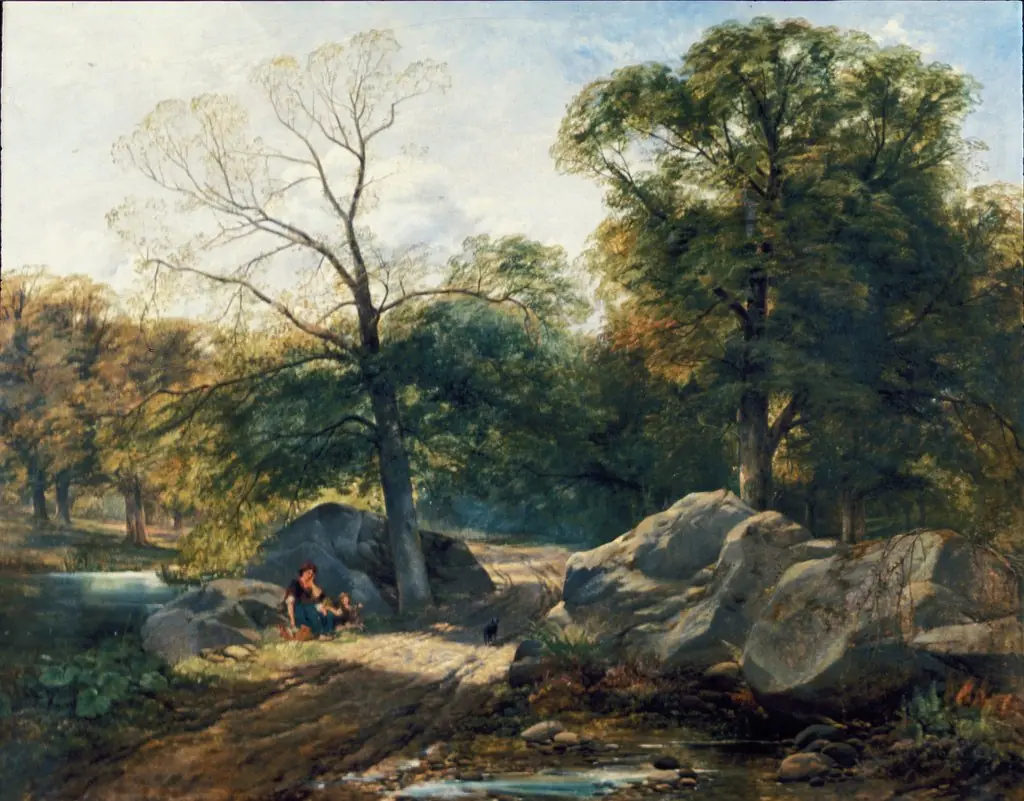 Rest by the Way
 Vue aux environs de Lyon
 Nant Cwmanog, Crafnant Valley
 October in Surrey: Children Nutting
 Cymmer Abbey, near Dolgellau
 View in the neighborhood of Oranienbaum