Artwork
Henry Clay
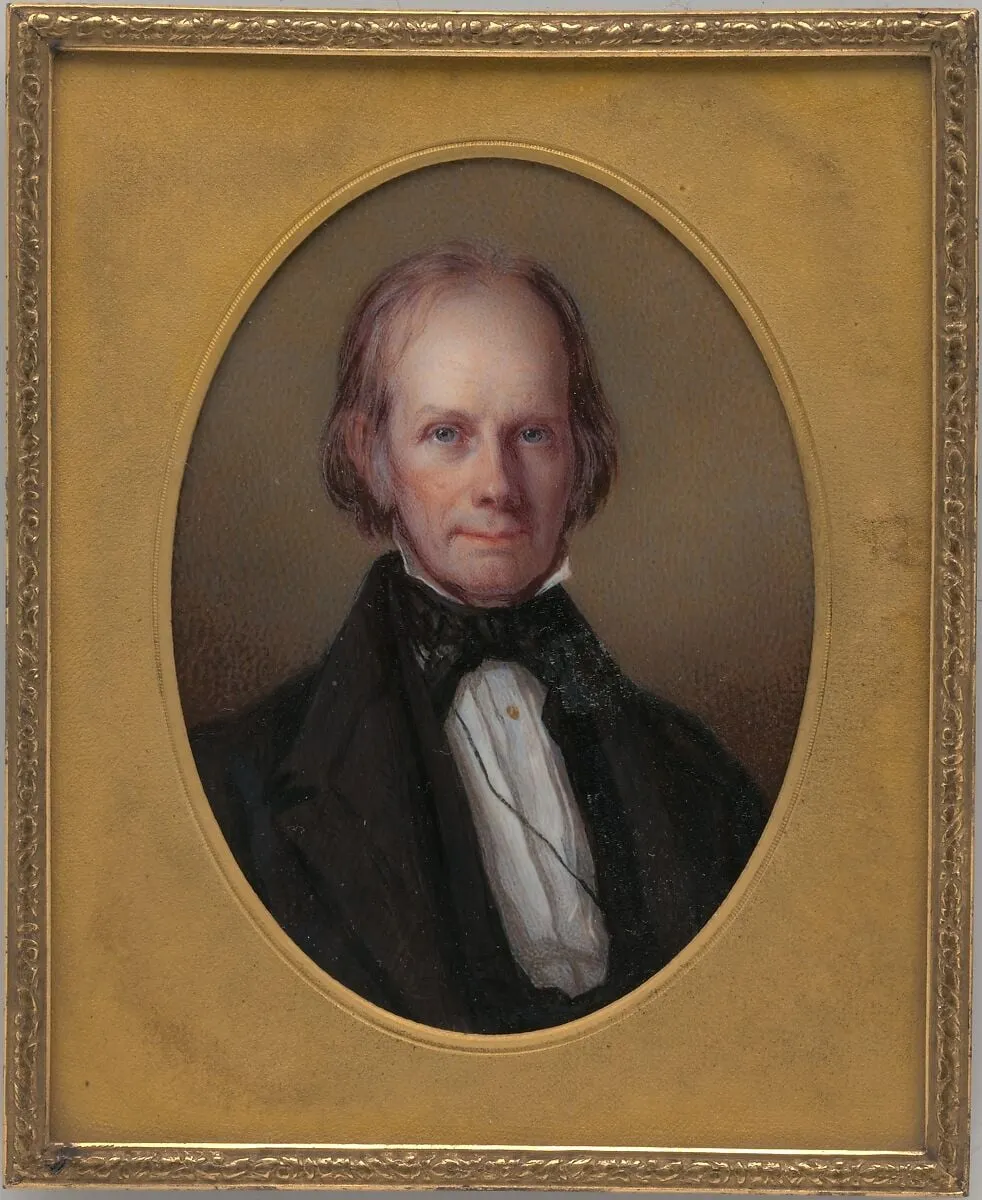
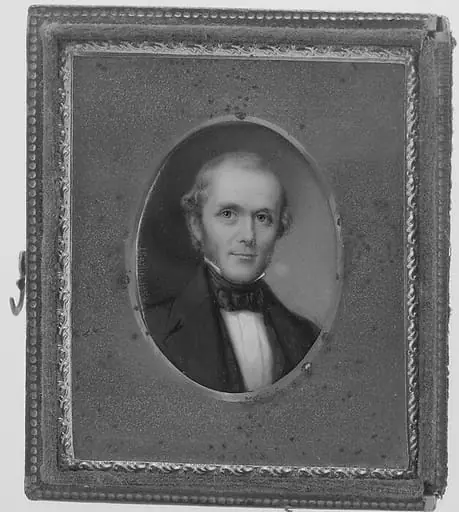
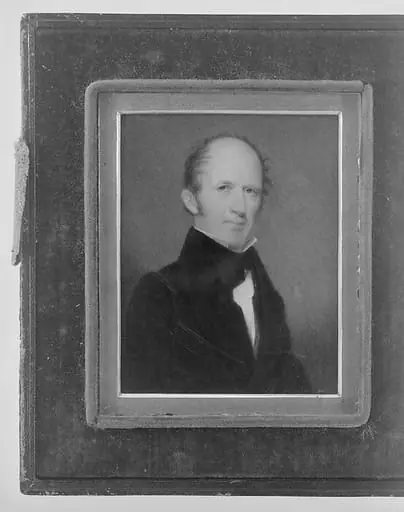
Henry Clay is a watercolor painting by the Romanticist artist Savinien Edme Dubourjal. It dates from 1845 and is held in the collection of the Metropolitan Museum of Art.
About this work
Subject & Meaning
The work belongs to the miniature portrait genre and is housed in the Metropolitan Museum of Art’s American Wing.
Henry Clay, a leading 19th‑century American statesman and former Secretary of State, is portrayed in a small watercolor on ivory by Savinien Edme Dubourjal (1845). The work belongs to the miniature portrait genre and is housed in the Metropolitan Museum of Art’s American Wing. Dubourjal renders Clay in formal dress, emphasizing his distinguished status through careful attention to facial features and the subtle use of color typical of ivory support.
As a portrait, the image functions both as a personal likeness and as a symbolic representation of Clay’s political influence, reflecting the era’s interest in documenting prominent public figures.
Technique & Style
The miniature is executed in watercolor on an ivory support, a technique typical of early nineteenth-century portrait miniatures designed for intimate display. The handling reflects the refined stippling and delicate glazing associated with Savinien Edme Dubourjal’s academic training, emphasizing facial modeling and costume detail. Measuring 8.4 cm in height and 6.5 cm in width, the composition focuses tightly on the sitter’s head and shoulders against a neutral ground, a format that prioritizes psychological presence over spatial illusion.
The ivory’s translucency enhances luminosity in the flesh tones, while the watercolor’s fine brushwork captures subtle gradations of light and shadow. No evidence of significant condition issues is recorded in the cited sources.
History & Provenance
The watercolor-on-ivory portrait of Henry Clay was created by Savinien Edme Dubourjal in 1845. The work entered the collection of the Metropolitan Museum of Art, where it is classified as a miniature portrait within the institution's American Wing. Beyond the date of inception and the artist's authorship, the available sources do not document the circumstances of commission, prior owners, or the chain of custody leading to the museum's acquisition.
The work titled Henry Clay, painted by Savinien Edme Dubourjal in 1845, is housed in the Metropolitan Museum of Art in New York, where it is listed under the museum’s American Wing collection. The piece, a watercolor on ivory measuring roughly 8.4 × 6.5 cm, is classified as a portrait miniature depicting the American statesman Henry Clay. Its presence in the American Wing is documented in the museum’s internal catalog and confirmed by its entry on Wikidata. No specific accession number or detailed exhibition record is supplied in the available documentation.
Overview
This small watercolor portrait by Savinien Edme Dubourjal, created around 1845, captures the likeness of Henry Clay. The subject is depicted from the chest up, wearing a dark coat and a white shirt, with a serious expression. Its diminutive scale, approximately three inches in height, is characteristic of the intimate portraiture popular during the mid-19th century.
Context
During the 19th century, miniature portraits on ivory served as cherished personal mementos. These small-scale works were often commissioned to commemorate loved ones or prominent figures, designed for intimate viewing or to be worn as jewelry. Dubourjal's depiction of Henry Clay reflects this tradition, offering a portable and finely crafted image of a significant public figure of the era.
Artist & collection