Artwork
Still Life with Flowers and Fruit
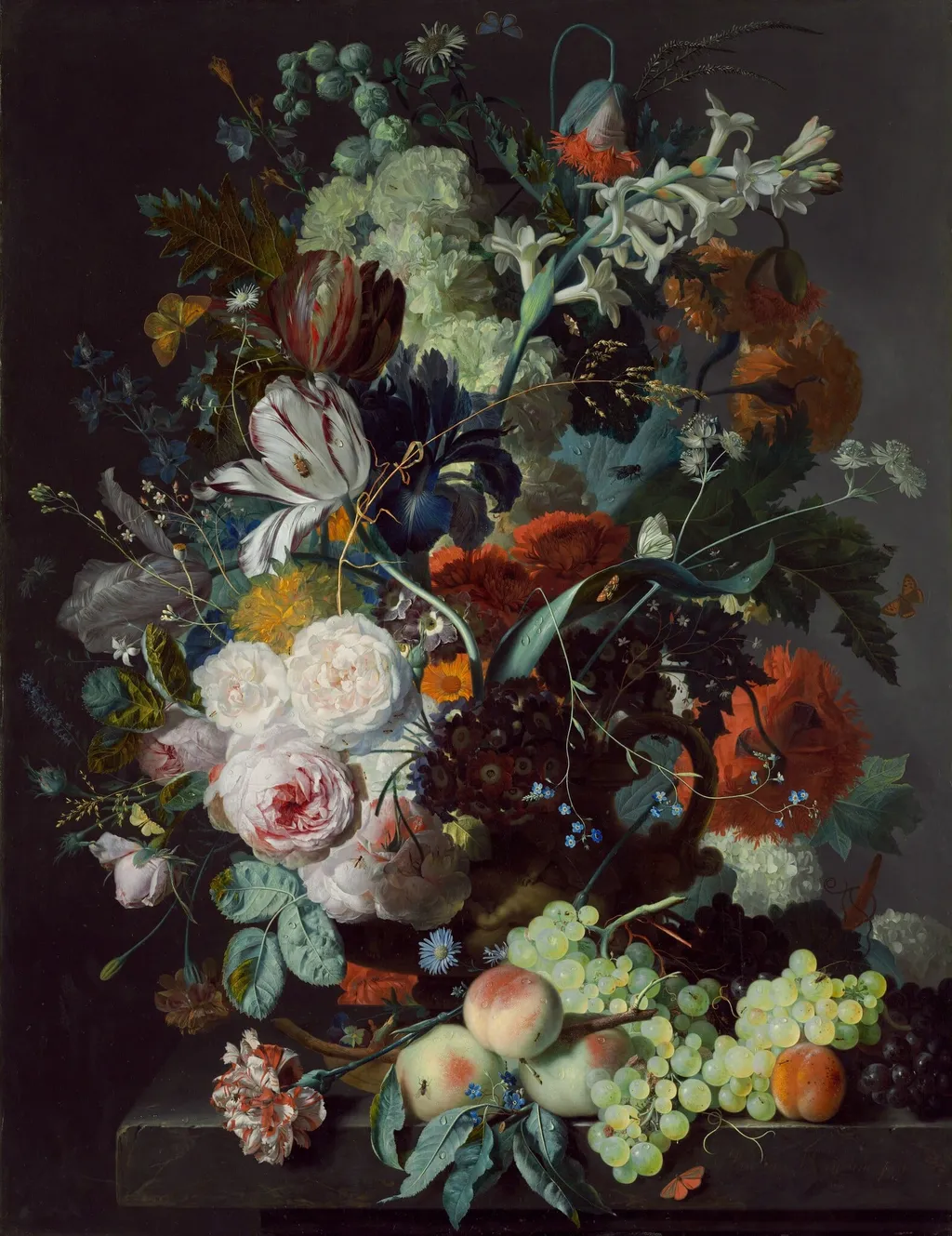
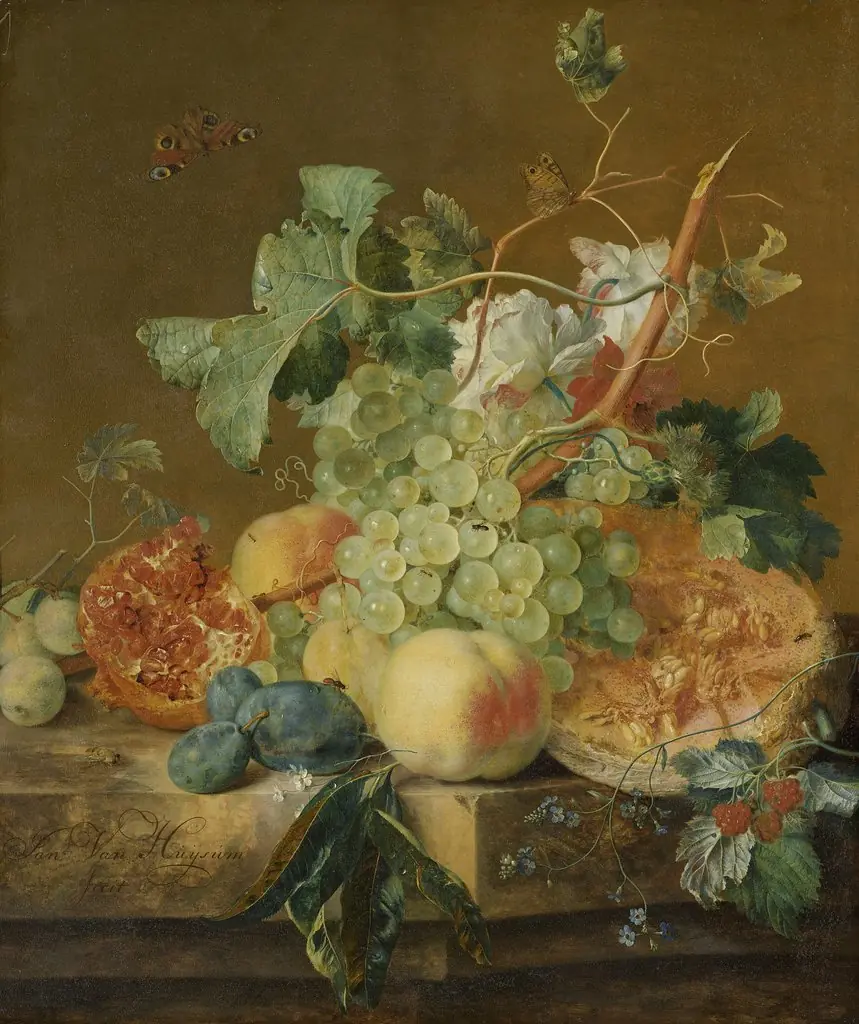
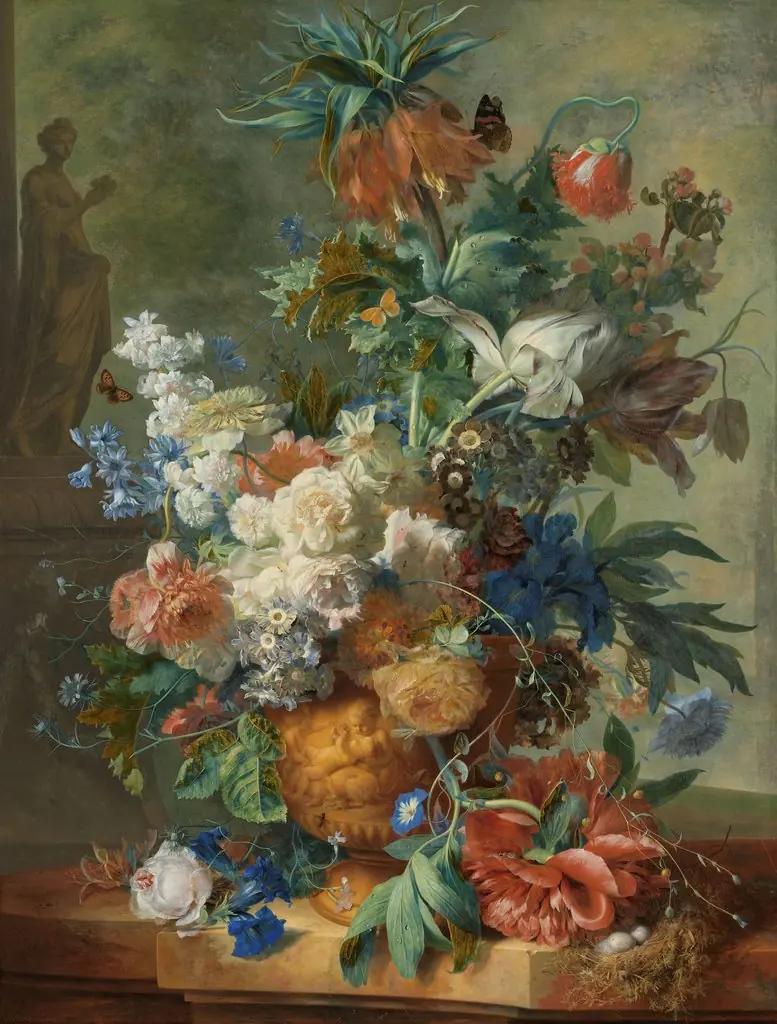
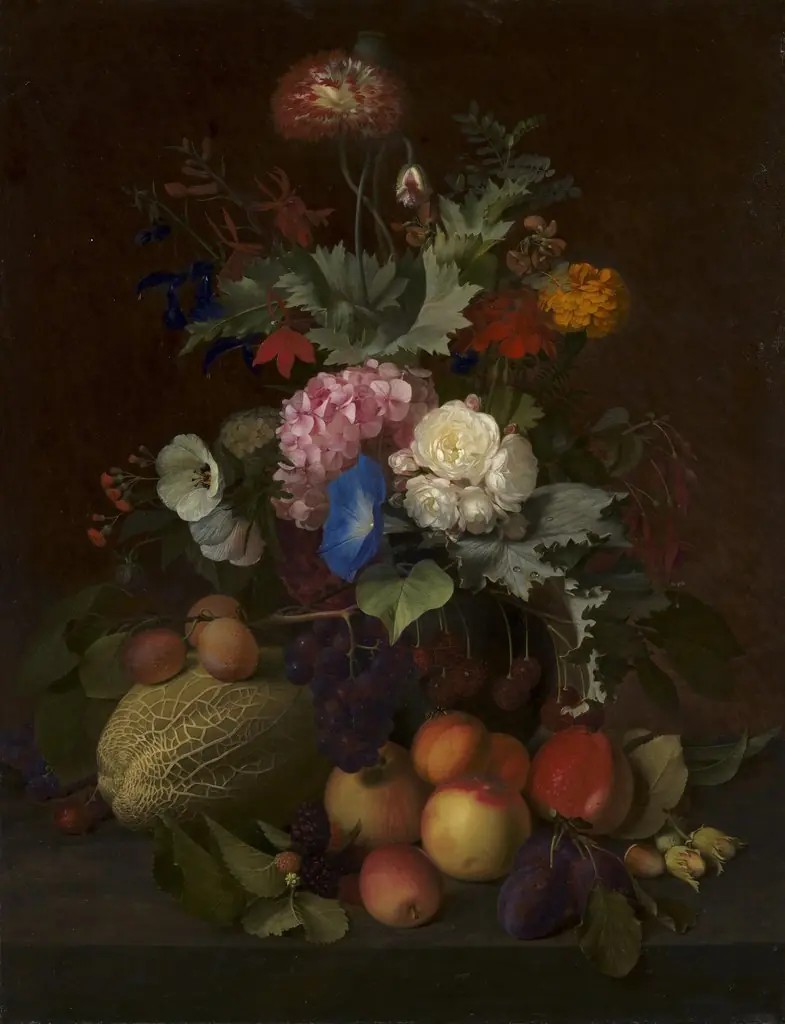
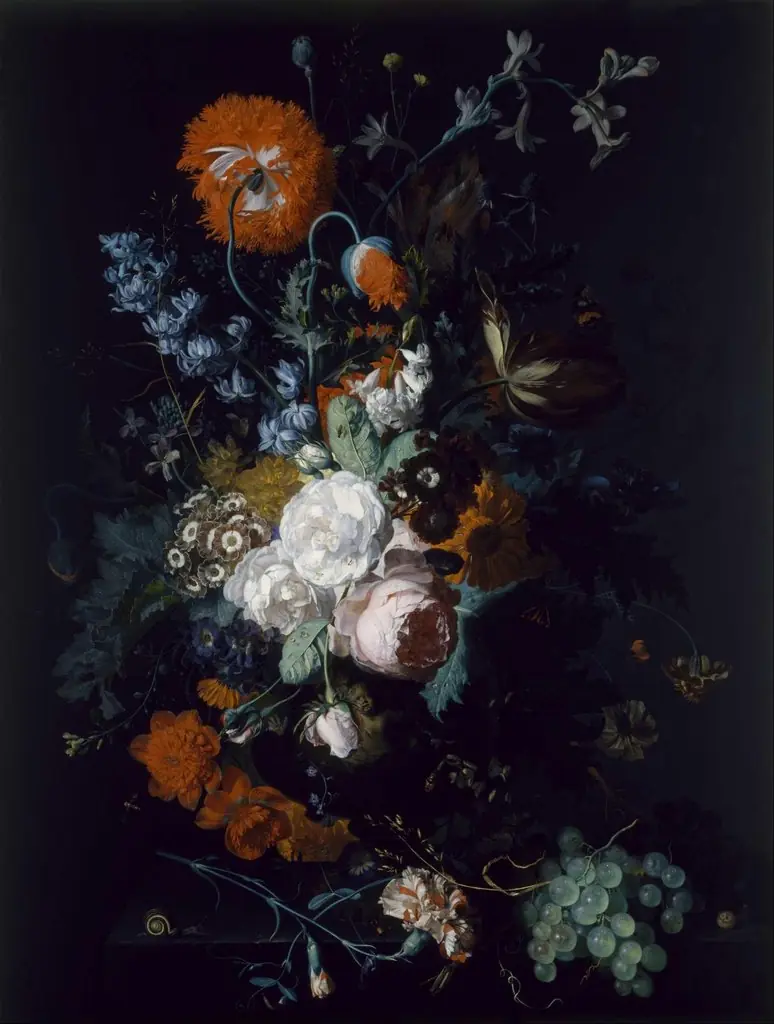
Still Life with Flowers and Fruit is an oil painting by the Baroque artist Jan van Huysum. It dates from 1715 and is held in the collection of the National Gallery of Art.
- Inscription
- Inscribed:lower right: Jan Van Huysum fecit
About this work
Subject & Meaning
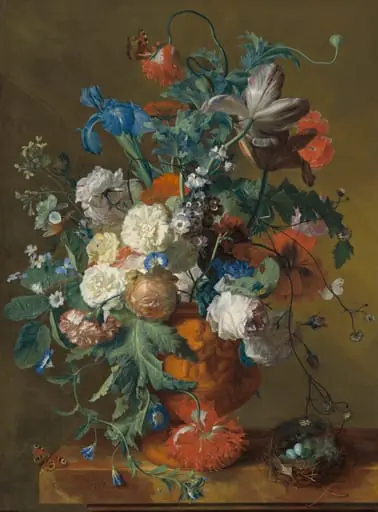
Jan van Huysum's Still Life with Flowers and Fruit (1715) exemplifies the Dutch still-life tradition, merging botanical precision with symbolic richness.
Jan van Huysum's Still Life with Flowers and Fruit (1715) exemplifies the Dutch still-life tradition, merging botanical precision with symbolic richness. The composition centers on a lush bouquet of roses and other flowers, accompanied by ripe peaches and grapes. Dewdrops and insects punctuate the scene, enhancing its lifelike texture.
These elements carry conventional meanings: flowers often symbolize transience, with wilting petals alluding to the fleeting nature of beauty and life, while fruit such as grapes and peaches may evoke abundance and the pleasures of the senses. The inclusion of insects reinforces themes of impermanence and nature's cycles, so that the work celebrates material opulence while subtly reminding viewers of mortality.
Technique & Style
Executed in oil on panel around 1715, Still Life with Flowers and Fruit exemplifies Jan van Huysum's meticulous technique, marked by crisp delineation and luminous color. The composition layers delicate blooms, including roses, against a dark ground, with peaches and grapes arranged below in careful recession. Subtle touches of dew and minute insects animate the surface, while the handling balances precise botanical description with a refined decorative rhythm.
The 78.7 × 61.3 cm panel support allows for sharp detail and rich contrasts, characteristic of Huysum's mature still lifes.
History & Provenance
Painted by Jan van Huysum in 1715, this oil-on-panel work entered the collection of Baron Louis de Rothschild in Vienna by 1882. The painting was confiscated by the Nazis in 1938 and designated for Adolf Hitler's planned museum at Linz, appearing on distribution lists from 1939 and 1940. Following recovery by Allied forces at the Munich Central Collecting Point, it was restituted to Austria in May 1948 and returned to Louis de Rothschild in 1949.
Upon his death, the work passed to his niece, Baroness Bettina Rothschild Springer, and subsequently to her husband, Baron Kurt Reininghaus. The family sold the painting to Galerie Sanct Lucas in Vienna, and it was acquired around 1994 by Mr. and Mrs. Philip Cunningham of Alexandria, Virginia. In 1996, the work was partially sold and partially gifted through dealer Otto Naumann to the National Gallery of Art in Washington, D.C., where it is held under accession number 1996.80.1.
Legacy
The work was looted from the Louis de Rothschild collection in Vienna in 1938 and earmarked for Hitler's planned museum at Linz; it was recovered by the Allies, restituted to Austria in 1948, and returned to the Rothschild family in 1949. It later entered the National Gallery of Art in Washington, D.C., where it is catalogued as accession 1996.80.1. Its provenance, together with Birgit Schwarz's 2004 study of Hitler's museum, has drawn scholarly attention to its place among Nazi-looted artworks, and it is regarded as a representative example of Jan van Huysum's mature still-life production.
Overview
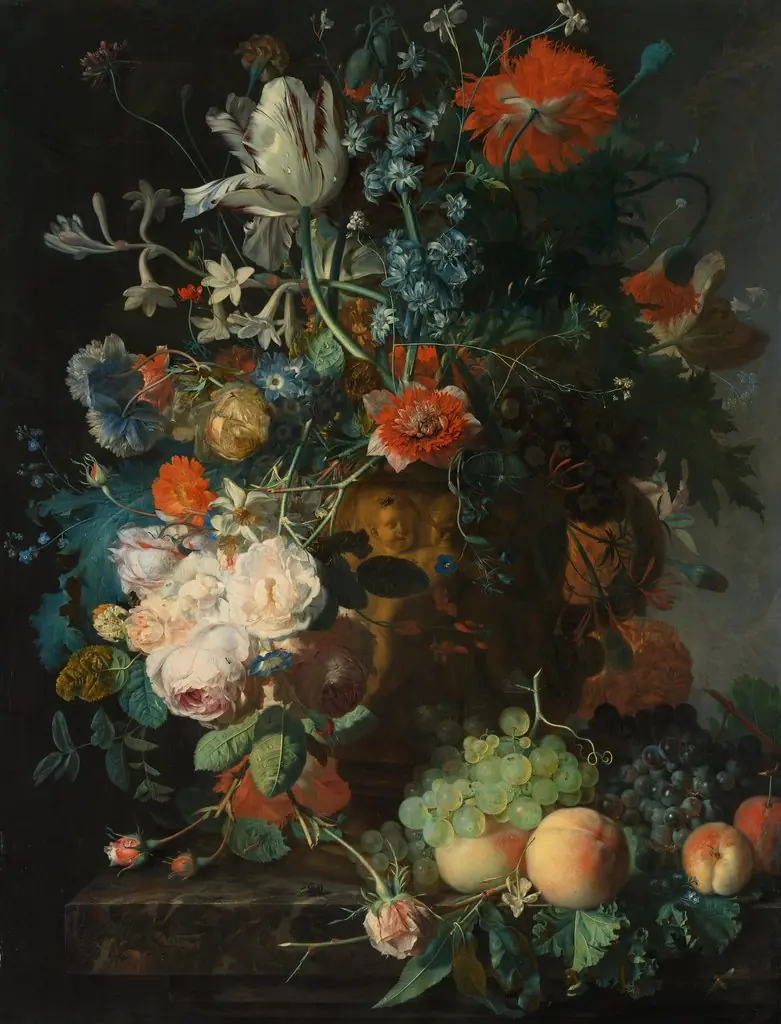
Jan van Huysum's painting, Still Life with Flowers and Fruit, created around 1715, is an oil on panel work that exemplifies the artist's focus on botanical subjects. This composition presents an elaborate arrangement of various flowers in a vase alongside a generous display of fruits. The artwork showcases a meticulous rendering of natural forms, characteristic of the Dutch still life tradition, capturing the transient beauty of nature through detailed observation.
Own this work as a print
Artist & collection

Artist
Jan van Huysum (or Jan van Huijsum) (15 April 1682 – 8 February 1749) is the most notable member of the Van Huysum family of artists working in Dutch Golden Age of the 17th and 18th centuries; "by common consent, Jan…