Artwork
式部輝忠筆 夏秋花鳥図|Birds and Flowers of Summer and Autumn
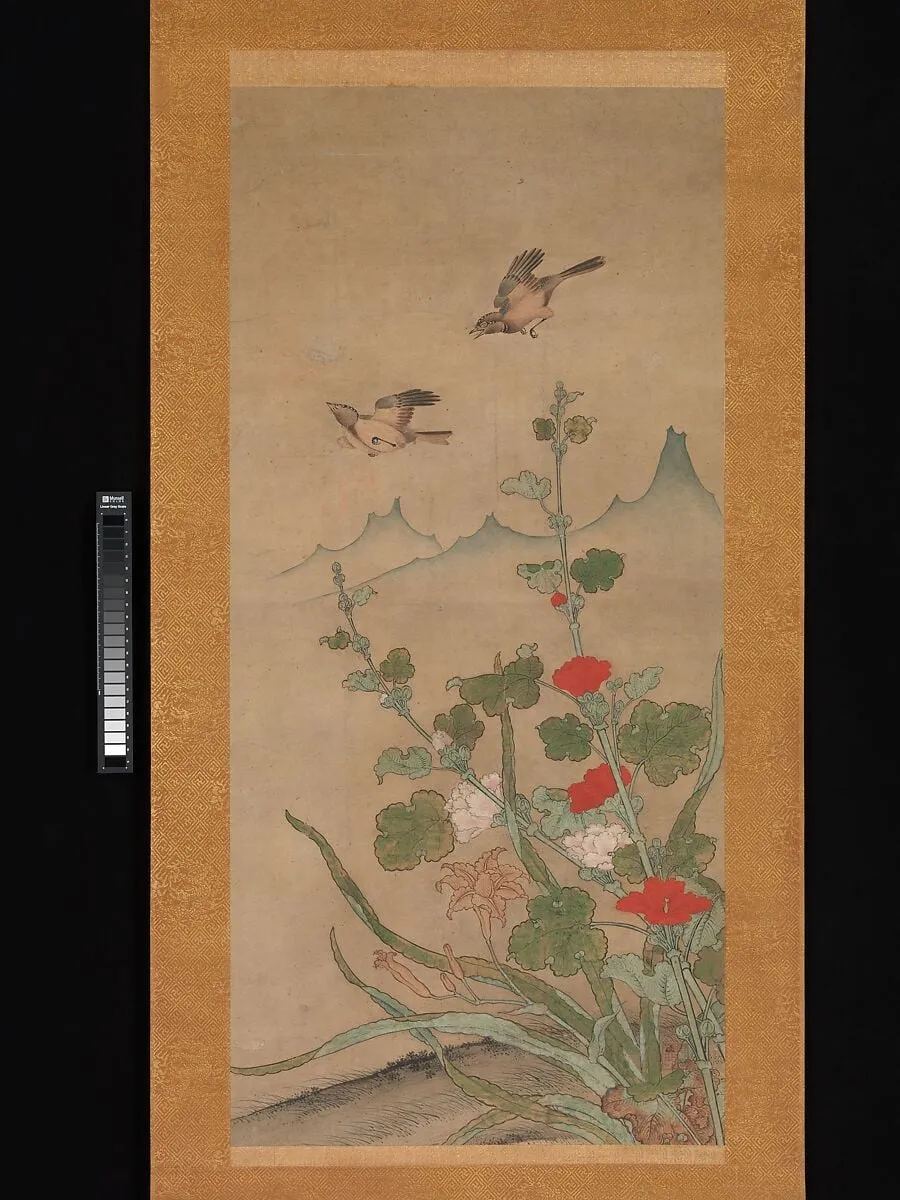
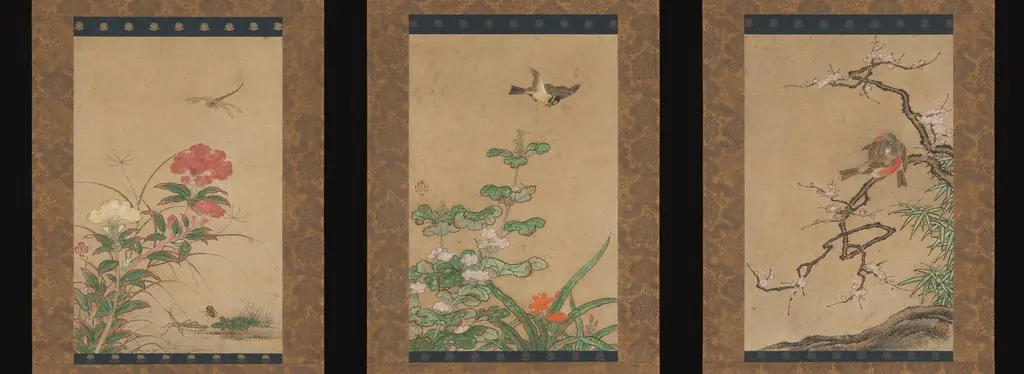
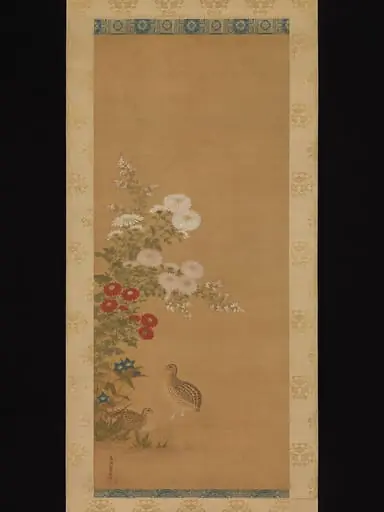
式部輝忠筆 夏秋花鳥図|Birds and Flowers of Summer and Autumn is an ink painting by the Renaissance artist Shikibu Terutada. It dates from 1550 and is held in the collection of the Metropolitan Museum of Art. 式部輝忠筆 夏秋花鳥図 (Birds and Flowers of Summer and Autumn) comprises a pair of hanging scrolls, rendered with ink and subtle color on paper.
- Accession no.
- 2015.300.64a, b
- Credit line
- Mary Griggs Burke Collection, Gift of the Mary and Jackson Burke Foundation, 2015
About this work
Subject & Meaning
Created in 1550 by Shikibu Terutada, this pair of hanging scrolls presents a floral and avian composition characteristic of Japanese landscape painting.
Created in 1550 by Shikibu Terutada, this pair of hanging scrolls presents a floral and avian composition characteristic of Japanese landscape painting. The imagery specifically features hollyhocks (Alcea), chrysanthemums, and lilies alongside various birds. By combining flora associated with both summer and autumn seasons within a single ensemble, the work visually bridges the transition between these times of year.
The inclusion of specific flowers like the chrysanthemum, often linked to longevity and the autumn season in East Asian culture, alongside summer-blooming hollyhocks and lilies, suggests a thematic focus on the cyclical nature of the seasons and the persistence of life through changing times. The presence of birds interacts with these botanical elements, a common convention in bird-and-flower painting intended to evoke a lively, naturalistic atmosphere while adhering to established iconographic traditions.
Technique & Style
Birds and Flowers of Summer and Autumn by Shikibu Terutada is executed as a pair of hanging scrolls, rendered in ink and color on paper. The work employs traditional East Asian pictorial handling, organizing its summer and autumn floral subjects, chrysanthemum, hollyhock, and lily, alongside bird imagery within a vertical hanging-scroll format suited to seasonal display. The medium of ink and color on paper is consistent with mid-sixteenth-century Japanese painting practice, allowing for both linear definition and tinted washes.
The Met's classification of the pair as paintings reflects its status as a formal, mounted work rather than a sketch or album leaf.
History & Provenance
The work titled 式部輝忠筆 夏秋花鳥図|Birds and Flowers of Summer and Autumn was painted by Shikibu Terutada in 1550 in Japan as a pair of hanging scrolls using ink and color on paper. Its subject matter includes chrysanthemum, lily, althea, and a bird, reflecting summer and autumn themes. According to the documented history, the painting entered the collection of the Metropolitan Museum of Art, where it is presently held. No additional ownership records or commissioning details are provided in the sources.
The pair of hanging scrolls Birds and Flowers of Summer and Autumn by Shikibu Terutada is held in the collection of the Metropolitan Museum of Art, as recorded in the Wikidata entry for the work. The painting, dated to 1550 and executed in ink and color on paper, is classified within the museum's Paintings holdings. Its location and collection are both identified as the Metropolitan Museum of Art, and the work is documented as having been made in Japan. No specific accession number is provided in the available sources, and no exhibition history is recorded.
Overview
式部輝忠筆 夏秋花鳥図 (Birds and Flowers of Summer and Autumn) comprises a pair of hanging scrolls, rendered with ink and subtle color on paper. These paintings collectively present a serene depiction of nature across two distinct seasons. The artist, Shikibu Terutada, utilized a traditional format to explore the changing environment, inviting contemplation of the natural world through a focused selection of flora and fauna.
Artist & collection