Artwork
元/明 呂敬甫 花蝶圖 軸 |Flowers
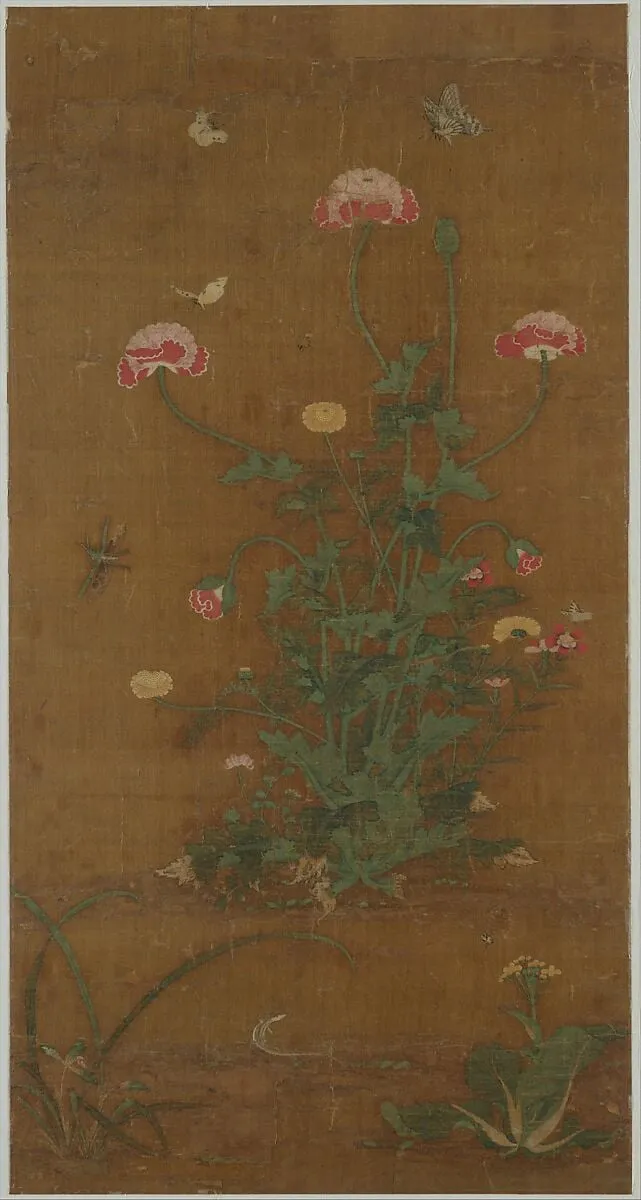
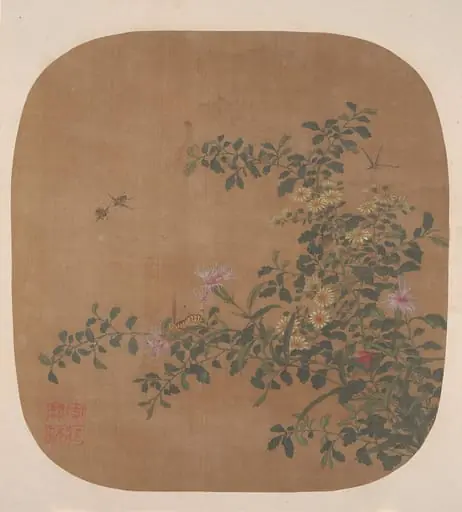
元/明 呂敬甫 花蝶圖 軸 |Flowers is an ink painting by the Ming dynasty painting artist Lü Jingfu. It dates from 1383 and is held in the collection of the Metropolitan Museum of Art.
About this work
Subject & Meaning
Flowers symbolize beauty, the transient nature of life, and seasonal cycles, while butterflies represent transformation, joy, and the soul.
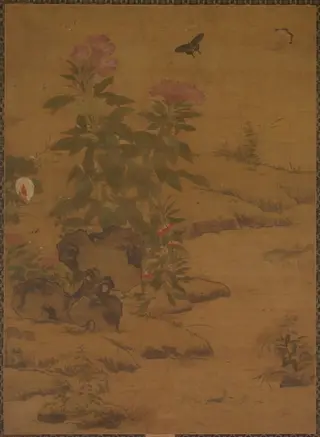
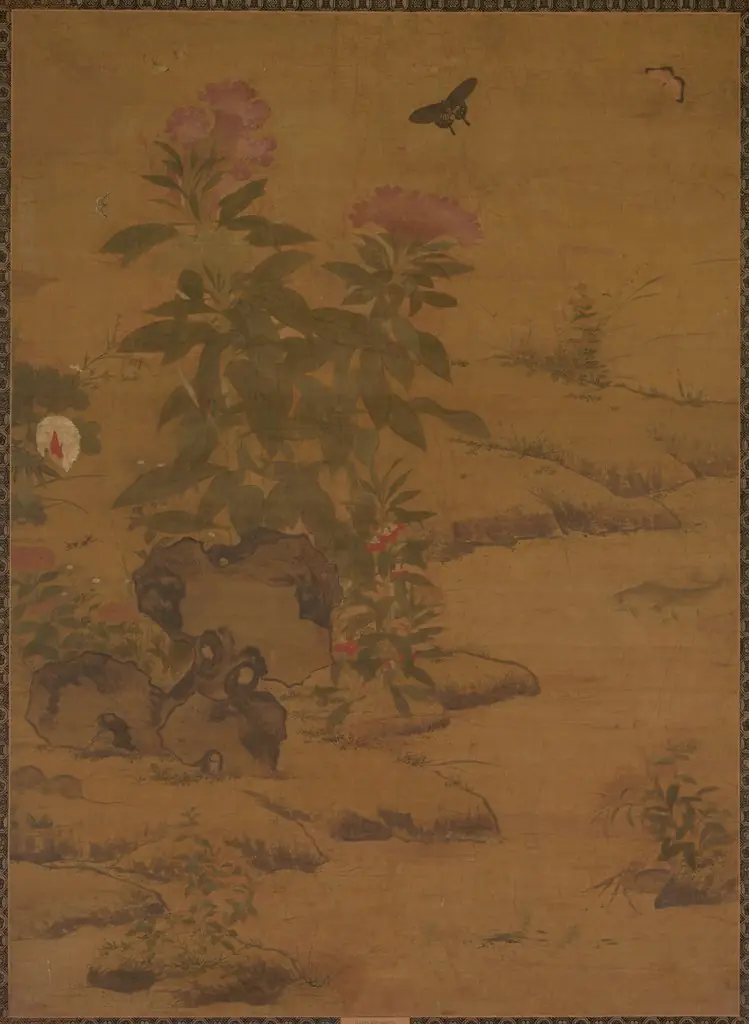
The painting depicts butterflies and flowers, a classic subject in Chinese still-life painting. The butterfly (蝶) and flower (花) combination carries layered significance in Chinese visual culture. Flowers symbolize beauty, the transient nature of life, and seasonal cycles, while butterflies represent transformation, joy, and the soul.
Together, the pairing evokes themes of love and romantic union, as the homophone for butterfly (蝶) puns on the word for aged or elder (耋), creating auspicious associations with longevity when combined with certain flowers. The 1383 date places this work in the transitional period between Yuan and Ming dynasties, when flower-and-butterfly compositions flourished as expressions of refined scholarly taste and symbolic communication.
Technique & Style
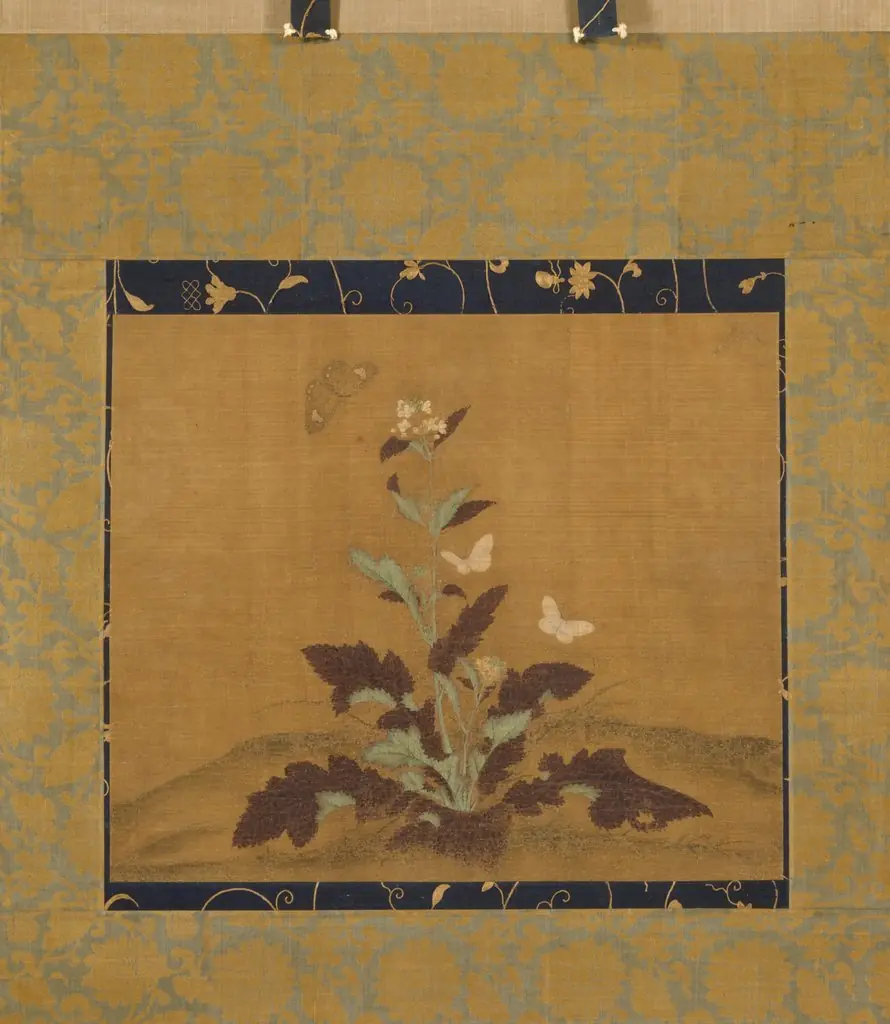
The Flowers scroll is executed as a hanging scroll in ink and color on silk, measuring 101.6 cm in height and 53 cm in width. The painting shows a delicate, naturalistic composition of blossoms and butterflies, rendered with fine, controlled brushwork in ink and light mineral pigments. The artist applied washes sparingly to build subtle tonal gradations, while the outlines of petals and wings remain crisp.
The silk support is smooth yet absorbent, allowing the pigments to settle with a muted luster. The condition appears stable, with only minor planar undulations consistent with age; no significant tears or losses are recorded.
History & Provenance
The hanging scroll Flowers by Lü Jingfu is dated 1383, as inscribed on the work. It entered the collection of The Metropolitan Museum of Art, New York, where it is currently held. The painting’s early history and any prior owners are not documented in the cited sources.
The scroll’s medium, ink and color on silk, aligns with late Yuan to early Ming practices, and its composition of butterflies and flowers reflects the still-life genre cultivated by scholar-amateur painters of the period.
The hanging scroll Flowers (c. 1383) by Lü Jingfu is part of the Metropolitan Museum of Art’s collection and is housed in its Asian art department in New York. It entered the museum’s holdings as part of the museum’s broader acquisition of Chinese painting works, though the specific accession number is not recorded in the available documentation. Its presence in the museum’s catalogue reflects its significance as a representative example of Yuan-era floral painting.
The work has not been listed in any publicly documented exhibition catalogues or loan records within the provided sources.
Overview
Artist Lü Jingfu created Flowers (元/明 呂敬甫 花蝶圖 軸) in 1383, during the transition between the Yuan and Ming dynasties. This painting, rendered with ink and color on silk, takes the form of a hanging scroll. It presents a delicate still life composition, featuring blooming flora and insects, characteristic of the period's artistic traditions.
Context
The strategic incorporation of empty space, as seen in Flowers, is a fundamental principle in traditional Chinese ink painting. Rather than signifying absence, these unadorned areas are considered active elements that contribute to the overall balance, rhythm, and atmosphere of the artwork. This approach allows the viewer's imagination to complete the scene, suggesting vastness or tranquility beyond the painted forms.
Artist & collection