Artwork
Duck in Flight
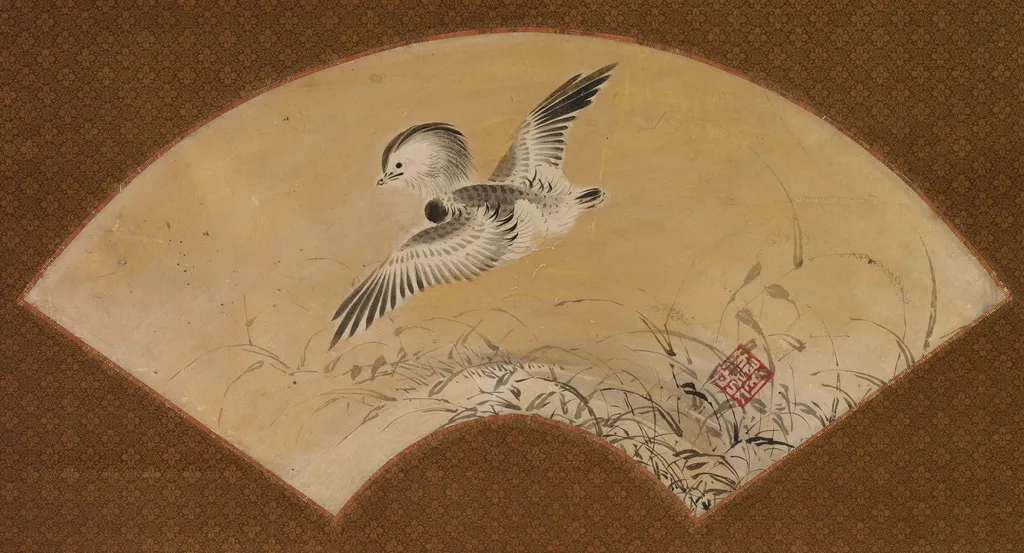
Duck in Flight is an unspecified painting by the Ukiyo-e artist Shikibu Terutada. It dates from 1550 and is held in the collection of the Cleveland Museum of Art.
About this work
History & Provenance
The work was commissioned by an unidentified patron during the mid-16th century and has been part of the museum's holdings since its acquisition.
Duck in Flight is a 1550 painting created by Shikibu Terutada in Japan. It entered the collection of the Cleveland Museum of Art, where it remains on view.
The work was commissioned by an unidentified patron during the mid-16th century and has been part of the museum's holdings since its acquisition.
Duck in Flight is held by the Cleveland Museum of Art, with the accession number 1992.140. The work was created in Japan in 1550 and was first recorded in the museum's collection in 1992. It has been exhibited in the museum's Japanese paintings galleries as part of the permanent collection display.
Context
Duck in Flight is a 1550 painting by Shikibu Terutada housed in the Cleveland Museum of Art, reflecting the artistic milieu of mid-16th century Japan. The work exemplifies the stylistic conventions of contemporary Japanese painting while demonstrating technical precision characteristic of the period. Its inclusion in a major Western collection underscores the growing international recognition of early modern Japanese art.
Scholarly discussion highlights its significance as a representative example of mid-century Japanese avian subjects within the broader context of East Asian visual culture.
Legacy
Duck in Flight has been recognized as a significant early example of Japanese bird-and-flower painting, influencing subsequent artists who explored avian subjects in ink and mineral pigments. The work's compositional treatment of motion and feather detail appears in the portfolios of later Edo-period painters documented in regional art surveys, though no direct lineage is formally recorded. Its inclusion in the Cleveland Museum of Art's collection has facilitated scholarly discussion of mid-16th-century avian motifs in Japanese art, contributing to broader reevaluations of the genre's technical sophistication.
Overview
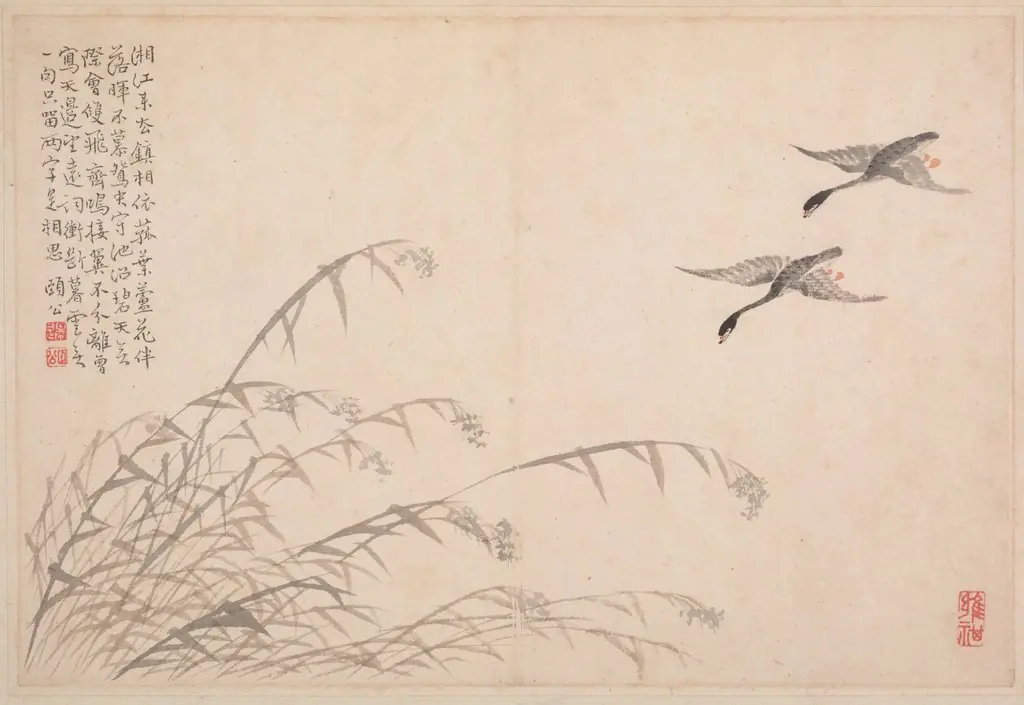
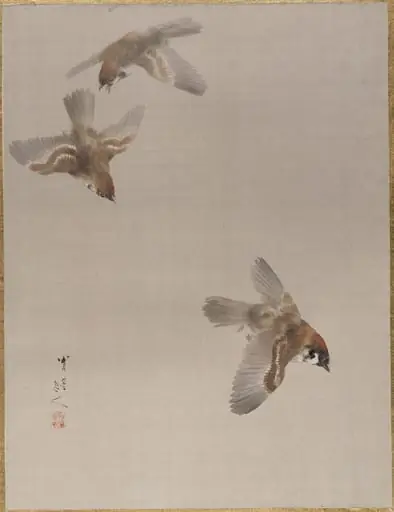
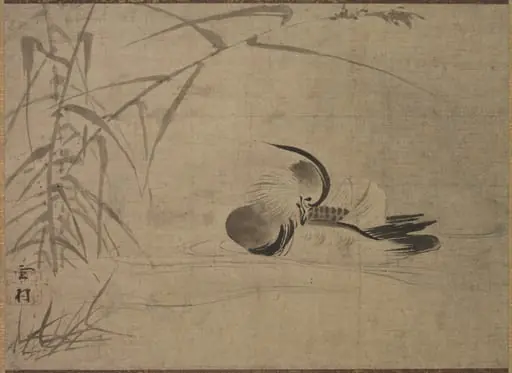
Created around the middle of the sixteenth century, this ink painting by Shikaku Terutada portrays a solitary duck captured in the act of soaring. The work is part of the collection of the Cleveland Museum of Art, where it is displayed as an example of Japanese monochrome brushwork from the period.
Subject & Meaning
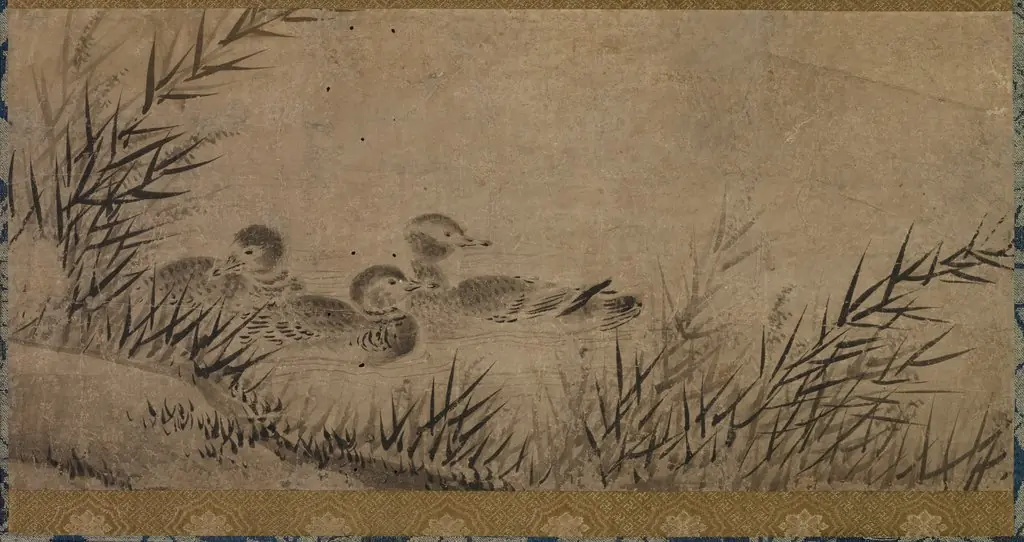
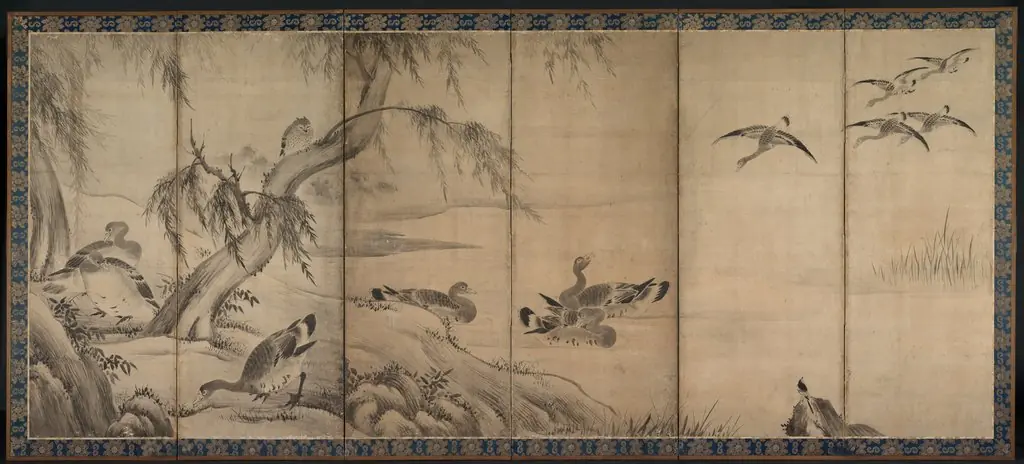
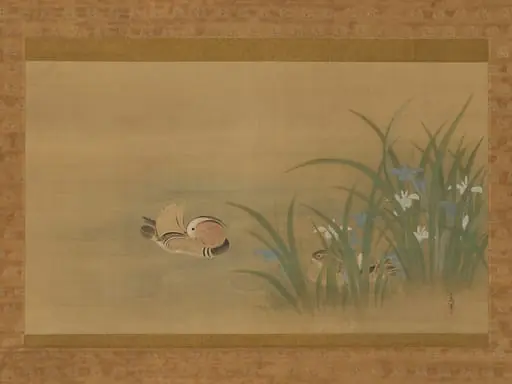
The central figure is a duck with its wings fully extended, suggesting a moment of decisive lift. The bird’s poised posture and the surrounding foliage hint at a natural setting, inviting contemplation of the fleeting instant when a creature transitions from stillness to flight.
Technique & Style
Executed in black ink on paper, the composition relies on varying brush pressures to render the duck’s plumage and the delicate grasses behind it. The stark contrast between dark outlines and lighter washes creates a sense of depth and motion, while the minimal palette emphasizes the artist’s control of line and tonal modulation.
Artist & collection