Artwork
The Grand Quai of Le Havre
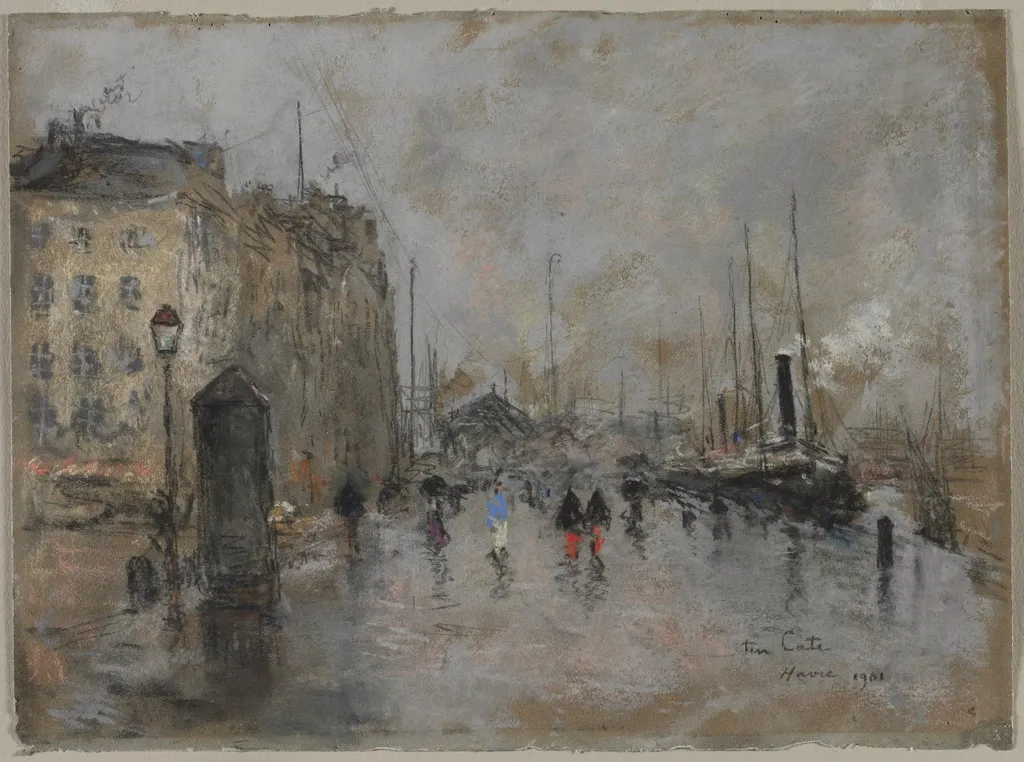
The Grand Quai of Le Havre is a drawing by Siebe Johannes ten Cate. It dates from 1901 and is held in the collection of the Cleveland Museum of Art.
- Accession no.
- 1960.166
About this work
Overview
The Grand Quai of Le Havre is a drawing by Dutch artist Ten Cate, depicting a serene harbor scene at dusk in the French port city of Le Havre, characterized by a subdued, autumnal atmosphere.
Subject & Meaning
The subject is a quiet, twilight view of Le Havre's harbor, with ships and buildings. The melancholic tone may evoke the artist's interpretation of the location's mood during the late autumn hours.
Technique & Style
While known for pastels, this work's medium is not specified here, but the use of chiaroscuro, a strong contrast between light and dark, is notable, enhancing the emotional depth of the dusk scene.
History & Provenance
Created during one of Ten Cate's trips to France, this piece aligns with his thematic focus on harbors and cityscapes, reflecting his travels and artistic inclinations.
Context
Ten Cate's career was heavily influenced by his time in Paris, where he interacted with notable artists like Kees van Dongen and Vincent van Gogh, though the direct influence of these interactions on this work is not explicitly evident.
Legacy
This drawing contributes to Ten Cate's body of work emphasizing harbors and cityscapes, though its specific impact on his legacy or the broader art historical context is not detailed in available information.
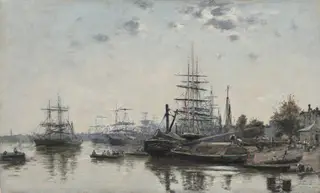
Own this work as a print
Artist & collection
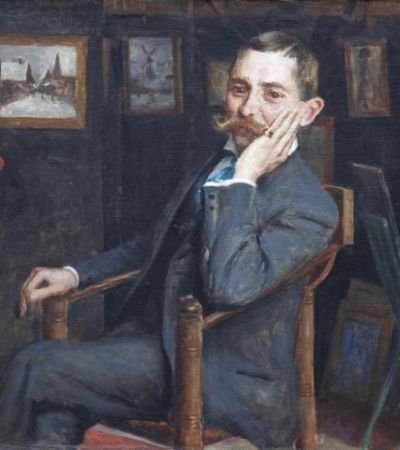
Artist
Siebe Johannes ten Cate was a Dutch-Frisian painter in the Impressionist style, who spent most of his working life in France.

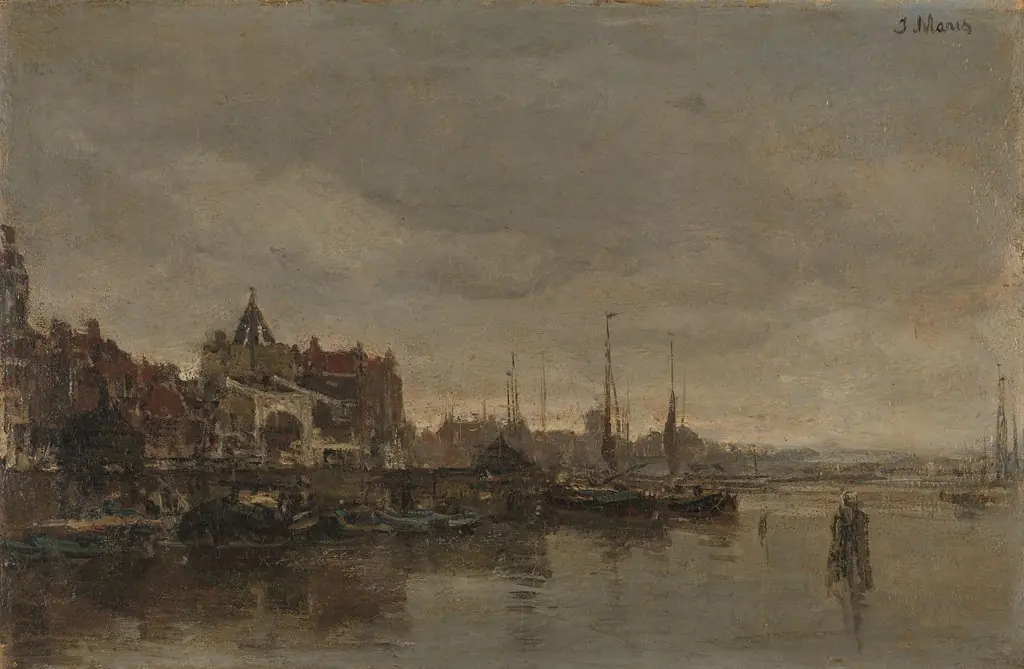 De Schreierstoren met de brug over de Gelderse Kade te Amsterdam
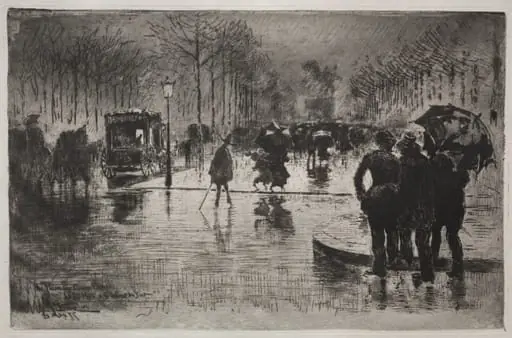 Artists Returning from the Salon
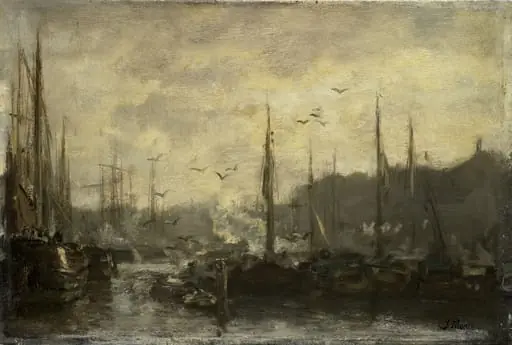 Harbor View
 Bordeaux, the Harbor
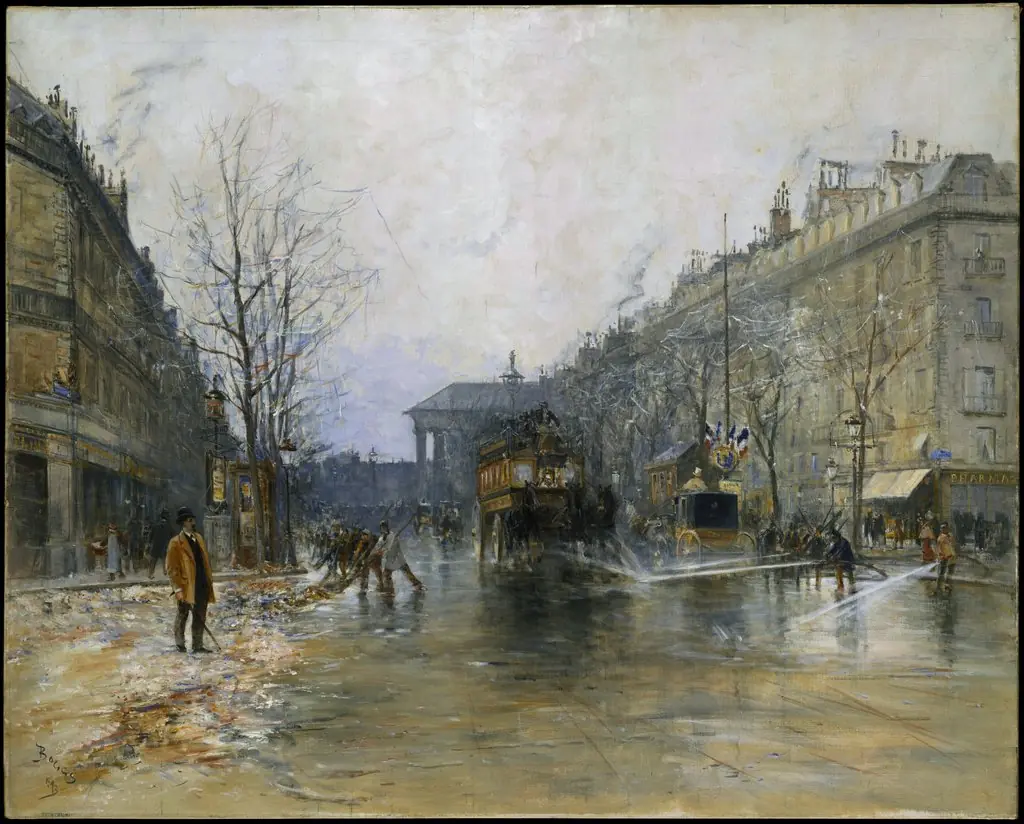 Paris Street Scene
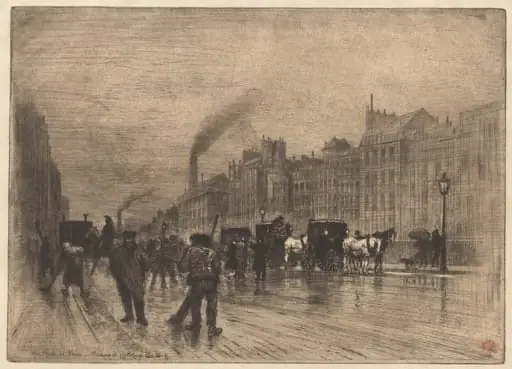 Matinée d'Hiver sur les Quais (Winter Morning on the Quays)
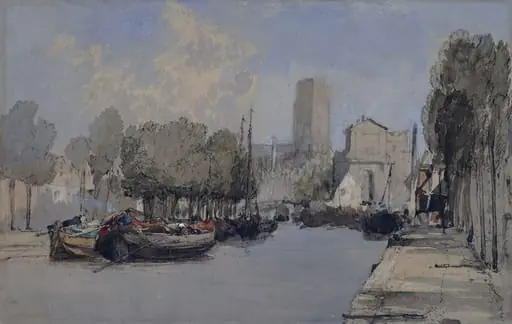 Dordecht
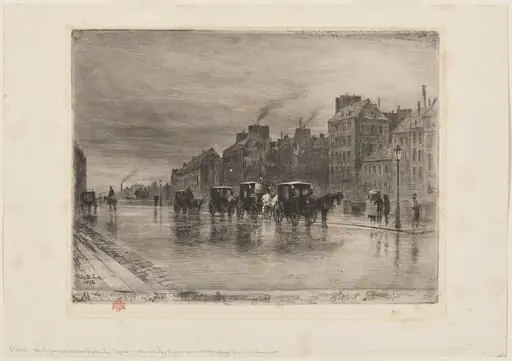 Une Matinée d'Hiver au Quai de l'Hôtel-Dieu (Winter Morning on the Quai de l'Hôtel-Dieu)
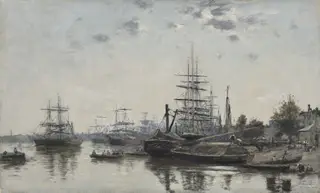 View of Bordeaux, from the Quai des Chartrons
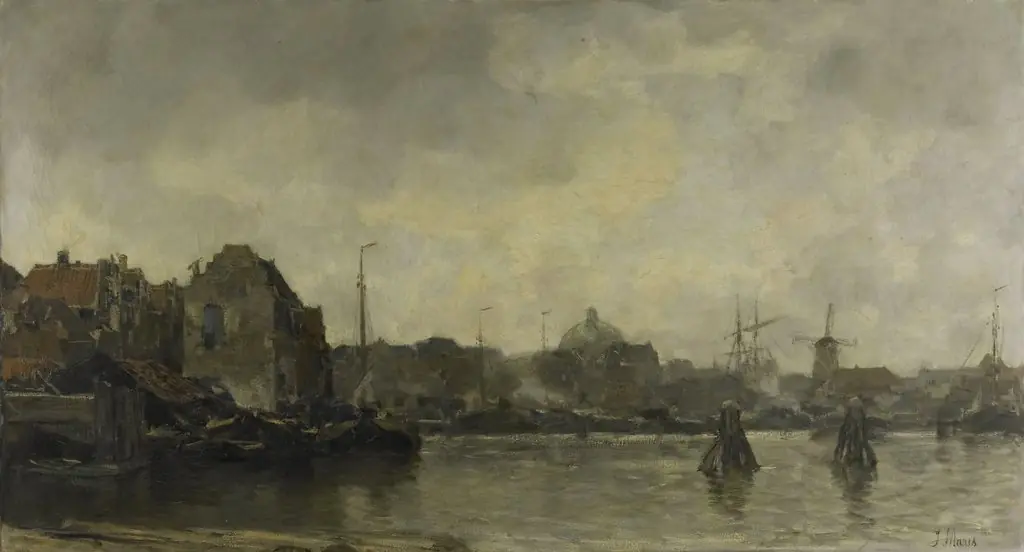 Cityscape
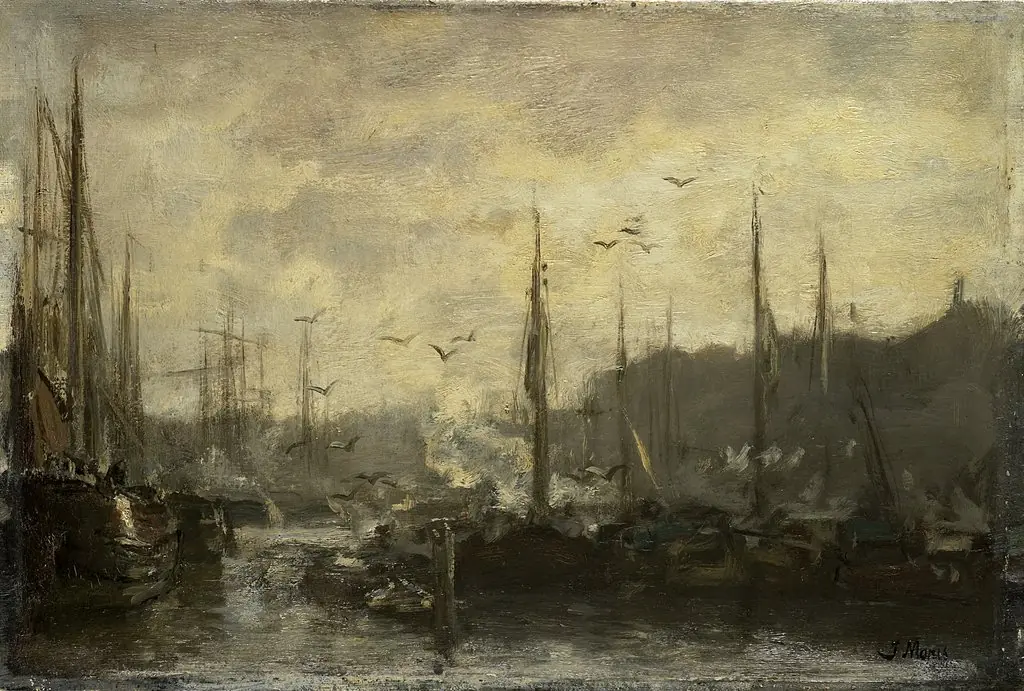 Harbor View
- View of Bordeaux, from the Quai des Chartrons