Artwork
Joseph Sold into Slavery
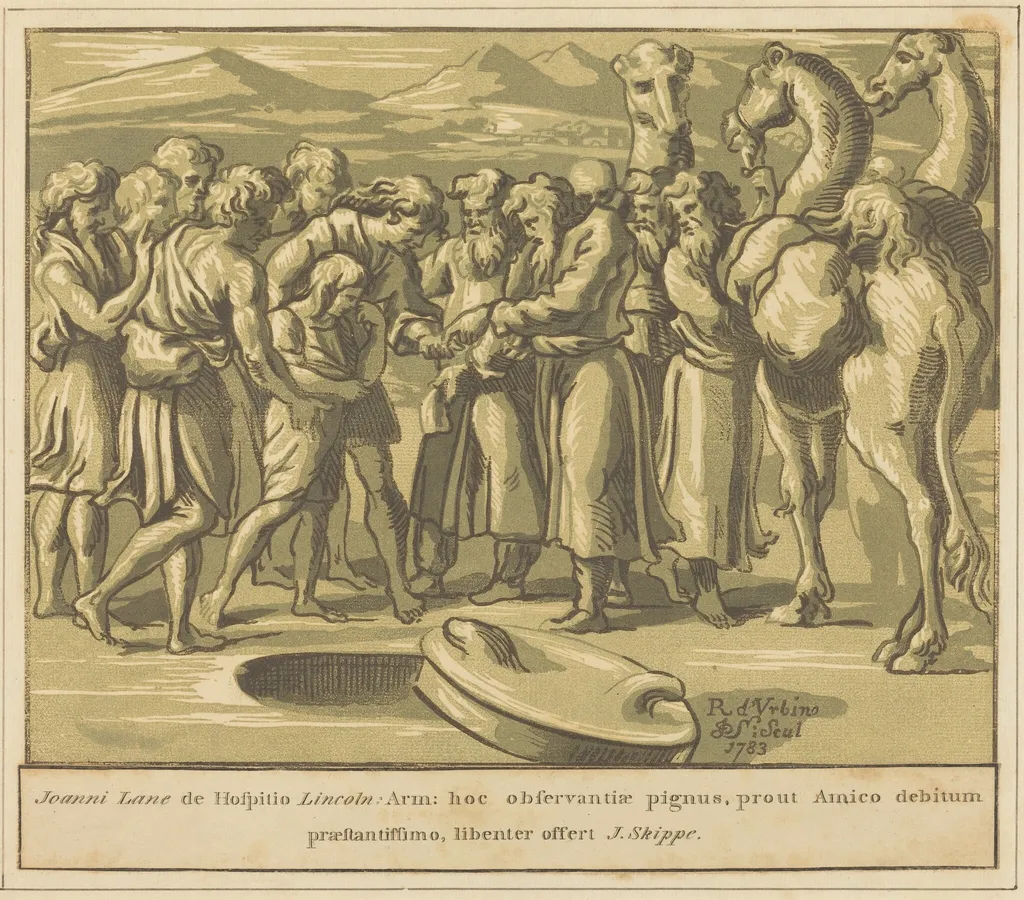
Joseph Sold into Slavery is an ink print by the Romanticist artist John Skippe. It dates from 1783 and is held in the collection of the National Gallery of Art.
- Inscription
- Inscribed:lower center in block: R. d Urbino / JS Scul / 1783; on second sheet: Joanni Lane de Hospitio Lincoln Arm: hoc observantiae pignus, prout Amico debitum / praestantissimo, libenter J. Skippe
About this work
Overview
Joseph Sold into Slavery is a chiaroscuro woodcut created by John Skippe in 1783. The print is rendered in gray and black from three blocks on an old mount.
Subject & Meaning
The scene depicts a dramatic moment from a narrative, likely biblical, showing a central figure in a white robe being dragged by others, with a broken staff on the ground, suggesting themes of betrayal or loss of authority.
Technique & Style
The artist employed chiaroscuro, using shading to create contrast between the figures and the flat background, which features a rocky landscape and distant mountains. The technique gives the figures a sense of depth and volume.
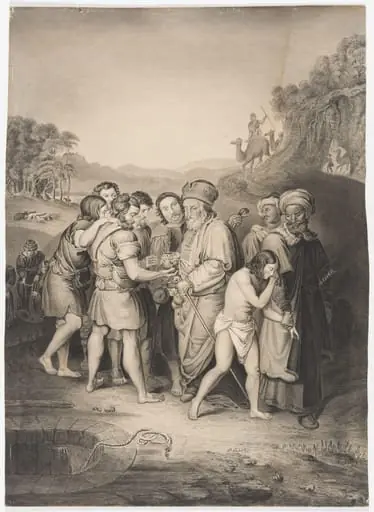
Own this work as a print
Artist & collection

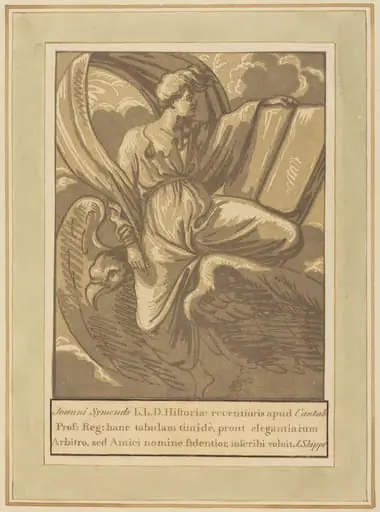
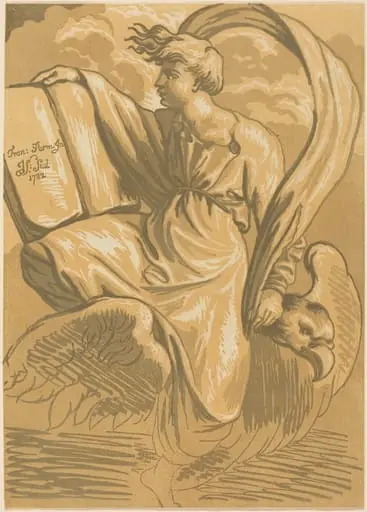
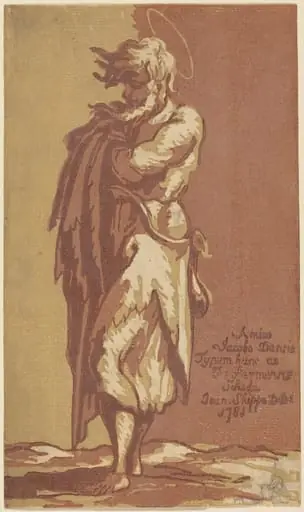
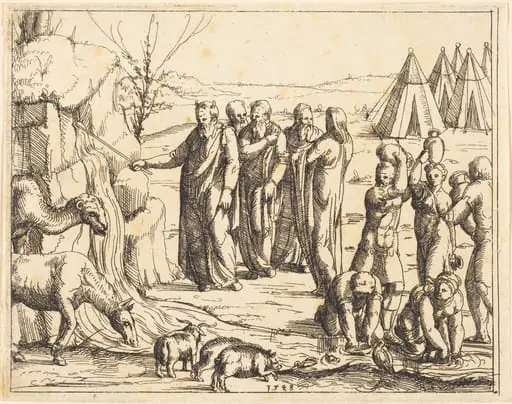 Moses Striking the Rock
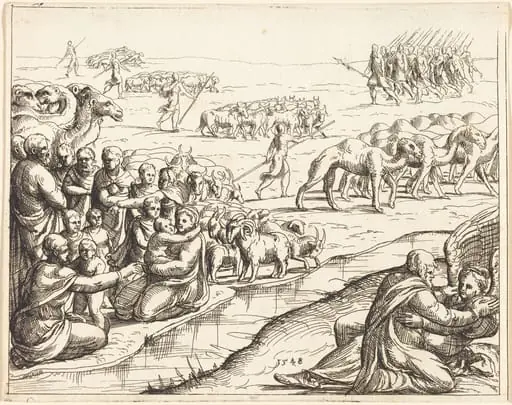 Jacob Wrestling with the Angel
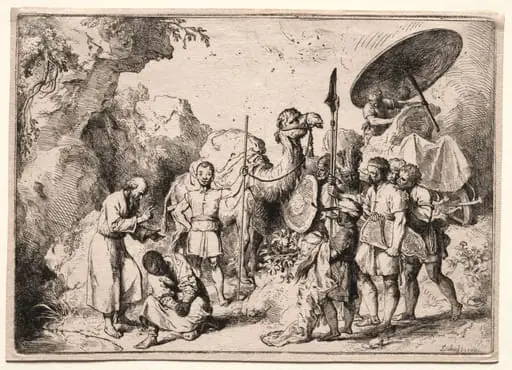 Deacon Philip Baptising the Eunich
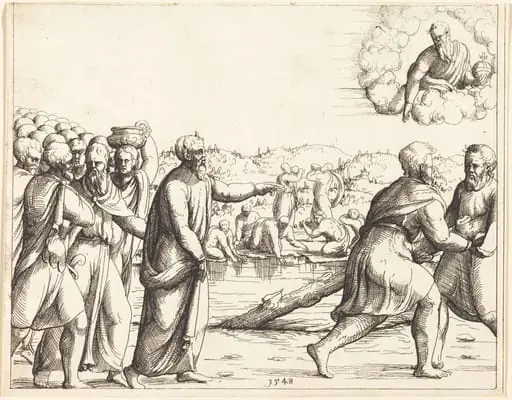 The Lord Sweetens the Waters of Marah
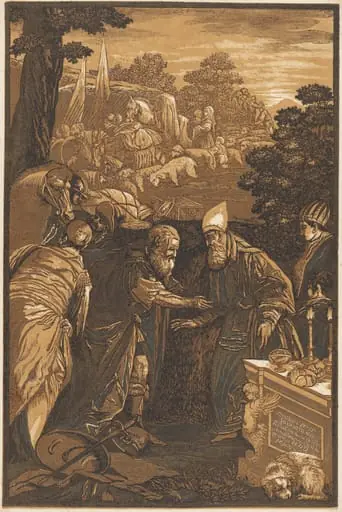 Melchisedech Blessing Abraham
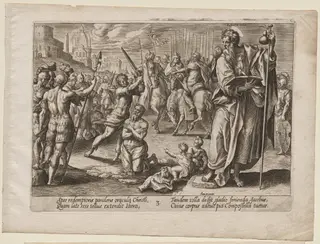 St. James the Great
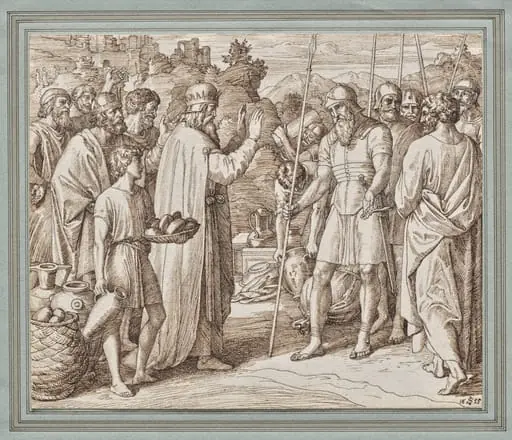 Melchizedek Blessing Abraham
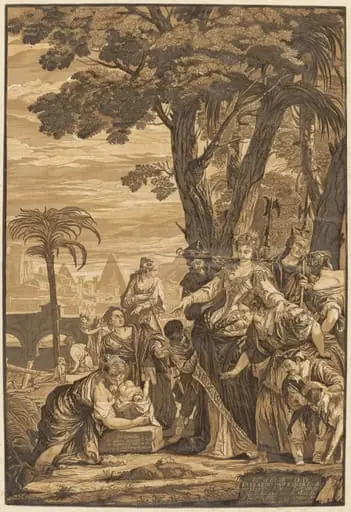 The Finding of Moses
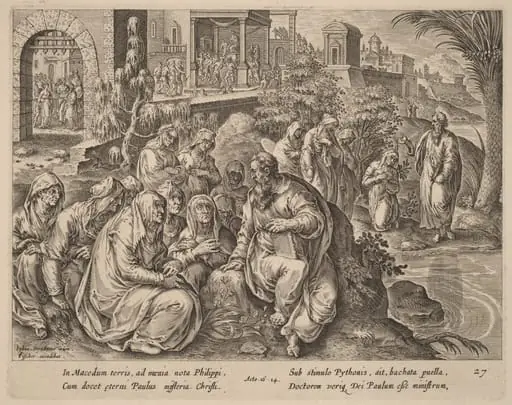 Saint Paul Speaks to the Women of Philippi by a River
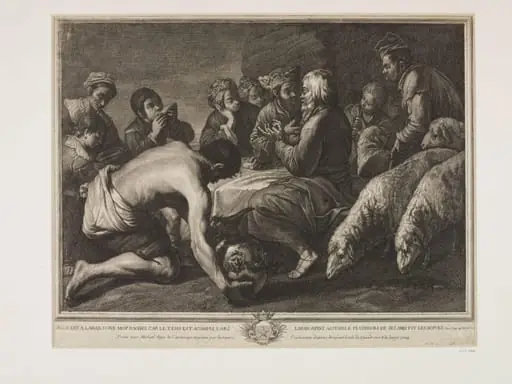 Laban giving his Daughter Rachel to Jacob
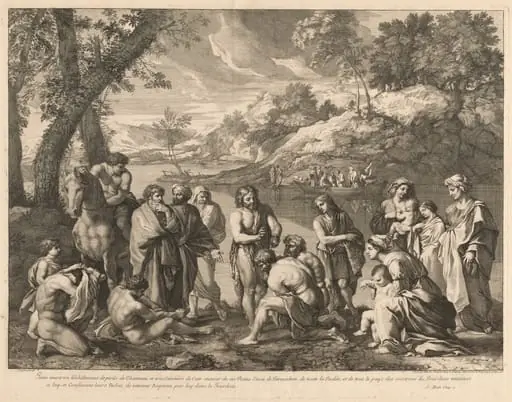 Saint John the Baptist in the River Jordan
- Joseph and his brethren