Artwork
The Hot Spring at Sitacoon
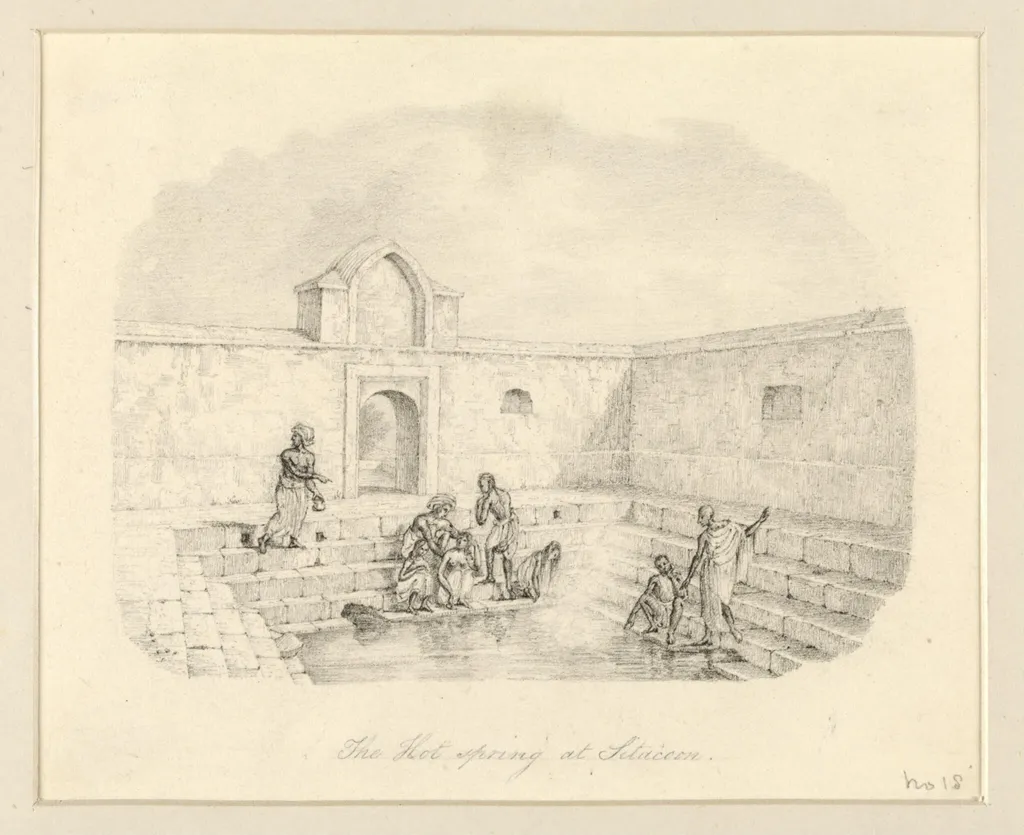
The Hot Spring at Sitacoon is a drawing by the Romanticist artist Robert Captain Smith. It dates from 1830 and is held in the collection of the Victoria and Albert Museum.
About this work
Overview
The sheets were later mounted and refined by Smith after his retirement in Ireland, with final revisions completed by 1845.
This pencil drawing is one of sixty-five illustrations from Captain Robert Smith’s personal travel journal, created during his journeys along the Ganges between 1828 and 1833. It captures a scene at Sitacoon, where individuals gather at a natural hot spring. The sheets were later mounted and refined by Smith after his retirement in Ireland, with final revisions completed by 1845. The drawing entered a museum collection in 1915, acquired from W. M. Biden of Hampton-on-Thames.
Subject & Meaning
The scene portrays a quiet moment of daily life around a thermal spring, with figures engaged in bathing and care. A woman observes from above, while others interact near the water: a man assists a child, and two individuals rest beside a shallow pool. The presence of a stone structure with an arched entrance suggests a locally constructed bathing area. The image conveys ordinary human activity rather than ceremonial ritual, reflecting Smith’s interest in authentic observation.
Technique & Style
Smith employed loose, rapid pencil strokes to suggest motion and texture, avoiding polished finish in favor of immediacy. Shading is achieved through light cross-hatching, particularly around the stone architecture and clothing folds, giving volume without heavy detail. The sketchy quality enhances the sense of a fleeting moment, consistent with the journal’s function as a visual diary rather than a formal record. The composition directs attention to the central figures through spatial grouping and subtle directional lines.
History & Provenance
The drawing originated as part of Smith’s private documentation during his service in India. After returning to Ireland, he spent years revising the manuscript, refining sketches and adding annotations. The journal remained unpublished during his lifetime.
In 1915, the collection was acquired by the museum from W. M. Biden, a private collector in Hampton-on-Thames, marking its transition from personal archive to public historical resource.
Context
Smith’s drawings were made during a period of British colonial presence in northern India, when travel and documentation by military officers often served both personal and administrative purposes. Unlike official surveys, his sketches focused on everyday scenes rather than monuments or political events. The inclusion of local figures in natural settings reflects a rare, non-stereotypical gaze, offering insight into the lived environment beyond colonial narratives.
Legacy
Though never published in Smith’s lifetime, the journal provides a rare, unfiltered glimpse into 19th-century Indian daily life as seen by a British observer. Its preservation and later acquisition by a museum ensured its survival as a historical document. The drawings now serve as visual records of social practices and architecture, valued for their observational honesty rather than artistic ambition.
Own this work as a print
Artist & collection

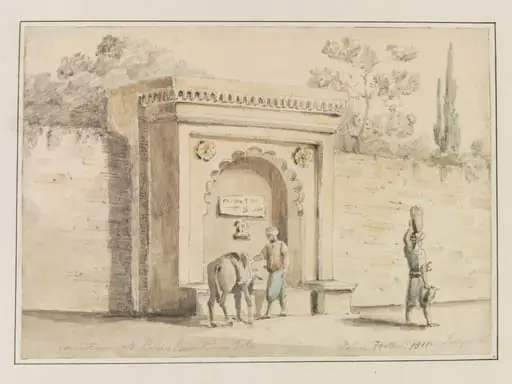 Fountain At Constantinople
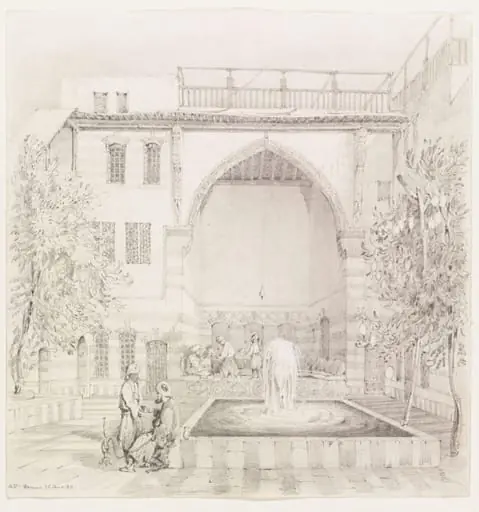 Damas
Damas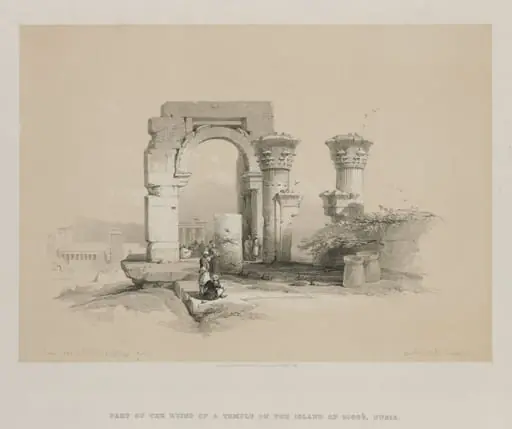 Egypt and Nubia, Volume II: Ruins - Temple on the Island of Biggeh, Nubia
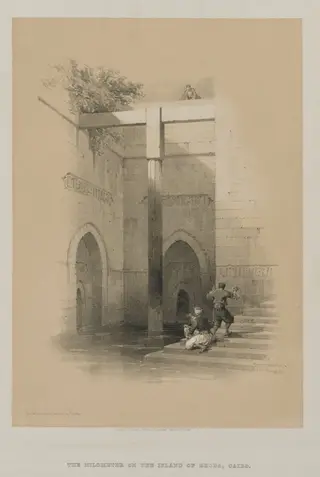 Egypt and Nubia, Volume III: The Nileometer. Island of Rhoda
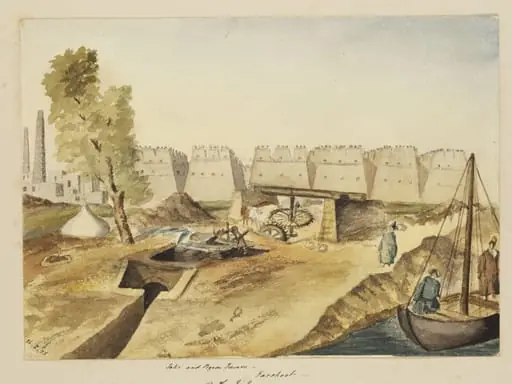 `Saki and Pigeon Towers - Farshoot - On the Nile'
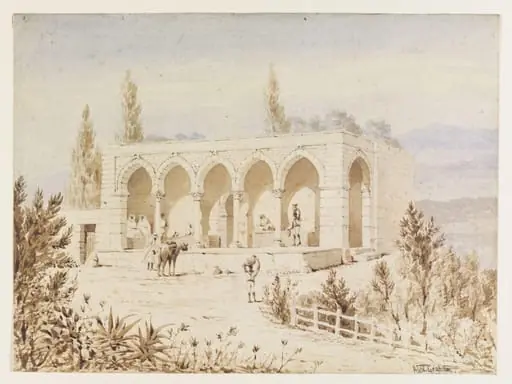 Sebela
 En Rogel, Holy Land
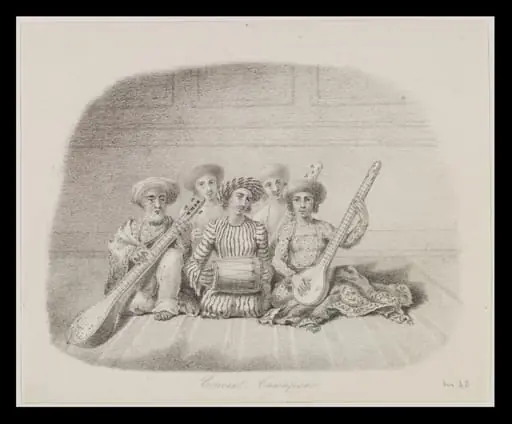
 A Nautch, Cawnpoor
 Ancient round tower and Musjid, Coel.
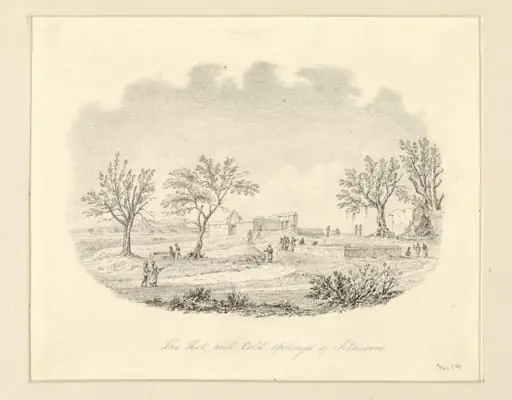
- The hot and cold springs of Sitacoon
 The Soubadars Tank, Cawnpoor