Artwork
Magogoni, Dar-es-Salaam
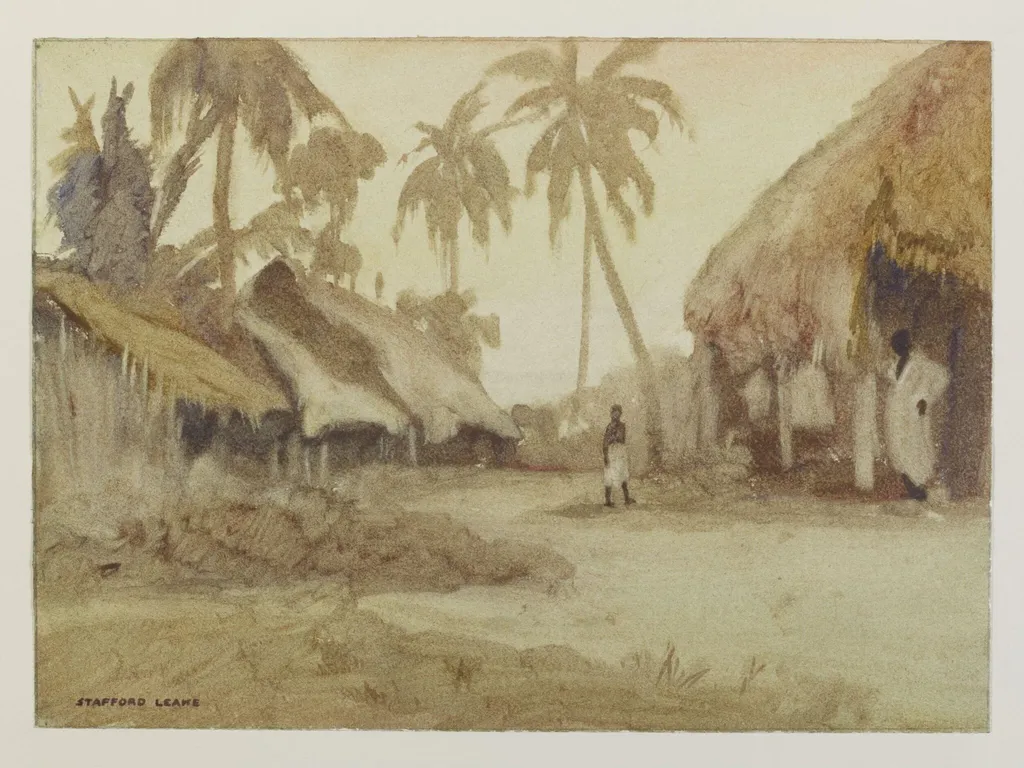
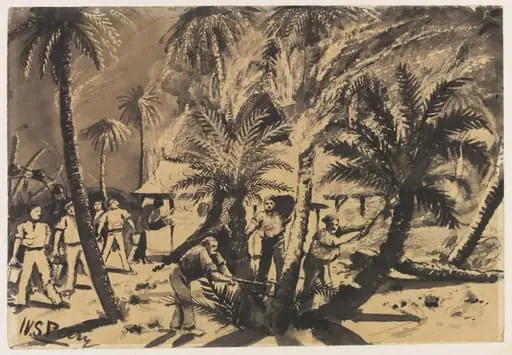
Magogoni, Dar-es-Salaam is a watercolor work on paper by the Aestheticist artist Stafford Leake. It dates from 1918 and is held in the collection of the Victoria and Albert Museum.
About this work
Overview
Created in 1918, this watercolour by Stafford Leake depicts Magogoni, a small settlement three miles east of Dar-es-Salaam in what was then German East Africa. The work is signed by the artist and executed in a loose, observational style typical of colonial-era sketches. It captures a quiet, sunlit moment in a rural African village, rendered with minimal detail and restrained tones.
Subject & Meaning
The scene presents a modest cluster of roughly constructed huts along a dusty path, with palm trees framing the horizon. A solitary figure, dressed in light clothing and a wide-brimmed hat, stands near the center, suggesting daily life in the village. The absence of movement or activity conveys stillness, possibly reflecting the artist’s interest in quiet observation rather than narrative drama.
Technique & Style
Leake employed fluid, sketch-like brushwork to suggest form and light without precise definition. The palette is subdued, dominated by earthy browns, ochres, and soft greens, evoking the arid landscape. Shadows are elongated and softly rendered, indicating late afternoon sunlight. The watercolour medium allows for transparency and subtle layering, enhancing the atmospheric quality of the scene.
History & Provenance
The painting originates from Leake’s time in East Africa during the final years of German colonial rule, shortly before British administration took hold.
The painting originates from Leake’s time in East Africa during the final years of German colonial rule, shortly before British administration took hold. As a colonial official or observer, he produced numerous watercolours documenting local settlements. This work likely served as a personal record rather than a commissioned piece, with its provenance tied to private collections or institutional archives in the UK.
Context
Made during the transition from German to British control in Tanganyika, the painting reflects a moment of administrative change. Such works were often created by colonial personnel to document landscapes and settlements, offering visual records that were neither ethnographic nor promotional, but quietly observational. The focus on vernacular architecture and natural elements aligns with broader trends in colonial watercolour practice.
Legacy
Leake’s watercolours, including this one, remain as modest but valuable documents of early 20th-century East African village life. They contribute to historical visual archives, offering insight into material culture and environmental conditions without romanticization. While not widely exhibited, they are held in regional collections and studied for their unembellished depiction of everyday spaces.
Own this work as a print
Artist & collection

 Native hut at Nassau
 The Buccaneers
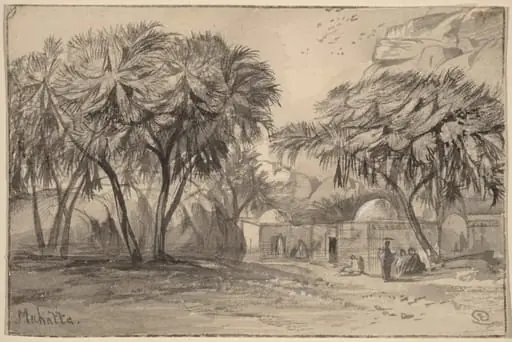 Mahatta
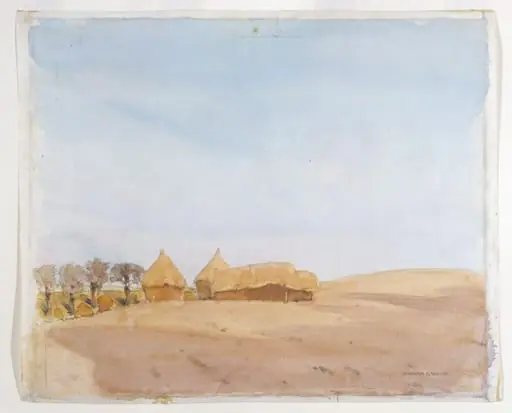 Glowing Evening
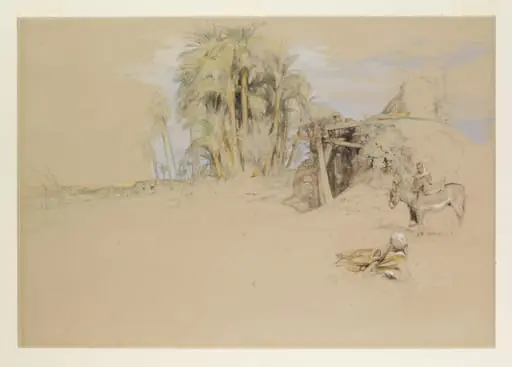 Rural Scene in Upper Egypt, on the banks of the Nile
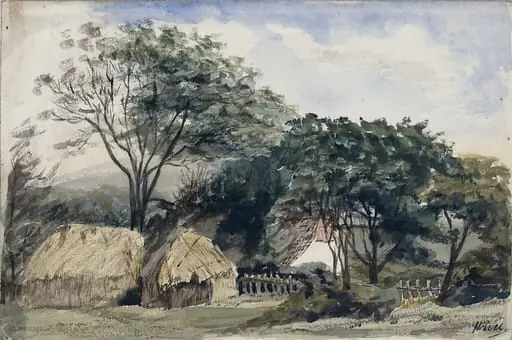 Hayrick and cottage under trees
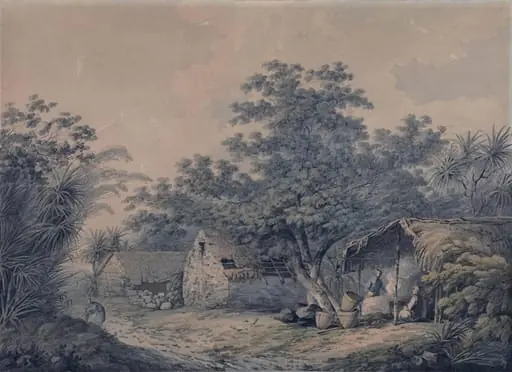 View in Krakatoa Island, near the Straits of Sunda
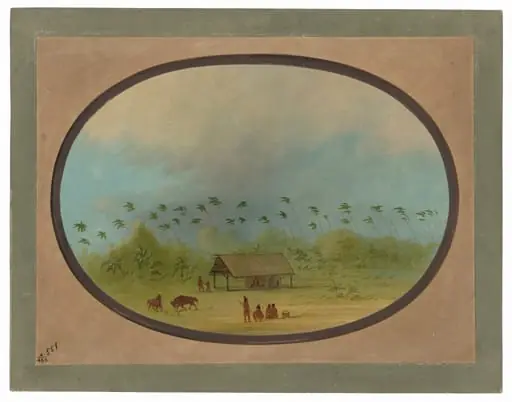 A Small Tobos Village
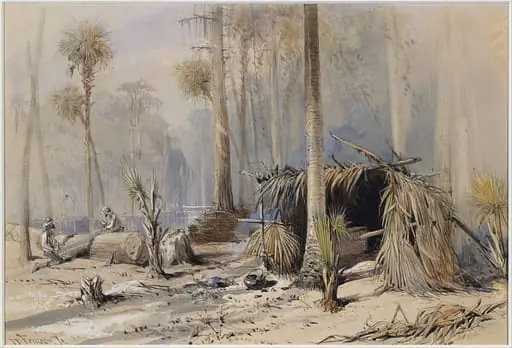 The Cypress-Shingle Yard, Ocklawaha River, Florida
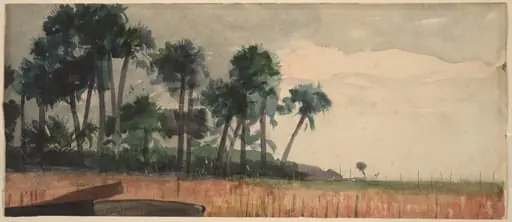 Palm Trees, Red
 The Heavies Camp on fire at Hafir April 1885
- Distant View of Bushire in the Persian Gulf