Artwork
Joshua Lamb
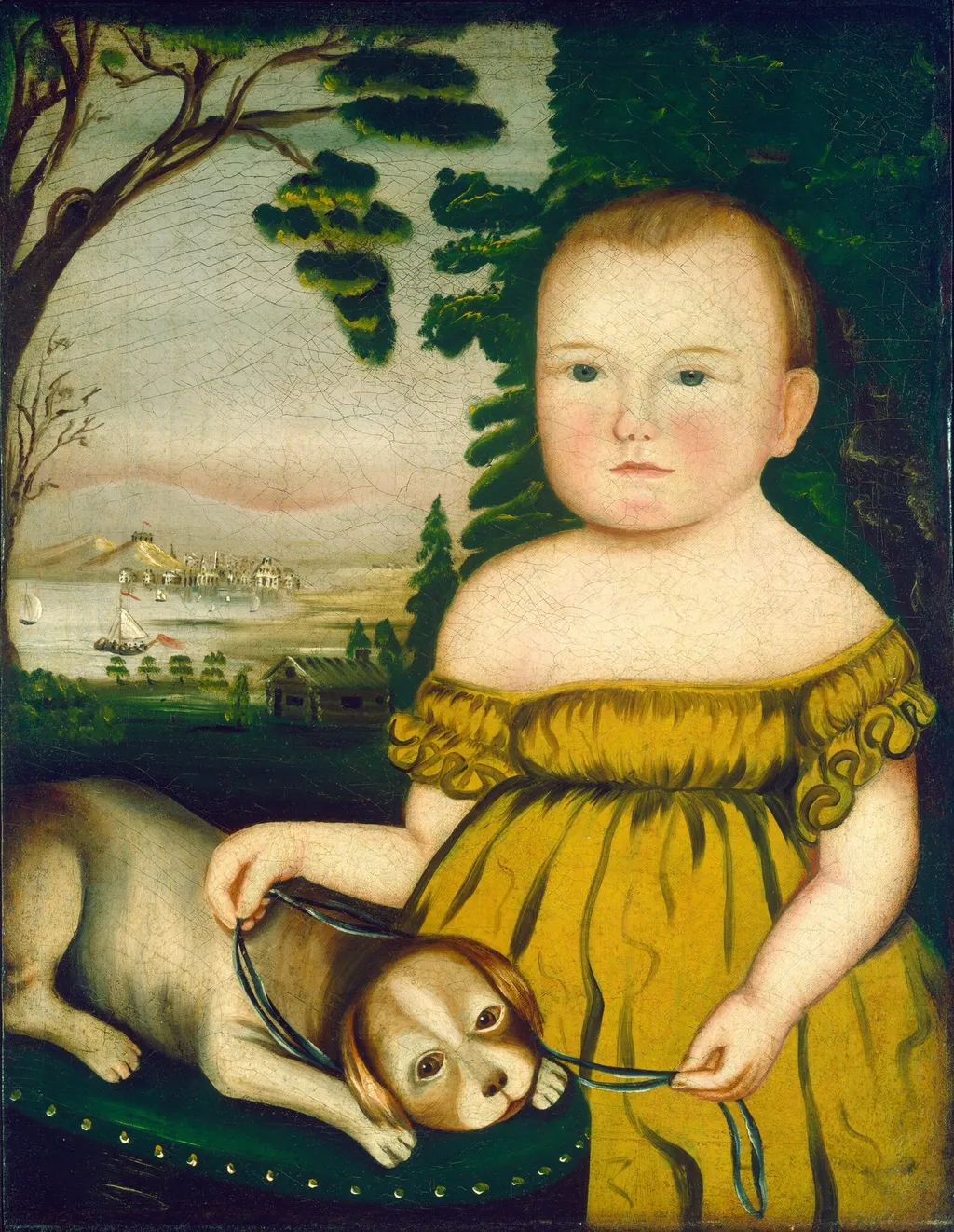
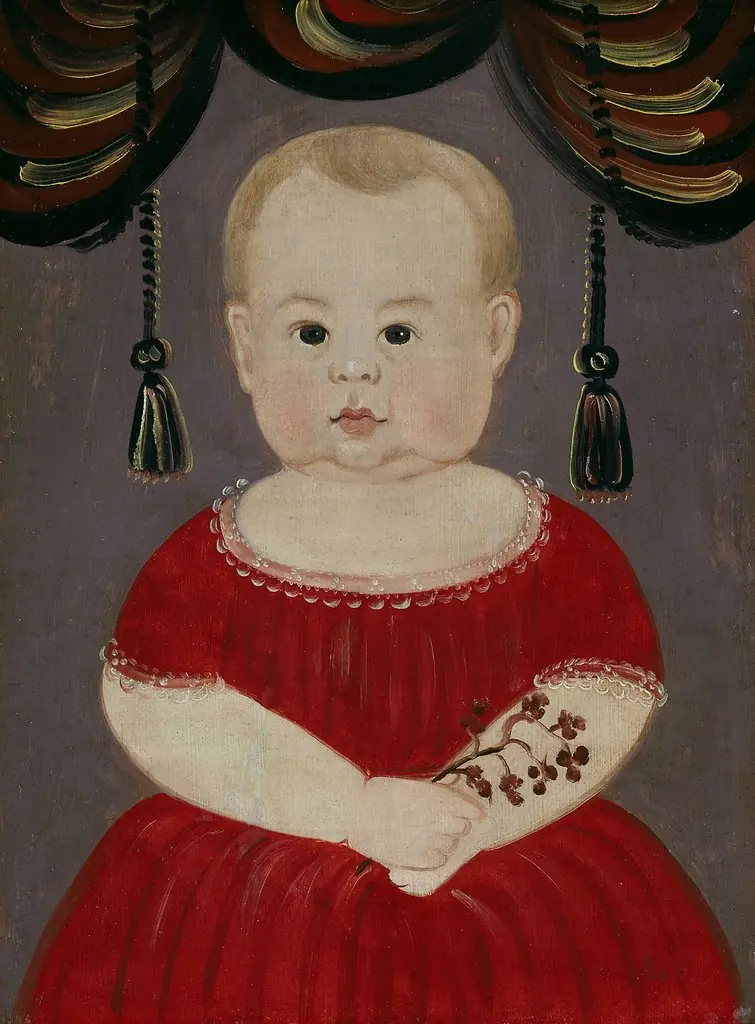
Joshua Lamb is an oil painting by the Realist artist Abram Ross Stanley. It dates from 1842 and is held in the collection of the National Gallery of Art.
- Inscription
- Inscribed:on reverse (no longer visible, photograph in object file [1980.62.22] in NGA curatorial records): Joshua Lamb This Liknes [sic] taken 1842. / By A Stanley
About this work
It doesn't have a lot of background details, which makes Joshua Lamb stand out.
The painting shows a man, Joshua Lamb. He's dressed in old-fashioned clothes. The artist, Stanley, Abram Ross, made this painting in 1842, which is interesting because not much is known about the artist, and this painting might be one of their few works.
The painting is quite simple, with a focus on the subject. It doesn't have a lot of background details, which makes Joshua Lamb stand out.
You can learn more about this style by looking into the technique: glazing.
Technique & Style
The portrait is painted in oil on a linen canvas support, executed in 1842 by Abram Ross Stanley. The handling aligns with mid-nineteenth-century American portrait conventions, characterized by smooth modeling of facial features and restrained brushwork that emphasizes clarity over textural incident. The composition centers on the sitter’s head and shoulders, with subdued, naturalistic lighting that defines volume while preserving a calm, dignified presence. The palette is muted, favoring earth tones and subdued hues typical of contemporary academic practice.
The work’s formal qualities reflect a conservative stylistic approach, avoiding pronounced painterly effects in favor of precise delineation and a restrained, almost sculptural approach to form.
History & Provenance
The portrait Joshua Lamb was painted by Abram Ross Stanley in 1842. The work was recorded as originating from New York. Its ownership history begins with Gus Knapp, who sold the painting in 1966 to the collectors Edgar William and Bernice Chrysler Garbisch.
Upon Bernice Chrysler Garbisch’s death, the painting passed by bequest to the National Gallery of Art, Washington, D.C., in 1980, where it remains in the collection. The sources do not provide a specific accession number or any exhibition history for the piece.
Context
The 1842 portrait by Abram Ross Stanley entered the National Gallery of Art through a 1966 sale by Gus Knapp and a 1980 bequest from Edgar William and Bernice Chrysler Garbisch. Measuring 61.9 × 48.2 cm, the oil on canvas work is classified as a portrait and exemplifies mid‑19th‑century American portraiture, a genre that emerged as the young republic sought to define its elite through formal representation. Its inclusion in the museum’s collection illustrates the growing recognition of native artists and the institutional effort to preserve early American painting.
Scholars have cited the piece when examining the development of portrait conventions in the United States during the 1840s.
Overview
Abram Ross Stanley's 1842 oil on canvas, "Joshua Lamb," depicts its namesake subject. This painting is a significant work from an artist about whom little is documented. The composition emphasizes the individual, presenting Lamb in period attire against a restrained background, a characteristic approach that highlights the sitter's presence. Its creation date places it within a specific historical moment for American portraiture.
Subject & Meaning
The portrait features Joshua Lamb, presented in attire typical of an earlier era rather than the contemporary fashion of 1842. This choice of clothing might suggest a deliberate connection to tradition or a specific personal history. The direct gaze and focused composition draw attention solely to the sitter, allowing viewers to contemplate his identity and the period he represents without distraction from elaborate settings.
Own this work as a print
Artist & collection