Artwork
Emma Homan
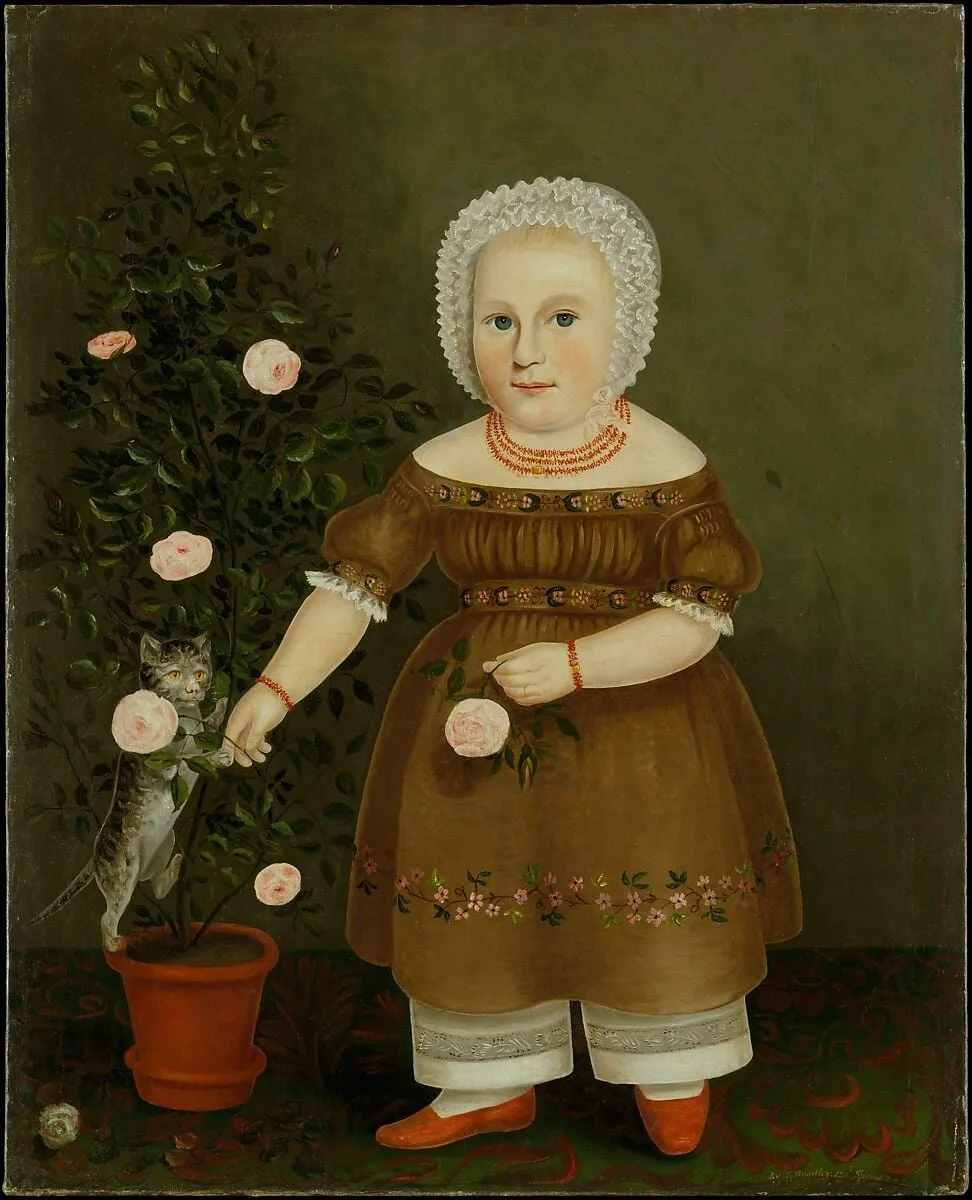
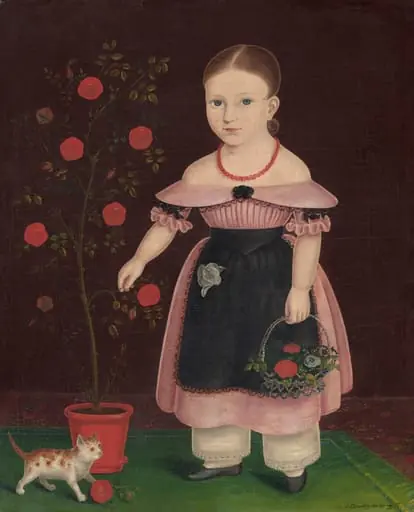
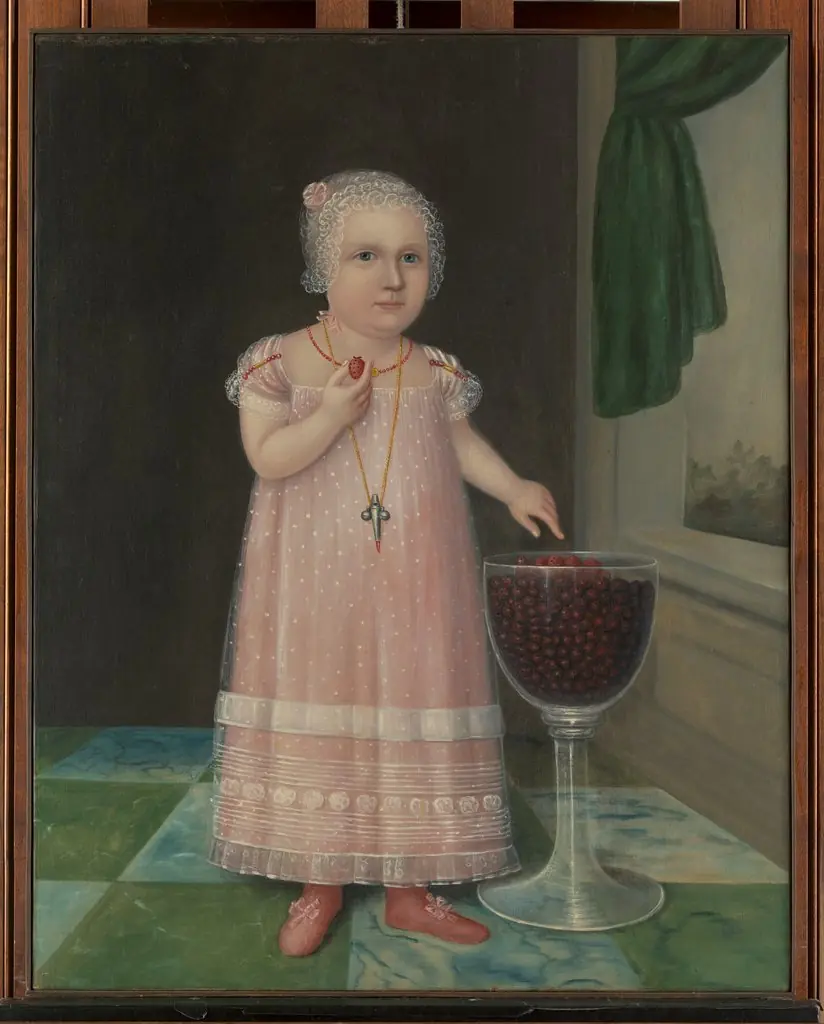
Emma Homan is an oil painting by the American Folk Art artist John Bradley. It dates from 1844 and is held in the collection of the Metropolitan Museum of Art.
- Accession no.
- 66.242.23
- Credit line
- Gift of Edgar William and Bernice Chrysler Garbisch, 1966
About this work
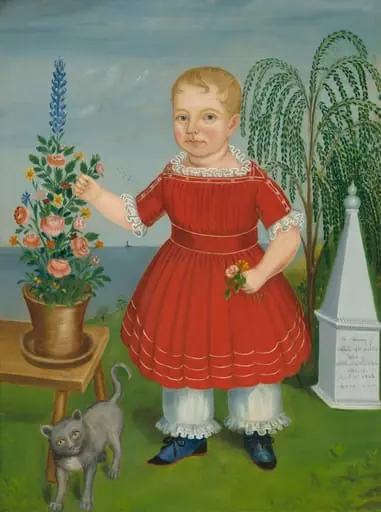
A small cat climbs a potted rosebush to bat at the finger of two-year-old Emma Homan, who stands in a brown floral dress and coral beads. The itinerant Irish-American painter John Bradley made this folk portrait in his New York studio in 1844, rendering the affluent toddler with the plain charm of American naïve art. Emma later became the botanical artist Emma Homan Thayer.
Overview
Bradley, an Irish immigrant who became a New York City portraitist, captured affluent sitters with a distinctive folk art sensibility.
This oil on canvas, painted around 1844 by John Bradley, depicts Emma Homan as a two-year-old child. Bradley, an Irish immigrant who became a New York City portraitist, captured affluent sitters with a distinctive folk art sensibility. The full-length portrayal showcases the young subject amidst domestic details, characteristic of the era's naive portraiture. It offers a glimpse into American childhood portraiture of the mid-19th century.
Technique & Style
Bradley's approach to portraiture is evident in the meticulous rendering of Emma's attire, from her brown floral dress and white lace cap to her coral bead necklace. The artist employed a plain, muted-green background, a common feature in his work, to emphasize the sitter. This attention to detail, combined with a direct, unvarnished presentation of the subject, defines Bradley's distinctive naïve style within American folk art.
Subject & Meaning
The portrait presents Emma Homan standing on a vibrantly colored carpet, positioned next to a substantial potted rosebush. A playful detail emerges as a small cat scales the plant, extending a paw towards the child's finger. This interaction adds a dynamic, charming element to the otherwise formal pose.
Such details often served to convey the sitter's innocence and connection to nature, common themes in children's portraits of the period.
History & Provenance
John Bradley maintained a studio at 134 Spring Street in New York City, where he produced his portraits. Although the canvas bears this address, family accounts suggest the painting may have been executed at Wading Brook or Wading River on Long Island. The artwork later entered the collection of the Metropolitan Museum of Art in 1966, a generous gift from Edgar William and Bernice Chrysler Garbisch, securing its place in a public institution.
Legacy
Emma Homan's life extended until 1908. After her childhood in New York, she relocated and later established a career as a botanical artist and author, known as Emma Homan Thayer. Her artistic talents, foreshadowed perhaps by the rosebush in her portrait, found expression in watercolor sketches of flowers. These illustrations were subsequently featured in various horticultural publications, contributing to the field of botanical art.
Artist & collection