Artwork
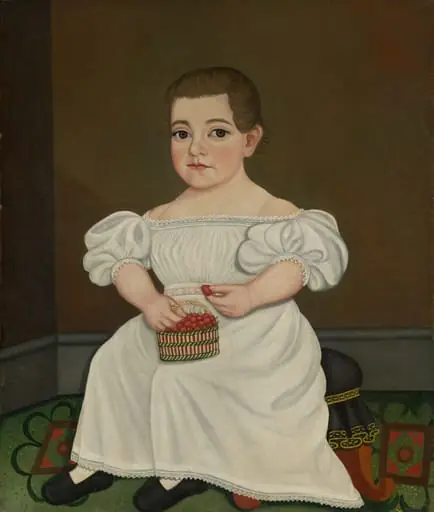
Little Miss Fairfield
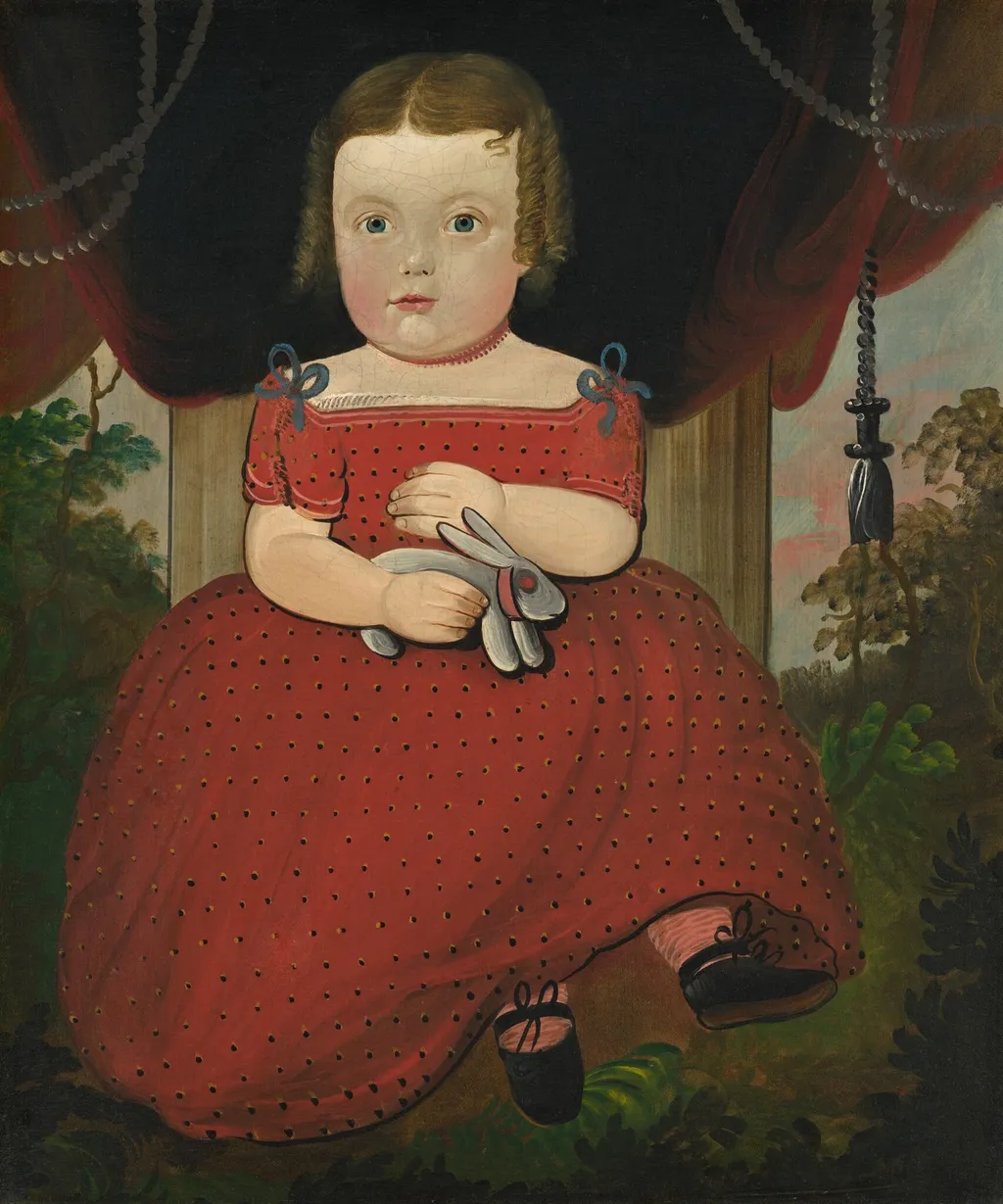
Little Miss Fairfield is an oil painting by the Impressionist artist William Matthew Prior. It dates from 1850 and is held in the collection of the National Gallery of Art.
- Inscription
- Inscribed:on reverse (no longer visible, photograph in NGA curatorial files): Child of Fairfield, Esqr. By W. M. Prior, Jan. 1850; 36 Trenton St.
About this work
Subject & Meaning
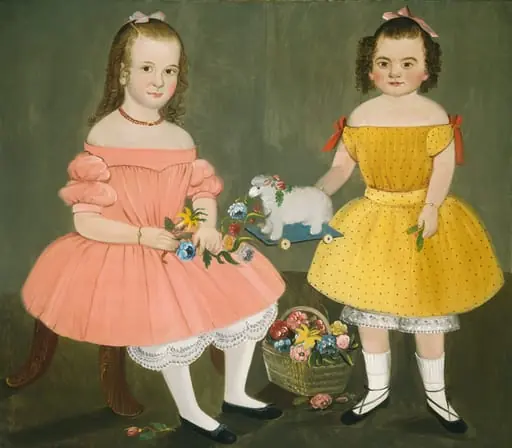
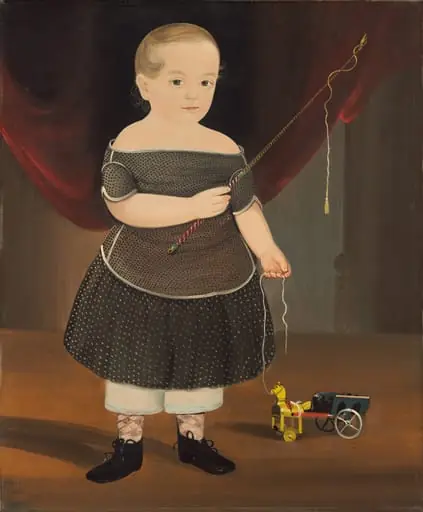
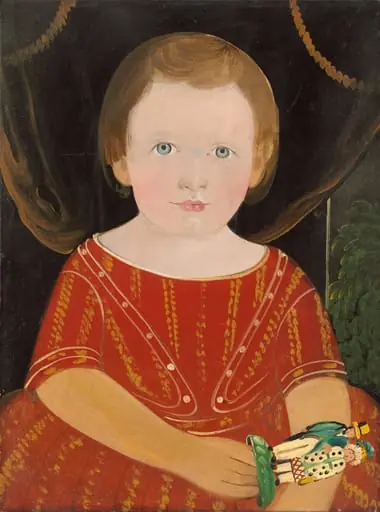
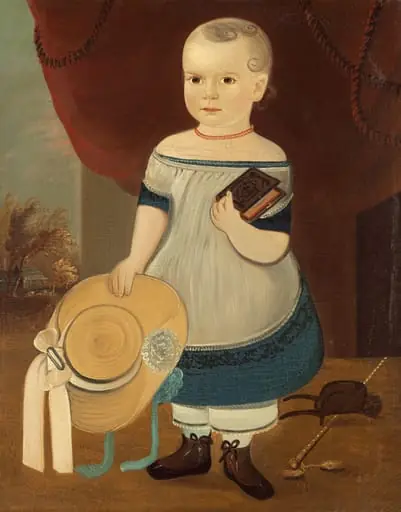
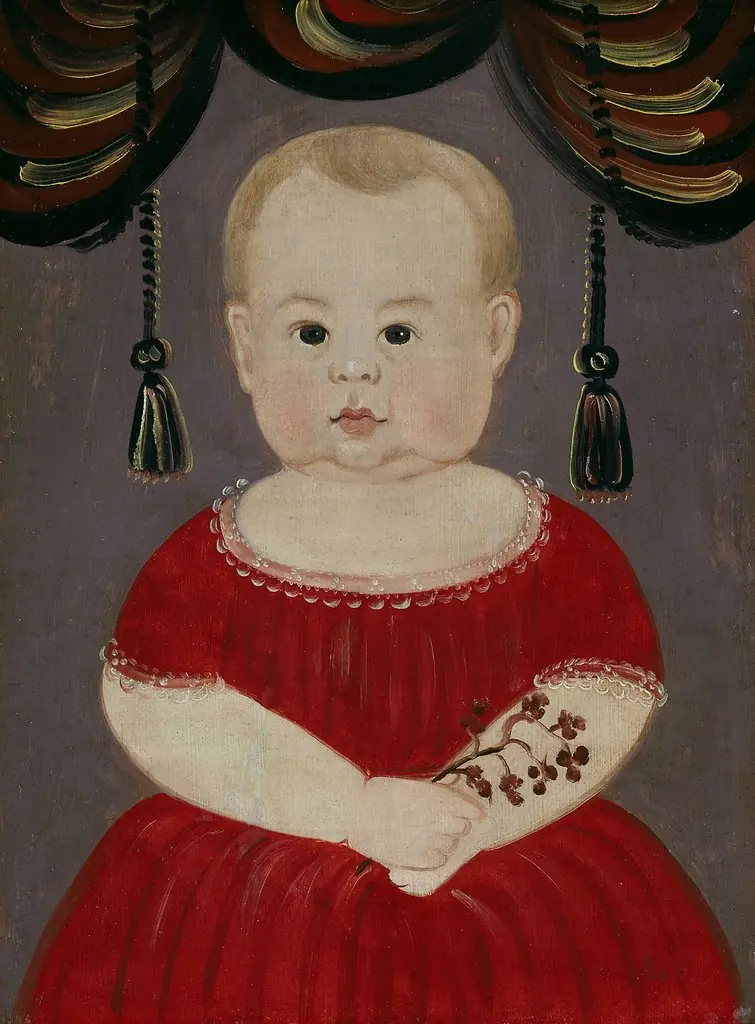
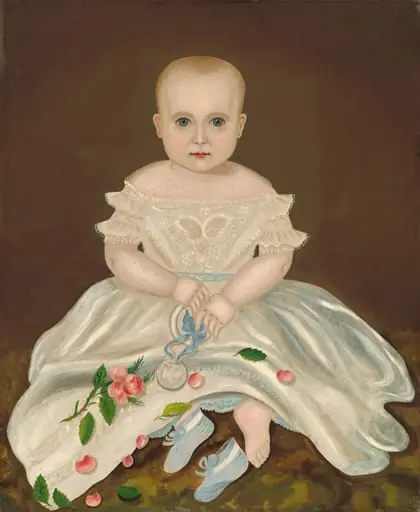
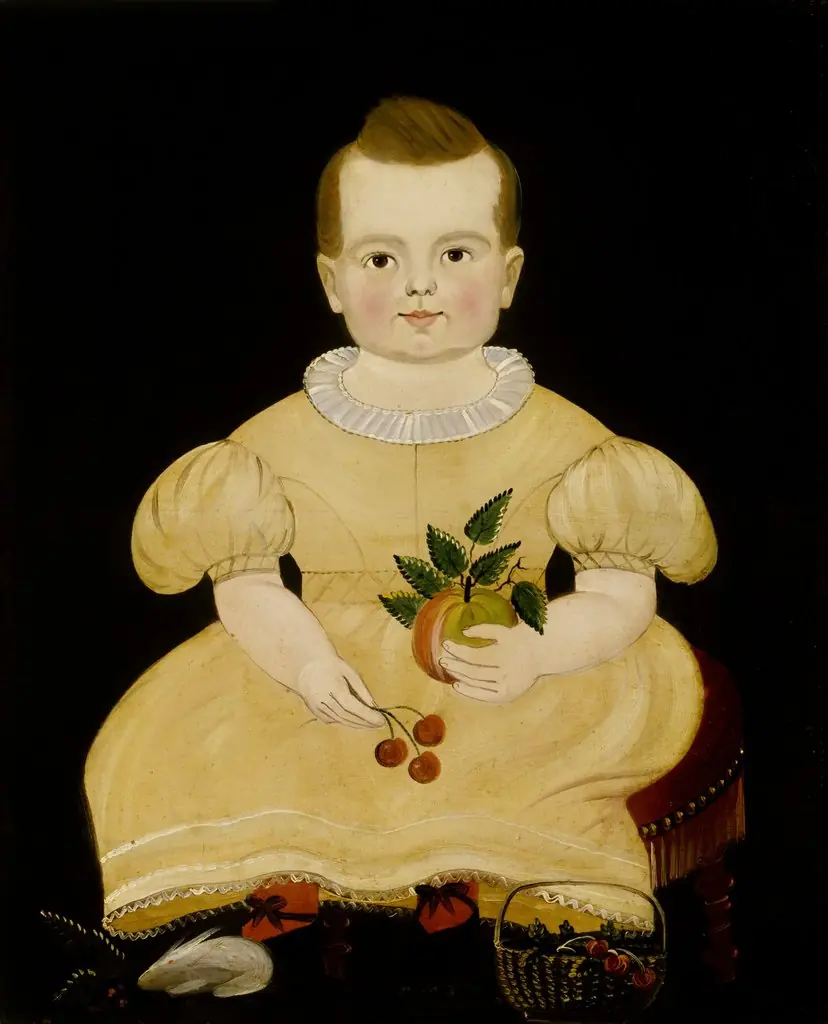
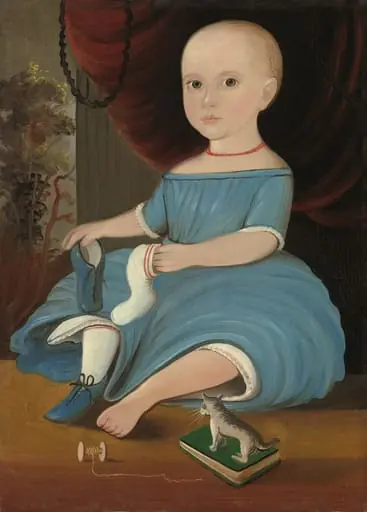
The portrait depicts a young girl seated in a three-quarter pose against a neutral background, wearing a white dress with a high collar and a dark sash, her gaze directed toward the viewer. As a genre portrait typical of mid-nineteenth-century American folk art, the work emphasizes the sitter’s youth and innocence through restrained attire and direct engagement. The painting’s title, Little Miss Fairfield, suggests a personal identification linked to Fairfield, a location in Pennsylvania, indicating the subject may have been a child from that region.
Within Prior’s oeuvre, such portraits often functioned as commemorative images meant to preserve the likeness and social standing of sitters, particularly children, in an era when photography was less accessible.
Technique & Style
The handling is consistent with mid-19th-century American folk portraiture, emphasizing clear delineation of features and simplified modeling.
The painting is executed in oil on a prepared canvas support, measuring 61 cm in height and 50.9 cm in width. The handling is consistent with mid-19th-century American folk portraiture, emphasizing clear delineation of features and simplified modeling. The composition centers on the sitter’s head and shoulders, with a restrained palette and smooth, even brushwork that avoids visible impasto.
Stylistically, the work aligns with Prior’s characteristic approach, combining naturalistic representation with a direct, unadorned presentation typical of itinerant portrait painters of the period.
History & Provenance
Painted in 1850 by William Matthew Prior, Little Miss Fairfield is an oil-on-canvas portrait that originated in Pennsylvania. The work was once in the collection of Leon F.S. Stark of Philadelphia before being sold in 1969 to Edgar William and Bernice Chrysler Garbisch. Two years later, the Garbisches donated the painting to the National Gallery of Art in Washington, D.C., where it remains part of the permanent collection.
The painting is held by the National Gallery of Art, Washington, D.C., accessioned as 1971.1.1 after a gift in 1971 from Edgar William and Bernice Chrysler Garbisch, who had acquired it from Leon F. S. Stark in 1969. The work entered the Gallery’s collection as part of the Garbisch bequest and remains in its holdings.
Overview
William Matthew Prior, an American folk artist, created Little Miss Fairfield in 1850 using oil on canvas. This painting exemplifies his characteristic approach to portraiture, focusing on individual subjects with a direct and unembellished style. The work reflects the broader Realism movement and Prior's significant contribution to 19th-century American art through his accessible depictions of people.
Context
As a prominent figure in 19th-century American folk art, William Matthew Prior was particularly known for his portraits of children and families. Little Miss Fairfield exemplifies his dedication to capturing the likenesses of ordinary individuals. His work provided an accessible form of portraiture, reflecting the lives and appearances of people outside the traditional elite, thereby establishing his role in the era's artistic landscape.
Own this work as a print
Artist & collection
Artist
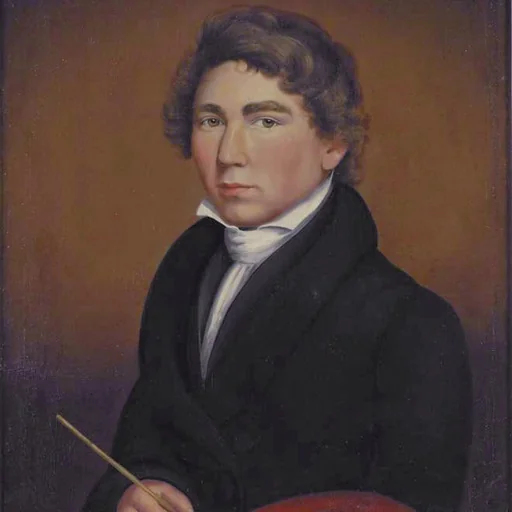
William Matthew Prior (May 16, 1806 – January 21, 1873) was an American folk artist known for his portraits, particularly of families and children.