Artwork
Sts. Catherine, Hubert and Quirinus (Last-Judgement-Altar)
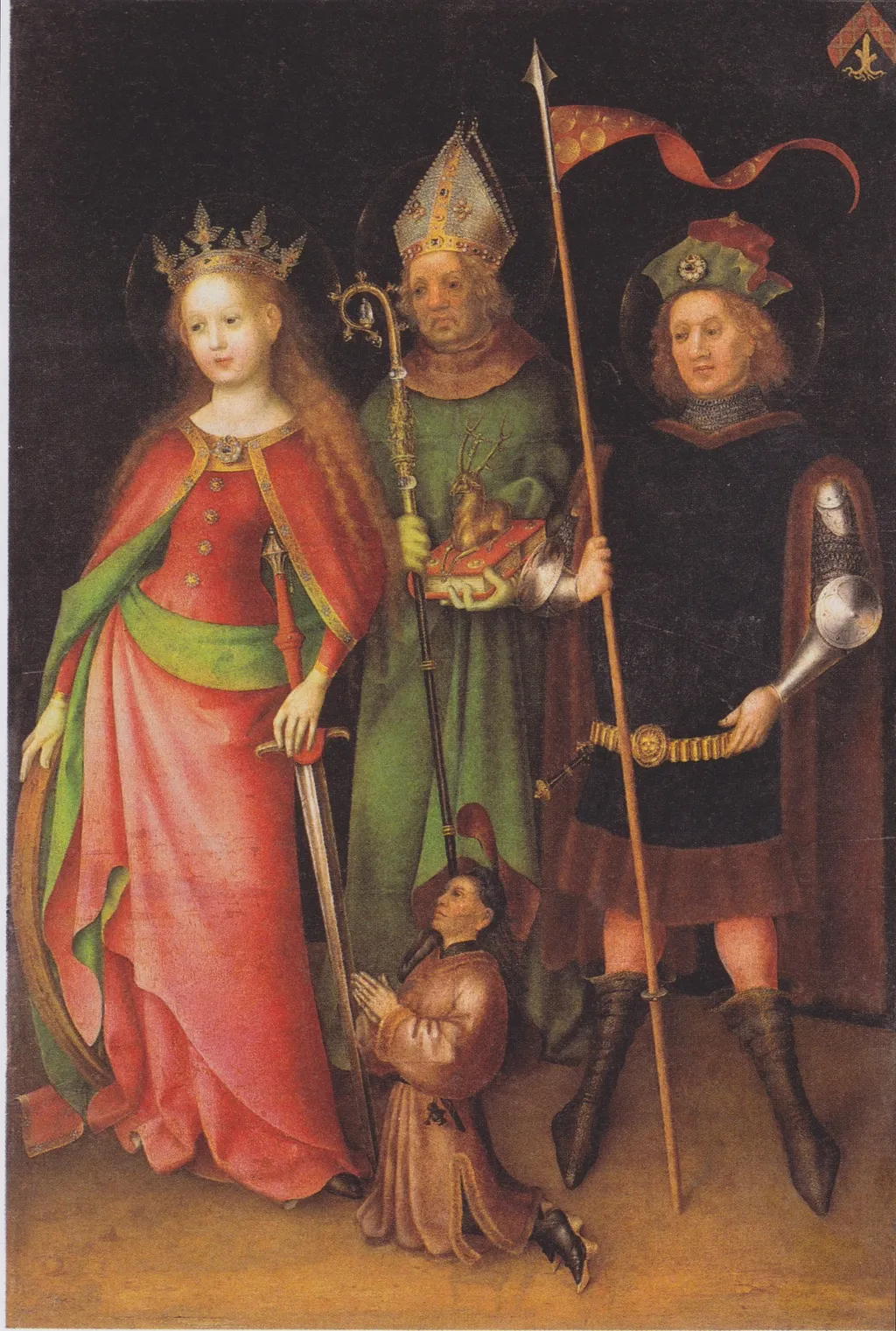
Sts. Catherine, Hubert and Quirinus (Last-Judgement-Altar) is an oil painting by the Northern Renaissance artist Stefan Lochner. It dates from 1445 and is held in the collection of the Bavarian State Painting Collections.
About this work
Subject & Meaning
Together they embody intercessory protection for the living and emphasize the eschatological judgment theme central to late medieval devotional art.
The altarpiece portrays the saints Catherine of Alexandria, Saint Hubert, and Saint Quirinus of Neuss in a Last Judgment composition, reflecting their traditional iconographic attributes and the donor’s pious devotion. Catherine is identifiable by her wheel and martyr’s palm, Hubert by the hunting horn and dog, and Quirinus by his bishop’s vestments and staff, each symbol reinforcing their individual legends of faith and sacrifice. Together they embody intercessory protection for the living and emphasize the eschatological judgment theme central to late medieval devotional art.
The work was commissioned by an unknown patron and later entered the collection of the Bavarian State Painting Collections, where it remains displayed in the Alte Pinakothek in Munich.
The altarpiece is executed in wood, measuring 120 cm in height by 80.4 cm in width, and dates to 1445.
Technique & Style
Created in 1445 by Stefan Lochner, this religious panel painting utilizes oil paint applied to a wood support. The work measures 120 cm in height and 80.4 cm in width. Stylistically, the composition features a grouping of specific saints, including Catherine of Alexandria, Hubertus, and Quirinus of Neuss, alongside a donor figure. The piece is currently held within the Bavarian State Painting Collections at the Alte Pinakothek.
History & Provenance
The work was commissioned as part of a Last Judgment altar and created by Stefan Lochner in 1445. It was executed in wood and later painted with oil. The piece entered the collection of the Bavarian State Painting Collections and has been housed in the Alte Pinakothek since its acquisition.
Legacy
The altarpiece remained influential through its preservation in Munich's Alte Pinakothek, where its innovative composition and vivid narrative shaped subsequent religious art in southern Germany. Scholars cite its dynamic spatial arrangement and expressive figures as a model for later painters seeking to blend devotional clarity with emotional depth. The work's attribution to Stefan Lochner has reinforced his reputation as a pivotal figure in early Netherlandish-influenced German painting, inspiring renewed appreciation of his stylistic synthesis during the 19th-century revival of interest in early Renaissance masters.
Overview
Created in 1445 by Cologne‑based painter Stefan Lochner, this wooden panel forms part of a larger polyptych altar. It brings together three saints, Catherine of Alexandria, Hubertus, and Quirinus of Neuss, alongside a kneeling donor, set against a dark, unadorned backdrop. The work is presently conserved in the Alte Pinakothek, Munich.
Context
Lochner’s work reflects Cologne’s position as a cultural crossroads between the Gothic traditions of the Low Countries and the emerging naturalism of the Northern Renaissance. By integrating vivid coloration with precise iconography, the painting illustrates the transitional aesthetic that defined German art in the decades preceding the Reformation.
Own this work as a print
Artist & collection
Artist
Stefan Lochner (the Dombild Master or Master Stefan; c. 1410 – late 1451) was a German painter working in the late International Gothic period. His paintings combine that era's tendency toward long flowing lines and…

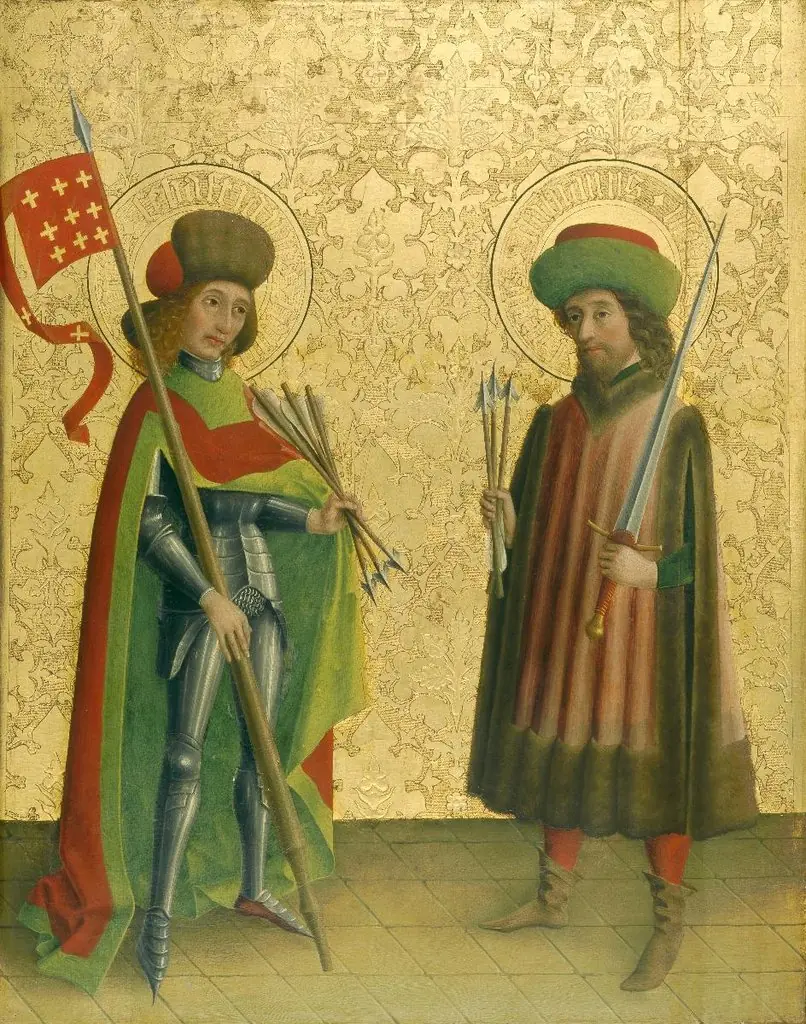 Die Heiligen Sebastian und Fabian
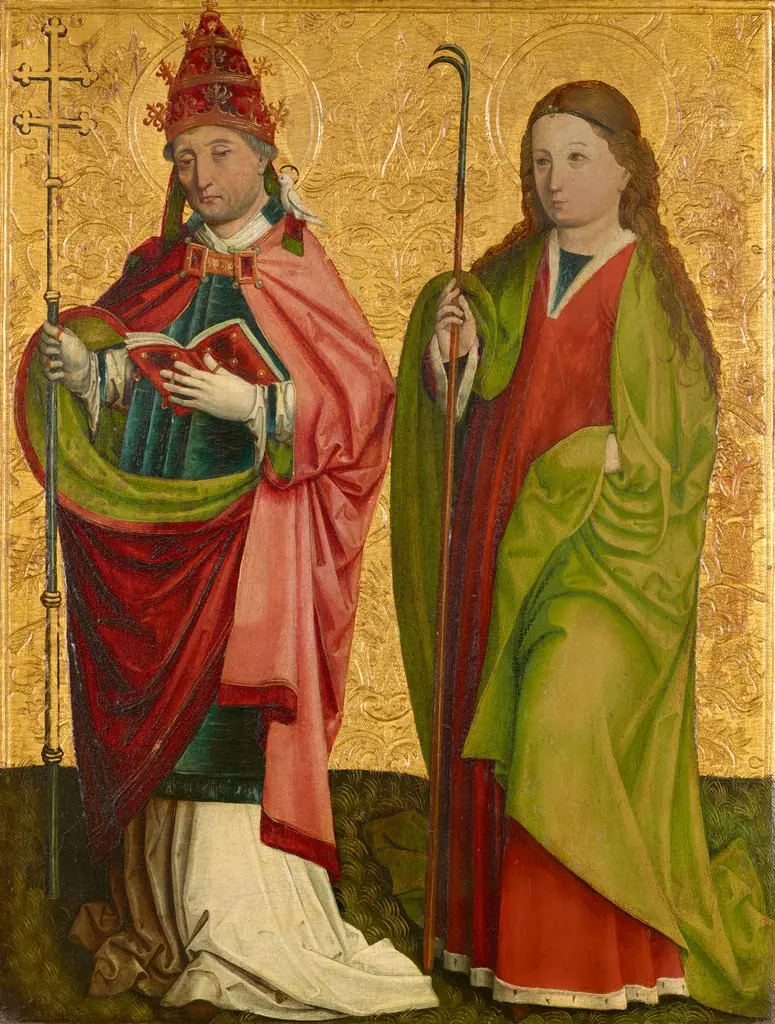 Rechter Flügel des sog. Pretschlaipfer-Triptychons: Hll. Gregor und Agathe (Innenseite); Hll. Erasmus und Barbara (Außenseite)
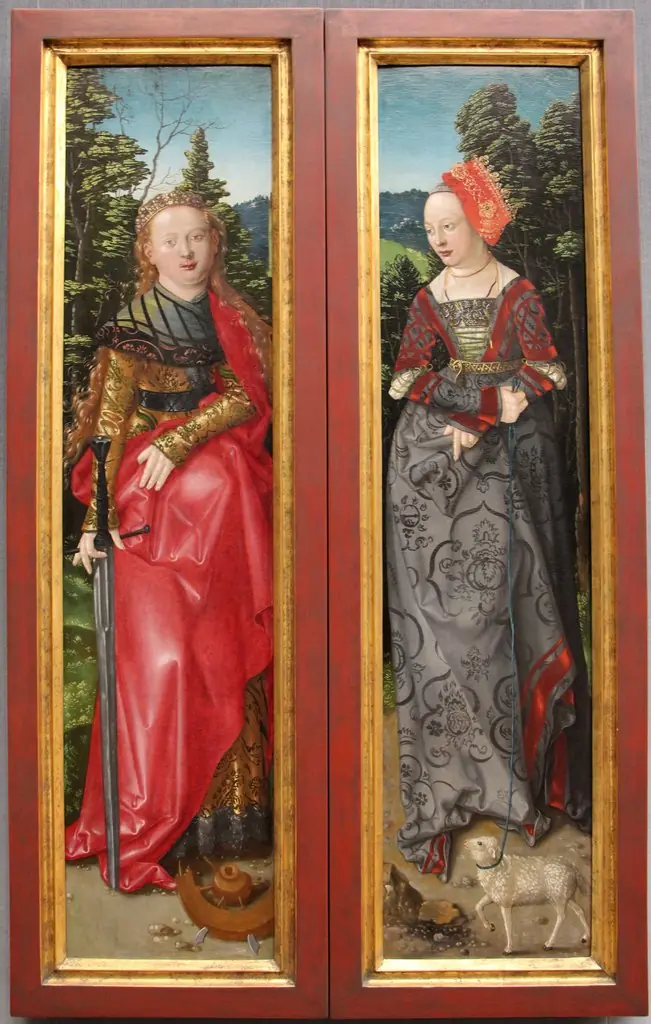 Der Dreikönigsaltar Außentafeln: Die Heiligen Katharina und Agnes
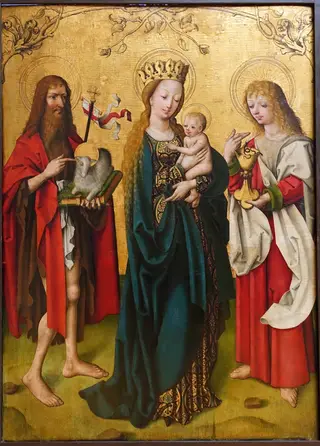 Virgin and Child between Sts. John the Baptist and John the Evangelist
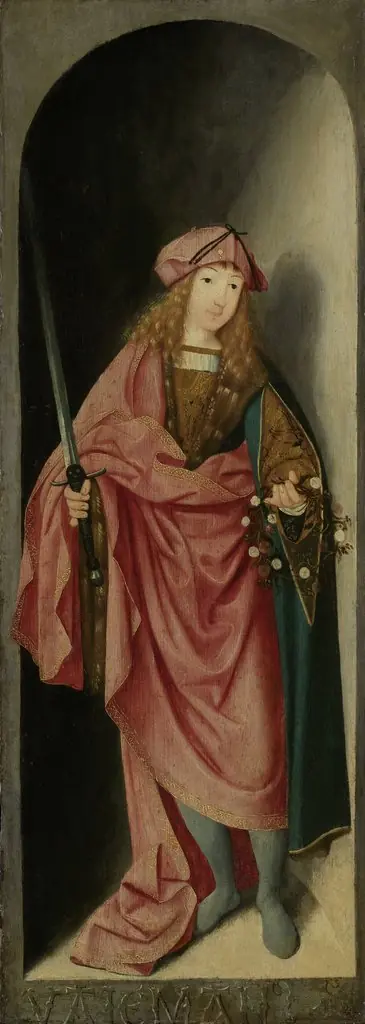 Left wing of a triptych with St Valerianus
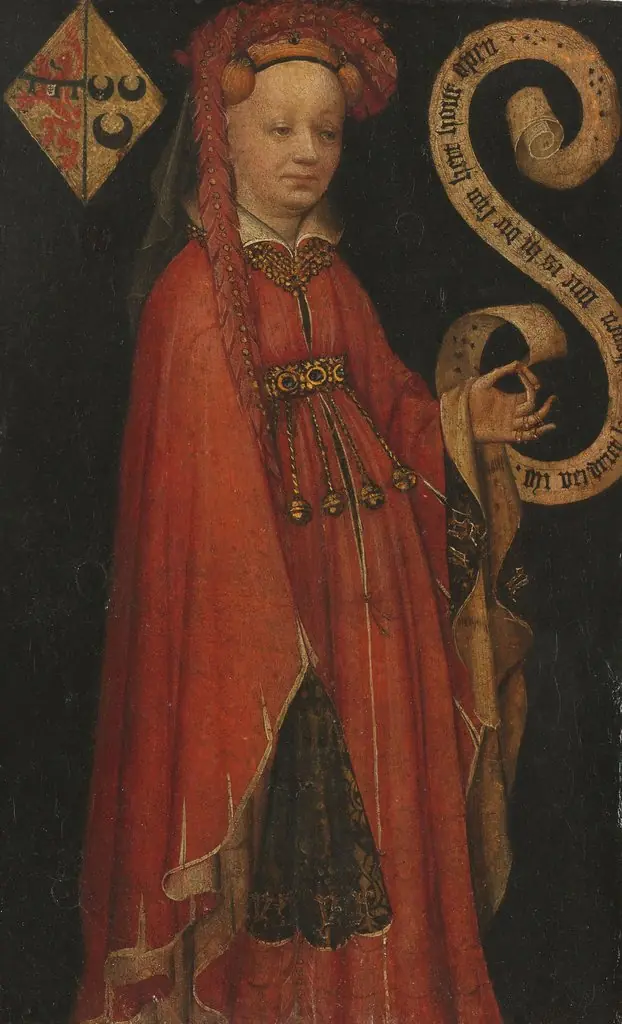 Portrait of Lysbeth van Duvenvoorde
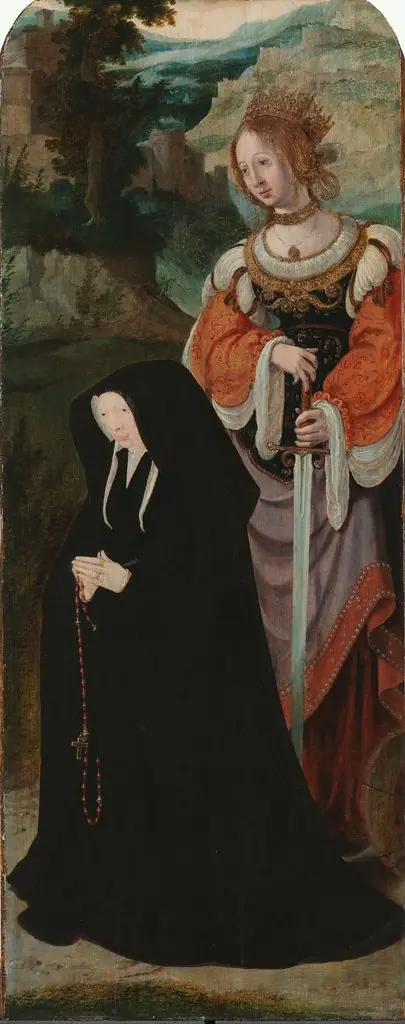 Wing of Lazarus tritptych with donor and Saint Catharine
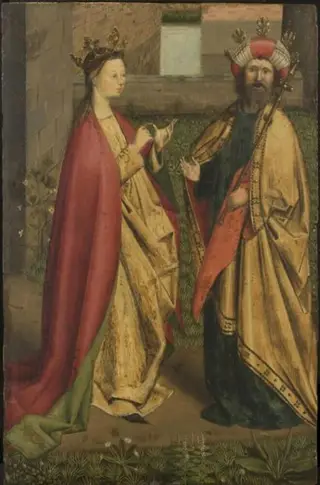 Saint Catherine of Alexandria Preaching to the Emperor
 Saints Stephen and Maurice
 St. Barbara is led into the tower