Artwork
He Acts Like a Painter
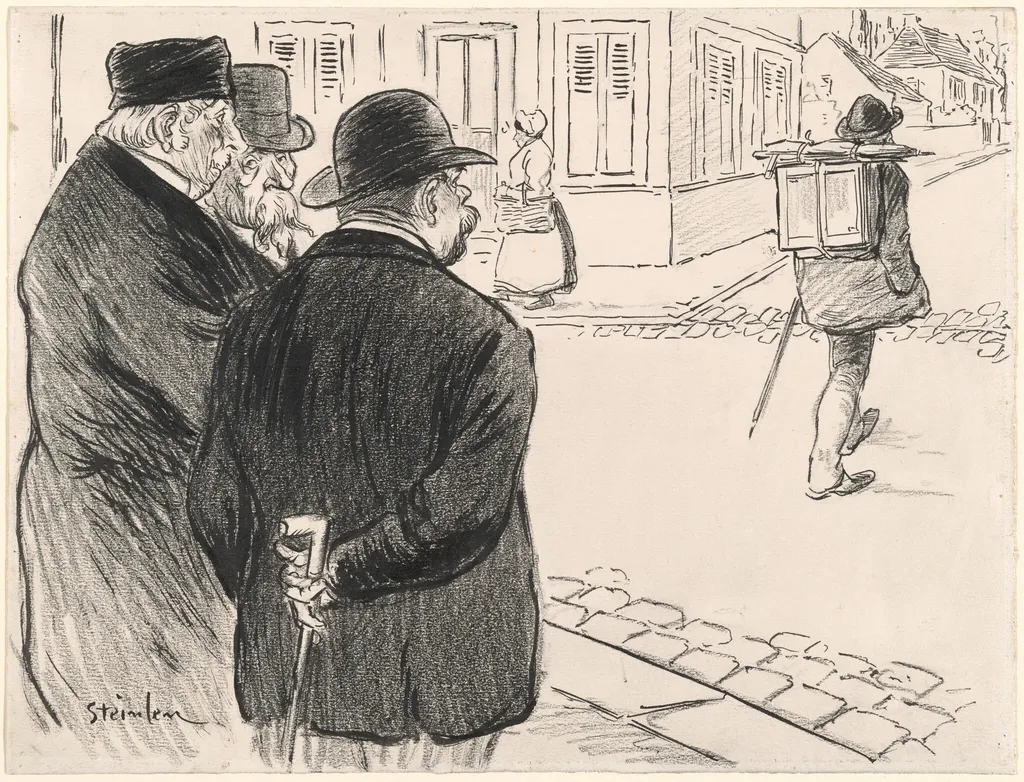
He Acts Like a Painter is an ink drawing by the Impressionist artist Théophile Alexandre Steinlen. It dates from 1891 and is held in the collection of the National Gallery of Art.
- Inscription
- Inscribed:lower left in black ink: Steinlen; in unknown hand, across top verso in red: 439 / 20 1/2 [?] / Mr Breysse; lower right verso in graphite: 1766
About this work
Overview
The work belongs to a body of sketches that prioritize spontaneity over finish, reflecting his engagement with the everyday rather than idealized subjects.
Created in 1891, this drawing by Théophile Alexandre Steinlen employs brush, black ink, and black crayon to capture a fleeting urban moment. Steinlen, a Swiss-born artist active in France, was known for his incisive observations of working-class life and his ties to radical political circles. The work belongs to a body of sketches that prioritize spontaneity over finish, reflecting his engagement with the everyday rather than idealized subjects.
Subject & Meaning
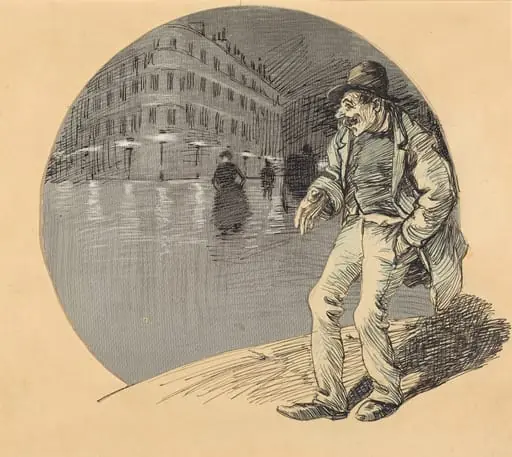
The scene depicts two elderly men walking side by side, one carrying a cane, as a woman passes and a photographer sets up a bulky camera near a building. The title, He Acts Like a Painter, suggests irony toward performative artistic identity. Steinlen subtly critiques the pretensions of bourgeois culture by juxtaposing the men’s ordinary demeanor with the photographer’s theatrical pose, implying a broader satire of social posturing.
Technique & Style
Steinlen uses rapid, fluid lines and textured crayon strokes to convey motion and atmosphere. The ink washes suggest depth without detail, while the crayon adds weight and contrast to clothing and shadows. The loose, unrefined handling avoids polish, emphasizing immediacy.
Background elements like the camera and windows are rendered with minimal strokes, inviting the viewer to infer context rather than observe it precisely.
History & Provenance
The drawing emerged during Steinlen’s most politically active period, when he contributed illustrations to anarchist and socialist journals such as La Revue Blanche. Though its exact provenance before institutional acquisition is undocumented, its style aligns with his published sketches of Parisian street life from the early 1890s, a time when he increasingly turned from commercial illustration to personal, observational work.
Context
In late 19th-century Paris, photography was becoming more accessible but still carried an air of novelty and formality. Steinlen’s inclusion of the bulky camera reflects contemporary anxieties about representation and authenticity. His focus on unremarkable pedestrians contrasts with academic art’s grand narratives, aligning him with the emerging realist and satirical traditions of the time, particularly among artists aligned with leftist movements.
Legacy
Steinlen’s drawings like this one helped redefine the artistic value of quick, informal sketches. His ability to distill social observation into minimal lines influenced later generations of illustrators and cartoonists. Though not widely exhibited in his lifetime as fine art, these works are now recognized for their quiet critique of modernity and their role in expanding the boundaries of what drawing could express.
Own this work as a print
Artist & collection
Artist
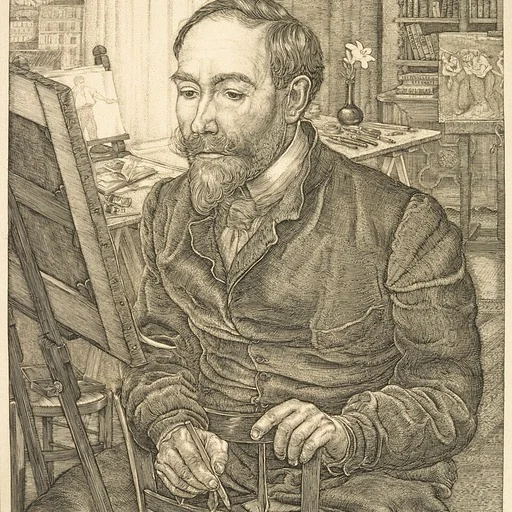
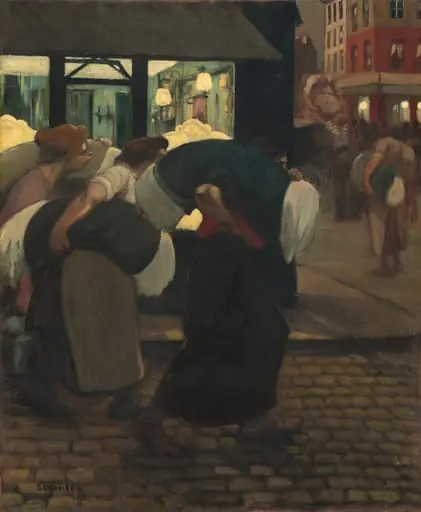
Théophile Alexandre Steinlen (November 10, 1859 – December 13, 1923), was a Swiss-born French Art Nouveau painter and printmaker. He was politically engaged and collaborated with the anarchist and socialist press.

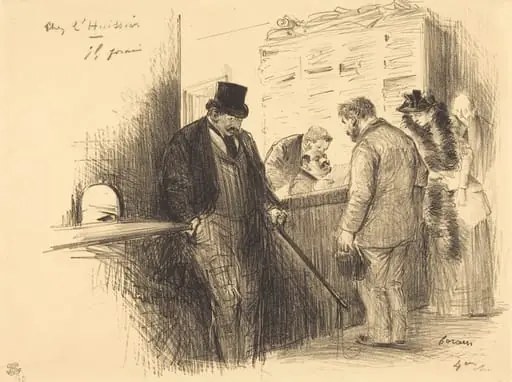
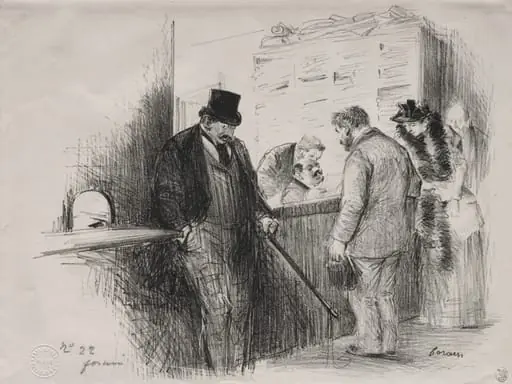
- Chez l'huissier (At the Bailiff's)
 Chez l'Huissier
 Le groom public
 Paul Verlaine à Londres
 Edgar Degas
 The First Vendor of Jourdan and Brown (Le premier vendeur de Jourdan et Brown)
 Salle de jeu (Gambling Room)
 Parisien transportant dans un autre quartier...
 Le Dimanche au Jardin des Plantes
 Untitled
 Bredouilles, l'Equipage d'un Zeppelin
 V'la un particulier qui doit ...être inquiet ...