Artwork
Untitled
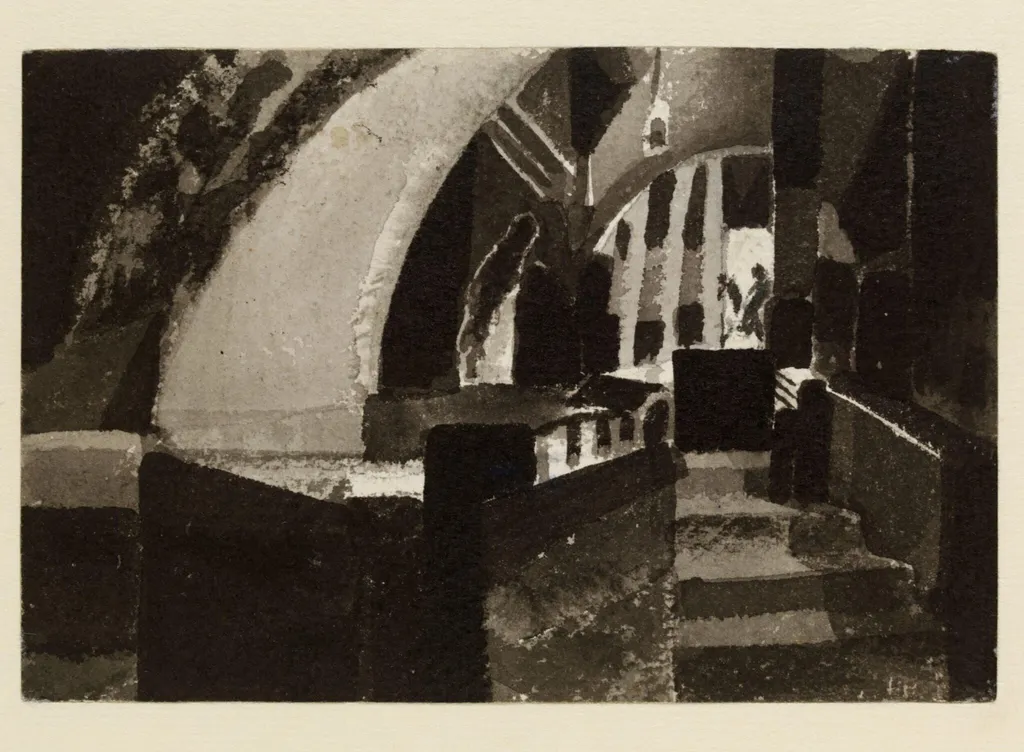
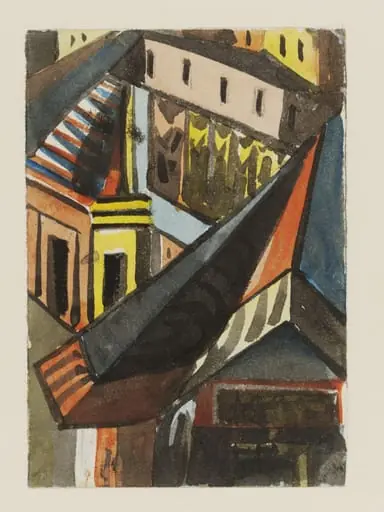
Untitled is a paint painting by the Bengal School artist Gaganendranath Tagore. It dates from 1925 and is held in the collection of the Victoria and Albert Museum.
About this work
Overview
Gaganendranath Tagore (1867‑1938), a Calcutta‑born artist known for his satirical cartoons and paintings, created this untitled work during his early forays into cubist language. Executed between 1920 and 1925, the piece combines colored paint with black ink on a postcard format, illustrating his initial experiments with fragmented forms and light.
Subject & Meaning
The composition portrays an interior space rendered through intersecting prisms, cubes and refracted planes, suggesting a dreamlike domestic scene. Figures linger in the background while a modest staircase recedes, the overall effect evoking a sense of hidden presence within an everyday setting.
Technique & Style
Tagore employs sharp, angular ink lines alongside vivid color blocks, breaking the surface into glass‑like fragments that reassemble into a mask‑like visage. The work merges European cubist principles with Indian ink traditions, creating a hybrid visual language that emphasizes multiple viewpoints and distorted perspective.
History & Provenance
The postcard was sent by Tagore to a correspondent identified as Roop Krishna Esq., with a handwritten note on the reverse expressing gratitude and a brief health update. This personal exchange situates the artwork within the artist’s network of friends and illustrates its original function as a mailed greeting.
Context
During the early 1920s Tagore, informed about modern European art, became one of the first Indian painters to adopt cubism, a movement pioneered by Picasso and Braque. His approach did not merely imitate the style; it integrated local artistic practices, marking a significant moment in the cross‑cultural dialogue of modern art.
Artist & collection
Artist
Gaganendranath Tagore made playful, sharp paintings of modern life in early 20th-century Bengal.

- Saxon Church, Bradford-on-Avon
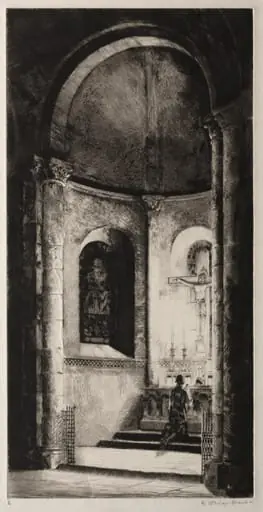 Crusader's Vigil
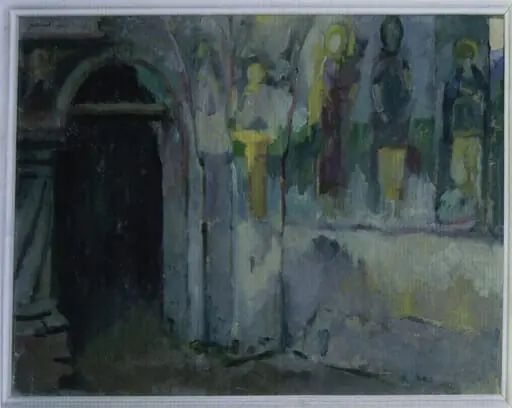 Interior de biserică
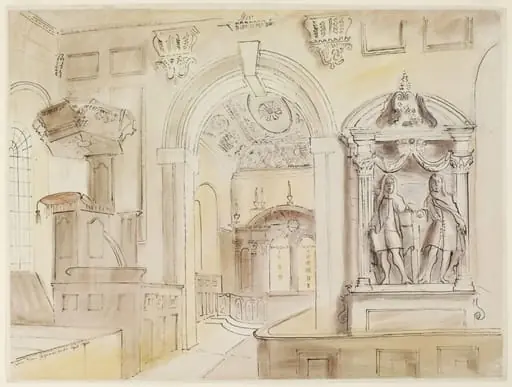 Interior of St. Peter's Church, Gayhurst
 Untitled
 Untitled
 The Presbyterian Unitarian Chapel, Nantwich
 Interior cu bolți
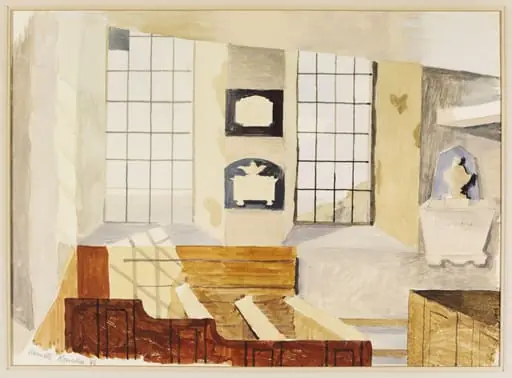 Interior of St. Mary's Church, Whitby
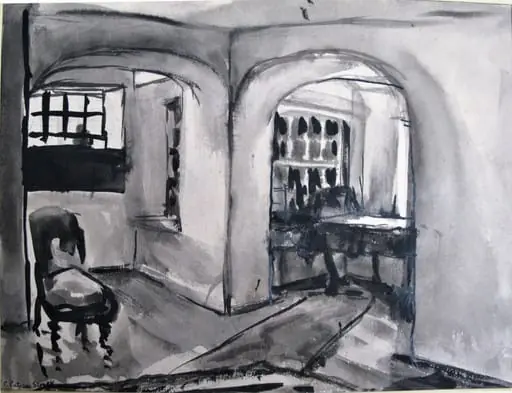 Interior în casa Satmary
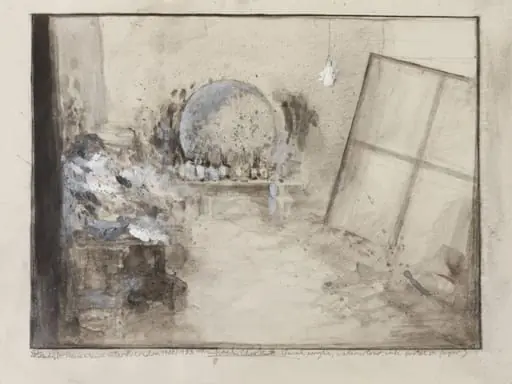 Study for Reece Mews Interior (Francis Bacon's Studio)
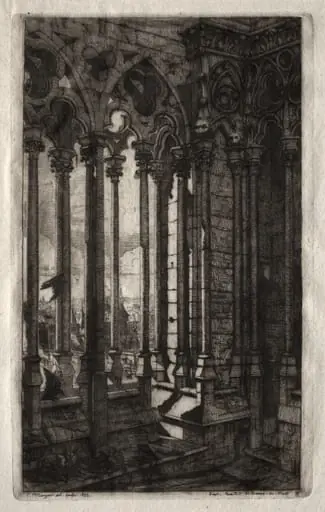 Etchings of Paris: The Gallery of Notre Dame