Artwork
The Hittite rock sanctuary of Yazilikaya
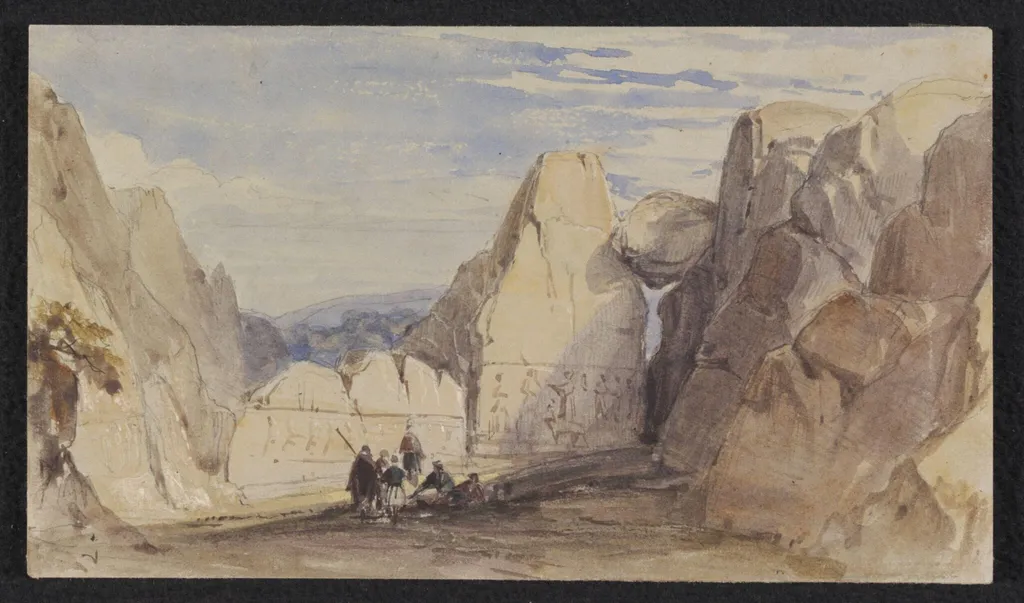
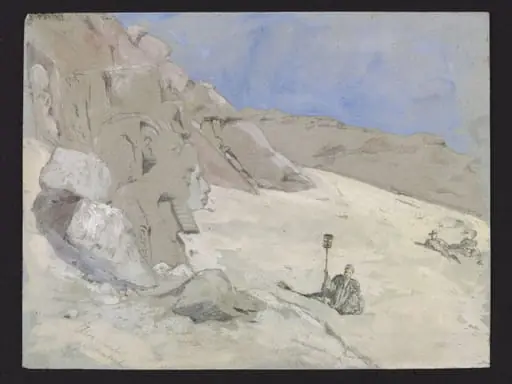
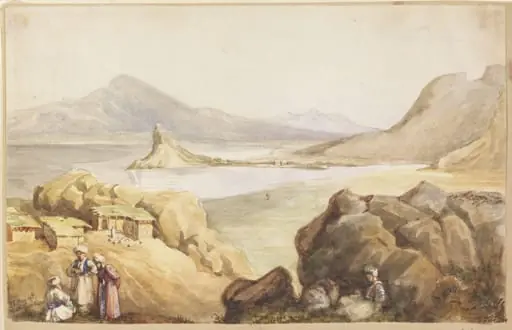
The Hittite rock sanctuary of Yazilikaya is a watercolor work on paper by the Romanticist artist Isidore Justin Severin Taylor. It dates from 1830 and is held in the collection of the Victoria and Albert Museum.
About this work
Overview
This watercolour depicts the Hittite rock sanctuary of Yazılıkaya, executed in a style characteristic of 19th-century European artistic explorations of ancient sites. The work is attributed to Isidore Justin Severin Taylor.
Subject & Meaning
The scene focuses on a rocky hillside with carved cliff faces, observed by a small group of individuals, suggesting an emphasis on the discovery and study of ancient Hittite relics within a natural setting.
Technique & Style
The artist employed loose, sketchy brushstrokes to convey the rugged texture of the rocks and the softness of the distant, sunlit landscape, capturing the interplay of natural and archaeological elements.
History & Provenance
Previously part of the Duc de Montpensier's collection, the piece was catalogued as item 42, indicating its value within a noble European collection interested in antiquities and travel art.
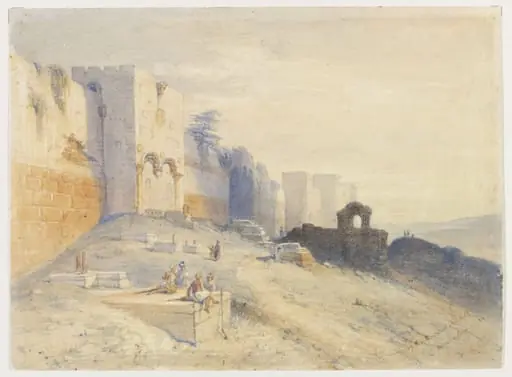
Artist & collection
Artist
French traveler and watercolor artist Isidore Justin Severin Taylor sketched ancient sites during the 1830s.

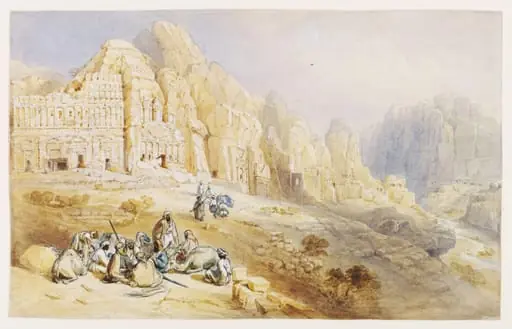 Principal range of tombs
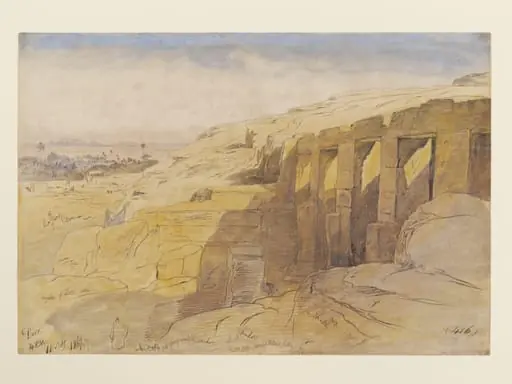 Temple at Derr, Nubia, Egypt
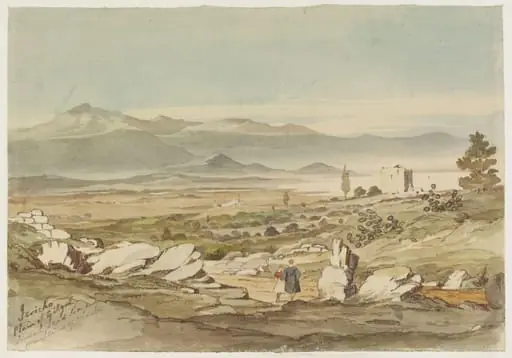 Jericho Plain of Gilgal, Jordan, Dead Sea, and Mountains of Moab
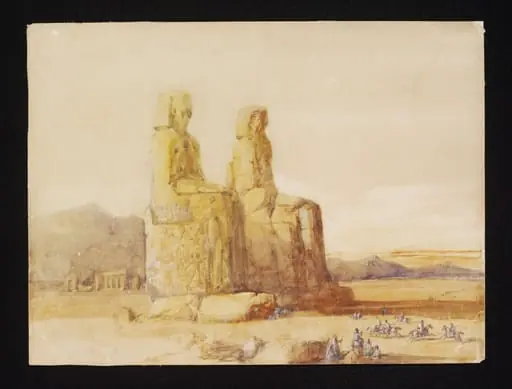 The Vocal Statue - Thebes, 1848
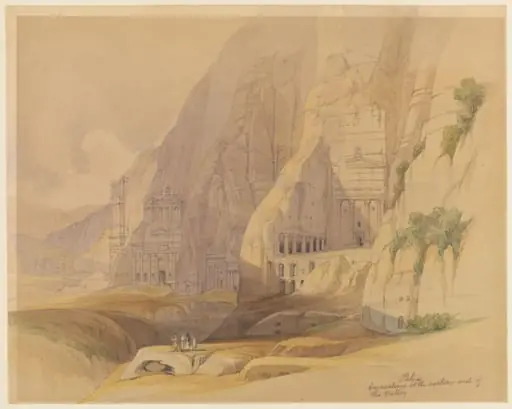 Petra Excavations at the eastern end of the Valley
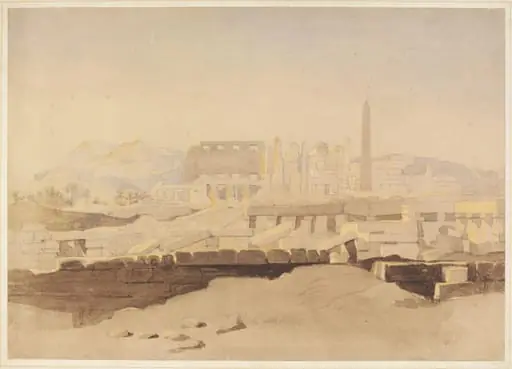 Temple at Carnak: Thebes
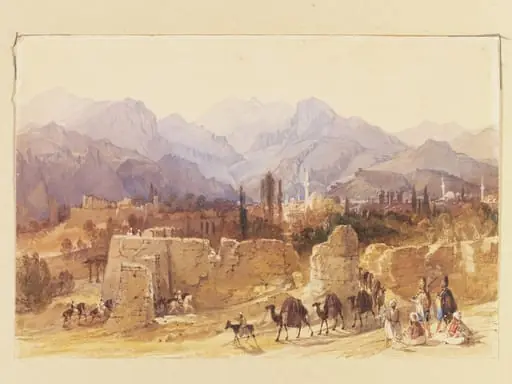 Philadelphia
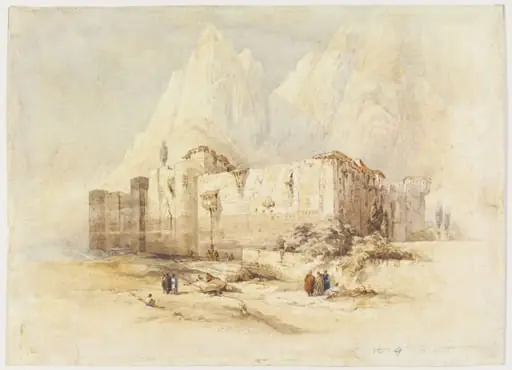 Convent of St Catherine, Mount Sinai
 Aboo Simbel
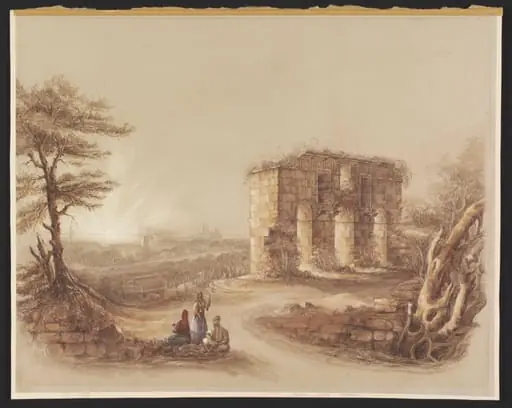 Monumental Gateway, Patara, Turkey
 Gule-Hissa Ovassy in the Northern part of Lycia
- Remains of the Ancient Temple of Jerusalem