Artwork
Ruine la mănăstirea Comana
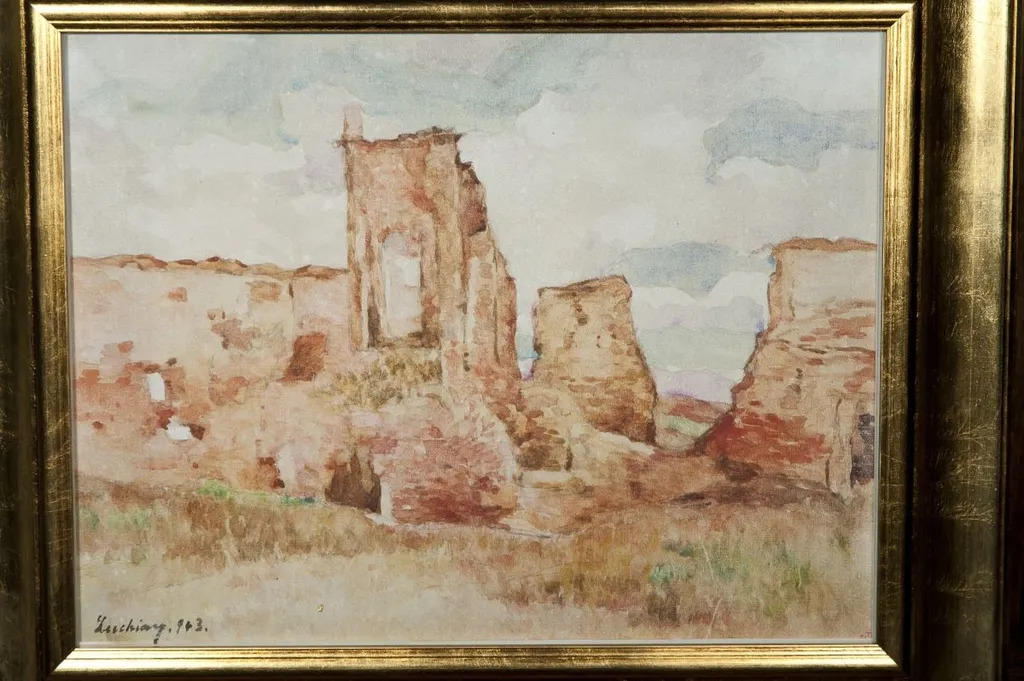
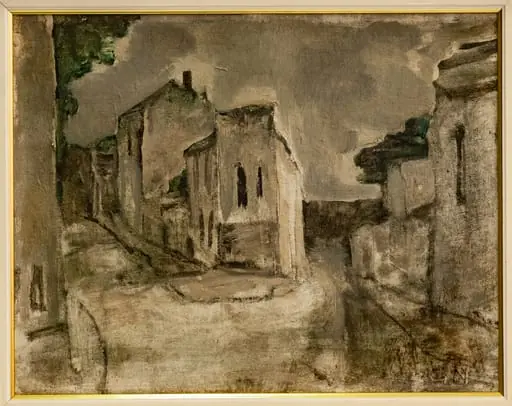
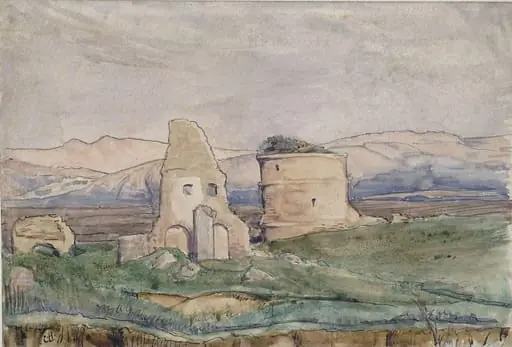
Ruine la mănăstirea Comana is an unspecified painting by the Romanesque artist Ștefan Luchian. It dates from 1903 and is held in the collection of the National Museum of Art of Romania.
About this work
The artist often drew ruins like this, not famous buildings but quiet places where nature takes over.
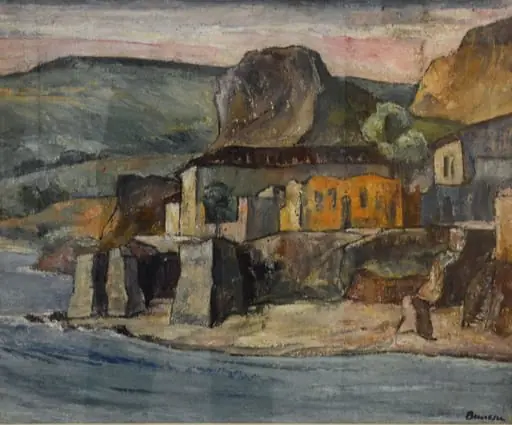
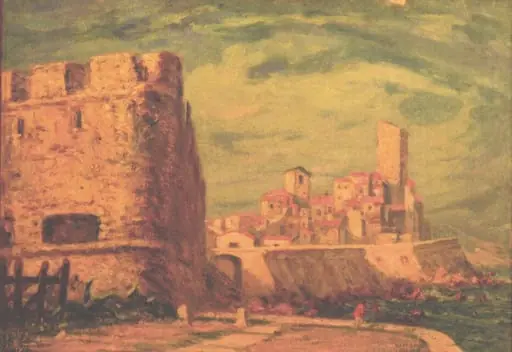
This painting shows an old stone monastery half-falling apart. Bricks tumble. Trees grow through cracks. A single arched doorway stands open in the ruins.
It was painted in 1903 in Romania. The artist often drew ruins like this, not famous buildings but quiet places where nature takes over. The colors feel dusty, grays, browns, a little green from moss.
If you like quiet old buildings, look up the Museum of Ethnography in Romania.
Overview
Ștefan Luchian’s 1903 oil painting captures the dilapidated remains of the Comana monastery in Romania. The composition centers on a crumbling stone structure, its arches and walls partially collapsed, while vegetation pushes through fissures. A solitary arched doorway opens onto the interior, emphasizing the sense of abandonment and the quiet dominance of nature over human construction.
Subject & Meaning
The work portrays a once‑active monastic site now succumbing to decay, illustrating the passage of time and the interplay between built heritage and the natural environment. By focusing on an obscure, uncelebrated ruin rather than a renowned monument, Luchian underscores themes of transience, solitude, and the quiet resilience of nature reclaiming forgotten spaces.
Technique & Style
Luchian employs a muted palette of grays, browns, and subtle greens, rendering the stone and moss with a soft, dusty tonality. The brushwork balances precise architectural detail with looser, atmospheric treatment of foliage, creating a harmonious contrast between the solid, geometric forms of the arches and the organic, irregular growth of trees.
History & Provenance
Created in 1903, the painting reflects Luchian’s broader interest in Romanian ruins and rural landscapes during the early twentieth century. It entered the collection of the Museum of Ethnography in Romania, where it remains part of the institution’s holdings on national cultural heritage and artistic documentation of historic sites.
Artist & collection

Artist
Ștefan Luchian was a Romanian painter, famous for his landscapes and still life works.